


Digital Archiving Expert
to preserve records securely with vetted and available freelancers matched in minutesHire experts who design searchable archives, apply retention and access policies, and migrate records from legacy systems. FRATCH uses fast, precise AI matching to connect you with vetted, available freelancers who fit your project.

Meet FRATCH Experts who have recently used Digital Archiving
Klaus K.

Last position:
HCL Notes Banking Support, Domino Administration / Migration / Operations at Atruvia / HCL International
Description of duties “Atruvia / HCL International” Role: HCL Notes Banking Support, Domino Administration / Migration / Operations Operations, administration and technical support of the HCL Notes/Domino environment in the Atruvia banking environment on behalf of HCL. As part of an international support team, the focus was on second- and third-level support as well as the processing, management and monitoring of SLA tickets in categories 1, 2 and 3. Duties included the technical analysis and resolution of incidents in the Notes/Domino environment, system administration, and the development and modification of Lotus Notes /Domino applications and LotusScript agents when a programming solution was required. Another focus was ticket dispatching: analysing and assessing incoming tickets, assigning them to the responsible departments and specialist teams, and subsequently coordinating and tracking processing within the agreed SLA periods. There was also direct communication and coordination with subject-matter experts, departments and end customers of the connected banks. In particular, when language or technical communication problems arose within the international support team, German-language customer communication was handled and mediation between customers and technical specialists was provided. Objective Ensuring stable and reliable operation of the HCL Notes/Domino landscape in the Atruvia banking environment and the timely processing of business-critical support cases in line with the agreed Service Level Agreements. Incidents were to be analysed as early as possible and either resolved directly through administrative measures or suitable LotusScript/Notes solutions, or forwarded specifically to the responsible specialist teams. As of: 25.09.2026 (Version 2.10 LITE) including project times Page: 3 of 32 SPO-SOFT EDV Beratung, Dipl.-Ing. Klaus Kano, Tel.: +494532-2767682, Mail: [email], [link] At the same time, qualified preliminary analysis and targeted ticket dispatching were intended to ensure that every ticket reached the technically and professionally responsible department immediately and that unnecessary transfers, processing times and associated costs were reduced. Result Operational Notes/Domino support for the banks served was reliably ensured throughout the entire project period. SLA-relevant tickets were systematically analysed, prioritised, assigned to the responsible departments and tracked through to resolution. Some incidents were resolved directly through administration, technical error analysis and the development of suitable LotusScript agents and modifications to Notes/Domino applications. By directing tickets specifically to the relevant expert and specialist teams, incorrect assignments and unnecessary processing loops were reduced and compliance with the agreed SLA times was supported. Direct communication with the banks and mediation between German-speaking end customers and the international support team also contributed to efficient problem resolution and high customer satisfaction.
Robert K.

Last position:
Interim Manager | Group Manager in the IT Operations & Digitalization division „Databases, Operations & Support" (DOS) at Landwirtschaftliche RentenBank
- Functional management and further development of a team of 28 IT employees (internal & external) in the areas of HelpDesk / HelpLine, RHEL (Red Hat), MUREX (trading system & applications), SAP basic operations
- Management of external service providers (including FI-TS for SAP basic operations)
- Personnel, resource and budget planning for the IT department and projects
- Introduction and establishment of regular communication formats (regular meetings, team and cross-departmental meetings)
- Ensuring application operations in a hybrid environment (Windows / Linux with database and web/application servers)
- Support for transformation projects to modernize the application landscape (e.g. DevOps approaches)
- Building and introducing digital IT procurement for hardware & software (e.g. with DELL)
- Development and management of the „IT Operations DOS" department based on the company strategy
- Preparation of management reports & decision papers on IT projects, optimization potential and automation opportunities
- Representing the department in Rentenbank committees and ensuring regulatory compliance (BaFin §44, DSGVO, BSI, MaRisk)
Onur K.

Last position:
Project Manager & Outsourcing Manager at SENEC GmbH (EnBW Group)
- Built a scalable nearshore IT developer hub (Croatia, Czech Republic, Poland) as an independent company through a BOT model (Build – Operate – Transfer)
- Identified, selected, and managed full-service agencies; introduced management and control mechanisms, including KPIs, SLAs, and regular service reviews
- Prepared and reviewed data processing agreements and framework contracts in coordination with Legal & Compliance; integrated regulatory requirements (including KRITIS) into process design
- Advised on cloud vs. on-premise strategies, data storage, and authorization concepts; supported Procurement with tendering and service provider evaluations
- Managed change and process harmonization between internal teams and nearshore partners; reported to executive management, CFO, and CIO
Result: Scalable IT developer hub with an audit-ready governance model, reduced operating costs, and accelerated product development.
Nicole F.

Last position:
Project Manager Datalake and Payment Service Provider at EnBW Energie Baden-Württemberg AG
- Implementation / restructuring of various digital payment use cases
- Project leadership and management, including scheduling, resource planning, and budgeting
- Implementation of posting processes in SAP in the subledgers and processing of account statements for invoice verification
- Definition of future operations and operating processes
- Collaboration with stakeholders to define business requirements and ensure that the project solutions meet them
- Identification and management of project risks and issues, including the development of risk mitigation and problem-solving strategies
- Promoting user acceptance through effective communication, training, and support strategies
- Advising on the practical implementation of various GDPR rulings in IT and business processes
Johannes H.

Last position:
Business Analyst for Riester subsidy management migration at Insurance company
- Analysis of the Riester subsidy GeVos for provider change 2.0 in the AZUR subsidy management system
- Representation of the GeVos in BPMN 2.0 with Draw.io and Adonis
- Analysis of the data sets exchanged with the life insurance policy administration system and migration to the msg data sets
- Design and mapping of the interfaces to the new msg.ZulagenVerwaltung for various Riester subsidy GeVos at data field level
Sarvesh L.

Last position:
Data Analytics for Renewable Energy Integration at Harz University
- Created data pipelines and visualization tools to support sustainable energy decision-making
- Developed insights that could optimize renewable energy deployment and grid integration strategies
Mladen B.

Last position:
Senior SAP BW/4HANA / BPC / SAC Consultant – Freelancer at Company in Berlin and Belgium in the utilities sector
- Implementation of data models in BW/4HANA, ABAP CDS Views, HANA Calculation Views, AMDP Scripts, OData Services, object-oriented ABAP in BW, SAC.
- Adjustments in BPC for BW/4HANA.
Vicenco K.

Last position:
ITSM Project Manager (self-employed)
Unified ITSM framework
- Definition of a company-wide ITSM target picture
- Introduction of a uniform service structure across all business units
SLA and OLA management
- Building a standardized SLA framework
- Definition of service classes (Business Critical, Standard, Low Priority)
- Introduction of OLAs between internal teams
- Building meaningful SLA reporting
- Definition of KPI and service dashboards for business units
Service portfolio management
- Definition of service descriptions
- If needed, preparing possible cost and service billing
Ticketing & processes
- Incident management
- Uniform ticket categories
- Standardized prioritization
- Escalation matrix
- Automations
- Self-service optimization
Request fulfillment
- Service catalog across all business units
- Approval workflows
Problem management
- Introduction of root cause analysis
- Known error database
- Problem review process
Complete asset management concept
- Hardware lifecycle management
- Software lifecycle management
- Leasing lifecycle
- Mobile device lifecycle
- Monitor lifecycle
- Phone lifecycle
Processes
- Procurement
- Goods receipt
- Inventory
- Assignment
- Return
- Disposal
- Leasing return Goal: single source of truth for all assets
CMDB design
- Definition of all configuration items:
- Workplace
- Notebooks
- Monitors
- Mobile phones
- Printers
Infrastructure
- Servers
- Firewalls
- Switches
- WLAN
- Storage
- Backup systems
Cloud
- Azure resources
- Microsoft 365
- SaaS services
Relationships
- User ↔ Asset
- Asset ↔ Service
- Service ↔ Infrastructure
- Location ↔ Asset
- Goal: make all service dependencies visible
Software asset & license management
- License management concept
- License balancing
- Compliance reporting
- Microsoft license management
- Adobe license management
- SaaS management
- Contract management
- Renewal management
Interfaces & automation Existing systems
- Workday
- Joiner
- Mover
- Leaver
TESMA
- Leasing data
- Contract data
Matrix42
- Asset synchronization
- User synchronization
Active Directory / Entra ID
- User management
Microsoft 365
- License assignment
- Group management
Dormakaba
Access processes
Lifecycle services
Monitoring platforms
- PRTG
- Palo Alto
- Cisco
Reporting & KPI framework
- Definition of a management dashboard
- KPIs
- Ticket volume
- SLA fulfillment
- MTTR
- First resolution rate
- Asset accuracy
- License compliance
- Change success rate
- Service availability
- Degree of automation
Network redesign support
- Governance
- Support of the network redesign from an ITSM point of view
- Definition of affected services
- Change management structure
- Communication concept
CMDB integration
- Recording of all network components
- Service mapping
- Dependency analysis
Validation of documentation and knowledge base articles
- Network documentation
- Operations documentation
- Standard changes
Monitoring & event management
- Target picture
- Central monitoring concept
- Event management process
- Alerting strategy
- Escalation model
Systems
Cisco
Palo Alto
Fortinet
Rubrik
Veeam
Matrix42
Azure
Microsoft 365 Automation
Ticket creation from monitoring
Escalations
Standard actions
Audit, compliance & information security
- ISO 27001 consulting
- TISAX consulting
- NIS2 preparation - consulting
- Audit-ready processes
- Documentation structure
- Evidence tracking in Matrix42
Roadmap
- 12-month roadmap
- Prioritization of all measures
- Quick wins
- Medium-term projects
- Long-term target picture
- Documentation
Stefan A.

Last position:
Sole Architect and Developer at Bauernhof-Eis Stangl GbR
Design and implementation of a compact ERP, CRM, accounting, and production-planning platform for a German food manufacturer. The system replaces Rechnung11, self-built Excel sheets, and manual processes for fewer than 10 internal users.
- Designed and implemented the full platform architecture as sole architect and developer.
- Built modules for customer management, B2B order handling, invoicing, production planning, and accounting support.
- Implemented DATEV export, ZUGFeRD/XRechnung e-invoicing, FinTS bank statement synchronization, and GoBD audit trail concepts.
- Used AI-supported workflows for prototyping, test support, and implementation acceleration while retaining full architecture, review, testing strategy, and technical ownership.
Technology: Java 23, Spring Boot 3, Spring Data JPA, Spring Security, Vue 3, TypeScript, PostgreSQL, Flyway, REST, OpenAPI, JWT, TOTP, RBAC, DATEV, FinTS, ZUGFeRD, XRechnung, GoBD, JUnit, Mockito, Testcontainers, Playwright, Docker, GitLab CI/CD
Panagiotis T.

Last position:
Senior Data Engineer Consultant at GOLDNER GmbH
- Onboarded and conducted comprehensive documentation and system analysis to assess the existing data infrastructure, facilitating rapid integration and collaboration across functional data teams (modelling, processing, reporting).
- Collaboratively defined the architecture and project structure for a central data pipeline repository, including hierarchical standards, knowledge management strategies, and role-specific responsibilities, enhancing maintainability and onboarding speed.
- Evaluated and validated open-source data routing tools (Airbyte, Apache NiFi, Dragster) for ingest and sync requirements in retail analytics, including local benchmarking and error-state testing.
- Led the design and deployment of Airbyte in Kubernetes, creating customized Helm charts, securing secrets handling, and configuring Ingress with TLS and internal DNS routing, ensuring full API and UI accessibility.
- Troubleshot and resolved Ingress controller issues, iterating through multiple stages of debugging and testing, and documented setup and replication steps for scalable reuse.
- Mapped data models to ARTS standard, supporting schema alignment for ERP and reporting use cases, and coordinated review loops to align future data processing logic.
- Drafted strategic 1-pagers comparing MinIO, Pub/Sub, and routing architectures, providing technical guidance for architectural decisions and investment planning.
- Enabled secure access and authentication mechanisms, including initial evaluation for SAML integration, cluster-level configuration reviews, and service annotation improvements.
Silke W.
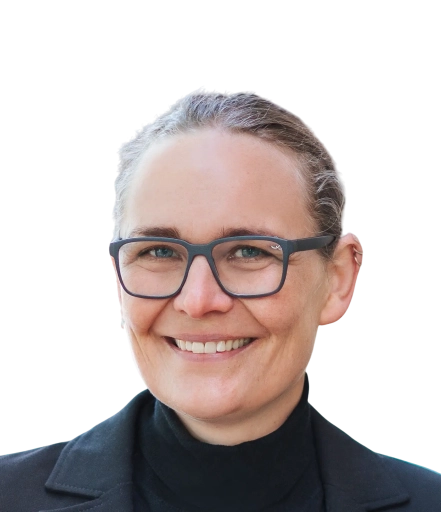
Last position:
Project Coordination for ERP System Implementation at BplusL Infra Log
Ensuring project coordination for the implementation of Microsoft Dynamics 365 Finance & Operations: stakeholder management, meeting coordination, open issue tracking, task prioritization and knowledge transfer between business units and IT.
Manfred B.
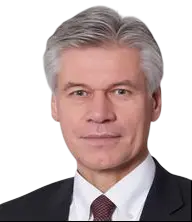
Last position:
Interim Manager Managing Director
- Optimization of business results and expansion of sales activities
- Responsible for personnel organization
- Introduction of a document management system (DMS)
- Introduction and optimization of the ERP, CMS and CRM landscape
- Introduction of digital signatures
- Increase in revenue, reduction in costs and increase in EBIT
Volker R.

Last position:
Architect and Senior System Administrator at International trading company
- Analysis and optimization of the VMware environment for operation in a KRITIS environment
- Planning and implementation of updates to the VMware and hardware environment in a KRITIS environment
- Set up Skyline Health Diagnostics
- Review of the existing documentation
- Training and onboarding of new internal employees
- Support with migration and upgrade projects
- Preparations for moving scripts in the virtualization environment to GitLab
- Ticket processing with Service.Now
Shishir V.

Last position:
IT Project Manager, Scrum Master, IT Application Manager at TATA Consultancy Services
Led end-to-end delivery of complex international customer-facing IT and system transformation projects across mobility, retail, life sciences, and product development domains.
Managed project opportunities and delivery initiatives from concept development, planning, execution, migration, validation, deployment, and final customer acceptance.
Acted as the primary point of contact for project stakeholders, ensuring alignment between customers, business units, suppliers, and delivery teams.
Ensured timely project execution through proactive monitoring of milestones, deliverables, dependencies, risks, and resource requirements.
Led and coordinated global cross-functional teams of 20+ members across multiple time zones. Served as the central coordination point for project activities, ensuring accountability, milestones, progress tracking, and timely resolution of issues across multiple stakeholders. Managed status reporting with all the stakeholders, providing clear and timely updates to ensure alignment on project goals.
Provided functional leadership, mentoring, coaching, and issue resolution support to project team members. Worked closely with senior leadership and executive stakeholders to define project charter and project scope, priorities, milestones, manage dependencies, success criteria and achieve project goals.
Collaborated closely with senior leadership, business stakeholders, suppliers, operations teams, and external partners to define project objectives and ensure successful execution.
Managed stakeholder communication through executive dashboards, KPIs, governance reviews, steering committee meetings, and project status reporting.
Anticipated business needs and provided effective technical solutions in a timely manner to improve business satisfaction.
Led and supported sub-project management structures, ensuring consistent execution, reporting, and escalation across complex initiatives.
Managed supplier relationships and service providers to ensure compliance with contractual obligations, service levels, timelines, and quality expectations.
Supported vendor selection processes, RFP evaluations, delivery governance, cost monitoring, and performance reviews.
Controlled project budgets, forecasts, resource allocations, and financial tracking to ensure delivery within approved constraints.
Scheduled workshops explaining the business requirement, prioritizing project goals and managing change.
Oversaw cloud migrations (Azure/ AWS), database migrations/upgrades, system upgrades, infrastructure & application modernization, data management, legacy decommissioning initiatives, AI solutioning, transition plan of 2000+ applications etc.
Coordinated execution, deployment, integration, commissioning, data migration and handover activities to ensure production readiness.
Led a cross-functional team proactively managing dependencies and resolving project issues to closure, while maintaining delivery timelines.
Proactively managed project risks, dependencies, issues, change requests, and escalations to ensure predictable project outcomes.
Ensured compliance with GxP, ITIL, corporate governance standards, validation requirements, and audit controls.
Led internal and external audit support activities, validation documentation, CAPA coordination, and regulatory compliance initiatives.
Drove process standardization, automation, and governance improvements across project delivery functions.
Led application rationalization initiatives resulting in the retirement of more than 50 legacy applications, improving operational efficiency and reducing maintenance costs.
Currently driving Generative AI initiatives to automate project documentation, reporting, knowledge management, and delivery processes.
Facilitated lessons learned workshops and implemented continuous improvement actions to enhance project execution effectiveness.
Peter S.
Last position:
SAP FI/CO/PSM Consulting at Federal authority
- SAP ERP/ECC, SAP S/4 Hana
- Analysis and documentation of SAP FI/CO, PSM, PSCD customizing
- Analysis, consulting and documentation of S/4 Hana apps for defining and executing statutory reports
- Clarification of the prerequisites for using S/4 Hana apps to define and execute statutory reports
- Analysis and documentation of customizing for in-house developments
- Consulting on the integration of SAP FI/CO as well as PSM, PSM-FM (Funds Management), Contract Accounts Receivable and Payable (PSCD)
- Consulting and documentation of customizing adjustments in SAP FI/CO, PSM, PSM-FM, PSCD when introducing new company codes and other organizational structures
- Consulting and documentation of necessary process adjustments
Discover over 15,000 top freelancers


Statistics of experts using Digital Archiving
Aggregated from the professional profiles of matched freelancers.

Experience
25 years

Position duration
2.3 years

Positions per freelancer
17

Top business areas
Information Technology, Project Management, Quality Assurance

Top industries
Information Technology, Professional Services, Banking and Finance

Certification focus areas
Information Technology, Project Management, Product Development

Bachelor's degree or higher
80%

Master's degree or higher
48%

Doctorate
10%

Certifications per freelancer
4

Most common languages
German, English, French

Speak two or more languages
93%
Based on our profile pool as of 16 Oct 2026.
Daily rate distribution
The chart shows how the daily rates of experts in this technology are distributed, based on recent contracts on our platform. Each bar covers a rate range — its height shows the share of experts charging within that range.
Average rates of experts using Digital Archiving
Rates are based on recent contracts and do not include FRATCH margin.

The average daily rate is the mean of all daily rates from recent contracts of comparable freelancers on our platform.
The median daily rate is the middle value of all daily rates — half of comparable freelancers charge less, half charge more. Unlike the average, it is barely affected by outliers.
Calculated based on our freelancers’ daily rates as of 16 Oct 2026. Actual rates may vary depending on seniority level, experience, skill specialization, project complexity, and engagement length.
Digital Archiving experts industry focus
See which industries our matched freelancers work in most often — every figure is calculated live from the freelancers on FRATCH.
- Information Technology (84%)
- Professional Services (61%)
- Banking and Finance (54%)
- Manufacturing (52%)
- Automotive (47%)
- Healthcare (38%)
- Government and Administration (37%)
- Transportation (35%)
Please note that freelancers can work across multiple industries, so percentages overlap.
About the technology
Purpose and scope
Digital archiving preserves digital records so people can find, verify and use them over time. It covers capture, classification, storage, retention, access and eventual disposition. Projects may include business documents, emails, images, audio, video, research data or public records.
Archive architecture
A reliable archive separates active collaboration from long-term preservation. Specialists define information models, metadata schemas, identifiers, storage tiers and retrieval paths. They also plan for format obsolescence, integrity checks, redundancy and clear ownership across the record lifecycle.
Ecosystem and tooling
Digital archiving can connect content repositories, document management systems, databases and object storage. Common work includes:
- Configuring metadata, taxonomy and full-text search
- Integrating scanners, capture tools and business applications
- Applying checksums, version control and audit trails
- Supporting PDF/A, TIFF, XML, JSON and media preservation
Tool choices depend on record types, governance needs and existing infrastructure. The term electronic archiving, or e-archiving, is often used for controlled retention and access workflows.
When expertise matters
Companies bring in freelance specialists during repository migrations, compliance initiatives, mergers and system replacements. They can also help when searches are slow, retention rules are unclear or teams cannot prove who changed a record. A focused engagement can turn scattered file shares and legacy databases into a governed archive.
Delivery and collaboration
Strong professionals begin with discovery: record inventories, stakeholder interviews, risk analysis and retention requirements. They produce information architecture, migration mappings, access models, operating procedures and test plans. Remote work suits analysis, configuration and documentation; on-site sessions may help with scanning operations, sensitive collections or hardware-dependent capture workflows.
Quality signals
Look for experience with digital preservation, records management and migration at the same time. Good specialists explain trade-offs between accessibility, storage cost, authenticity and confidentiality. They test metadata, permissions, search behavior, restore procedures and audit evidence before handover, then leave clear documentation for the people who will operate the archive.

Frequently asked questions
Key details about Digital Archiving, drawn from the questions we get asked most.

Digital Archiving is used to preserve records and keep them searchable, authentic and accessible over time. It supports documents, email, images, audiovisual files, research material and other content that must remain governed beyond its active working period.
Digital Archiving adds record context and lifecycle controls that ordinary cloud storage may not provide. It typically includes metadata, retention rules, controlled disposal, integrity checks, audit trails and preservation planning rather than simply keeping files available.
A strong Digital Archiving specialist often combines records management, information governance, metadata design and migration planning. Knowledge of document management systems, databases, object storage, OCR, identity management and data protection is also valuable.
The right Digital Archiving experience depends on the collection, integrations and preservation risks, not just the archive size. A simple repository configuration may need a focused specialist, while a legacy migration benefits from proven discovery, mapping, validation and change-management skills.
Digital Archiving work is often suitable for remote collaboration when systems, documentation and secure access are available. On-site involvement can still be useful for physical scanning workflows, restricted collections, local infrastructure or workshops with records owners.
Companies commonly engage a Digital Archiving freelancer before a repository migration, during a compliance program or when records are spread across uncontrolled locations. A specialist can assess the current state, define the target model and guide implementation without requiring a permanent internal role.
E-archiving is a common term for controlled electronic retention and access, and it overlaps strongly with Digital Archiving. In some contexts it emphasizes formal records workflows, while digital preservation may place more focus on long-term authenticity and file-format sustainability.
A capable Digital Archiving professional can explain metadata, retention, access, migration and preservation decisions in practical terms. Ask for evidence of tested search and retrieval, permission controls, integrity validation, clear documentation and a handover process that your team can operate.
The average hourly rate of freelancers who have used Digital Archiving in their recent projects is 103 €, which corresponds to a daily rate of about 822 € based on an 8-hour working day.
Of the freelancers who have used Digital Archiving in their recent projects, 80% hold at least a Bachelor's degree, 48% hold at least a Master's degree, and 10% hold a doctorate.
On average, freelancers who have used Digital Archiving in their recent projects have 25 years of professional experience, with a single engagement typically lasting around 2.3 years.
The most common languages among freelancers who have used Digital Archiving in their recent projects are German (99%), English (93%), and French (22%).
The most common industries among freelancers who have used Digital Archiving in their recent projects are Information Technology (84%), Professional Services (61%), and Banking and Finance (54%).
The most common business areas among freelancers who have used Digital Archiving in their recent projects are Information Technology (89%), Project Management (83%), and Quality Assurance (66%).
Main locations of FRATCH Experts, who have recently used Digital Archiving
Our freelancers and interim experts are at home all over Germany — available on-site in Berlin, Hamburg, Munich and every major business hub, or fully remote. Choose a city to discover matched specialists, local market insights and up-to-date availability.
 Berlin
  Hamburg
  Munich
  Frankfurt
  Dusseldorf
  Essen
Essen  Vienna
 Across Switzerland our specialists are active in Zurich, Geneva, Basel and Bern — working on-site or fully remote. Choose a city to discover matched specialists, local market insights and up-to-date availability.
 Zurich Geneva Basel Bern
 Countries:
Request a free demo
Get in touch with the FRATCH team and we will get back to you within 4 hours.
Would you rather directly get in touch?
We always have the time for a call or email!

Philipp Thomaschewski
FRATCH CEO

