


Microsoft Certified: Azure Fundamentals (AZ-900)
professionals in minutes with the power of AI from over 15,000 CVsValidate baseline cloud architecture, core Azure services, and governance models. FRATCH matches your team with vetted freelance specialists tailored to your infrastructure requirements.

Meet FRATCH Microsoft Certified: Azure Fundamentals Professionals
Tobias S.

Last position:
IT Project Manager at Public Sector
Data Center Migration
Public Sector, Berlin
Technical project manager for data center migration
- Led the six-member project group
- Project planning, schedule coordination, and resource management
- Coordination with departments and analysts
- Planned and managed migrations
- Reviewed and adapted migration processes
- Managed and developed change management processes
- Directed activities for internal and external clients toward defined goals
- Considered and implemented all quality assurance requirements
- Ensured project and results documentation
- Integrated the project into the company context
- Prepared status reports and coordinated with project portfolio management
Citrix, VMware, network technology and security (including firewalls, DMZ, IDS, IPS)
David J.

Last position:
External AI Solution Architecture Engagement via Zühlke
- Challenge: Assess the feasibility of voice support for patient intake, pre-qualification, routing and documentation.
- Action: Designed the speech recognition, agent control, documentation and integration architecture; assessed latency, language quality, privacy and regulatory requirements.
- Result: Built a working multilingual proof of concept in three days, demonstrating voice interaction, triage, suspected diagnosis and AI-supported documentation. This made the next technical and clinical review points visible. No production deployment is documented.
Kudret Y.

Last position:
Marketing Manager Migrolcard at Migrol AG
- Overall responsibility for the planning, execution, and monitoring of B2B and B2C marketing for Migrolcard, online and offline — from strategy through to execution.
- Budget ownership for all marketing activities, including performance tracking and KPI analysis, with clear recommendations for improvement.
- Managed campaigns, partners, and budgets to strengthen customer loyalty and card usage.
- Built an AI-supported lead workflow: qualified and enriched incoming LinkedIn leads, then automatically passed them to the relevant person for follow-up and quotation.
Ravindra K.

Last position:
Data Engineer (Team Lead) at OPTUM – UnitedHealth Group
- Lakehouse build: Designed and built the member & eligibility domain of an Azure Databricks healthcare lakehouse, ingesting SQL Server, file and REST/SFTP sources (JSON, CSV, XML, Parquet) via Azure Data Factory into ADLS Gen2.
- Medallion pipelines: Transformed data through bronze, silver and gold Delta Lake layers with PySpark and Spark SQL; used Delta Live Tables / Lakeflow with built-in expectations for declarative, quality-checked pipelines.
- Platform modernisation: Delivered a SQL Server-to-cloud platform: ADF → ADLS Gen2 → Databricks → dbt Core models → Snowflake → Power BI, replacing legacy reporting with governed analytics.
- Robust ETL: Built metadata-driven, idempotent full, incremental and watermark-driven loads with schema evolution and failure-state handling, improving reliability and re-runnability.
- Data modelling: Designed Kimball star schemas with SCD Type 1 & 2 dimensions; tuned slow queries and pipelines using execution plans.
- Governance & security: Applied Unity Catalog RBAC, lineage and audit logging, with Azure Key Vault secrets and managed identities, to meet HIPAA and GDPR requirements.
- Leadership & mentoring: Led a 6-person team (2 data engineers, 2 analysts, BI developer, QA); mentored engineers, set delivery standards and coordinated with international stakeholders.
- Delivery & AI-assisted work: Ran CI/CD and work tracking in Azure DevOps; built Power BI semantic models with DAX and RLS; used Genie Code, Claude and Copilot to accelerate PySpark/SQL development, DAX and documentation.
Walter S.

Last position:
Territory Service Manager Red Hat Consulting at Major German Engineering and Technology Multinational Company
- Migrating from VMware to OpenShift Virtualization, 40+ workstreams / projects in parallel (Small- to Medium Sized VM Operators / Critical Factory Workload Owners / Large-Scale Data Center Operators)
Pedro C.

Last position:
Senior Project Manager (previously Cloud Project Manager) at IBM Client Innovation Center (formerly Nordcloud)
- Led a migration team of several squads for a Public Sector client (on-prem to AWS & Azure), incl. lift-and-shift and database modernisation to PostgreSQL.
- Led AWS/Azure discovery & assessment of 80+ applications and 400+ environments, delivering the wave plan.
Sylvia M.

Last position:
Volunteer work at Landeshauptstadt München Sozialreferat
- Support migrants with visits to authorities or their search for housing
- Help children or adults with learning
- Create application documents or help find an apprenticeship
Fabio G.

Last position:
IT Architect, Requirements Analyst and Consultant at CANCOM
- Supports CANCOM customers in migrating legacy on-prem systems to Microsoft Fabric and Microsoft Foundry
- Takes over and stabilizes existing solutions after a short handover
- Business analysis and requirements engineering for migration to a new cloud environment
- Optimization of machine learning models for feature extraction and customer profiling
- Ensures data protection and compliance
- Leads the migration of on-prem systems to Microsoft Fabric
- Designs new AI platforms for clients
- Tests the integration of chatbots for document intelligence with Microsoft Foundry, including requirements analysis, implementation, validation, and client communication
Banashankari N.

Last position:
Senior IT Project Manager, Data and Integration Platform at MCH Group, Group IT
Led implementation of an Azure cloud-based, event-driven enterprise integration platform connecting Salesforce, Momentus(event) and ERP applications. Reduced overall costs by 60%, lowered operational errors to under 1%, and delivered on time.
- Led the full project lifecycle from initiation to delivery using agile and hybrid methods - platform vision, feasibility, technical blueprint, architecture, implementation, integration, testing, rollout and business adoption.
- Built the engineering team from the ground up, leading teams across Switzerland, Bulgaria and India using Scrum and Kanban; established Jira, Confluence, Asana and SharePoint for delivery and reporting.
- Established and managed frequent steering meetings, reporting that gave stakeholders transparency and drove key decision-making.
Kurt S.
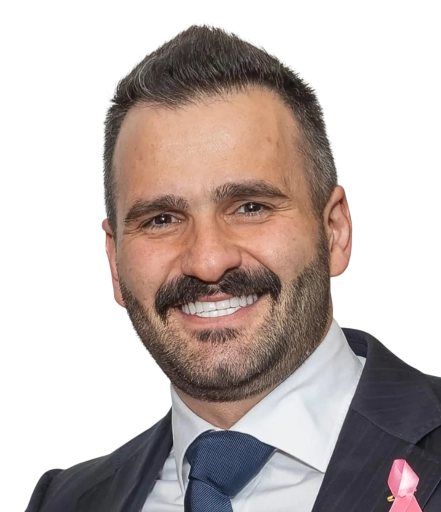
Last position:
Circle Lead Portfolio & Service Management at LINK digital GmbH
Interim mandate to define the IT Service Strategy 2026, stabilize leadership and organizational structures, and prepare the platform and service organization for scaling. Focus on management clarity, stakeholder alignment and customer orientation in a volatile environment.
Strongly technical predecessor role with limited leadership and management impact
High turnover and increasing use of junior consultants
Missing SLAs with key service providers (including BTC, Bechtle) as well as missing KPI and reporting structures
Missing strategic framework and inconsistent communication with stakeholders
Overall responsibility for the organizational unit, budget, providers and strategic prioritization
Leadership of an organization staffed predominantly with external consultants (including PwC, Wavestone, Accenture)
Responsibility for leadership stabilization and management effectiveness
Close cooperation with executive management and the advisory board as well as with key stakeholders in a sensitive environment
Development and communication of a clear IT Strategy 2026 as a framework for management and teams
Restoration of leadership focus and decision-making clarity in a fragmented organization
Noticeable improvement in how leadership and communication were perceived by stakeholders
Introduction of a clear prioritization logic to reduce operational friction
Initial stabilization of the organization within a deliberately short interim period
Tech & Methods: Azure Cloud, Service Governance, Stakeholder Management, Provider Steering, Leadership Frameworks
Johanna U.

Last position:
Manager at Deloitte Consulting GmbH
- Technology consulting and project management with a focus on SAP ICMR and SAP Group Reporting
Viktors D.

Last position:
IT Consultant at Dundurs Consulting GmbH
- Supporting the implementation of a digitalization project in the area of nutrient balancing
- Analyzing complex business processes and interfaces to surrounding systems (data flows, dependencies)
- Designing processes for data retrieval, storage, and sharing, including plausibility checks and validation logic
- Creating and prioritizing user stories and guiding developers in agile sprints (clarifying acceptance criteria, conducting technical reviews)
- Supporting the Product Owner in defining functional and technical requirements
- Participating in the rollout process and delivering training for stakeholders
- Documenting processes, requirements, and interfaces (including records/changes for releases)
Carlbandro E.

Last position:
IT Lecturer / Coach at Freelance
As a freelance IT lecturer and IT coach, I specialize in teaching individuals concepts like Cloud Computing, Business Intelligence, Python Programming and Agile Frameworks. My goal is to simplify complex technical concepts into practical, actionable knowledge. Through my extensive experience as an IT consultant in various sectors and roles I know about the importance of IT training - for companies and employees alike.
Ronald K.

Last position:
Owner at RONCON IT-Consulting GmbH
Kerstin S.

Last position:
Project management at IT service provider in the SAP area for energy companies
- Project management for the SAP release upgrade of a large multi-client environment (IT service provider in the SAP area for energy companies)
- Setting up a release process for future operational workflows
- Cutover planning
- Building a test management process with the involved clients
Discover over 15,000 top freelancers


Microsoft Certified: Azure Fundamentals Professionals statistics
Aggregated from the professional profiles of matched freelancers.

Experience
17 years

Position duration
2 years

Positions per freelancer
13

Top business areas
Information Technology, Product Development, Project Management

Top industries
Information Technology, Banking and Finance, Manufacturing

Certification focus areas
Information Technology, Project Management, Business Intelligence

Bachelor's degree or higher
90%

Master's degree or higher
61%

Doctorate
6%

Certifications per freelancer
9

Most common languages
German, English, French

Speak two or more languages
99%
Based on our profile pool as of 20 Nov 2026.
Daily rate distribution
The chart shows how the daily rates of experts holding this certification are distributed, based on recent contracts on our platform. Each bar covers a rate range — its height shows the share of experts charging within that range.
Average rates for Microsoft Certified: Azure Fundamentals Professionals
Rates are based on recent contracts and do not include FRATCH margin.

The average daily rate is the mean of all daily rates from recent contracts of comparable freelancers on our platform.
The median daily rate is the middle value of all daily rates — half of comparable freelancers charge less, half charge more. Unlike the average, it is barely affected by outliers.
Calculated based on our freelancers’ daily rates as of 20 Nov 2026. Actual rates may vary depending on seniority level, experience, skill specialization, project complexity, and engagement length.
Microsoft Certified: Azure Fundamentals Professionals experts industry focus
See which industries our matched freelancers work in most often — every figure is calculated live from the freelancers on FRATCH.
- Information Technology (96%)
- Banking and Finance (59%)
- Manufacturing (50%)
- Professional Services (44%)
- Automotive (40%)
- Healthcare (38%)
- Retail (31%)
- Telecommunication (31%)
Please note that freelancers can work across multiple industries, so percentages overlap.
About the certification

Foundation of Microsoft Cloud Capabilities
The credential confirms foundational understanding of cloud services and how Microsoft Azure delivers them. It demonstrates that an independent professional understands cloud architecture models, high availability principles, compute options, and storage configurations across modern enterprise environments.
Core Knowledge Areas Validated by AZ-900
Holders of the credential demonstrate validated proficiency across critical cloud management disciplines:
- Cloud computing concepts including IaaS, PaaS, SaaS, and hybrid models
- Core Azure architectural components such as regions, availability zones, and resource groups
- Fundamental Azure compute, networking, and storage services
- Security posture management, identity access with Microsoft Entra ID, and network security groups
- Cost management tools, governance policies, resource tagging, and compliance frameworks
Typical Professional Profiles
This accreditation is common among technical project managers, business analysts, solutions consultants, and junior cloud engineers. It provides assurance that non-engineering team members and cross-functional consultants speak the exact technical language required to coordinate with infrastructure leads, systems administrators, and enterprise architects.
Business Value for Client Projects
Engaging a freelancer with this background eliminates communication gaps during cloud migrations, multi-cloud strategy development, and IT modernization initiatives. These specialists understand how Azure services map directly to business objectives, helping prevent cost overruns, architectural misalignments, and compliance risks from project kickoff.

Frequently asked questions
Need clarity? These are the questions we hear most often about Microsoft Certified: Azure Fundamentals Professionals.

The Microsoft Certified: Azure Fundamentals (AZ-900) credential validates a clear comprehension of cloud computing concepts, foundational architectural constructs, and core Azure services. It also tests knowledge of security, privacy, identity management, and Azure cost management strategies.
The Azure Fundamentals credential serves as a broad baseline rather than an implementation-heavy credential. Unlike role-based options like Azure Administrator Associate or Azure Solutions Architect Expert, it emphasizes theoretical clarity, operational concepts, and core architecture over hands-on script deployment and advanced CLI management.
Consultants with AZ-900 credentials bridge the gap between technical teams and executive stakeholders. They understand the financial and technical implications of cloud architectures, ensuring realistic scoping during migrations, vendor evaluations, and digital transformation initiatives.
There are no formal prerequisites for the Microsoft Certified: Azure Fundamentals examination. Candidates generally benefit from foundational exposure to general information technology concepts and basic internet networking principles before sitting for the test.
Unlike Microsoft role-based certifications that require periodic renewal assessments, the AZ-900 certification does not expire once earned. Microsoft considers foundational certifications permanent validations of basic cloud literacy.
Freelancers holding the Azure Fundamentals certification excel in cloud adoption planning, IT procurement consulting, business analysis, and governance alignment. They are ideal for early-stage discovery phases where strategic alignment matters as much as technical implementation.
No, an expert with Microsoft Certified: Azure Fundamentals should not be engaged for complex hands-on production engineering or deep security hardening. They are suited for project management, requirements gathering, and strategic oversight alongside dedicated engineers.
The AZ-900 credential covers the same conceptual baseline as AWS Certified Cloud Practitioner or Google Cloud Digital Leader, but specifically focuses on Microsoft ecosystems such as Microsoft Entra ID, Azure Resource Manager, and native Microsoft compliance tools.
The average hourly rate for freelancers with Microsoft Certified: Azure Fundamentals Professionals is 102 €, which corresponds to a daily rate of about 814 € based on an 8-hour working day.
Of the freelancers with Microsoft Certified: Azure Fundamentals Professionals, 90% hold at least a Bachelor's degree, 61% hold at least a Master's degree, and 6% hold a doctorate.
On average, freelancers with Microsoft Certified: Azure Fundamentals Professionals have 17 years of professional experience, with a single engagement typically lasting around 2 years.
The most common languages among freelancers with Microsoft Certified: Azure Fundamentals Professionals are German (100%), English (99%), and French (19%).
The most common industries among freelancers with Microsoft Certified: Azure Fundamentals Professionals are Information Technology (96%), Banking and Finance (59%), and Manufacturing (50%).
The most common business areas among freelancers with Microsoft Certified: Azure Fundamentals Professionals are Information Technology (98%), Product Development (73%), and Project Management (66%).
FRATCH Microsoft Certified: Azure Fundamentals Professionals main locations
Our freelancers and interim experts are at home all over Germany — available on-site in Berlin, Hamburg, Munich and every major business hub, or fully remote. Choose a city to discover matched specialists, local market insights and up-to-date availability.
 Munich
 Frankfurt
 Vienna
Across Switzerland our specialists are active in Zurich, Geneva, Basel and Bern — working on-site or fully remote. Choose a city to discover matched specialists, local market insights and up-to-date availability.
 Zurich Geneva Basel Bern
Countries:
Request a free demo
Get in touch with the FRATCH team and we will get back to you within 4 hours.
Would you rather directly get in touch?
We always have the time for a call or email!

Philipp Thomaschewski
FRATCH CEO

