


Robotic Process Automation Experts
matched in minutes with vetted, available freelancers and the power of AIHire experts who automate repetitive workflows across finance, customer operations and shared services, using tools such as UiPath, Automation Anywhere and Microsoft Power Automate. FRATCH finds the right vetted, available freelancer through fast, precise AI matching.

Meet FRATCH Experts who have recently used Robotic Process Automation
Fadi S.

Last position:
AI-Engineer at Recruitment Agency
- Design, development, and productive rollout of an Enterprise HR Copilot based on Microsoft Copilot Studio to automate internal HR processes
- Development of an AI-supported assistant for answering employee inquiries based on a SharePoint knowledge base and internal company HR documentation
- Integration of the Copilot into Microsoft Teams, including welcome logic, user guidance, and role-based routing
- Automation of HR processes and approval workflows with Microsoft Power Automate to reduce manual processing steps
- Development of realistic HR documents and response templates with Azure OpenAI, taking business requirements and consistent company policies into account
- Implementation of prompt strategies, knowledge management, and response optimization to improve response quality and user acceptance
- Close collaboration with business departments to analyze requirements and integrate the AI solution into existing company processes
Technologies:
Microsoft Copilot Studio, Microsoft Teams, Azure OpenAI, SharePoint, Power Automate, Power Platform, Microsoft 365, Prompt Engineering, Workflow Automation
Ole H.

Last position:
Senior IT Project Manager at Rail-Flow GmbH
The client operates a SaaS platform for managing rail and intermodal transport (Rail-Flow Transport Management Platform).
For two of its customers, it was looking for a 3-month project management replacement. Both customers offer rail and intermodal transport services. Implementation progress differs: one customer is already live and wanted its Phase 2 enhancements implemented; the other customer is implementing its MVP and entering an intensive testing phase.
As part of the assignment, project management was taken over, including management of the internal development team (offshore Turkey).
- Took over complete project management for 2 customer projects, including the roles of Product Owner and Co-Scrum Master
- Managed agile implementation teams consisting of business analysts, implementation consultants, developers (offshore) and QA staff
- Ensured compliance with and further development of project governance
- Planning and rollout management: creation and maintenance of project and rollout plans as well as coordination of role assignments with the client’s management
- Requirements and change management: management of contractual requirements, bugs and changes
- Customer and project communication: organization and moderation of status meetings and steering committees
- Identification of project risks, initiation of countermeasures and escalation
- Ensured correct and timely invoicing for project services together with Finance
Methods: Scheduling (forward- and backward-based), including milestone planning, structured interviews, multi-project management (in English)
Tools / Technologies: Jira, Confluence / Atlas, Claude (Skills, Artifacts), MS Outlook
Jens H.
Last position:
Interim CTO (occasional assignments) at Fujitsu / FSAS
Stabilization of an Azure/.NET landscape in live operation.
- Architecture, DevOps, and operational readiness; technical decisions under time pressure
- Azure DevOps, monitoring, ETL/ELT, cloud security, FinOps, and data-mesh-related topics
Technologies: Azure DevOps, .NET, CI/CD, monitoring, FinOps
Artur S.
Last position:
Senior Marketing & Transformation Consultant at Stadtwerke Lübeck
- Marketing consulting for the EDL@Home and Commodity (electricity & gas) business areas
- Development of data-driven marketing and sales strategies
- Definition and expansion of key channels (Web, App, Portal, Social, Paid, Sales Partners)
- Target, annual and budget planning for the EDL@Home business area
- Definition of business requirements for marketing platforms
- KPI-based performance management
- Development of dashboards to measure success
- Performance reviews with management
- Management of external service providers
- Stakeholder management between Marketing, Sales, IT, Customer Service and Management
Björn A.
Last position:
Project Manager at DB InfraGO
Elevator emergency call reorganization project: Project to evaluate and define a new technical solution for connecting elevator emergency calls for all facilities of DB InfraGO passenger stations.
Objectives: Secure, redundant connection of all locations across Germany. Definition of the technical solution, documentation, subject-matter support and management of specialist and line organizations.
Identification and commissioning of technical solutions.
Management of documentation and approval of the technical solution in DB regulations.
Definition and tracking of the roadmap for describing the solution.
Preparation of a rollout plan to avoid shutdowns.
Coordination and implementation of decision proposals for steering committees.
Communication of the solution to all committees and regional areas.
Enrique C.

Last position:
AI – Automation Senior Analyst/ Developer at Heinz & DF
- Designed and implemented comprehensive business processes, leading cross-functional teams to increase customer satisfaction and reduce costs
- Provided training and ensured benefits realization through end-to-end workflow development
- Contributed to the “Generate Insights from Hidden Knowledge” initiative by developing and deploying AI-driven workflow automation solutions using Large Language Models (LLMs) and low-code/no-code platforms
- Designed multi-agentic workflows integrating OpenAI, LangChain, Haystack, and n8n to automate document review, data extraction, and knowledge summarization processes
- Led the orchestration of AI and automation frameworks to enhance medical and business review processes, ensuring compliance, explainability, and transparency
- Collaborated cross-functionally to translate complex business requirements into AI-enabled automation prototypes aligned with enterprise compliance and data privacy standards
- Applied Power Automate, UiPath, Nintex, and ServiceNow to deliver rapid, scalable, and secure automation solutions within validated operational environments
- Leveraged Lean Six Sigma, Agile/SAFe, and ITIL principles to structure AI development pipelines ensuring measurable impact, auditability, and sustainable governance
- Managed cross-departmental collaboration to standardize workflows, reducing errors and enhancing task management. Established governance frameworks to ensure the sustainability of automation solutions
Rafael D.
Last position:
Project Lead Automation at Textile Industry
Analysis and optimization of end-to-end processes in various business areas such as sales, procurement, order processing, and logistics. Redesign of the ERP system. Identification of optimization potential, especially in areas with media discontinuities and manual activities, as well as creation of a prioritized transformation roadmap with clear business cases and implementation recommendations. Management of automation initiatives. RPA at the production site in China. Evaluation and introduction of relevant AI use cases, as well as building basic AI capabilities within the organization. Training internal project team members and supporting them throughout the transformation process to develop a culture of continuous improvement. Close collaboration with IT and external implementation partners, with reporting to senior management.
Main responsibilities and achievements:
- Analysis of business processes and design of automated processes
- Training and support for employees in China and Germany
- 20% cost savings in logistics
- Regular status reports to senior management
Michael R.

Last position:
Project Manager at Payone GmbH (Worldline AG)
- Objective/Motivation: PAYONE urgently needs a 360° view of its customers. So far, PAYONE has had no company-wide master data strategy. It is not possible to identify customers across all relevant systems.
The organization is to be enabled to identify customers across all relevant systems. Establishing the basis for master data management at PAYONE
- Challenge: Due to company acquisitions, the system landscape is very heterogeneous. The company is highly dynamic and burdened with many system harmonization and integration projects, meaning that resource bottlenecks and changes in project priorities repeatedly create an almost impossible task.
Due to BaFin findings, the project has a central task and role. The first focus is the migration of all customers, including their AML/KYC data, from the master data backend systems to Salesforce. This is intended to resolve one of the largest findings and establish the corresponding ODD/EDD processes.
In addition, customer data must be harmonized in Salesforce. Previous migrations resulted in duplicate customer records in some cases. The aim is therefore to maintain only one customer in Salesforce and, using the relevant information from the backend systems, also be able to identify which products the customer uses and in which processing systems the customer obtains PAYONE services.
Project: ONE Customer
Budget: €1.5 million
Team: 10/30 employees (full-time/part-time); 4 vendors/providers
Integration: 8 (subsystems/interfaces)
Applications: Salesforce; SAP S4/HANA; in-house developments
Tools: MS Office; Jira, Confluence, SharePoint
Methods: Hands-on; Agile (SAFe); Prince2
Nick F.
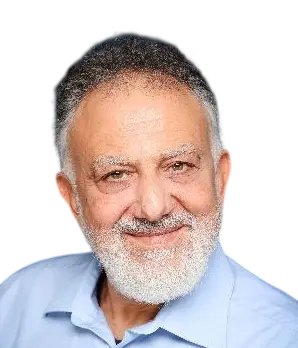
Last position:
SAP Senior managing partner at INXAP Switzerland
Leading public Cloud Projects hands on. Develop the German market for SAP consulting company Inxap focused on edge technologies.
- Built and expanded INXAP's SAP consulting presence in the German market, focusing on AI, automation, IoT, and next-generation financial process technologies.
- Advised CIOs, CFOs, and IT leadership teams on SAP strategy, digital transformation, and Center of Excellence (CoE) operating models.
- Led executive-level engagements, shaping solution roadmaps and driving high-value SAP S/4HANA, SAP Public Cloud and financial process automation initiatives.
- Developed and negotiated strategic deals, ensuring alignment with corporate IT priorities and delivering measurable business outcomes.
- Positioned INXAP as a trusted partner for edge technologies by translating complex innovations into actionable enterprise use cases.
- Built relationships with key stakeholders across corporate IT, enabling long-term partnerships and repeat business.
- Identified market opportunities, crafted go-to-market strategies, and represented INXAP in executive discussions with German enterprises.
- Coordinated cross-border collaboration with Swiss leadership to align offerings, delivery models, and client acquisition strategies.
Florian B.

Last position:
Project Management / PMO Consultant
PMO & Project Organization Blueprint for Restructuring
Renewable Energy / Solar Equipment
Technologies / Methods: PMO setup, KPI tracking, project organization, Jira, Confluence
- Developed measures to improve management control during a restruct...
Kai E.

Last position:
CONSULTANT & INTERIM MANAGER at EHLERS Advisory
Independent Consultant
- Advisory focus: E-Commerce, Digitalization, Automation, Pricing, Assortment & Merchandising, Platform Strategy
- Industries: Retail & Consumer Goods
- Subject Matter Expert for leading management consultancies
- Ongoing executi...
Yaroslav S.

Last position:
Senior Low-Code Consultant at Freelancer
Structured analysis and evaluation of business processes
Gathering, documenting, and prioritizing requirements
Creating business-friendly and technically executable process models
Use of Camunda tools
Deriving requirements and interfaces from BPMN diagrams
Coordination with stakeholders and business units
Translating business requirements into technical solution designs
Implementing efficient and tailored applications
Systematic collection, analysis, and documentation of requirements
Prioritizing and validating requirements in close collaboration with stakeholders
Alignment between business and development to ensure shared objectives
Creating use cases, user stories, and acceptance criteria
Continuous requirements and change management throughout the project lifecycle
Define project goals and create project plans
Delegate tasks and monitor project progress
Monitor budgets and inform stakeholders
Mendix: Architecture, development, and maintenance of custom applications (Microflows, Domain Model, Security, XPath)
Modeling Mendix workflows for process optimization
Develop scalable apps with Mendix including REST/SOAP integration with SAP, SQL, Azure & SharePoint
UI design for Mendix using Atlas UI, Fluent UI, HTML, CSS, JavaScript
Develop web & mobile apps with Mendix using agile methods (Scrum, Kanban)
Implement business logic with Mendix Microflows and Nanoflows
Performance optimization and architecture improvements for Mendix applications
Conduct Mendix training
Create technical documentation and best practices for Mendix
Coaching and mentoring for low-code development with Mendix
Hoa Josef N.

Last position:
AI Architect and Enabler at Inhouse / AI Business
Technologies: n8n, Notion, OpenAI API, Claude, MS AI Foundry, MS CoPilot Studio, MS CoPilot, LLM, Node.js, Vercel, LangGraph, PostgreSQL, pgEdge, pgvector, Docker, LangChain, Ollama, Open WebUI
- Continuous evaluation and prioritization of internal automation needs
- ~20 AI agents in active use: research, content pipelines, document processing
- 5 n8n workflows for automated data and process control
- Architecture built on the same principles as in customer projects: state management, event-driven orchestration, API integration
- Ongoing operation and further development
Michael S.
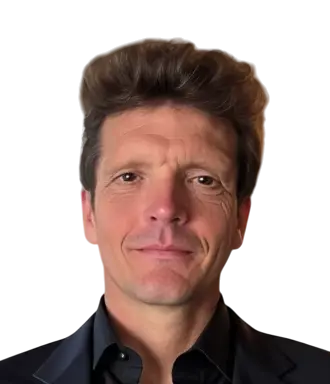
Last position:
Project Manager – Business Analyst – Demand Manager at Rheinmetall AG
- Gathering, evaluating, and prioritizing strategic demands from the Electronics and Power Systems business units
- Supporting the digitalization of business processes for Electronics and Power Systems
- Process digitalization and IT architecture planning, including network infrastructure
- Reviewing demands with regard to existing solutions in coordination with IT and business departments
- Designing and implementing possible business architectures
- Planning implementation projects, in particular supporting import control through the introduction of SAP GTS
- Acting as the interface between business departments and IT
- Creating and implementing concepts for IT security, compliance, data protection, and the protection of classified information
- Conducting workshops, process analyses, and training sessions
- Stakeholder management and change management
- Technologies used: SAP GTS, SAP MM, SAP SD, MS Office 2016, MS SharePoint, ServiceNow, SharePoint
Ralph B.

Last position:
Senior Solution Architect Cloud, Data & AI at Sogeti Deutschland GmbH – Part of Capgemini
Evaluation, structuring, and handling of complex tenders for Sogeti as well as as part of larger Capgemini proposals. Focus on analyzing demanding customer requirements, deriving solid solution concepts, and translating technical, functional, and commercial aspects into convincing proposal storylines. In close alignment with delivery, sales, account, and bid teams, scalable and implementable Quality Engineering solutions were designed, evaluated, and prepared for customer decisions. This included selecting suitable role profiles and right-shore staffing options, assessing available skills and capacities, as well as the commercial preparation of reliable price and effort calculations.
A special focus was on bid management and handling service proposals (RfP/RfI analysis), solution design, presentation and management materials, as well as the functional and technical evaluation of customer requirements in the context of Quality Engineering & Testing, agentic AI-supported test automation using modern quality assurance approaches.
SOGETI projects:
- BMW: Development of a test strategy including test management, test automation, and provision of a rightshore delivery model.
- GEA: SAP Business Assurance and Quality Engineering for an SAP rollout including test governance, test automation, AI agent layer, and hypercare concept.
- AIXTRON: SAP S/4HANA Cloud migration explore phase with QA assessment, testable blueprint structure, staffing, and scalable Sogeti delivery approach.
- Deutsche Glasfaser: Quality Engineering & Testing for DG development squads, including ServiceNow and Salesforce, testing automation and governance.
- ERGO: RfP/proposal support for Managed Service Test Data Provisioning as well as a Jira/Atlassian rollout with assessment, target picture, MVP, rollout, and governance.
- Munich Re: Proposal and solution design in the insurance environment with a focus on test data provisioning, process analysis, compliance, and automation.
- BWI: Project/proposal context in the public/IT service environment with reference to Quality Engineering, Test Factory, and digital transformation support.
- Rolls-Royce: Proposal/project support in the Sogeti context with a focus on structured RfP analysis, solution design, and customer-oriented proposal preparation.
Discover over 15,000 top freelancers


Statistics of experts using Robotic Process Automation
Aggregated from the professional profiles of matched freelancers.

Experience
18 years

Position duration
2.1 years

Positions per freelancer
10

Top business areas
Information Technology, Project Management, Product Development

Top industries
Information Technology, Professional Services, Banking and Finance

Certification focus areas
Information Technology, Project Management, Quality Assurance

Bachelor's degree or higher
89%

Master's degree or higher
52%

Doctorate
5%

Certifications per freelancer
4

Most common languages
German, English, Spanish

Speak two or more languages
97%
Based on our profile pool as of 16 Oct 2026.
Daily rate distribution
The chart shows how the daily rates of experts in this technology are distributed, based on recent contracts on our platform. Each bar covers a rate range — its height shows the share of experts charging within that range.
Average rates of experts using Robotic Process Automation
Rates are based on recent contracts and do not include FRATCH margin.

The average daily rate is the mean of all daily rates from recent contracts of comparable freelancers on our platform.
The median daily rate is the middle value of all daily rates — half of comparable freelancers charge less, half charge more. Unlike the average, it is barely affected by outliers.
Calculated based on our freelancers’ daily rates as of 16 Oct 2026. Actual rates may vary depending on seniority level, experience, skill specialization, project complexity, and engagement length.
Robotic Process Automation experts industry focus
See which industries our matched freelancers work in most often — every figure is calculated live from the freelancers on FRATCH.
- Information Technology (81%)
- Professional Services (68%)
- Banking and Finance (55%)
- Manufacturing (41%)
- Retail (33%)
- Insurance (27%)
- Transportation (27%)
- Telecommunication (25%)
Please note that freelancers can work across multiple industries, so percentages overlap.
About the technology
What RPA does
Robotic Process Automation, or RPA, uses software robots to perform repeatable, rule-based tasks across business applications. These digital workers can read structured data, enter records, move files, trigger workflows and reconcile information without changing the underlying systems. RPA is useful where work is stable, high-volume and governed by clear rules.
Common automation work
RPA specialists automate processes that cross spreadsheets, portals, email inboxes and enterprise software. Typical assignments include:
- Invoice capture, validation and payment preparation
- Customer or employee record updates across systems
- Report generation, data checks and scheduled distribution
- Claims, order and service-request processing
- Legacy application workflows without a usable API
Tools and ecosystem
The ecosystem includes UiPath, Automation Anywhere, Blue Prism and Microsoft Power Automate. Effective delivery also involves OCR, document understanding, APIs, web automation, queues, credential vaults, process mining and orchestration. Specialists may connect RPA with ERP, CRM, ticketing, finance and human-resources systems while respecting access controls and audit needs.
When companies bring experts in
Companies often need freelance expertise when an automation program is starting, an internal team is overloaded or a critical workflow must be stabilized. A specialist can assess process suitability, map exceptions, define controls and create a maintainable delivery plan. External support is also valuable during migrations between RPA tools or after a merger creates duplicated processes.
Reliable delivery signals
Strong RPA professionals do more than record clicks. They distinguish suitable automation candidates from processes that need redesign, handle exceptions explicitly and build reusable components. They document business rules, logging, recovery paths and credential handling, then test against realistic data and operational scenarios. Clear handover materials help internal teams monitor and extend the automation.
Collaboration and outcomes
RPA work sits between business operations, IT and compliance. Good specialists can translate a manual procedure into a process map, challenge unnecessary steps and explain limitations to non-technical stakeholders. Deliverables may include a feasibility assessment, process design, bot workflows, test evidence, monitoring guidance and training. Remote collaboration works well when process owners can provide secure access, sample data and timely decisions.

Frequently asked questions
Curious about Robotic Process Automation? Here are the answers that come up again and again.

Robotic Process Automation is used to automate repetitive, rule-based work across applications that people normally operate through screens. Common examples include invoice handling, customer data updates, reconciliations, report preparation and case routing. It is most effective when the process has stable rules and predictable inputs.
RPA interacts with existing interfaces, which can make it useful when APIs or integration options are limited. Traditional integrations are often more robust for high-volume, real-time data exchange and long-term system connectivity. A strong specialist evaluates both options instead of treating automation as the default answer.
A strong UiPath or other RPA specialist may also work with Automation Anywhere, Blue Prism or Microsoft Power Automate. Useful adjacent skills include process mapping, OCR, APIs, SQL, document understanding, queues, identity controls and test automation. Knowledge of the business process is as important as tool proficiency.
Robotic Process Automation projects need experience matched to their scope, risk and system landscape rather than a fixed career duration. A simple attended workflow may need focused implementation skills, while unattended automations across finance or customer operations require stronger architecture, exception handling and governance. Ask for evidence of comparable processes and documented production handover.
RPA work can often be delivered remotely through secure development environments, controlled credentials and screen-sharing sessions with process owners. On-site access may still help with restricted systems, workshops or complex operational discovery. Agree on data handling, environment access, communication windows and approval responsibilities before work starts.
Choose an RPA specialist who can explain why a process is suitable, not just demonstrate a tool. Review examples of exception handling, logging, security controls, testing and support documentation. A practical discovery conversation should produce clear assumptions, risks and measurable acceptance criteria.
RPA follows defined rules and usually works best with structured, predictable inputs. Artificial intelligence and machine learning can interpret unstructured documents, classify content or make predictions, and they may complement an automation workflow. The right design combines these capabilities only where they solve a real process problem.
Before starting Robotic Process Automation work, clarify the process owner, systems involved, input formats, exception paths, security model and target operating environment. Freelancers should also confirm who approves business rules, who provides test data and who owns support after release. These details prevent a bot from reproducing an unclear or unstable process.
The average hourly rate of freelancers who have used Robotic Process Automation in their recent projects is 110 €, which corresponds to a daily rate of about 879 € based on an 8-hour working day.
Of the freelancers who have used Robotic Process Automation in their recent projects, 89% hold at least a Bachelor's degree, 52% hold at least a Master's degree, and 5% hold a doctorate.
On average, freelancers who have used Robotic Process Automation in their recent projects have 18 years of professional experience, with a single engagement typically lasting around 2.1 years.
The most common languages among freelancers who have used Robotic Process Automation in their recent projects are German (99%), English (99%), and Spanish (16%).
The most common industries among freelancers who have used Robotic Process Automation in their recent projects are Information Technology (81%), Professional Services (68%), and Banking and Finance (55%).
The most common business areas among freelancers who have used Robotic Process Automation in their recent projects are Information Technology (92%), Project Management (78%), and Product Development (64%).
Main locations of FRATCH Experts, who have recently used Robotic Process Automation
Our freelancers and interim experts are at home all over Germany — available on-site in Berlin, Hamburg, Munich and every major business hub, or fully remote. Choose a city to discover matched specialists, local market insights and up-to-date availability.
 Berlin
  Hamburg
  Munich
  Frankfurt
 In Austria our freelancers and interim experts support companies from Vienna to Graz — on-site where your project needs them, or fully remote. Choose a city to discover matched specialists, local market insights and up-to-date availability.
 Vienna Graz
 Across Switzerland our specialists are active in Zurich, Geneva, Basel and Bern — working on-site or fully remote. Choose a city to discover matched specialists, local market insights and up-to-date availability.
Zurich Geneva Basel Bern Countries:
Request a free demo
Get in touch with the FRATCH team and we will get back to you within 4 hours.
Would you rather directly get in touch?
We always have the time for a call or email!

Philipp Thomaschewski
FRATCH CEO

