


Managing Successful Programmes (MSP)
professionals in Germany, matched in minutes from 15,000 CVs with the power of AI.MSP stands for strong programme governance, clear benefits realisation, and coordinated change across linked projects. It helps keep direction, decision-making, and stakeholder alignment under control in complex transformations. Find vetted freelancers holding Managing Successful Programmes (MSP) fast and precisely.

Meet FRATCH Managing Successful Programmes (MSP) in Germany
Thomas K.
Last position:
Advisor - Programmes & Operational Excellence at P2P.org
Non-custodial staking and digital-asset infrastructure for Web3 wallets, exchanges, and institutional custodians
Advised the COO on delivery for staking and digital-asset infrastructure serving institutional custodians, exchanges and wallets across regulated markets.
- Ran the company-wide KPI and OKR process across the organisation, raising company-wide OKR achievement from 50% to 65%.
- Designed and implemented OKR/KPI frameworks enabling structured quarterly delivery cycles and executive-level execution visibility.
- Defined, documented and improved the P2P governance and operating processes across programmes and operations.
Maciej S.
Last position:
Product Owner at Bundesagentur für Arbeit
- As part of the project, the further development of the identity management system was driven forward. This included a comprehensive refactoring of the interfaces to the connected target systems. In addition, several special systems were successfully connected to the IAM to ensure end-to-end identity and authorization management.
- Technical design and solution proposals for IAM system development
- Requirements analysis and requirements management (IREB, BABOK)
- Alignment of the strategy with the future target architecture (TOGAF)
- Prototyping of solutions
- Documentation of requirements (Innovator)
- Analysis and documentation of requirements and creation of process models (UML, BPMN, ArchiMate)
- Modeling of requirements and system functionalities (OOA/OOD, UML)
- Further development of interfaces (SOAP, REST)
- Carrying out architecture reviews
Hossam W.

Last position:
Senior Manager – Transformation & Strategy at Maven Insights
- Selected as SME for a government executive authority in Dubai, benchmarking four PPM platforms against technical fit and delivery risk and developing the target operating model and strategic benchmarks.
- Led an operational optimization project for a performance-based road maintenance contract, directing two consultants and delivering a 10% improvement against contract KPIs.
- Managed delivery of a smart city implementation as the consulting firm's project manager, coordinating the specialist solution consultant and the site's asset owner, and owning project governance and reporting.
Güven M.
Last position:
Head of Special Projects Staff Unit
- Participatory renewal of the business area strategy and the company's target vision
- Project manager for the geographical expansion of the electricity grid and the improvement of processes related to renewable energies
- Introduction of multiproject management and business process management, including Six Sigma deployment
- Project manager for the introduction of the company's program for introducing artificial intelligence
- Change management for the implementation of the AI program
Christian B.

Last position:
Senior Program Manager (Freelance) at Bellerose Consulting
- Advise organizations on integrating AI into project and program management practices, delivering measurable productivity improvements
- Designed and implemented an AI agent to improve project communication, transparency, and reporting quality
Jörg L.
Last position:
Project Coach, PMO, Agile Coach, Scrum Master at DVAG
- Hybrid project coach with an end-to-end view of the entire project, including external Managed Services
- Interim Project Manager due to a change in staffing
- Team Coach for two agile development teams working according to Scrum
- Improvement of the communication culture and structure
- Initiation and moderation of stakeholder workshops
- Moderation of agile events from Daily to Scrum of Scrums (Smart SAFe®)
- Analysis and improvement of process and project documentation
- Coordination of the use of Atlassian applications (Confluence and Jira)
- Support for Product Owners in Backlog Tasking
- Organization and moderation of retrospectives at different levels
- Coaching of the Project Manager in a hybrid environment
- Intensive communication and coordination with Portfolio Management
- Tools and methods: Scrum, Scrum of Scrum, Smart SAFe®, Jira, Confluence, Salesforce, Concept Board, BPMN 2.0, MS 365, PRINCE2®
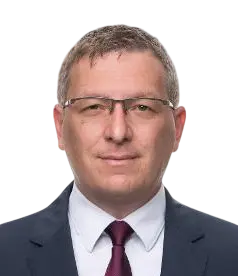
Thomas B.
Last position:
CIO of the corporate group at Badische Stahlwerke GmbH
- Member of the strategic management team
- Responsible for 50 direct reports and functional responsibility for 25 more
- Realigned the global IT strategy and merged individual IT divisions of the business units
- Led the central international IT organization of the corporate group
- Budget responsibility of €20 million p.a.
- Strategic advisor to the executive board
- Contributor to the company's strategic decisions as a leadership team member
- Driver of digitalization
- Evolved the global team structure across entities in a matrix setup
- Initiated and implemented process changes
- Operated and provided the central IT infrastructure including the data center for the entire group
- Designed the global application architecture
- Implemented AI-powered solutions
- Responsible for IT governance based on ISO 27001
- Rolled out Microsoft M365
- Conducted an ERP selection process for the corporate group
- Designed and implemented the new organizational structure as a foundation for future success
- Introduced requirements management, project portfolio management and capacity planning for cross-company IT within six months
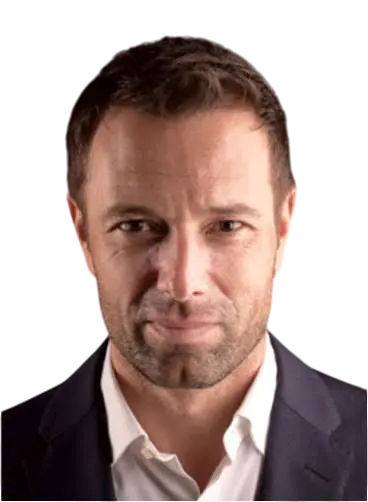
Günther N.
Last position:
Advisor ERP & CRM Business Process & System Landscape at IDnow
Managing the harmonization and further development of an international CRM- and ERP-related system landscape across multiple product lines and markets (PMI)
- Analysis, design, and requirements management for harmonized end-to-end business processes and business logic (Customer Base & Lead to Order, Lead-to-Cash, Order-to-Cash, Billing, Accounting, Service)
- Integration of Salesforce with billing and accounting systems (JustOn, DATEV) including data model, interfaces, and billing logic together with implementation partner
- Designing a central IT operating model to improve IT project management and DevOps model between business stakeholders, E2E process owners, and IT.
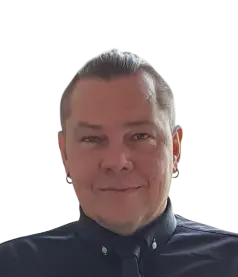
Kai S.
Last position:
Demand Manager, Analyst, Process Consultant
- Integrating system architecture, business analysis, requirements engineering, and process consulting
- Managing business unit needs toward IT and implementation
- Capturing requirements in JIRA and breaking them down into epics
- Overseeing internal projects and programs, including stakeholder management and reporting
- Handling requirements from traditional IT developments to IoT integrations and SAP subsystem replacements
- Implementing current legal regulations (MAKO, EnWG, EEG, GWG, StromGVV, GasGVV, StromNEV, GasNEV)
- Applying agile methods (Agile, SAFe, ITIL, Scrum, Kanban, DDD, IaC, CI/CD, DevOps, automation, ETL, OOA, OOD, MDA, BPMN, BPM, UML, marketing automation, data science, ML, AI, GenAI, LLMs)
- Using tools like JIRA, SharePoint, MS Office, MS Project, MS Dyn CRM, VMware ESX/ESXi, BSI IT-Grundschutz, BSI C5, NIST, MS Azure, Typo3, mail automation, Docker, Kubernetes, OpenStack, OpenShift, Terraform, Ansible, SQL, REST, SOAP, Git, GitLab, LoRaWAN, SAP IS-U, S/4HANA, USU, KUGU, AbSys, sensors, MQTT
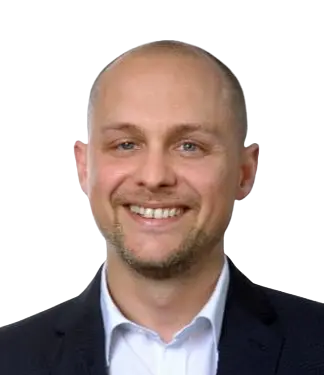
Moritz H.
Last position:
Managing Partner at Emergize GmbH & Co. KG
- Advising leaders at all levels on designing and implementing change initiatives and solving complex organizational challenges
- Leading and turning around mission-critical projects and programs
- Promoting agile collaboration, boosting operational excellence, and resolving conflicts
- Conducting workshops, one-on-one coaching, and targeted interventions
- Delivering regular keynote speeches on organizational bionics and modern leadership
Chibu O.

Last position:
Lead Consultant at Addlestone Advisory Partners
- Attained buy-in and accountability from key stakeholders on regulatory, technology, functional as well as process engineering and project delivery issues.
- Guided stakeholders through decision making processes.
- Increased organisational maturity levels and data process flows.
- Business analysis duties as required.
- Project and or programme management duties as required.
- Bridged between operational, technical and management teams.
Xavier R.
Last position:
Interim / Senior Project Manager / PMO at Mann + Hummel
- Portfolio, program, and project management using agile, hybrid, and traditional project management methods
Ludger W.
Last position:
Emergency Management in the Public Sector at HZD Hessen
- Advising on setting up a virtual emergency command center, including criteria development, implementation according to BSI-200-4, KRITIS/NIS2 compliance, BCM strategy.
Stefan F.
Last position:
Project Management – Telecommunications at 1&1 Versatel
- Set of concurrent projects (BSS/OSS related)
Discover over 15,000 top freelancers


Managing Successful Programmes (MSP) statistics
Aggregated from the professional profiles of matched freelancers.

Experience
23 years

Position duration
2 years

Positions per freelancer
11

Top business areas
Information Technology, Project Management, Strategy

Top industries
Information Technology, Manufacturing, Government and Administration

Certification focus areas
Project Management, Information Technology, Product Development

Bachelor's degree or higher
92%

Master's degree or higher
83%

Certifications per freelancer
13

Most common languages
German, English, Spanish

Speak two or more languages
100%
Based on our profile pool as of 26 Oct 2026.
Daily rate distribution
The chart shows how the daily rates of experts holding this certification in Germany are distributed, based on recent contracts on our platform. Each bar covers a rate range — its height shows the share of experts charging within that range.
Average rates for Managing Successful Programmes (MSP) in Germany
Rates are based on recent contracts and do not include FRATCH margin.

The average daily rate is the mean of all daily rates from recent contracts of comparable freelancers on our platform.
The median daily rate is the middle value of all daily rates — half of comparable freelancers charge less, half charge more. Unlike the average, it is barely affected by outliers.
Calculated based on our freelancers’ daily rates as of 26 Oct 2026. Actual rates may vary depending on seniority level, experience, skill specialization, project complexity, and engagement length.
Managing Successful Programmes (MSP) experts industry focus
See which industries our matched freelancers work in most often — every figure is calculated live from the freelancers on FRATCH.
- Information Technology (86%)
- Manufacturing (64%)
- Government and Administration (64%)
- Energy (50%)
- Banking and Finance (50%)
- Professional Services (50%)
- Telecommunication (43%)
- Transportation (36%)
Please note that freelancers can work across multiple industries, so percentages overlap.
About the certification

What MSP means
Managing Successful Programmes (MSP) is a framework for leading large change through a set of related projects and business changes. It is used when one project is not enough and the work must stay aligned to a bigger strategic goal. MSP, from PeopleCert (AXELOS), focuses on governance, direction, and delivery control.
What it validates
A freelancer with MSP can help define and steer a programme in a way that keeps outcomes in view, not just tasks.
- Programme structure and governance
- Benefits management and value tracking
- Stakeholder engagement and communication
- Risk, issue, and dependency handling
- Transition from design to business change
Typical profile
MSP is often held by programme managers, senior project managers, transformation leads, change managers, and PMO specialists. These professionals usually work on complex initiatives where several teams, suppliers, and business units must move together. In Germany, MSP is especially relevant when local and international teams need a shared way to govern change.
Core knowledge areas
The certification points to practical knowledge of programme strategy, blueprinting, tranches, quality control, and benefits delivery. It also reflects the ability to keep sponsors informed, manage uncertainty, and make sure projects stay connected to business outcomes.
- Programme leadership and assurance
- Blueprint and target operating model thinking
- Benefits mapping and realisation planning
- Governance roles, reports, and decision points
- Managing interdependent projects and change waves
What it tells companies
When you see MSP on a profile, you are looking at someone who understands how to organise change beyond the project level. That matters in mergers, operating model changes, digital transformation, public sector reform, and major system rollouts. A good MSP practitioner can bring structure when priorities are shifting and many parties need to stay aligned.
Finding the right fit
For companies in Germany, MSP is often a good signal for work that needs clear coordination across locations, teams, and languages. The holder may work on site, remotely, or in a hybrid setup, depending on stakeholder access and governance needs. If your programme depends on benefits, leadership cadence, and disciplined oversight, MSP is a strong filter when selecting a freelancer.

Frequently asked questions
Not sure where to start with Managing Successful Programmes (MSP)? These answers cover the essentials.

Managing Successful Programmes (MSP) validates the ability to lead change at programme level, not just run individual projects. It points to structured thinking around governance, benefits, stakeholder alignment, and dependency management. Companies use it as a signal that a freelancer can help turn strategy into coordinated delivery.
MSP is about the bigger picture: a set of related projects working toward shared outcomes. PRINCE2 is more focused on managing a single project with clear controls and defined stages. A freelancer with MSP is often a better fit when the challenge is transformation, cross-team coordination, or benefits realisation across several workstreams.
The MSP certification is common among programme managers, transformation leaders, senior PMO professionals, and change managers. It fits people who coordinate multiple projects, manage stakeholders at senior level, and keep business outcomes in view. It is less about hands-on task delivery and more about steering complex change.
Managing Successful Programmes is most valuable in major change efforts such as digital transformation, operating model redesign, merger integration, and public sector change. It is also useful when several vendors or internal teams must deliver in step. The method helps keep governance, sequencing, and benefits control consistent across the programme.
Before pursuing Managing Successful Programmes (MSP), it helps to understand project and programme basics, stakeholder management, and change delivery. The learning usually covers the MSP principles, themes, and governance model in a practical way. Candidates should be ready to think in terms of outcomes, not just plans and tasks.
For the practitioner level of MSP, some prior familiarity with the framework is usually expected, often through foundation-level knowledge or equivalent experience. The exact route can vary by training provider and certification path. In practice, people working in programme environments tend to be the best fit.
MSP credentials are tied to the current syllabus and scheme rules set by the issuing body. Renewal or continuing recognition may depend on the certification level and the version you hold, so holders should check the current requirements before they let a credential lapse. Companies should ask for the latest status if the certification is important for a role.
Yes, Managing Successful Programmes (MSP) is relevant for Germany when work involves complex transformation, multiple stakeholders, or international coordination. It is useful in hybrid or remote programmes as long as governance and decision-making are clear. For German companies, it can be a strong sign that a freelancer can support structured change across departments and locations.
The average hourly rate for freelancers with Managing Successful Programmes (MSP) in Germany is 107 €, which corresponds to a daily rate of about 853 € based on an 8-hour working day.
Of the freelancers with Managing Successful Programmes (MSP) in Germany, 92% hold at least a Bachelor's degree and 83% hold at least a Master's degree.
On average, freelancers with Managing Successful Programmes (MSP) in Germany have 23 years of professional experience, with a single engagement typically lasting around 2 years.
The most common languages among freelancers with Managing Successful Programmes (MSP) in Germany are German (100%), English (100%), and Spanish (29%).
The most common industries among freelancers with Managing Successful Programmes (MSP) in Germany are Information Technology (86%), Manufacturing (64%), and Government and Administration (64%).
The most common business areas among freelancers with Managing Successful Programmes (MSP) in Germany are Information Technology (93%), Project Management (93%), and Strategy (86%).
FRATCH Managing Successful Programmes (MSP) main locations
Our freelancers and interim experts are at home across the DACH region — available on-site in the major business hubs or fully remote. Choose a location to discover matched specialists, local market insights and up-to-date availability.
 Berlin Hamburg Munich Cologne Frankfurt Stuttgart Dusseldorf Leipzig Dortmund Essen Bremen Dresden Hanover Nuremberg
 Request a free demo
Get in touch with the FRATCH team and we will get back to you within 4 hours.
Would you rather directly get in touch?
We always have the time for a call or email!

Philipp Thomaschewski
FRATCH CEO

