


Scaled Professional Scrum (SPS)
professional in Germany, matched in minutes from 15,000 CVs with the power of AI.Scaled Professional Scrum professionals bring clarity to cross-team coordination, Scrum at scale, dependency management, and product alignment. Get fast, precise matching with vetted freelancers who know SPS and real-world scaling work.

Meet FRATCH Scaled Professional Scrum (SPS) in Germany
Ralf R.
Last position:
Program & Campaign Management at PAYBACK GmbH
- Project management in the area of “Campaign, Offer and Performance Management Classic” for PAYBACK partners from the retail, FMCG and financial services sectors
- Campaign planning, development and implementation of offer-specific concepts and measures for the channels newsletter, digital advertising (web and app), stand-alone mailings and the print mailing “PAYBACK Punkteübersicht”
- Coordination with PAYBACK program partners (including American Express, Netto, EDEKA, Marktkauf & Trinkgut), PAYBACK departments and agencies
- Documentation of tasks and processes as well as onboarding of future job holders
Thorsten H.

Last position:
Product Owner, Software Developer, AI Manager, Technical Consultant at crazyALEX.de GmbH
AI-supported document processing and inventory management integration
Design and development of an AI-supported application for the automated processing of delivery and invoice documents, connected to SelectLine ERP. Documents are analyzed using AI, matched with orders and line items, and prepared for posting goods receipts.
IMPACT:
- Automated extraction of structured order, delivery and invoice data from PDF and image documents
- Automatic and manual mapping of documents to orders and order line items
- Integration with SelectLine ERP for order import, status synchronization and goods receipt postings
- Traceable processing through separate analysis, mapping and posting processes as well as technical logging
- Development of a containerized end-to-end architecture with AI analysis, workflow automation and relational data storage
KEYWORDS: AI, document analysis, OpenAI, n8n, SelectLine ERP, FastAPI, Python, JavaScript, MariaDB, Docker, REST API, PDF, OCR, mapping, inventory management, goods receipt, workflow automation
Marijn S.

Last position:
Senior Software Engineer at Puls Security GmbH
Optimizing and acceleration of our Gitlab CI pipeline
Conceptual work for the PoC of the Zero Trust system
Extension of the policy-engine backend in Go
Extension of the policy-testing mechanism in Python
Architectural design of the PEP component of Zero Trust
Documentation of the product
Technologies: Zero Trust, Go, Python, Gitlab CI, Docker, JWT, Domain-Driven Design
Moritz K.

Last position:
Scrum Master, Agile Coach at Name on request
Due to founding another company during COVID, the managing director stepped back from day-to-day operations, which left the team without leadership for around 3 years.
My task was to train a new Product Owner, shape the developers and the Product Owner into a cohesive team, and coach this newly formed team into a state where self-organized value delivery for the customer would be possible again.
Because of the political situation in the US, the main customer of my client saw a drop in revenue, which made a change in the business model necessary for my client. I was allowed to support the transition from a service provider to an AI-first company with a broad customer base in a strategic advisory role, hire staff, and facilitate several C-level negotiations between my client and its new customers.
TASKS
- Training team and management in Scrum and agile ways of working
- Coaching a junior Product Owner up to PSPO II level
- Mediating conflicts in change processes
- C-level consulting and negotiation facilitation
- Developing and evaluating business models
- Leading the hiring process for 4 new employees
ACHIEVEMENTS
- Successfully coached Product Owner to PSPO II level
- Formed a cohesive Scrum team from a team without leadership
- Restored self-organized value delivery for the customer
- Successfully transitioned to AI-native development (Claude)
- Successfully changed the customer's business model
TOOLS & METHODS
- Team building
- NVC according to Rosenberg
- Conflict management
- Workshop facilitation
- Negotiation facilitation
- Leadership coaching
- Personio hiring
Emilian N.

Last position:
Agile Coach / Scrum Master at Misumi Europe GmbH
- B2B e-commerce platform with self-service portal; support of existing systems and development of a new website (go-live 2025) with focus on UX/UI, performance, and seamless data flow for tens of thousands of users
- Introduction of efficient Scrum ceremonies, standardized estimation methods, and Definition of Ready/Done
- Coaching of teams and Product Owners, promoting self-organization and continuous process improvement
- Structuring and managing the Jira infrastructure at team and organization level
- Coordination with stakeholders, implementation of the rollout roadmap, and removal of blockers
- Building a feedback culture and optimizing meeting structures
- Results: +75% PI accuracy, team velocity doubled
Sebastian P.
Last position:
Scrum Master & Agile Coach at HUK-Coburg
Goal: Coach a new agile team to implement and deliver the MVP of an AI-powered digital insurance service.
- Kicked off and coached a new cross-functional agile team as Scrum Master.
- Introduced a new Product Owner to the role with coaching, close collaboration and support with daily operations and backlog management in Jira.
- Facilitated the ideation, design and backlog creation process for the MVP, applying the appropriate tools and techniques (user journey mapping, impact mapping, story mapping, AI prototyping).
- Managed dependencies and impediments across multiple teams, resolving challenges rising from the use of both agile frameworks and traditional project management methodologies.
- Facilitated and supported planning and decision-making activities regarding the MVP delivery (roadmap creation, release planning, test management, translation of user feedback into product decisions)
- Continuously improved processes across multiple agile teams, closely collaborating with other Scrum Masters and cross-team roles (leads, architect, test manager).
- Designed and facilitated in-person and remote workshops as needed across multiple teams (agile practices, problem solving, process improvement, AI powered product development).
Joachim S.
Last position:
Agile Master, Agile Coach at TRUMPF SE + Co.KG
- Agile Transformation > 500 employees (laser machine development, hardware and software)
- Scrum Master (up to 4 teams in parallel)
- Consulting and hands-on support for the agile transformation and the implementation and further development of the company’s own scaling model (with elements from LeSS and SAFe)
- Training in agile ways of working/practices: Scrum, Kanban, SAFe, OKR, Agile Leadership, Agile principles
- Coaching/mentoring of PO and team in backlog, estimation, burn-down, DoD, sprint goal, velocity, flow, release planning
- Coaching/mentoring of Junior Agile Master
- Mediation in conflicts within and between teams
- Ensuring that impediments are addressed and resolved, thereby implementing the continuous improvement process
- Preparation and facilitation: retrospectives, design thinking, product vision, story mapping, team building, World Cafe, Open Space, Lean Coffee
- Tools: Jira, Confluence, Teams, Miro, MS Office
Rolf W.

Last position:
Agile Consultant at Lead.ai
- Introduction of Agile-CCPM in an IT project agency with a focus on PHP-based content management systems.
- Preparation and facilitation of workshops to establish a cross-agency multi-project management system.
- Coordination and support of the agency partners.
- Coaching of the methodological framework.
- Collection, evaluation, and use of organizational metrics to plan next steps.
- Environment: OKR, CCPM, Agile Coaching, Agile Planning, Agile Metrics, Workshops, Facilitation, Change Management, JIRA, Zoom, Slack, Miro.
Ferhat G.
Last position:
Team Coach & Release Train Engineer at Bank
Timm H.

Last position:
Agile Coach & Project Manager at Telefónica Germany GmbH & Co OHG
- Coaching of project participants
- Project management for numerous content migration projects for Telefónica Germany's telecom brands
- Development and reporting of performance metrics
- Promoting collaboration between content managers and UX writers
- Running retrospectives and integrating agile elements
- Team size: 23 people
- Technical environment: Jira, Confluence, Miro, Teams, Adobe Experience Manager, Figma
Dirk H.
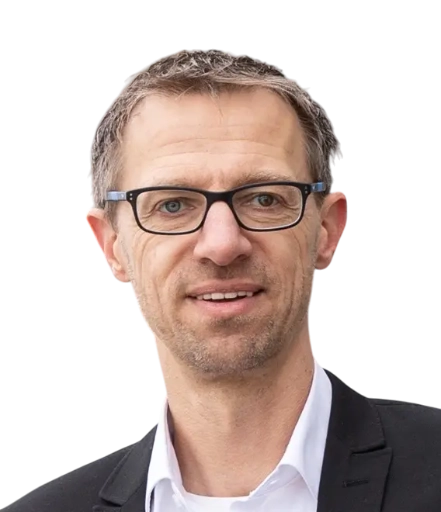
Last position:
Head of Individualization Initiative at Berge & Meer Touristik GmbH
- Responsibility for the Individualization Initiative to develop and implement a new travel product category
- Setting up the cross-functional organization at strategic, tactical and operational levels
- Aligning the initiative with the company's strategic goals (OKRs)
- Preparing decision papers and recommendations for management and advisory board
- Operational management of the technology work package
Peter J.
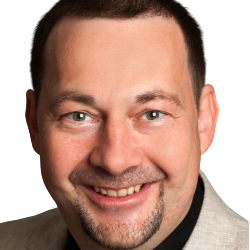
Last position:
SRE Enablement and Change Lead at NDA
- Support adoption of SRE.
- Enablement, Capability and Capacity building. "Help us do it ourselves".
- Lean Improvement Kata. Install measurements. Organisational change (manage the system!) -> behavioral change. Example: Agree to include Non-functionl Requirements in corporate Definition of SW Quality and adapt QA.
- Initiate SRE CoP. etc Objective: SRE needles moves.
Philipp G.
Last position:
Founder at Online Start-Up
Founded the first online start-up with projects around regional online portals, e-commerce and price comparison while still studying.
Grew the start-up into successful companies.
Bennet P.
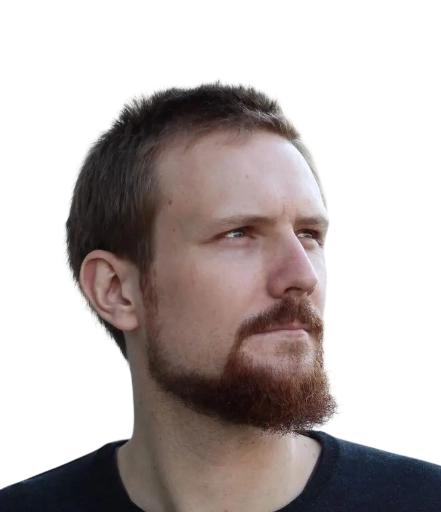
Last position:
Content Creator
- Took a year off the software world to build skills in storytelling and social media management
- Grew a YouTube channel in the motorcycle niche to over 3000 subscribers in less than a year in the German speaking market alone
Ali N.
Last position:
Managing Director at YourSystems
- Large Scale Lean & Agile Transformation Expert
- Lean Portfolio Manager
- SAFe Program Consultant (SPC)
- Agile Coach
- Management Consultant
- Technical Project and Team Manager
- Enterprise Architect
- Software Architect
- Developer and Developer Lead
- Project delivery on behalf of YourSystems for various large and medium-sized companies such as VW, CARIAD SE, Daimler AG, Technicolor, Thomson, Porsche Digital GmbH, Commerzbank Group, ING-DiBa, EuroHypo Bank, Roche Diagnostics International, Deutsche Bank, Siemens Medical Solutions, Viasys Healthcare, Deutsche Telekom, Markant Services GmbH, Cardinal Health, Carl-Zeiss AG, Grassvalley Germany
Discover over 15,000 top freelancers


Scaled Professional Scrum (SPS) statistics
Aggregated from the professional profiles of matched freelancers.

Experience
17 years

Position duration
1.6 years

Positions per freelancer
13

Top business areas
Information Technology, Product Development, Project Management

Top industries
Information Technology, Automotive, Banking and Finance

Certification focus areas
Project Management, Product Development, Information Technology

Bachelor's degree or higher
100%

Master's degree or higher
47%

Certifications per freelancer
16

Most common languages
German, English, French

Speak two or more languages
100%
Based on our profile pool as of 26 Oct 2026.
Daily rate distribution
The chart shows how the daily rates of experts holding this certification in Germany are distributed, based on recent contracts on our platform. Each bar covers a rate range — its height shows the share of experts charging within that range.
Average rates for Scaled Professional Scrum (SPS) in Germany
Rates are based on recent contracts and do not include FRATCH margin.

The average daily rate is the mean of all daily rates from recent contracts of comparable freelancers on our platform.
The median daily rate is the middle value of all daily rates — half of comparable freelancers charge less, half charge more. Unlike the average, it is barely affected by outliers.
Calculated based on our freelancers’ daily rates as of 26 Oct 2026. Actual rates may vary depending on seniority level, experience, skill specialization, project complexity, and engagement length.
Scaled Professional Scrum (SPS) experts industry focus
See which industries our matched freelancers work in most often — every figure is calculated live from the freelancers on FRATCH.
- Information Technology (100%)
- Automotive (65%)
- Banking and Finance (65%)
- Professional Services (59%)
- Manufacturing (53%)
- Energy (47%)
- Retail (47%)
- Insurance (41%)
Please note that freelancers can work across multiple industries, so percentages overlap.
About the certification

What SPS proves
Scaled Professional Scrum (SPS) from Scrum.org shows that a professional understands how to apply Scrum across multiple teams without losing the basics of transparency, inspection, and adaptation. It is not about adding more ceremony. It is about keeping the work manageable when several teams depend on the same product, backlog, or release flow.
Core skills
- Coordinating multiple Scrum teams around one product goal
- Managing shared backlogs and cross-team dependencies
- Keeping planning, refinement, and reviews usable at scale
- Reducing friction between teams, Product Owners, and stakeholders
- Supporting integration, release flow, and delivery alignment
Typical holders
SPS is often held by Scrum Masters, Agile Coaches, delivery leads, and experienced product people who work in environments with more than one team. It also fits consultants who help organizations move from single-team Scrum to broader coordination. In Germany, it is especially relevant where distributed teams, mixed vendor setups, or complex product portfolios make simple team-level Scrum no longer enough.
What to expect from a holder
A freelancer with SPS usually brings a practical view of scaling. They should be able to spot where coordination breaks down, explain why teams are blocked, and suggest ways to simplify the structure before adding process. Common project settings include software platform work, enterprise transformation, regulated environments, and long-running product development where many specialists must ship together.
Knowledge areas
- Scrum foundations applied across several teams
- Nexus-style coordination concepts and integration thinking
- Product ownership in a scaled setup
- Stakeholder alignment and release readiness
- Patterns that help teams stay autonomous while working together
Why it matters for companies
If you hire for SPS, you are usually looking for someone who can improve how teams work together, not someone who only knows team-level Scrum language. The certification signals fluency in scaling problems, but real value still depends on experience with coaching, facilitation, and change work. For companies in Germany, that is useful when teams are split across sites, work in English and German, or need a freelancer who can join quickly and stabilize a complex delivery setup.

Frequently asked questions
Curious about Scaled Professional Scrum (SPS)? Here are the answers that come up again and again.

Scaled Professional Scrum (SPS) validates practical knowledge of applying Scrum across several teams working on the same product or outcome. It focuses on coordination, shared planning, dependencies, and keeping delivery aligned without turning Scrum into heavy process. For companies, it signals that the freelancer understands scaling problems, not just team-level Scrum basics.
A standard Scrum certification usually focuses on one team working well within the Scrum framework. SPS goes further and deals with the issues that appear when several teams must collaborate, integrate, and release together. The difference is less about theory and more about the complexity of real product delivery.
SPS is the certification, while Nexus is Scrum.org’s approach for scaling Scrum with multiple teams. Many professionals preparing for SPS study Nexus ideas because they match the same problem space. Employers should see the certificate as evidence that the freelancer knows how to work in scaled Scrum environments, not just in isolated teams.
Scaled Professional Scrum is a strong fit for Scrum Masters, Agile Coaches, product leaders, and consultants who support multiple teams. It also suits freelancers who step into delivery environments where coordination, integration, and backlog alignment are everyday issues. If a role asks for scaling experience, SPS can be a meaningful signal.
Preparing for SPS usually means understanding Scrum deeply and then studying how those principles behave when several teams share work. Candidates should be comfortable with product thinking, dependency management, and facilitation in complex settings. Real project experience helps, because the certification is easier to use well when the concepts have been seen in practice.
Scaled Professional Scrum (SPS) does not rely on a formal training path in the way some other certifications do, although many people prepare through study and experience. Scrum.org certifications generally stay active through its assessment model, and professionals may need to keep an eye on current assessment rules. If you are hiring, it is smart to check that the freelancer’s knowledge reflects current Scrum.org guidance.
SPS matters most in products with several Scrum teams, shared components, or frequent release dependencies. It is common in enterprise software, platform work, and transformation programs where coordination has a direct impact on delivery. In Germany, it can also be useful when teams are spread across sites or work with a mix of local and international collaborators.
A company should ask how the freelancer has handled real scaling problems, not only whether they know the framework. SPS is most valuable when the person can explain what they improved: backlog clarity, team alignment, integration, or stakeholder flow. A strong candidate should be able to talk about the situations they faced and the trade-offs they made.
The average hourly rate for freelancers with Scaled Professional Scrum (SPS) in Germany is 110 €, which corresponds to a daily rate of about 879 € based on an 8-hour working day.
Of the freelancers with Scaled Professional Scrum (SPS) in Germany, 100% hold at least a Bachelor's degree and 47% hold at least a Master's degree.
On average, freelancers with Scaled Professional Scrum (SPS) in Germany have 17 years of professional experience, with a single engagement typically lasting around 1.6 years.
The most common languages among freelancers with Scaled Professional Scrum (SPS) in Germany are German (100%), English (100%), and French (35%).
The most common industries among freelancers with Scaled Professional Scrum (SPS) in Germany are Information Technology (100%), Automotive (65%), and Banking and Finance (65%).
The most common business areas among freelancers with Scaled Professional Scrum (SPS) in Germany are Information Technology (100%), Product Development (94%), and Project Management (94%).
FRATCH Scaled Professional Scrum (SPS) main locations
Our freelancers and interim experts are at home across the DACH region — available on-site in the major business hubs or fully remote. Choose a location to discover matched specialists, local market insights and up-to-date availability.
 Berlin Hamburg Munich Cologne Frankfurt Stuttgart Dusseldorf Leipzig Dortmund Essen Bremen Dresden Hanover Nuremberg
 Request a free demo
Get in touch with the FRATCH team and we will get back to you within 4 hours.
Would you rather directly get in touch?
We always have the time for a call or email!

Philipp Thomaschewski
FRATCH CEO

