


Conceptboard Experts in Germany
with precise AI matching, vetted and available freelancersHire experts who turn Conceptboard into structured spaces for workshops, design reviews, agile planning and remote collaboration. Work with professionals who connect visual boards to research, presentations and project workflows, matched quickly with vetted, available freelancers.

Meet FRATCH Experts in Germany, who have recently used Conceptboard
Simone H.
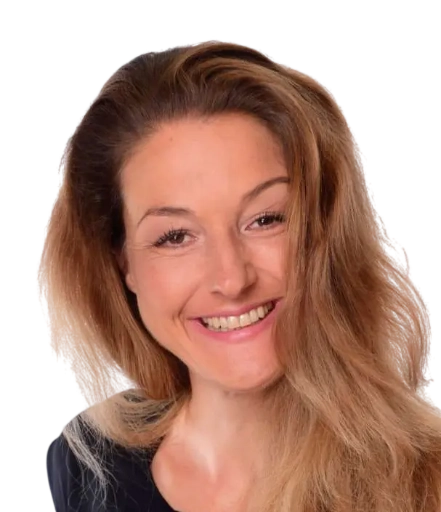
Last position:
Developer at 1&1 Internet Development SRL
Extension of the company website
- Developed new software components as part of a Scrum team
- Took turns with other members of the development team to perform smoke tests after releases
Achievements:
- Enhanced the website with new features
- Conducted code reviews and pair programming
- Advised the customer and trained the editors
- Implemented continuous delivery
Konstantinos T.
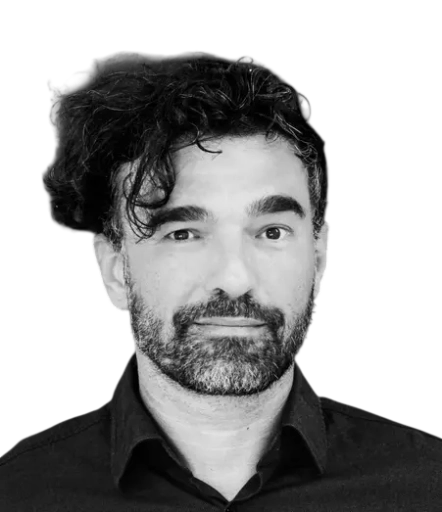
Last position:
Project Manager at Frankfurt School of Finance
- Management of IT/digitalization projects within the central PMO
- PMO knowledge document & management presentation (governance, methods)
- Requirements training & e-invoicing summary for project submitters
- Market analysis of hybrid tools & PMO checklists/governance
- Stakeholder management (IT, library, management)
Mario K.

Last position:
Senior Manager and Transition Architect at Wavestone AG
- Designed and managed complex transformation programs in regulated industries, including target vision, operating model and governance.
- Led and coached teams and executives to establish modern delivery, portfolio and organizational structures.
- Advised executives and department heads on roadmaps, organizational development and strategic transformation decisions.
- Business development, proposal development, pitch support and building strong customer relationships.
- Built internal methods, standards and practice contributions for banking, insurance and agile transformation.
Kristina S.
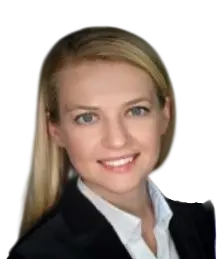
Last position:
Agile Transformation Coach – SAP Program (Freelance) at Sherpa X Digital Transformation SAP at Siemens
- Agile Transformation Coach within an SAP-driven End-to-End Lead-to-Cash program, supporting leadership and management teams in implementing and evolving the Sherpa Way of Working, strengthening Agile practices, role definitions and responsibility clarity (RACI), and delivery effectiveness
- Member of the leadership core team for the Way of Working, shaping and evolving agile operating models, challenging existing practices, and driving pragmatic, system-level improvements
- Conceptualized a Polarion-based Scrum Master dashboard as a single, role-based entry point for sprint status, dependencies, risks, and governance artefacts, reducing reporting overhead and improving transparency
- Provided targeted 1:1 coaching to the Master Scrum Master and Scrum Masters, strengthening leadership capability, role effectiveness, and support for team-specific challenges, including the redesign of Scrum Master syncs and collaboration formats
- Worked with teams and leadership on End-to-End Lead-to-Cash process analysis and documentation in SAP Signavio, supporting alignment, transparency, and a shared understanding of process expectations across teams
Markus E.

- Development of a climate action plan with a decarbonization roadmap for a municipal administration, focusing on energy-efficient building renovation and energy supply.
Kathrin S.

Last position:
Requirements Engineer at Governikus GmbH & Co. KG
- Impact: Structured requirements analysis and quality assurance as a foundation for the further development of a software solution.
- Analysis, documentation, and coordination of requirements. Conducting stakeholder analyses, interviews, and workshops to gather and validate requirements. Conducting requirements reviews and working closely with business departments and development teams.
Techniques & Tools: Requirements Engineering, Stakeholder Management, Workshop Facilitation, System Context Modeling, Requirements Reviews, Quality Scenarios, Miro, Jira, Confluence
Christian W.

Last position:
Agile turnaround & team leadership in a scaled IT environment at Full Service Provider Banks
Analysis and shadowing of existing PI, Scrum and Kanban processes
Support for PI planning, refinements, sprint planning, reviews and retrospectives
Agile coaching of squad leads, product owners and teams
Temporary takeover of moderation, control and leadership tasks in critical situations
Creation of clear structures for features, epics, capacity planning and prioritization
Introduction of standardized work and feedback formats in Jira and Conceptboard
Support for leadership in decision-making, goal clarity and role definition
Preparation of a stable foundation for a tribe-wide agile playbook
Increased schedule reliability and more realistic commitments in the PI and sprint context
More transparency about goals, dependencies and actual capacities
Relief for leaders through clear structures and clean role models
Empowered teams with a better understanding of Scrum, Kanban and their practical application
Improved collaboration between squads, product owners and management
Sustainable basis for the further development of the agile organization even under difficult conditions
Robert A.

Last position:
Consultant and Trainer at Haufe Akademie
- Process management
- Process analysis
- Process design
- Process improvement
- Lean logistics
- Agile management
- Culture of learning from mistakes
Alexander R.

Last position:
Business Analyst at Financial Services Provider Landesbank
The Helaba ATLAS project aims to modernize core systems and make them future-proof. As part of the subproject, the existing legacy system for international payments is being replaced by a modern web-based application.
- Analysis of functional and technical requirements
- Analysis and optimization of business processes
- Process modeling
- Preparation and facilitation of workshops
- Defining project scope and prioritizing requirements
- Business process management (analysis, modeling, and optimization)
- Specification of user stories
- Designing business and authorization concepts
- Testing and acceptance
- Designing mockups in Figma
- Creating the UI/UX style guide for web applications Approach: Scrum (agile) Technologies: Jira, Confluence, MS Teams, Conceptboard, Java, Vaadin, Figma
Jan-Philipp S.

Last position:
IT Project Management Coach (Freelance) at The Project Coach
- Set up and manage complex project and rollout structures (SAP, cloud, portfolio) for large public sector programs
- Provide professional leadership to interdisciplinary teams (up to 30 people)
- Coaching and advising project and program managers
- Facilitation of national and international workshops and committees
- Set up and manage backlog, risk, and dependency management; meeting and agenda structures
- Lead cross-functional teams and facilitate steering formats
- Coordinate individual transformation projects across multiple broadcasters
- Use various project and portfolio management tools (ServiceNow, Planview, Cplace, Clarity, Jira, Confluence)
- Develop rollout scenarios; manage pilot and full-scale go-live
- Responsible for change and communication concept, as well as organizational training (train-the-trainer, key-user network)
- Central control and harmonization of rollout activities across five broadcasters; standardization of project management methods, risk management, and integration management
Eduardo S.

Last position:
Agile Master / Deputy Release Train Engineer at Deutsche Rentenversicherung Bund
- Introduced agile ways of working across 8 teams in the IT Audit area
- Worked with the RTE to establish standards, governance structures and stable delivery processes at division level
- Supported alignment between Agile Masters and Product Owners as part of a company-wide SAFe rollout
- Contributed to improving predictability and structural compliance
Simon A.

Last position:
Incident Manager at Fourenergy GmbH
- Further developed the error handling process, including adapting it to agile methods
- Managed critical errors and oversaw the resolution and rollout of fixes
- Trained colleagues on the process flow
Patric E.
Last position:
Project Manager & Consultant
- Led an ERP migration as part of a company merger -> Harmonized processes and system landscapes
- Conducted requirements analyses and process workshops -> Ensured a clear basis for management decisions
- Established an iterative approach -> Enabled adaptability as conditions changed
Katrin V.

Last position:
Landkreis Weilheim-Schongau
- Developed a future concept for digitalization and citizen services
- Optimized central processes and advised leaders on strategic management of change processes
Mandy S.

Last position:
Scrum Master & Agile Coach at Energielenker Solutions GmbH
- Scrum Master for a development team in the renewable energy sector (FTEs & freelancers), coaching 3 POS
Discover over 15,000 top freelancers


Statistics of experts using Conceptboard
Aggregated from the professional profiles of matched freelancers.

Experience
21 years

Position duration
2.1 years

Positions per freelancer
13

Top business areas
Project Management, Information Technology, Product Development

Top industries
Information Technology, Professional Services, Banking and Finance

Certification focus areas
Project Management, Human Resources, Information Technology

Bachelor's degree or higher
94%

Master's degree or higher
63%

Doctorate
10%

Certifications per freelancer
7

Most common languages
German, English, French

Speak two or more languages
96%
Based on our profile pool as of 18 Nov 2026.
Daily rate distribution
The chart shows how the daily rates of experts in this technology in Germany are distributed, based on recent contracts on our platform. Each bar covers a rate range — its height shows the share of experts charging within that range.
Average rates of experts in Germany using Conceptboard
Rates are based on recent contracts and do not include FRATCH margin.

The average daily rate is the mean of all daily rates from recent contracts of comparable freelancers on our platform.
The median daily rate is the middle value of all daily rates — half of comparable freelancers charge less, half charge more. Unlike the average, it is barely affected by outliers.
Calculated based on our freelancers’ daily rates as of 18 Nov 2026. Actual rates may vary depending on seniority level, experience, skill specialization, project complexity, and engagement length.
Conceptboard experts industry focus
See which industries our matched freelancers work in most often — every figure is calculated live from the freelancers on FRATCH.
- Information Technology (80%)
- Professional Services (68%)
- Banking and Finance (50%)
- Retail (45%)
- Government and Administration (41%)
- Manufacturing (39%)
- Automotive (38%)
- Education (38%)
Please note that freelancers can work across multiple industries, so percentages overlap.
About the technology
What Conceptboard does
Conceptboard is a browser-based visual collaboration workspace for teams that need to collect, arrange and discuss information on an open canvas. People use it for workshops, design feedback, project planning, research synthesis and presentations. Boards can combine text, images, documents, drawings, comments and templates in one shared space.
Core collaboration features
Conceptboard supports real-time and asynchronous work. Experts configure board structures, permissions, commenting flows and reusable templates so participants can contribute without losing context. They also use presentation modes, voting, tagging and export options to move from an unstructured discussion to clear decisions and documented results.
Typical project work
- Set up workshop boards for discovery, retrospectives and prioritisation
- Create customer journey maps, affinity maps and research repositories
- Organise design reviews with visual annotations and threaded feedback
- Build planning spaces for agile teams, programmes and stakeholder groups
- Prepare collaborative presentations for distributed meetings
The right configuration depends on the audience, the decision to be made and the level of access each participant needs.
Ecosystem and adjacent skills
Conceptboard work often connects with user research, service design, product discovery and agile delivery. Specialists may bring experience with journey mapping, canvas methods, workshop design, information architecture and visual communication. Useful adjacent tools include video conferencing, document storage, project management systems and presentation software, even when Conceptboard remains the central workspace.
When companies hire specialists
Companies typically bring in freelance expertise when a board must support a high-stakes workshop, a complex stakeholder process or a large body of research. A specialist can turn an unclear brief into a usable board, prepare participant guidance, moderate the flow and document outcomes. In Germany, local teams may value German-language workshop materials while still collaborating with international colleagues remotely.
What strong professionals deliver
Strong Conceptboard professionals think beyond attractive layouts. They establish a clear board hierarchy, reduce cognitive load, protect sensitive content through suitable permissions and make every activity easy to understand. They test the participant journey, keep sessions focused and leave behind reusable templates, decisions and follow-up actions. Their work makes visual collaboration practical rather than decorative.

Frequently asked questions
Not sure where to start with Conceptboard? These answers cover the essentials.

Conceptboard is used for online workshops, design reviews, research synthesis, agile planning and collaborative presentations. It gives teams a shared visual space for ideas, documents, comments and decisions, whether participants work together live or contribute asynchronously.
Conceptboard overlaps with Miro and Mural as a visual collaboration and online whiteboard tool. The best choice depends on factors such as board structure, templates, permissions, participant experience, integrations and the company’s existing workflow. A specialist can compare these points against the project’s actual needs.
A strong Conceptboard specialist may also understand service design, user research, agile methods, workshop planning and visual communication. Experience with stakeholder management, presentation design and remote collaboration helps turn a board into a productive working process.
The right level of Conceptboard experience depends on the task. A simple board setup may need a specialist who can structure content and permissions, while a complex workshop or research repository calls for deeper skills in facilitation, information architecture and outcome documentation.
Conceptboard is well suited to remote work because participants can access shared boards through a browser and contribute across locations. On-site sessions can still be useful for sensitive workshops or groups that benefit from direct interaction. German and English language capability may matter when teams and stakeholders are distributed.
Ask a Conceptboard professional to show examples of board structures, workshop flows or research spaces, not just polished screenshots. Review how clearly they define objectives, guide participants, manage access, document decisions and adapt the workspace to different audiences.
Conceptboard can replace many physical workshop materials and support participants who are not in the same room. It does not automatically replace good preparation, facilitation or decision-making. The outcome depends on a clear agenda, accessible board design and active participation.
Freelancers working with Conceptboard should clarify the project goal, participant groups, language, privacy expectations and required outputs before building a board. They should also confirm whether the client needs a live workshop, an asynchronous workspace, a reusable template or a documented decision process.
The average hourly rate of freelancers in Germany who have used Conceptboard in their recent projects is 104 €, which corresponds to a daily rate of about 835 € based on an 8-hour working day.
Of the freelancers in Germany who have used Conceptboard in their recent projects, 94% hold at least a Bachelor's degree, 63% hold at least a Master's degree, and 10% hold a doctorate.
On average, freelancers in Germany who have used Conceptboard in their recent projects have 21 years of professional experience, with a single engagement typically lasting around 2.1 years.
The most common languages among freelancers in Germany who have used Conceptboard in their recent projects are German (100%), English (93%), and French (30%).
The most common industries among freelancers in Germany who have used Conceptboard in their recent projects are Information Technology (80%), Professional Services (68%), and Banking and Finance (50%).
The most common business areas among freelancers in Germany who have used Conceptboard in their recent projects are Project Management (95%), Information Technology (84%), and Product Development (80%).
Main locations of FRATCH Experts, who have recently used Conceptboard
Our freelancers and interim experts are at home across the DACH region — available on-site in the major business hubs or fully remote. Choose a location to discover matched specialists, local market insights and up-to-date availability.

 Munich
 Cologne
Request a free demo
Get in touch with the FRATCH team and we will get back to you within 4 hours.
Would you rather directly get in touch?
We always have the time for a call or email!

Philipp Thomaschewski
FRATCH CEO

