


Trainers in Germany
in minutes from over 15,000 CVs with the power of AI.From onboarding and sales training to leadership workshops and software rollouts, skilled trainers turn complex topics into clear sessions people can use right away. Get fast, precise matching with vetted, available freelancers.

Meet FRATCH Trainers in Germany
Christel Kristin R.
Last position:
SAP Senior / Lead Consultant / Team Lead / Trainer at Mercator Leasing GmbH
- Merging several systems, consulting for SAP Finance / Controlling overall, FI/CO, DRC, F2R, R2R, incoming and outgoing invoice mapping and target postings of contracts and BP from source systems. CAMt53, creation of the technical concept for the migration of various business areas, creation of migration templates and FMD Files, support with data migration, consolidations and data entry, test management for the SAP part, test support, training of end users in all FI and CO areas, FI-AA
Olaf S.
Last position:
Trainer & Facilitator for Digital Sovereignty at ITSM-COLOGNE
Project: Digital Sovereignty – Toll Collect
Workshop: Digital Sovereignty Recognize dependencies, reduce risks, remain capable of acting
Format
- One-day practical seminar
Target group
- Executive management
- IT managers
- Data protection officers
- Compliance functions
Content and objectives
- Systematic analysis of digital dependencies
- Assessment of legal and operational risks
- Development of a concrete plan to increase digital sovereignty
- Mapping of the entire IT infrastructure by participants
- Identification of critical dependencies on non-European providers
- Creation of a prioritized risk matrix based on:
- GDPR
- NIS2
- EU AI Act
- Joint development of options for action – from a hybrid model to complete migration to European solutions
- Development of an individual sovereignty roadmap with:
- Responsibilities
- Milestones
- Budget framework
Agenda
- Preliminary self-assessment (current infrastructure)
- Digital sovereignty? Nothing but an illusion
- Digital sovereignty 2026 – Germany’s dangerous dependency in focus
- Digital sovereignty & open source
- What is digital sovereignty?
- Three questions raised by digital sovereignty
- Reflection: Digital sovereignty in your own life
- Why is digital sovereignty existential now?
- Practical examples of digital sovereignty
- Schleswig-Holstein initiative
- Benefits of digital sovereignty for your company
- Assessing strategy options (cost-benefit matrix)
- Sovereign provider? 10 questions
- What does digital sovereignty specifically mean for your company?
- How do you shape digital sovereignty?
- Digital sovereignty and psychological safety
- Psychological safety: The key to high-performing teams
- Why psychological safety in your company?
- Benefits of psychological safety
- Invitation to group work: PsySafety Check (PS-C)
- The “Braintrust” experiment
- Creating a risk matrix
- Creating a roadmap & project plan
- European alternatives to US Big Tech
- 10-point plans:
- NIS2
- EU AI Act
- GDPR
- ISO 27001
Philipp O.
Last position:
Business economist, trainer & coach at Self-employed
- Holistic project support from analysis through piloting to implementation in the areas of change, process and project management.
- Design and delivery of customer-specific training courses, seminars and workshops on processes, organization and structures with clear objectives.
- Worked as a coach, trainer and keynote speaker on leadership, conflict and communication for up to 300 people.
- Trainer for mediators.
Martin L.

Last position:
Senior Consultant at Aucoteam GmbH
- Development of a system for capturing, storing, and using knowledge
- Assessment of the current status and requirements for capturing employees’ tacit knowledge
- Creation of the appropriate taxonomy for the individual specialist areas
- Establishment of a suitable technical architecture
- Conducting expert interviews with the help of Artificial Intelligence (AI)
- Concept for data backup
- Analysis and evaluation of the approach and results
- Incorporation of organizational changes
Kathrin S.

Last position:
Requirements Engineer at Governikus GmbH & Co. KG
- Impact: Structured requirements analysis and quality assurance as a foundation for the further development of a software solution.
- Analysis, documentation, and coordination of requirements. Conducting stakeholder analyses, interviews, and workshops to gather and validate requirements. Conducting requirements reviews and working closely with business departments and development teams.
Techniques & Tools: Requirements Engineering, Stakeholder Management, Workshop Facilitation, System Context Modeling, Requirements Reviews, Quality Scenarios, Miro, Jira, Confluence
Fabian M.

Last position:
Scrum Master at Bosch Deutschland GmbH
Supporting agile scaling according to SAFe and stabilizing delivery capability in an international multi-project environment.
- Stabilization of Feature and Integration Teams in the SAFe context
- Preparation and facilitation of complex, cross-functional PI Plannings
- Promoting collaboration with international teams in India
- Process optimization and strengthening of agile team ownership
Ralph S.

Last position:
Interim Head of Business Excellence at DEHN SE
Process architect and transformation driver for company-wide excellence initiatives (covering a vacancy) Establishment and management of a company-wide process and governance framework to strengthen structure, leadership and effectiveness in an internationally growing family-owned company. Responsibility for the global process house, end-to-end governance, process role architecture and further development of the integrated management system – including international implementation (Romania, USA).
Scope:
- Management of the Business Excellence department with 6 employees and functional leadership of 20+ Process Owners
- Establishment of a global process operating system (architecture, roles, governance, global-local logic)
- Development of a group-wide control and KPI system for processes (transparency, KPIs, maturity)
- Introduction of mechanisms to ensure effectiveness in day-to-day operations (role enablement, communities, feedback)
- Governance and role framework for new production sites in Romania and USA (mandates, roles, decision logic)
- Stabilization and further development of the integrated management system (IMS)
Sustainable Results:
- Global process operating system established - Structure, roles, governance and global-local rules defined as a binding framework and anchored in the management system — the basis for consistent management and scalability.
- End-to-end process ownership strengthened - Process Owner roles globally defined, qualified and anchored in Communities of Practice — clear ownership structures across all sites for the first time.
- KPI and process management logic established - Uniform KPI system, maturity model and reporting principles developed — the basis for fact-based decisions, prioritization and transparency throughout the company.
- Effectiveness in day-to-day operations increased - Enablement architecture, onboarding mechanisms, regular meeting formats and feedback loops introduced — the process system is applied in daily work and continuously improved.
- Governance framework for new site implemented - Mandates, roles, decision paths and escalation logic for the new production site in Romania developed — clear structure for setup, management and integration.
Tobias B.
Last position:
Executive Consultant (C-Level) at klarsolar GmbH (E.ON Energie Deutschland GmbH)
- Led sales excellence and post-merger integration project for klarsolar GmbH into E.ON Germany
- Defined strategic integration and transformation: stakeholder alignment, B2B (up to 100 kWp) and B2C (up to 30 kWp) scaling, brand and sales strategy harmonization, synergy realization
- Developed and implemented holistic sales strategy 2025/26 with vision 2030
- Reorganized sales organization: lead generation, presales, inside sales, field sales, sales ops, after sales
- Introduced CRM-based lead qualification, performance monitoring, business rules and low performer management
- Established sales governance, performance reviews, continuous improvement processes, incentive and compensation logic
- Owned sales IT roadmap (ERP, CRM, BI, planning tools) and deployed KPIs, dashboards, control systems
- Professionalized sales recruiting, onboarding, knowledge management and training academy
- Acted as trusted advisor to C-level and shareholders, provided growth potential analyses and board recommendations
- Achieved all project goals on budget and timeline, seamless integration with measurable synergies in 6 months, increased market penetration and sales efficiency
Matthias B.

Last position:
Member at Rotary – Passport Club Werderscher Markt
Bernd E.
Last position:
Self-employed Consultant, Trainer & Freelancer at Self-employed sole proprietor
- Advising international companies and mid-sized organizations on learning strategy, leadership development and organizational transformation.
- Interim management and freelancing (including Head of L&D, Senior Expert Talent & Leadership Development).
- Designing and implementing leadership, team and organizational development programs at management, team and employee level.
- Developing digital and hybrid learning formats to scale modern learning strategies.
- Building and marketing my own online program “Employee and Team Development for Managers”.
- Author of the professional book “Professional Communication – Finally More Success at Work”.
Beate P.
Last position:
Interim Head of Service at Altendorf Group
- Strategic and operational leadership of the technical service organization
- Improvement of all processes and workflows
- Development and introduction of a service management IT tool incl. AI database, customer app, and self-service portal
Toralf C.

Last position:
IT Consultant in PKI Software Development at BWI
- Implementation of a full-stack application with Angular as frontend framework and Java as backend language
- Use of the Swagger OpenAPI specification for REST communication between frontend and backend applications
- Control of a card printer via the Nexus Card SDK framework
- Design and implementation of card management software with web interface and JavaFX module for printer monitoring
- Use of Cucumber tests for test automation and creation of test artifacts for testing outside the development environment
- Use of Wireshark for network investigations to analyze the API of a third-party product and to check the REST API of the self-developed software
Rico F.
Last position:
Recruiter / Trainer at Freelance
- Active sourcing and recruiting for individual assignments (Finance, IT, Procurement)
- Training of recruiting departments
- Training of specialists and managers for job application situations and interview techniques
- Application coaching and CV consulting
Maureen S.
Last position:
Remote HR Consulting | HR Operations | Recruiting at Mindful HR
- Independent HR consulting with a focus on remote and project-based collaboration
- Support across HR Business Partnering, HR Operations and Recruiting
- Advice and support on operational HR topics throughout the employee lifecycle
- Support for managers with people-related and HR matters
- Flexible, pragmatic support for companies and HR teams requiring additional capacity
- Conceptualisation and implementation of digital brand presences, including the development and launch of two websites within a short timeframe using AI-supported tools – from structure and content to implementation and publication
Darav T.
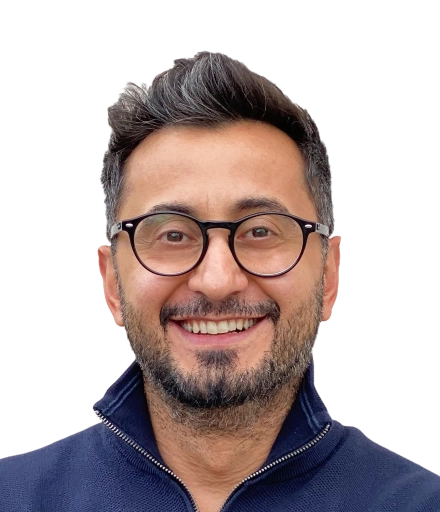
Last position:
COO & Co-Founder at MedTech Startup
Established and streamlined business development and sales processes, including implementation of CRM systems, marketing strategies, and search engine advertising
Expanded market reach through targeted outreach efforts
Implemented effective B2B marketing strategies to enhance brand visibility and product reach
Developed a strong sales pipeline focused on long-term relationship building and customer retention
Played a key role in the product development lifecycle from ideation to execution, ensuring compliance with market demands and regulatory standards
Led medical and technical teams to drive product development and company growth
Discover over 15,000 top freelancers


Trainers statistics
Aggregated from the professional profiles of matched freelancers.

Experience
22 years

Position duration
4.3 years

Positions per freelancer
11

Top business areas
Project Management, Human Resources, Information Technology

Top industries
Professional Services, Information Technology, Education

Certification focus areas
Human Resources, Project Management, Information Technology

Bachelor's degree or higher
87%

Master's degree or higher
64%

Doctorate
12%

Certifications per freelancer
5

Most common languages
German, English, French

Speak two or more languages
92%
Based on our profile pool as of 26 Oct 2026.
Daily rate distribution
The chart shows how the daily rates of experts in this role in Germany are distributed, based on recent contracts on our platform. Each bar covers a rate range — its height shows the share of experts charging within that range.
Discover detailed Trainers rate benchmarks:
Explore rate insightsAverage rates for Trainers in Germany
Rates are based on recent contracts and do not include FRATCH margin.

The average daily rate is the mean of all daily rates from recent contracts of comparable freelancers on our platform.
The median daily rate is the middle value of all daily rates — half of comparable freelancers charge less, half charge more. Unlike the average, it is barely affected by outliers.
Calculated based on our freelancers’ daily rates as of 26 Oct 2026. Actual rates may vary depending on seniority level, experience, skill specialization, project complexity, and engagement length.
Trainers experts industry focus
See which industries our matched freelancers work in most often — every figure is calculated live from the freelancers on FRATCH.
- Professional Services (78%)
- Information Technology (59%)
- Education (57%)
- Manufacturing (43%)
- Automotive (31%)
- Government and Administration (28%)
- Banking and Finance (25%)
- Retail (25%)
Please note that freelancers can work across multiple industries, so percentages overlap.
About the role
What they do
A trainer designs and delivers learning sessions that help teams work better, adopt new tools, or build new skills. In German companies, freelance trainers are often brought in for workshops, classroom training, webinars, and train-the-trainer setups.
- Analyse the audience and define learning goals
- Prepare session plans, exercises, and handouts
- Deliver interactive training in person or online
- Adapt content for different skill levels and roles
- Collect feedback and refine the format
Common specialisms
A good trainer is not just a presenter. They know how to structure content, keep attention, and handle group dynamics. Depending on the project, a training consultant may focus on soft skills, software adoption, compliance, product knowledge, sales methods, or leadership development.
- Technical and software training
- Sales and customer communication training
- Leadership, change, and team workshops
- Onboarding and internal academy programs
- Train-the-trainer formats for internal teams
When companies hire
Companies usually hire freelance trainers when they need fast support, a fresh external view, or extra capacity for a launch, reorganisation, or learning initiative. This is common in Germany when local teams need sessions in German, English, or both, or when workshops must work across sites and remote teams.
Freelance trainers also make sense when the scope is short, the topic is specialised, or the company wants a proven workshop facilitator instead of a permanent hire.
What strong trainers bring
The best trainers combine clear delivery with practical business sense. They can adjust to the room, manage time, and turn abstract content into exercises people remember. Strong candidates usually bring:
- Clear facilitation and audience control
- Practical examples tied to the company’s work
- Solid method knowledge for adult learning
- Comfort with online tools and hybrid setups
- Clean materials that others can reuse
How to choose well
Look for evidence of real delivery, not just polished slides. Ask for sample agendas, training concepts, and references from similar assignments. A strong trainer can explain how they deal with difficult groups, mixed seniority levels, and limited time.
In Germany, it helps if the trainer understands the sector, the language needs, and the local business context. That is especially relevant for manufacturing, logistics, IT, finance, and professional services.
Typical deliverables
A freelance trainer should be able to provide more than a one-off session. Typical outputs include a needs analysis, training outline, participant materials, live delivery, and a short follow-up report. Many clients also expect a version of the content that internal teams can use later.
The exact format depends on the topic, but the goal is always the same: sessions that are clear, useful, and easy to apply after the workshop ends.

Frequently asked questions
What clients ask us most about Trainers — answered in short.

A trainer designs and delivers learning sessions for a specific business need. That can be onboarding, software adoption, sales skills, leadership training, or a workshop for a change program. The work usually includes planning the content, running the session, and adapting it to the audience.
A freelance trainer makes sense when the topic needs outside structure, neutral moderation, or extra capacity. Companies often choose this route for short-term projects, rollouts, or topics that need a fresh teaching style. It is also useful when internal experts know the subject but are not good facilitators.
Look for clear facilitation, strong preparation, and the ability to keep a group engaged. A good corporate trainer can handle different seniority levels, explain complex topics simply, and adjust the session live if the room needs it. Domain knowledge matters too, but delivery skill is what makes the training work.
Not always. A trainer teaches a defined topic and helps people practice it through structure and exercises. A coach works more one-to-one, a consultant advises on the business problem, and a facilitator mainly guides the group process. Some professionals cover more than one of these roles, but the project goal should be clear.
Ask how they would tailor the content for your team, what materials they provide, and how they handle online or on-site delivery. In Germany, language fit can also matter, especially for mixed teams or local shop-floor audiences. If the topic is technical or regulated, ask for direct project experience in the same setting.
Both can work, depending on the topic and group size. A workshop facilitator or trainer can run strong remote sessions if the format is interactive and the tools are set up well. On-site is often better for team-building, hands-on practice, or groups that need more direct energy and discussion.
Check the training concept, the clarity of the agenda, and whether the examples fit your business. Good signs are strong participant engagement, practical exercises, and materials that people can reuse after the session. References from similar projects are often more useful than a polished profile.
Freelancers stand out by showing a clear niche, such as software training, leadership workshops, or onboarding programs. A strong training consultant can explain the problem they solve, not just list topics they cover. Sample agendas, facilitation examples, and a clean delivery style help build trust fast.
The average hourly rate for Trainers in Germany is 119 €, which corresponds to a daily rate of about 950 € based on an 8-hour working day.
Of the freelancers working as Trainers in Germany, 87% hold at least a Bachelor's degree, 64% hold at least a Master's degree, and 12% hold a doctorate.
On average, freelancers working as Trainers in Germany have 22 years of professional experience, with a single engagement typically lasting around 4.3 years.
The most common languages among freelancers working as Trainers in Germany are German (99%), English (92%), and French (23%).
The most common industries among freelancers working as Trainers in Germany are Professional Services (78%), Information Technology (59%), and Education (57%).
The most common business areas among freelancers working as Trainers in Germany are Project Management (72%), Human Resources (68%), and Information Technology (61%).
FRATCH Trainers main locations
Our freelancers and interim experts are at home across the DACH region — available on-site in the major business hubs or fully remote. Choose a location to discover matched specialists, local market insights and up-to-date availability.

 Berlin
 Hamburg
 Munich
 Cologne
 Frankfurt
 Stuttgart
 Dusseldorf
Countries:
- Germany
- Austria
- Switzerland
Request a free demo
Get in touch with the FRATCH team and we will get back to you within 4 hours.
Would you rather directly get in touch?
We always have the time for a call or email!

Philipp Thomaschewski
FRATCH CEO

