


Postdoctoral Researchers in Germany
matched in minutes from over 15.000 CVs with the power of AI.Need support with grant proposals, literature reviews, experiment design, data analysis, publication strategy, or supervision in a lab or research group? Get fast, precise matching with vetted, available freelancers.

Meet FRATCH Postdoctoral Researchers in Germany
Sandeep K.
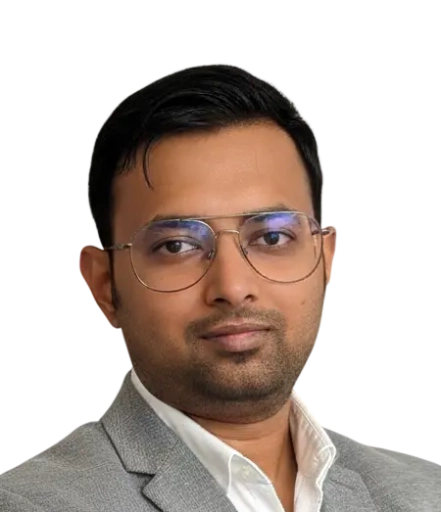
Last position:
Postdoctoral Researcher at Friedrich Schiller University
- Established and optimized viral detection assays (SARS-CoV-2, IAV) in A549 and Vero cell lines using qPCR, immunofluorescence and AFM-based morphology analysis to generate quantitative data on viral protein expression and particle quality
- Characterized protein aggregation and fibril formation using NanoFTIR, fluorescence spectroscopy, Raman and ThT assays, linking biophysical signatures to stability and quality attributes of protein formulations
- Applied statistics-based data analysis to evaluate assay robustness and variability, supporting QbD-oriented discussions on method performance and critical analytical parameters
- Led method development and data interpretation for analytical workflows, collaborating with cross-functional colleagues and training team members on advanced biophysical instrumentation
David H.
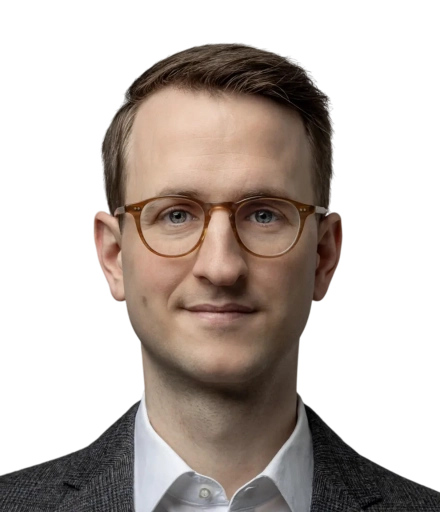
Last position:
Consultant for AI Strategy and Digitization at ai-strategy.io
- AI vision development: Match external best practices with analysis of processes, interfaces, stakeholders, data flows, and output KPI, creating a long-term target picture of process automation and AI augmentation
- Curated employee training framework, e.g. for public service foundation: Basics of AI, generative AI applications, evaluation of human judgement and machine control in socially critical applications
- Implemented advanced upskilling courses specialized for product managers: Using AI in innovation, portfolio management, process automation, and marketing to promote novel products and services
- Multiple keynote speaker: AI-driven organizational transformation powered by cultural transformation and forward-looking leadership practices
- Ongoing exchange of expertise and experiences with personal network of leading AI strategists at multinational corporations, e.g., Siemens, Mercedes-Benz, BMW, McDonald’s, Adidas, Linde, Infineon, TÜV Süd, to collect business best practices
- Cooperation with expert leadership networks, e.g. TEC Leadership Institute and PM1 to strengthen impact through increased reach across organizations and industries
Mustafa K.
Last position:
Postdoctoral Researcher at National Institutes of Health (NIH), NHLBI
- Led peptide inhibitor design against UPF1 using RFdiffusion, ProteinMPNN, and AlphaFold2/3; validated candidates with molecular dynamics simulations
- Screened over 1 million compounds for ataxia fusion proteins via AutoDock Vina; confirmed top hits using GROMACS MD simulations
- Developed RNA-seq analysis pipelines for nonsense-mediated decay (NMD) studies including isoform quantification and motif discovery
- Modeled protein-RNA interactions using AlphaFold3 multimers integrated with BioGRID/STRING databases
- Established computational workflows for transcriptomics and RNA regulation in iPSC-derived human models
Krishnanjan P.
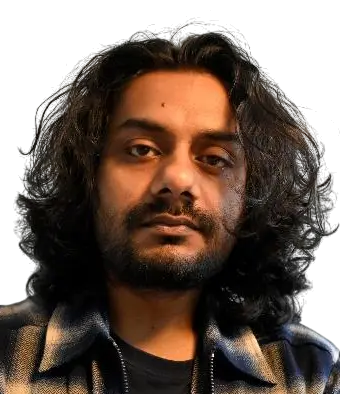
Last position:
Post-doctoral Researcher at University of Bremen
- Conduct quantum mechanical calculations within the Density Functional Theory (DFT) framework
- Perform molecular dynamics using machine learned force fields
- Participate in the Special Priority Program (SPP2315) of the German Research Foundation (DFG)
- Conduct DFT calculations on a large number of crystalline phases and predict their likelihood of formation in experiments
- Identify and synthesize two engineered artificial minerals (EnAM) to recover tantalum and cobalt from fayalite slag
- Work on molecular dynamics combined with machine learning and enhanced sampling techniques to investigate crystal nucleation and growth mechanisms from melt
- Collaborate closely with experimental partners
Anh N.

Last position:
AI Humanities Last Exam Expert
- Project Pegasus: Create and solve challenging problems in Management, Social Sciences, and Humanities areas, with the goal of stumping advanced AI models
- Project Hypno: Challenge state-of-the-art (SOTA) language models by asking complex questions based on an image
Fereydoon T.
Last position:
Postdoctoral Researcher & Scientific Project Coordinator at Institute for Molecular Systems Engineering, Heidelberg University
- Managed and coordinated a research group of 6 scientists, aligning computational and experimental pipelines across multiple labs
- Developed high-performance Python frameworks for biophysical simulations, achieving >50% runtime reduction compared to MATLAB baselines
- Integrated machine learning algorithms to classify and predict cell migration behaviors, improving model accuracy by ~25%
- Streamlined reporting workflows using automated data extraction and visualization, cutting manual documentation time by 40%
- Published in Advanced Functional Materials (2023), Advanced Healthcare Materials (2024), and Bioactive Materials (accepted 2026)
Sebastian P.

Last position:
Postdoctoral Research Associate at Max Planck Institute for Human Development
- Published a peer-reviewed article on comparative analysis of biophysical models in diffusion MRI, impacting ongoing research projects.
- Got SciPy selected for the cover image of the corresponding journal issue.
Mario D.
Last position:
Postdoc at Bayreuth University
Evangelia C.

Last position:
Postdoctoral Researcher & Data Steward at Technical University Darmstadt (Müller-Plathe group)
- Developed and applied a symbolic regression scheme to explore and model complex relationships in liquid viscosities across their phase space, providing predictive insights into material properties.
- Contributed to the improvement of hybrid Particle-Field models through data-driven diagnostics and model enhancement strategies.
- Lead interdisciplinary collaboration with experimental physicists for the investigation of the molecular mechanisms behind water-based inks.
- Managed research data workflows to ensure public accessibility and institutional archiving of simulation data, code scripts, and inputs, directly supporting research transparency and reproducibility.
Pierre J.
Last position:
Postdoctoral Researcher at Anna Poetsch’s Biomedical Genomics group, Dresden
- Benchmarked multiple LLMs for genomic prediction tasks, ensuring rigorous evaluation across architectures and datasets.
- Extended and streamlined in-lab LLM architecture, enhancing interpretability and broadening applicability.
- Identified sequence and epigenetic factors underlying human genome stability, enabling deeper insights into their distinct roles in genome biology.
- Mentored and designed projects for several master’s students and interns, leading to highly graded reports and development of pipelines with lab-wide applications.
Khalid Y.
Last position:
Research Associate (Postdoc) | Health Data Scientist at University Medical Center Göttingen, Germany
- Designing harmonization framework for diverse health data formats
- Handling ETL pipeline for emergency vital parameters from source to downstream
Ravindra G.
Last position:
Postdoctoral Researcher at Helmholtz Institute for Infection Research
- Developed an agent based model to elucidate the dose-uptake discrepancy of antibiotics in bacteria
- Fostered collaboration with microbiologists to develop a data driven framework for antibiotic dosing
Margarida R.

Last position:
Postdoctoral Researcher at Max Planck Institute for Multidisciplinary Sciences
- Studied regulation of body size and insulin-related signaling in planarian models
- Developed quantitative imaging pipelines and applied computational analysis to morphological and cellular data
- Designed experiments, documented protocols, and coordinated project timelines
- Mentored junior researchers and supervised laboratory work
Ingmari T.
Last position:
Postdoc in the group Joint Lab of Integrated Quantum Sensors at Humboldt University Berlin
- QUASENS: third-party funded project (federal ministry of education and research)
- Setting up a micro-integrated Ramsey-Bordé-based optical atomic clock
Discover over 15,000 top freelancers


Postdoctoral Researchers statistics
Aggregated from the professional profiles of matched freelancers.

Experience
12 years

Position duration
2.9 years

Positions per freelancer
5

Top business areas
Research and Development, Information Technology, Project Management

Top industries
Education, Biotechnology, Healthcare

Bachelor's degree or higher
100%

Master's degree or higher
100%

Doctorate
100%

Certifications per freelancer
0

Most common languages
English, German, French

Speak two or more languages
100%
Based on our profile pool as of 26 Oct 2026.
Daily rate distribution
The chart shows how the daily rates of experts in this role in Germany are distributed, based on recent contracts on our platform. Each bar covers a rate range — its height shows the share of experts charging within that range.
Average rates for Postdoctoral Researchers in Germany
Rates are based on recent contracts and do not include FRATCH margin.

The average daily rate is the mean of all daily rates from recent contracts of comparable freelancers on our platform.
The median daily rate is the middle value of all daily rates — half of comparable freelancers charge less, half charge more. Unlike the average, it is barely affected by outliers.
Calculated based on our freelancers’ daily rates as of 26 Oct 2026. Actual rates may vary depending on seniority level, experience, skill specialization, project complexity, and engagement length.
Postdoctoral Researchers experts industry focus
See which industries our matched freelancers work in most often — every figure is calculated live from the freelancers on FRATCH.
- Education (86%)
- Biotechnology (43%)
- Healthcare (43%)
- Chemical (29%)
- Information Technology (29%)
- Energy (21%)
- Manufacturing (21%)
- Pharmaceutical (21%)
Please note that freelancers can work across multiple industries, so percentages overlap.
About the role
Research focus
Postdoctoral Researchers turn a defined research question into clear work. They design studies, review literature, refine methods, run experiments, and interpret results. In universities, institutes, and R&D teams, a postdoc often bridges theory and delivery.
Typical deliverables
- Research plans and project outlines
- Literature reviews and state-of-the-art summaries
- Experimental protocols and study designs
- Data analysis, figures, and results interpretation
- Manuscripts, conference papers, and grant text
- Documentation for handover or collaboration
Core skills
A strong postdoctoral researcher combines deep subject knowledge with careful execution. Common strengths include statistics, scientific writing, programming for analysis, lab or field methods, and clean documentation. In Germany, many projects also need confident English for publishing and enough German to coordinate with local teams or administration.
Tools and methods
The exact stack depends on the discipline, but the work often includes R, Python, MATLAB, SPSS, LaTeX, Excel, reference managers, and lab or simulation software. The method matters just as much: controlled experiments, qualitative interviews, systematic reviews, reproducible analysis, and clear version control. A good postdoc keeps results traceable and easy to defend.
When companies bring one in
Companies, universities, and research units hire postdoctoral researchers when they need focused scientific capacity without a long internal hiring process. This is common for funded projects, publication backlogs, method-heavy studies, or temporary gaps in a research team. A freelance postdoc can also support a principal investigator, lab head, or innovation team during peak phases.
What sets them apart
The best postdoctoral researchers work like owners of a research stream. They ask precise questions, challenge weak assumptions, and move from idea to evidence without losing rigor. They also know when to collaborate closely and when to work independently, which makes them valuable in remote setups and in on-site research environments alike.

Frequently asked questions
Curious about Postdoctoral Researchers? Here are the answers that come up again and again.

A postdoctoral researcher turns research goals into structured work. They may design studies, run experiments, analyse data, write papers, or support grant applications. In practice, they help a team move from a question to evidence and a clear conclusion.
A freelance postdoc makes sense when the work is tied to a project, a grant, or a publication cycle. It is also useful when a team needs specialist knowledge quickly or has a temporary gap in capacity. This is common in universities, research institutes, and innovation-led companies in Germany.
Look for strong research design, sound analysis, and clear scientific writing. Depending on the field, you may also need lab methods, field work, statistical tools, programming, or experience with peer-reviewed publishing. Good communication matters because the work often involves supervisors, collaborators, and stakeholders.
A postdoctoral researcher usually works with more independence and takes more responsibility for study design, interpretation, and publication. Compared with a PhD researcher, the focus is less on training and more on delivering research outputs. Compared with a research assistant, the scope is broader and often more concept-driven.
Many tasks can be done remotely, such as literature reviews, data analysis, manuscript drafting, and grant text. Remote work is often effective when the team shares data, protocols, and review cycles clearly. For lab-heavy or equipment-heavy work, on-site time in Germany may still be necessary.
Check the relevance of their publications, methods, and subject area. A strong postdoctoral researcher explains not only what they did, but also why the method fits the question and how they handled limitations. You should also look for clean documentation and realistic planning.
A freelancer should expect a clearly defined scope, access to data or background material, and a named contact person. Good assignments also include publication goals, deadlines, and rules for authorship or confidentiality. In Germany, many teams also expect professional communication in English, and sometimes German for coordination.
Yes, that is often part of the role, especially in academic or applied research settings. A postdoctoral researcher can help shape a proposal, review the literature, prepare figures, and draft sections of a manuscript. This is especially valuable when the project needs both scientific depth and strong writing.
The average hourly rate for Postdoctoral Researchers in Germany is 87 €, which corresponds to a daily rate of about 696 € based on an 8-hour working day.
Of the freelancers working as Postdoctoral Researchers in Germany, 100% hold at least a Bachelor's degree, 100% hold at least a Master's degree, and 100% hold a doctorate.
On average, freelancers working as Postdoctoral Researchers in Germany have 12 years of professional experience, with a single engagement typically lasting around 2.9 years.
The most common languages among freelancers working as Postdoctoral Researchers in Germany are English (100%), German (93%), and French (36%).
The most common industries among freelancers working as Postdoctoral Researchers in Germany are Education (86%), Biotechnology (43%), and Healthcare (43%).
The most common business areas among freelancers working as Postdoctoral Researchers in Germany are Research and Development (100%), Information Technology (43%), and Project Management (43%).
FRATCH Postdoctoral Researchers main locations
Our freelancers and interim experts are at home across the DACH region — available on-site in the major business hubs or fully remote. Choose a location to discover matched specialists, local market insights and up-to-date availability.
 Berlin Hamburg Munich Cologne Frankfurt Stuttgart Dusseldorf Leipzig Dortmund Essen Bremen Dresden Hanover Nuremberg
 Request a free demo
Get in touch with the FRATCH team and we will get back to you within 4 hours.
Would you rather directly get in touch?
We always have the time for a call or email!

Philipp Thomaschewski
FRATCH CEO

