


ISO 17025 Experts in Germany
for compliant laboratory work, matched in minutes with vetted and available freelancersHire experts who establish laboratory management systems, prepare accreditation evidence and improve testing or calibration processes under ISO/IEC 17025. FRATCH uses fast, precise AI matching to connect you with vetted, available freelancers who fit your technical and location requirements.

Meet FRATCH Experts in Germany, who have recently used ISO 17025
Jessica D.
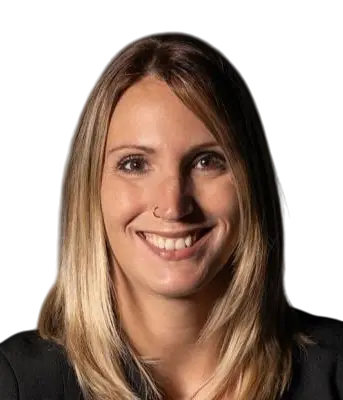
Last position:
Consultant at Jessica Diederen Consulting
- Workflow automation
- Process management
- Scrum Master
- Introduction of new office processes at regional and global level
- Project assistance in ISO 9001, 13485 and 17025 projects
Holger B.
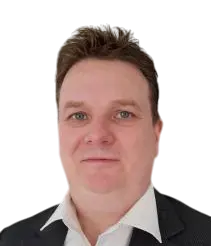
Last position:
Consultant for development-related topics and standards at TeDiMoS GmbH
- Standards research "product- / project-related for speed-controlled pumps".
- Supporting internal development departments with standards-related questions nationally and internationally.
- Creating and maintaining internal standards and test plans.
- Deriving technical requirements from normative specifications.
- Cooperation with authorities.
- Coordination with associations and organizations/authorities (VDE, UL, notified Body EMC-Test).
Sathish V.
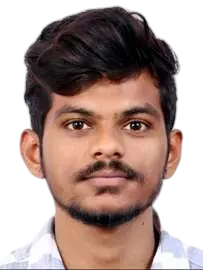
Last position:
Master's Thesis Student Quality Management at PAVANA GmbH
- Development of a software-based DMS framework for the integration of QMS with a focus on compliance with ISO 17025 and MEASNET + TR6
- Participated in external DAkkS audits
- Created FMEA, quality deviation reports, Ishikawa diagrams, and 5 Whys reports for energy yield uncertainties and WTGs
- Highlighted critical variables (e.g., wind speed, wind direction, terrain) influencing uncertainty and evaluated data quality to implement QA/QC measures
- Identified main sources of uncertainty in energy yield assessment (e.g., model assumptions, data variability) and assessed impact on energy yield projections
- Systematically calibrated and validated the model using reference data (e.g., LiDAR) to reduce uncertainty while implementing continuous quality improvement processes (PDCA, RCA, SPC, FMEA)
Monika W.
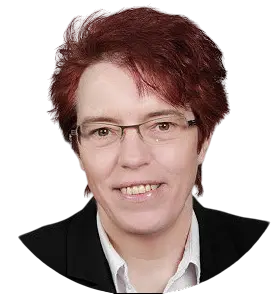
Last position:
Quality Specialist at Nexans GmbH
- Implementation of a quality management system including creating all required process descriptions and work instructions for ISO 9001:2015 certification, as well as final planning and conducting audits
- Creating action catalogs for measures needed to comply with ISO 9001 and achieve the targeted certification
- Preparing documentation related to ISO 9001
- Developing training materials for employees and managers based on the QMH and the created documentation
- Recording results of external audits of departments (incoming goods, production, warehouse logistics, procurement and supplier management, outgoing goods, shipping) according to ISO 9001
- Preparing for and participating in certification audits
Elena C.
Last position:
Plant Quality Manager at BHC Gummi-Metall GmbH
- Reviewing customer requirements (Quality Agreements) and implementing process and product quality measures within the approval processes (start-up support and initial samples according to PPF/PPAP) under APQP
- Main contact for quality-related issues at the site
- Implementing supplier quality support and development
- Ensuring compliance with all quality-specific requirements such as incoming and outgoing inspections, initial sample test reports, quality work instructions, inspection plans, and control charts
- Customer contact for complaint management and handling using Quality Core Tools: 8D report, 5 Why, Ishikawa analysis
- Active use of quality tools: control plan, PFMEA, inspection plan, EMPB, drawings, collecting and analyzing statistical data, R&R, MSA, SPC
- Conducting internal system, product and process audits according to VDA 6.3 and VDA 6.5
- Responsible for certification of the quality management system IATF 16949, occupational health and safety ISO 45001, and environmental management ISO 14001
- Supervising, goal-oriented leadership and development of a 10-member team
Serge Patrick T.

Last position:
Senior Test Engineer at Voith Group
- Software tests for control functions in e-mobility vehicles
- Development of software tests for complex system and component functions for control and regulation in commercial vehicles with electric mobility
- Analysis of software specifications and creation of test specifications for system and component function tests
- Further development and maintenance of test tools
- Carrying out manual and/or automated tests based on the test specifications
- Review of test specifications and participation in reviews of software specifications
- Tools: Vector CANalyzer, SIEMENS Polarion
Ayushi J.
Last position:
Scientific Research Assistant/ Project Engineer at GSU Gesellschaft für Sicherheits- und Umwelttechniken mbH
- Sample preparation according to VDI 3866 and VDI 3492
- Conducting analyses according to VDI 3492
- Quality assurance and compliance with safety standards
- Documentation and report writing
Ashwini R.

Last position:
Technical Analyst at GlaxoSmithKline
- Perform validation or qualification tests on new or existing processes, IT modules, equipment, Clinical trial software in compliance with internal norms or external standards.
- Resourceful in reviewing various documents, including VMP, URS, System Requirement Specification (SRS) and/or Functional/Technical Specification, Design Qualification (DQ), Risk Assessment (RA) with ALCOA CCEA, IQ, OQ, PQ, Traceability Matrix (TM), Compliance Report (CR), and Validation Summary Report (VSR), in accordance with regulatory requirements and quality management systems.
- Perform testing activities with Microfocus ALM and handle faults and deviations.
- Familiar with regulatory standards (such as FDA/GxP, records management, and disaster recovery).
- Proven expertise in risk management, FMEA, audit management, and periodic compliance reviews.
- Proficiency in change management and control procedures, deviation management, incident management, and CAPA escalation.
- Implementing a Quality System to meet GxP standards and ensure regulatory compliance through inspections, data review, and training.
- Conduct internal audits on processes and systems, prepare for external audits, and verify compliance with internal standards and SOPs.
- Develop and review SOPs and papers in accordance with regulatory norms.
- Organized and reviewed cGMP training records.
Sven H.
Last position:
Director Recycling Technology / Authorized Representative at FormaTurf GmbH
- P&L shared responsibility
- Leading FormaTurf’s global strategy
- Responsible for all technical departments (R&D, production, engineering, HSE, quality)
Discover over 15,000 top freelancers


Statistics of experts using ISO 17025
Aggregated from the professional profiles of matched freelancers.

Experience
18 years

Position duration
1.7 years

Positions per freelancer
11

Top business areas
Quality Assurance, Project Management, Operations

Top industries
Manufacturing, Healthcare, Professional Services

Certification focus areas
Quality Assurance, Project Management, Operations

Bachelor's degree or higher
100%

Master's degree or higher
63%

Doctorate
25%

Certifications per freelancer
3

Most common languages
German, English, French

Speak two or more languages
100%
Based on our profile pool as of 29 Oct 2026.
Daily rate distribution
The chart shows how the daily rates of experts in this technology in Germany are distributed, based on recent contracts on our platform. Each bar covers a rate range — its height shows the share of experts charging within that range.
Average rates of experts in Germany using ISO 17025
Rates are based on recent contracts and do not include FRATCH margin.

The average daily rate is the mean of all daily rates from recent contracts of comparable freelancers on our platform.
The median daily rate is the middle value of all daily rates — half of comparable freelancers charge less, half charge more. Unlike the average, it is barely affected by outliers.
Calculated based on our freelancers’ daily rates as of 29 Oct 2026. Actual rates may vary depending on seniority level, experience, skill specialization, project complexity, and engagement length.
ISO 17025 experts industry focus
See which industries our matched freelancers work in most often — every figure is calculated live from the freelancers on FRATCH.
- Manufacturing (67%)
- Healthcare (56%)
- Professional Services (56%)
- Automotive (44%)
- Biotechnology (44%)
- Chemical (44%)
- Energy (44%)
- Education (33%)
Please note that freelancers can work across multiple industries, so percentages overlap.
About the technology
Standard and purpose
ISO/IEC 17025 defines the general requirements for the competence, impartiality and consistent operation of testing and calibration laboratories. It provides a framework for reliable results, controlled methods, documented decisions and confidence in laboratory reports. The standard applies to internal, commercial, research and public-sector laboratories.
Accreditation scope
An ISO 17025 engagement starts with a clear scope of activities. Specialists help define the methods, measurement ranges, equipment, sample types and reporting boundaries that a laboratory can competently perform. They also align procedures and records with the requirements of the selected accreditation body.
Management system
The standard combines technical competence with a functioning management system. Professionals work on document control, impartiality risks, complaints, nonconforming work, corrective action, internal audits and management reviews. They can also integrate the system with existing quality frameworks without creating unnecessary duplicate processes.
Laboratory tooling
Strong capability covers both practical laboratory work and its evidence trail:
- Validate or verify testing and calibration methods
- Assess measurement uncertainty and traceability
- Control equipment, reference materials and environmental conditions
- Build audit-ready records and technical procedures
- Review results, reports and data integrity controls
Digital laboratory systems, electronic worksheets, calibration databases and quality management software often support this work. Specialists must understand how tools preserve approvals, version history and objective evidence.
When to hire specialists
Companies bring in freelance expertise before an initial accreditation assessment, during a scope extension or after audit findings. It is also useful when a laboratory changes equipment, introduces a method, moves premises or needs independent review. In Germany, on-site collaboration may matter for observing facilities and workflows, while remote work suits documentation, training and evidence reviews.
What good looks like
A strong professional connects the wording of ISO 17025 with actual measurement practice. They ask how results are produced, identify weak evidence and explain risks in language that laboratory staff can use. Look for experience with the relevant discipline, accreditation assessments, uncertainty evaluation, root-cause analysis and clear technical writing. German-language communication can be important when procedures, records and assessor discussions are handled locally.

Frequently asked questions
Quick answers to the questions that come up most around ISO 17025.

ISO 17025 is used to demonstrate that a testing or calibration laboratory operates competently and produces dependable results. It covers impartiality, personnel competence, methods, equipment, traceability, measurement uncertainty, reporting and the management system behind the work.
ISO/IEC 17025 focuses specifically on the technical competence and impartiality of testing and calibration laboratories. ISO 9001 addresses general quality management across many types of organizations, so it does not by itself demonstrate that laboratory results are technically valid.
A strong ISO 17025 specialist may also understand method validation, measurement uncertainty, metrological traceability, statistical evaluation and laboratory information systems. Audit preparation, corrective action and clear technical documentation are equally important for turning requirements into usable evidence.
Projects involving a new accreditation scope, complex measurement methods or serious audit findings need a professional who has worked directly with ISO 17025 requirements. Less extensive support may be suitable for document reviews or targeted training, but the specialist still needs to understand the laboratory’s technical discipline.
ISO 17025 documentation reviews, gap assessments, training and corrective-action planning can often be handled remotely. On-site work is valuable when the specialist must observe equipment, environmental controls, sample handling or staff practices in a German laboratory.
Ask how the professional has handled method validation, uncertainty budgets, traceability and evidence from internal audits under ISO/IEC 17025. Good answers connect each requirement to a real laboratory process rather than repeating standard language, and they show how findings were documented and resolved.
An ISO 17025 assessment examines both the management system and the technical work within the proposed scope. Assessors review records, personnel competence, equipment, methods, environmental conditions, result reporting, impartiality controls and how the laboratory responds to problems.
ISO/IEC 17025 applies to testing laboratories as well as calibration laboratories. It is relevant to areas such as materials, chemical, environmental, medical, electrical and mechanical testing whenever organizations need technically defensible and recognized results.
The average hourly rate of freelancers in Germany who have used ISO 17025 in their recent projects is 99 €, which corresponds to a daily rate of about 788 € based on an 8-hour working day.
Of the freelancers in Germany who have used ISO 17025 in their recent projects, 100% hold at least a Bachelor's degree, 63% hold at least a Master's degree, and 25% hold a doctorate.
On average, freelancers in Germany who have used ISO 17025 in their recent projects have 18 years of professional experience, with a single engagement typically lasting around 1.7 years.
The most common languages among freelancers in Germany who have used ISO 17025 in their recent projects are German (100%), English (100%), and French (44%).
The most common industries among freelancers in Germany who have used ISO 17025 in their recent projects are Manufacturing (67%), Healthcare (56%), and Professional Services (56%).
The most common business areas among freelancers in Germany who have used ISO 17025 in their recent projects are Quality Assurance (100%), Project Management (78%), and Operations (44%).
Main locations of FRATCH Experts, who have recently used ISO 17025
Our freelancers and interim experts are at home across the DACH region — available on-site in the major business hubs or fully remote. Choose a location to discover matched specialists, local market insights and up-to-date availability.
 Berlin Hamburg Munich Cologne Frankfurt Stuttgart Dusseldorf Leipzig Dortmund Essen Bremen Dresden Hanover Nuremberg
Request a free demo
Get in touch with the FRATCH team and we will get back to you within 4 hours.
Would you rather directly get in touch?
We always have the time for a call or email!

Philipp Thomaschewski
FRATCH CEO

