


Research Assistants in Germany
from over 15,000 CVs with the power of AIFrom literature reviews and interview support to data cleaning, coding, and report preparation: get research assistants, research associates, and RA support for academic, market, and policy projects. Fast, precise matching with vetted, available freelancers.

Meet FRATCH Research Assistants in Germany
Ajay C.

Last position:
Software Engineer & Cloud AI Developer at TANGILITY GmbH
Built Python-based AI microservices and integrations for an AEC/VR Unity-based SaaS app, focusing on LLM/VLM capabilities, retrieval-backed systems, RESTful APIs, containerized deployment, and an automation microservice for the CAD-to-Unity pipeline.
- Developed a custom Hybrid A* based algorithm in C# to simulate hospital scenarios and detect early-stage design conflicts from collision/spatial data and generate structured reports.
- Solved and automated the time-consuming problem of converting CAD files to usable Unity environments with a custom-engineered and real-time pipeline using a ZeroMQ-based communication layer to distribute workloads across multiple processes and achieve real-time performance.
- Built a Dockerized FastAPI pipeline for CAD-to-Unity automation, combining vision-based object matching, image embeddings, and precomputed metadata to automatically map CAD objects to Unity behavior scripts, assign properties, and reduce repeated AI inference calls.
- Created documentation and examples to help technical users understand, configure, and extend the AI automation pipeline.
Chetan S.

Last position:
Student Research Assistant at Hochschule Ravensburg-Weingarten (RWU)
- Built and verified Zynq-7000 (Zybo Z7-10) FPGA prototypes in Xilinx Vivado – AXI IP integration, bitstream generation, hardware bring-up, timing-closure checks and waveform-based debug to confirm expected RTL behaviour.
- Set up Cadence Virtuoso schematic/simulation flows and documented settings, results and methodology for reproducible experiments – supporting structured verification and research documentation.
- Wrote Python automation for log parsing, structured data reporting and result analysis; worked daily in version-controlled Linux/Git workflows.
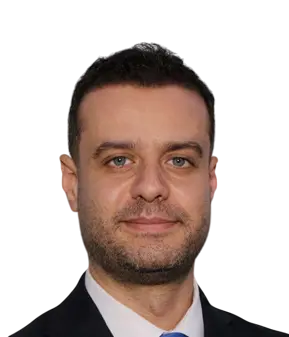
Armin M.
Last position:
Graduate research assistant at Duisburg-Essen University
- Conducted advanced machine learning methods on large-scale inequality datasets for forecasting, clustering and feature importance to assess impacts on growth
- Integrated multi-source inequality datasets into a unified panel; applied reproducible preprocessing pipelines including variable harmonization, outlier treatment, normalization, and multiple-imputation methods
- Published four papers in international peer-reviewed journals
Shruti K.

Last position:
Scientific Assistant at Deutsche Sporthochschule Köln
- Developed a React-based research platform with interactive 3D/AR product visualization workflows.
- Implemented interaction tracking and usage analytics to measure user behavior and feature engagement within a research platform.
- Deployed the research platform and integrated a R Shiny analytical dashboard, enabling researchers to interactively explore meta-analysis results within a unified platform.
Abdelrahman H.

Last position:
Research Assistant (WHK), FPGA Development – BrassSense Project at HAW Hamburg / Prof. Peter Schulz
- Real-time tone detection on FPGA (~20 ms latency target) using a filter bank architecture with a fuzzy-logic decision stage, avoiding FFT due to its window-length/frequency-resolution tradeoff.
- Responsible for system integration and architecture.
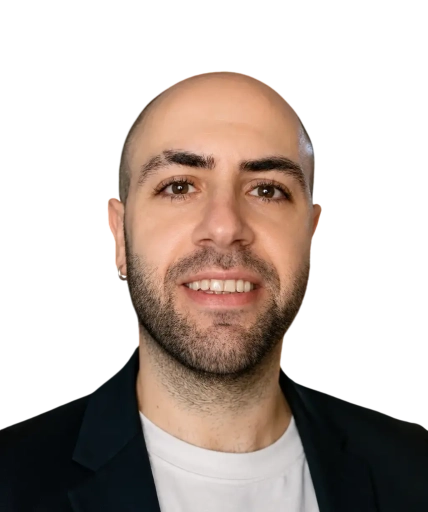
Mehmet Emin D.
Last position:
Research Assistant at E.ON Energy Research Center, RWTH Aachen
- Planning and carrying out experiments on user behavior in energy-efficient systems.
- Developing simulation models to predict user interactions.
- Data analysis and optimization of existing models for better system integration.
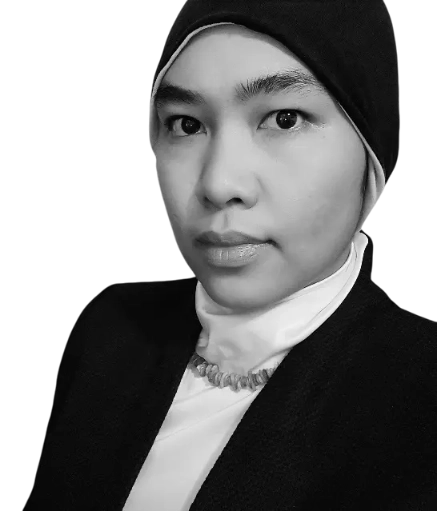
Pertami K.
Last position:
Data Scientist (Freelance) at Spryfox GmbH
- Implemented data/feature pipelines and automated validation/reporting for multi-million-row insurance datasets.
- Built production-grade image processing to detect fabric defects; delivered maintainable, well-tested Python code and concise reports.
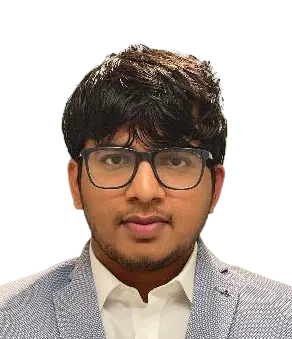
Kuldeep G.
Last position:
Student research assistant at Technische Universität Dresden
- Designing RF component matching networks, Wilkinson power divider, embedded symmetric strip line technology transmission line technology and other RF components
- Taking measurements and estimation to find main error source for spherical scanner
- Designing bow-tie antenna for ground penetrating radar and testing for interference in rover
Narges D.
Last position:
Research Assistant at Hochschule München
Introduced an integrated approach for structural damage detection across concrete, steel, and glass using advanced technologies such as LiDAR and thermal imaging. Highlighted cross-material interactions to enhance diagnostics and enable predictive maintenance.
Developed an NLP-based medical note simplifier that transforms complex clinical instructions into plain, child-level English. Applied prompt engineering with Flan-T5 transformer models to extract patient-relevant actions and rephrase them into clear to-do items. Built dual Flask and Tornado backends with a printable web interface.
Prisca O.
Last position:
Research Assistant at Ruhr Universität Bochum, Faculty of Electrical Engineering and Information Technology
- Prediction of wind speeds for wind energy systems
- Development of algorithms to predict future wind speeds based on historical weather data
- Application of statistical and machine learning methods to improve forecast accuracy
- Use of MATLAB and Python for data preprocessing, visualization, and model development
Mengqi Y.

Last position:
Graduate Research Assistant at Tübingen University
- Analyzed intensive longitudinal psychological data, uncovering latent behavioral trends.
- Applied Bayesian hierarchical models in R/JAGS; ensured robust parameter estimation and model convergence.
- Led data wrangling, transforming raw survey data into analysis-ready formats.
- Supported peer-reviewed publication through methodology design and statistical evaluation.
Arnav S.
Last position:
Scientific Assistant (HIWI) at Institute of Transport and Automation Engineering, Production Technology Center, Leibniz University Hannover
- Implemented stereo camera calibration and applied incremental Structure from Motion (SfM) algorithms to build a detailed 3D model of a forklift for an AR-enabled Smart Forklift project
- Developed OpenCV-based preprocessing that improved data accuracy by 20% and enhanced the analysis of industrial videos
Tushar R.

Last position:
Research Assistant/Master Thesis at Otto-von-Guericke Universität Magdeburg
- Performed qualitative and quantitative analysis of extracted findings, categorizing themes, evaluating methodologies, and assessing study quality and reliability.
- Produced research reports and evidence summaries communicating key trends, gaps, and opportunities to academic advisors or cross-functional teams.
- Presented findings through well-structured visualizations, tables, and narrative summaries to support decision-making and guide future research directions.
Ayushi J.
Last position:
Scientific Research Assistant/ Project Engineer at GSU Gesellschaft für Sicherheits- und Umwelttechniken mbH
- Sample preparation according to VDI 3866 and VDI 3492
- Conducting analyses according to VDI 3492
- Quality assurance and compliance with safety standards
- Documentation and report writing
Prakriti J.
Last position:
Student Research Assistant at Heidelberg University
- Built a Databricks ETL pipeline to ingest and clean JSON book metadata from the OpenLibrary API.
- Transformed nested datasets using Python/PySpark and structured them into curated analytical tables.
- Loaded processed datasets into Snowflake to enable SQL based reporting and metadata analysis.
Discover over 15,000 top freelancers


Research Assistants statistics
Aggregated from the professional profiles of matched freelancers.

Experience
9 years

Position duration
1.8 years

Positions per freelancer
5

Top business areas
Research and Development, Product Development, Information Technology

Top industries
Education, Information Technology, Automotive

Certification focus areas
Business Intelligence, Information Technology, Research and Development

Bachelor's degree or higher
100%

Master's degree or higher
97%

Doctorate
21%

Certifications per freelancer
1

Most common languages
English, German, Hindi

Speak two or more languages
100%
Based on our profile pool as of 26 Oct 2026.
Daily rate distribution
The chart shows how the daily rates of experts in this role in Germany are distributed, based on recent contracts on our platform. Each bar covers a rate range — its height shows the share of experts charging within that range.
Average rates for Research Assistants in Germany
Rates are based on recent contracts and do not include FRATCH margin.

The average daily rate is the mean of all daily rates from recent contracts of comparable freelancers on our platform.
The median daily rate is the middle value of all daily rates — half of comparable freelancers charge less, half charge more. Unlike the average, it is barely affected by outliers.
Calculated based on our freelancers’ daily rates as of 26 Oct 2026. Actual rates may vary depending on seniority level, experience, skill specialization, project complexity, and engagement length.
Research Assistants experts industry focus
See which industries our matched freelancers work in most often — every figure is calculated live from the freelancers on FRATCH.
- Education (82%)
- Information Technology (56%)
- Automotive (24%)
- Healthcare (18%)
- Manufacturing (18%)
- Professional Services (18%)
- Telecommunication (15%)
- Aerospace and Defense (12%)
Please note that freelancers can work across multiple industries, so percentages overlap.
About the role
What they do
Research assistants support projects that need accurate preparation, structured analysis, and clean documentation. They help with desk research, source screening, interview notes, survey handling, and the first pass of data organization. In many teams, a research assistant is also called a research associate or RA.
- Literature reviews and source summaries
- Data collection, cleaning, and tagging
- Interview support, transcription checks, and note-taking
- Report drafts, charts, and reference lists
Core skills
Strong research assistants work carefully and ask the right questions early. They can follow a method, handle sensitive material, and keep findings traceable. Good written English matters, and in Germany many projects also need reading knowledge of German sources, especially for local market, policy, and academic work.
- Structured desk research
- Source evaluation and fact checking
- Spreadsheet work and basic analysis
- Clear writing and clean documentation
Tools and methods
The tool stack depends on the project. Common work includes Excel, Google Sheets, PowerPoint, Word, reference managers, survey tools, and qualitative coding software. For academic and policy work, a strong research assistant can also support literature databases, citation formatting, and interview coding.
A good freelancer can move between raw notes, source files, and a usable draft without losing context. That is valuable when a team needs quick support for a proposal, a paper, a briefing, or a client deliverable.
When companies bring one in
Companies and institutions use freelance research assistants when the workload is uneven or when a project needs specialist support for a short period. They are a practical choice for teams that want help without adding a permanent seat.
- A study needs rapid source gathering
- A team must process interviews or survey responses
- A report needs tables, references, and clean formatting
- An internal team lacks time for detailed background research
What good looks like
The best research assistants are careful with details and honest about limits. They do not guess when the evidence is thin. They document where every insight came from, keep files organized, and adapt to the preferred method of the lead researcher, analyst, or consultant.
Strong candidates also know when to stop collecting and start structuring. That balance saves time and makes their work easier to reuse in slides, memos, papers, and decision documents.
Germany projects
In Germany, research assistant work often sits inside universities, think tanks, consultancies, and product or market research teams. Some projects are remote, while others need on-site support for workshops, interviews, or access to internal material.
If the role involves German-language sources or local stakeholders, clear communication in English and German is often important. That is especially true when the brief covers public-sector topics, regulated industries, or B2B research.

Frequently asked questions
Key details about Research Assistants, drawn from the questions we get asked most.

A research assistant helps collect, organize, and summarize information so the lead team can move faster. That can include literature reviews, source checks, interview notes, survey cleanup, and first-draft reporting. The exact scope depends on whether the project is academic, market-focused, or policy-related.
A freelance research assistant makes sense when the workload is temporary, the topic is specialized, or the team needs help quickly. It is also useful when you need extra hands for a study, proposal, or analysis peak without adding a long-term position. Companies often choose this route for defined deliverables and changing project volume.
A strong research assistant is careful, methodical, and good at turning messy inputs into usable material. Look for source evaluation, structured note-taking, spreadsheet skills, and clear writing. For Germany-based work, it can also help if the freelancer can work with German sources and local terminology.
The titles often overlap, but a research assistant usually focuses more on support work such as gathering, sorting, and preparing material. A research associate may take on more ownership of study design or interpretation, while an analyst often goes deeper into modeling, insight generation, or decision support. In practice, the exact split depends on the team and the brief.
Yes, much of the work can be done remotely if the task involves desk research, document review, coding, or report preparation. On-site work is more useful when the project includes workshop support, access to internal archives, or in-person interviews. For Germany-based projects, many teams combine remote collaboration with occasional local presence.
Typical deliverables include literature summaries, source lists, interview transcripts or notes, cleaned datasets, coded responses, and draft sections for reports or presentations. A good research assistant also keeps references and file names consistent so the team can reuse the work later. The best outputs are traceable, easy to review, and ready for the next step.
Judge a research assistant by the clarity of the process as much as the final document. Good work shows where information came from, uses a consistent method, and avoids unsupported claims. Ask for a short sample task if the project is important, and check whether the freelancer can explain how they selected sources and handled uncertainties.
Freelancers should be ready to work from a brief, follow a clear method, and ask questions early when the scope is vague. A research assistant role can involve repetitive tasks, but it also requires judgment, confidentiality, and clean handover habits. Being organized and responsive matters just as much as subject knowledge.
The average hourly rate for Research Assistants in Germany is 51 €, which corresponds to a daily rate of about 407 € based on an 8-hour working day.
Of the freelancers working as Research Assistants in Germany, 100% hold at least a Bachelor's degree, 97% hold at least a Master's degree, and 21% hold a doctorate.
On average, freelancers working as Research Assistants in Germany have 9 years of professional experience, with a single engagement typically lasting around 1.8 years.
The most common languages among freelancers working as Research Assistants in Germany are English (100%), German (97%), and Hindi (29%).
The most common industries among freelancers working as Research Assistants in Germany are Education (82%), Information Technology (56%), and Automotive (24%).
The most common business areas among freelancers working as Research Assistants in Germany are Research and Development (97%), Product Development (71%), and Information Technology (53%).
FRATCH Research Assistants main locations
Our freelancers and interim experts are at home across the DACH region — available on-site in the major business hubs or fully remote. Choose a location to discover matched specialists, local market insights and up-to-date availability.
 Berlin Hamburg Munich Cologne Frankfurt Stuttgart Dusseldorf Leipzig Dortmund Essen Bremen Dresden Hanover Nuremberg
 Request a free demo
Get in touch with the FRATCH team and we will get back to you within 4 hours.
Would you rather directly get in touch?
We always have the time for a call or email!

Philipp Thomaschewski
FRATCH CEO

