


Research Scientists in Germany
matched in minutes from over 15,000 CVs with the power of AI.Bring in research scientists for experimental design, literature reviews, data analysis, and prototype validation. Strong profiles combine domain knowledge, reproducible methods, Python, R, MATLAB, and clear documentation. Get fast, precise matching with vetted, available freelancers.

Meet FRATCH Research Scientists in Germany
Martin R.
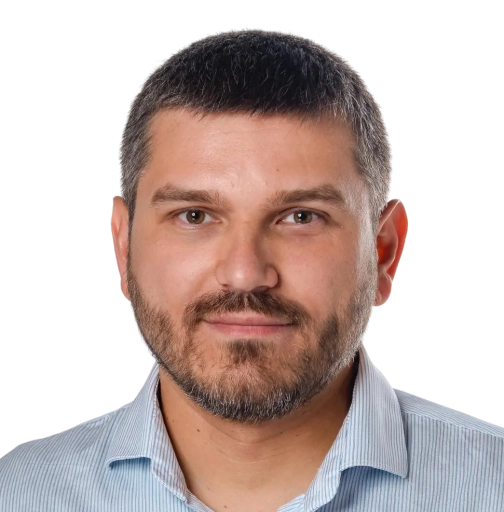
Last position:
Senior LLM Research Scientist at BYO Inc.
- Research and develop models for chatbots, NLP and LLMs (e.g. Llama, Qwen, OpenAI)
- Enhance chatbots with RAG, in-context learning
- Supervised fine-tuning (PEFT, LoRA), Huggingface or Unsloth
- Advanced training methods: Test-time training, (transductive) active learning, reinforcement learning
- High-throughput serving with vLLM
- Apply embedding models (e.g. SentenceTransformers), similarity/vector search or vector DB or ranking (e.g. LlamaIndex, Faiss, LangChain)
- Generate and filter synthetic data, clustering
- Detect hallucinations
- Evaluate chatbot models (Rouge, BLEU, F1-Score, Recall, Precision)
- Visualization of experiments (matplotlib)
Georgios P.

Last position:
Senior Scientist at Hanwha Qcells GmbH
- Managed and implemented worldwide outdoor test facilities for both prototype and commercial silicon-based photovoltaics.
- Produced comprehensive technical reports on short- and long-term outdoor performance, collaborating with cross-functional teams to identify and address performance trends.
- Enhanced efficiency in data analysis by developing automation tools and dashboards.
- Modeled and simulated the yield of systems and modules to support product development.
- Published research findings at international conferences and established partnerships for enhanced research outcomes.
Sanu M.

Last position:
Decision Scientist III at Vinted GmbH
Built an FRT (Full Resolution Time) data product in dbt and BigQuery with a MECE ticket lifecycle methodology derived from a unified semantic mapping and ordered event stream.
Delivered reusable macros, modular models, automated unit tests, and a LookML metric layer adopted by Process Improvements and Ops.
Overhauled FRT experiments using quasi-experimental and pre-post causal analyses to demonstrate that slower resolution affected GMV, enabling shifting from a blanket 70%-in-48h SLA to problem-specific targets and providing the analytical foundation for SLA redesign.
Amr H.

Last position:
Member at National EV Standards Committee
- Co-authored EV retrofitting regulations and service-center standards.
- Developed VIN and local-content frameworks and aligned multiple governmental stakeholders.
Maria Daniela L.

Last position:
Research Scientist at Intel Labs
- Designed and implemented AI-driven orchestration models for large-scale distributed systems.
- Developed Python and Go-based optimization pipelines to automate service placement across Kubernetes clusters.
- Worked on scalable data pipelines and production-ready model integration with serverless frameworks (intent-driven K8s operators).
- Contributed to the Horizon Europe VERGE project.
Salar M.
Last position:
Project management and tutor at LLMs Learning Journey
- Designed and managed an upskilling academy for Deutsche Telekom.
Discover over 15,000 top freelancers


Research Scientists statistics
Aggregated from the professional profiles of matched freelancers.

Experience
13 years

Position duration
2.5 years

Positions per freelancer
7

Top business areas
Product Development, Research and Development, Information Technology

Top industries
Education, Information Technology, Energy

Bachelor's degree or higher
100%

Master's degree or higher
83%

Doctorate
83%

Certifications per freelancer
0

Most common languages
English, German, French

Speak two or more languages
100%
Based on our profile pool as of 26 Oct 2026.
Daily rate distribution
The chart shows how the daily rates of experts in this role in Germany are distributed, based on recent contracts on our platform. Each bar covers a rate range — its height shows the share of experts charging within that range.
Average rates for Research Scientists in Germany
Rates are based on recent contracts and do not include FRATCH margin.

The average daily rate is the mean of all daily rates from recent contracts of comparable freelancers on our platform.
The median daily rate is the middle value of all daily rates — half of comparable freelancers charge less, half charge more. Unlike the average, it is barely affected by outliers.
Calculated based on our freelancers’ daily rates as of 26 Oct 2026. Actual rates may vary depending on seniority level, experience, skill specialization, project complexity, and engagement length.
Research Scientists experts industry focus
See which industries our matched freelancers work in most often — every figure is calculated live from the freelancers on FRATCH.
- Education (83%)
- Information Technology (50%)
- Energy (33%)
- Aerospace and Defense (17%)
- Automotive (17%)
- Cosmetics (17%)
- Banking and Finance (17%)
- Food and Beverage (17%)
Please note that freelancers can work across multiple industries, so percentages overlap.
About the role
What they do
Research scientists turn open questions into testable work. They design experiments, build hypotheses, review literature, and interpret results into decisions teams can use. In Germany, they are often brought in for R&D work that needs a sharp external specialist without a long hiring cycle.
Typical deliverables
- Research plans and experimental designs
- Literature reviews and state-of-the-art summaries
- Data analysis, model evaluation, and result interpretation
- Technical reports, slides, and recommendations
- Prototype validation and reproducible documentation
Core skills
A strong Research Scientist combines scientific rigor with practical delivery. They know how to define variables, control bias, and choose methods that fit the problem. They also communicate clearly with engineers, product teams, and leadership.
- Research design and statistical thinking
- Python, R, MATLAB, or similar analysis tools
- Experimental methods, simulation, or lab workflows
- Scientific writing and clear presentation of findings
- Versioned, reproducible work and careful documentation
Where they help
Companies hire research scientists when the work is uncertain, technical, or exploratory. Common cases include new product research, algorithm validation, material testing, and applied science projects that need outside expertise. In Germany, this often fits industrial R&D, medtech, chemistry, software, and advanced engineering teams.
What good looks like
Strong researchers do not just produce data. They frame the right question, challenge weak assumptions, and explain what the results do and do not prove. They also leave behind a method that others can reuse.
- Clear hypotheses and decision-ready conclusions
- Reproducible analysis and clean records
- Honest treatment of uncertainty and limits
- Fast adaptation to new domains and tools
Freelance fit
Freelance work makes sense when a project needs focused expertise, a temporary capacity boost, or a niche scientific background that is hard to hire permanently. It also works well when a team needs outside review before a major research or development step. Remote collaboration is common, but on-site work in Germany can matter for lab access, workshops, or sensitive data. At the best level, a freelance research scientist fits into the team quickly and keeps the work moving without creating extra process.

Frequently asked questions
Not sure where to start with Research Scientists? These answers cover the essentials.

A Research Scientist defines the research question, chooses the method, and turns raw findings into something the team can act on. That may include literature review, experiment design, data analysis, model testing, or a technical recommendation. The exact scope depends on whether the project is exploratory, applied, or validation-focused.
A freelance researcher is a strong choice when you need specialist expertise for a defined project, not a permanent seat. This is common for one-off studies, urgent R&D tasks, or a niche topic that your team does not cover in-house. It also helps when you want an external view before committing to a technical direction.
Look for solid research design, analytical thinking, and the ability to explain results clearly. Depending on the project, a research scientist may also need Python, R, MATLAB, lab methods, statistics, or simulation skills. Just as important is the ability to document work so others can reproduce it.
A data scientist often focuses on data products, forecasting, or production analytics, while a research scientist is usually deeper in scientific inquiry and experimental validation. A research engineer tends to focus more on building and implementing systems than on forming hypotheses. In practice, the titles overlap, so the project scope matters more than the label.
Yes, many parts of the work can be done remotely, especially literature review, analysis, modeling, and reporting. In Germany, on-site collaboration becomes more important when the project needs lab access, hardware tests, or close work with internal R&D teams. Good candidates should be comfortable with both modes if the project requires it.
Ask how the candidate frames a research question, how they choose methods, and how they handle uncertain results. A strong research scientist can explain trade-offs, not just tools. You should also ask for a recent example of how they documented their process and communicated findings to non-specialists.
They often work as the technical lead for the research part of the project, then hand findings to engineers, product managers, or domain experts. The best setup has a clear problem statement, regular check-ins, and one owner for decisions. That keeps the research useful instead of academic for its own sake.
Review the candidate’s prior work for clear methods, sound reasoning, and evidence that they can connect research to business or product decisions. A good Research Scientist will show structured thinking, honest limits, and clean documentation. If possible, ask for a short case discussion rather than only a CV review.
The average hourly rate for Research Scientists in Germany is 90 €, which corresponds to a daily rate of about 720 € based on an 8-hour working day.
Of the freelancers working as Research Scientists in Germany, 100% hold at least a Bachelor's degree, 83% hold at least a Master's degree, and 83% hold a doctorate.
On average, freelancers working as Research Scientists in Germany have 13 years of professional experience, with a single engagement typically lasting around 2.5 years.
The most common languages among freelancers working as Research Scientists in Germany are English (100%), German (83%), and French (50%).
The most common industries among freelancers working as Research Scientists in Germany are Education (83%), Information Technology (50%), and Energy (33%).
The most common business areas among freelancers working as Research Scientists in Germany are Product Development (100%), Research and Development (83%), and Information Technology (67%).
FRATCH Research Scientists main locations
Our freelancers and interim experts are at home across the DACH region — available on-site in the major business hubs or fully remote. Choose a location to discover matched specialists, local market insights and up-to-date availability.
 Berlin Hamburg Munich Cologne Frankfurt Stuttgart Dusseldorf Leipzig Dortmund Essen Bremen Dresden Hanover Nuremberg
 Request a free demo
Get in touch with the FRATCH team and we will get back to you within 4 hours.
Would you rather directly get in touch?
We always have the time for a call or email!

Philipp Thomaschewski
FRATCH CEO

