


Computer-Aided Engineering Expert in Germany
from over 15,000 CVs with the power of AIHire experts who deliver finite element analysis, computational fluid dynamics and multiphysics simulation across automotive, industrial and aerospace projects. FRATCH quickly matches you with vetted, available freelancers whose expertise fits your technical goals.

Meet FRATCH Experts in Germany, who have recently used Computer-Aided Engineering
Josef E.

Last position:
Managing Director at CAE Consulting & Engineering GmbH
I work as managing director – organization and active development engineer
Recently completed or nearing completion (2023, 2024):
- Projects in the field of wafer production at Hittec Prontor GmbH (apertures for ZEISS SMT GmbH)
- Micromanipulator concepts with flexure joints for ZEISS SMT, arranged through HAYS AG)
- EVE Innovativ GmbH (combined heat and power plants)
- Kraftblock GmbH, (renewable energy storage)
- CAE Consulting Eng. GmbH, European patent for hybrid robot, market development
- TQ Systems GmbH (gearbox technology)
CE is a supplier of development services in the broad field of mechanical engineering. 30 completed projects in the D-A-CH region. Development and patent exploitation company for R&D, products, cutting and welding robots, conveyor technology ... etc.
My most important results:
- Small selection - results of research and development activities led to the international patent application for cutting and welding robots and to the German patent application for the rotary lifting hanger as well as the spherical joint for combining 3 rods at one point for the parallel kinematics robot, push chain, own European patent for hybrid robot, combustion engines
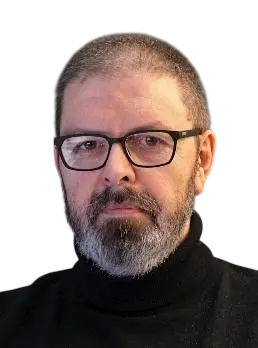
Andreas W.
Last position:
Enterprise Architect at Own development / IP of CAMCO Engineering UG
UEF 3.0 · Semantic Government Overlay (SGO) · Autonomous Systems (UAS / dual use)
- Designed: Semantic Government Overlay (SGO) – AI-guided administration without replacing existing specialist procedures. Read-only semantic layer over registers and specialist processes based on the Federal Information Management (FIM). Decision authority remains with the case worker (architecture principle).
- Developed: Reference architecture with source-backed, derived statements (Executable Ontologies OWL/RDF/SHACL). Technically guaranteed purpose limitation and no-write-path principle in specialist data – auditable, without a central data pool.
- Anchored: Regulation as a design principle: EU AI Act (high-risk obligations for public-sector AI, fundamental rights impact assessment under Art. 27), GDPR, NIS2, and administrative automation limits (§ 35a VwVfG, § 31a SGB X) as technical control points in the architecture.
- Created: Methodical tool for pilot organizations: data pipeline assessment (phase 0), compliance blueprint, and management summary as a decision-ready package for public administration.
- Specified: UEF 3.0 as a successor architecture to TOGAF – decision paper, canonical ontology, six-layer architecture, read/actuate boundary, federation registry, terminology concordance, and release delta as a closed specification status.
- Architected: AI-native mission OS for autonomous UAS and ground robotics as a tactical layer on top of a separately approved autopilot. Run-time assurance according to ASTM F3269-21 (Simplex pattern): the verified safety controller keeps authority, the AI function provides suggestions.
- Designed: Three-tier architecture – Tier 0 autopilot with 650 Hz flight control on RTOS, Tier 1 AI OS with semantic world model and multi-agent cluster, Tier 2 swarm and ground mesh. Zenoh as the primary fabric, MAVLink as the only authenticated command path (single writer). Result: graceful degradation – loss of the mission, not of the aircraft.
- Secured: Two-gate chain on the read/actuate boundary – governance gate (can-question: AI Act risk class per actuation, enforced human oversight under Art. 14, immutable log) before the RTA safety monitor (is-it-correct question: flight envelope, geofence, energy reserve) with revert to the baseline controller.
- Anchored: Dual-use architecture with common core and build-time fork instead of runtime switch. Three separate legal levels: civil variant – UAS under the EASA Basic Regulation (EU) 2018/1139 with the limited applicability under Art. 2(2) of the AI Act, ground robotics under the Machinery Regulation 2023/1230 with the full high-risk obligation chain, Cyber Resilience Act for both; unarmed carrier variant as defense material under AWG/AWV and Dual-Use Regulation 2021/821 (BAFA approval); armed variant under KrWaffKontrG. Each variant lives under exactly one dominant legal regime. Evidence base: AI BOM, SBOM, and complete data lineage.
- Analyzed: System analysis and realignment of grown engineering system landscapes. Approach concept for consolidation without migration – semantic layer over the existing sources instead of data transfer. Result: decision-ready implementation concept including an evaluation model for the target architecture.
Christian O.

Last position:
Managing Partner & Head of Electrical Engineering at B&O Automation GmbH
- Implementation of several automatic milling fixtures for metal processing in the automotive industry
- Implementation of various punching and bending machines, including interlinking
- Electrical design of a production line for surface treatment of roasting ovens for the food service industry
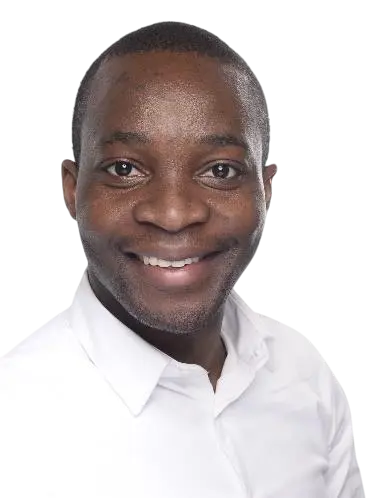
Cedric T.
Last position:
B2B Freelance Design Engineer for Special-Purpose Machinery at FEM-Composites GmbH
- Cost estimation for a hydraulic system, taking into account the costs over the entire product life cycle and optimizing the technical specifications.
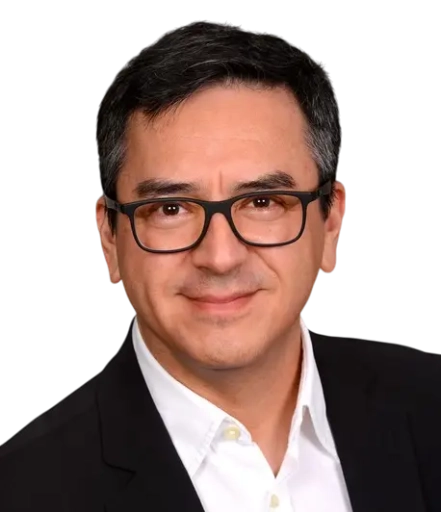
Mauricio G.
Last position:
Design Engineer at Butting CryoTech GmbH
- Creation of complete 3D designs and design drawings
- Evaluation of requirement specifications and customer specifications
- Execution of partial steps in technical work preparation according to specifications and documents, including project support
- Contact person for internal and external customers in design projects
- Design and calculation of piping and components for cryogenic media and low-temperature applications
- Support with finite element calculations
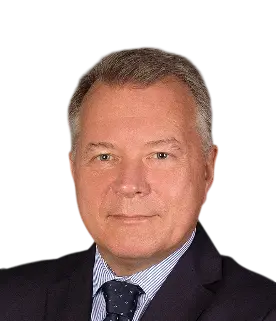
Andreas K.
Last position:
Project Manager at Winkelmann Building+Industry / Reflex Winkelmann
As part of a greenfield project, a new production plant is being built in Slovakia to produce industrial media storage for OEMs and distributors once completed.
Procurement and industrialization of production equipment for prefabrication.
Design, procurement, installation and integration of complete production lines based on stamping, forming and welding technology with integrated, labor-reducing processes.
Establishment of a production environment under strategic aspects according to the latest state of the art.
Overall and continuous communication with the entire greenfield team, adjacent departments and plant and executive management.
Development of concepts together with key suppliers and identification of ratio potentials along manufacturing process chains using value stream analyses.
Collection, assessment and application of process data such as throughput times, manufacturing times, setup times, wait and idle times using time and multimoment studies as well as surveys.
Forward-looking design of production systems and processes with the goal of implementing automated and competitive process solutions as part of comprehensive supply chain management.
Planning of production workflows, definition of manufacturing methods, design of the overall layout and workstations.
Determination and recording of process cost rates, overhead rates, cost evaluation of production processes, machine hourly rates, depreciation as well as expected share of claims and rework costs to optimize manufacturing costs.
Continuous optimizations of product designs for their adaptation into automation-oriented production environments until the plant's SOP.
Multi-project management for the engineering, design, procurement, installation and process integration of all relevant trades with respect to plant engineering, lifting equipment, production equipment and QA installations.
Ongoing establishment of an overall concept in constructive, plant engineering, logistical, IT and QA aspects.
Buse C.
Last position:
Driveline Systems Engineer at Ford Otosan R&D Center
- Led component ownership for drive-line systems in Transit projects from concept to SOP, validation and production launch
- Coordinated DV/PV testing activities (NVH, durability, thermal), analyzed results and implemented design updates with CAD and CAE teams and managed documentation through Teamcenter
- Worked cross-functionally with design, testing, purchasing, plant and quality teams under an agile project structure
- Investigated plant and field issues, conducted root cause analysis and implemented engineering changes
- Participated in supplier feasibility reviews and design freeze meetings and ensured timing and cost alignment
- Created and presented DFMEA, DVP plans, campaign prevention documents and budget reviews to global stakeholders (Ford UK & Ford US)
- Delivered cost-down initiatives with technical feasibility assessments and supplier negotiation support
- Ensured compliance with Ford and international standards (e.g. GSP, ISO, vehicle attribute targets) during development and validation phases
Michael M.

Last position:
Design Engineer at Schüssler Technik GmbH
- Development and design of drives with support from product management
- Technical support for purchasing
- Creation of requirements and functional specifications, FMEAs, calculations and verifications with CAE, test protocols
- Communication with suppliers, customers, production, assembly, quality management and product management
- Testing products and error analysis
- Support for marketing activities (e.g. trade shows)
Hüseyin Özgün G.

Last position:
Freelance Mechanical Engineer - Designer at Gridesign
Conception and detailed design of mechanical systems.
CAD modeling, drawings and calculations.
FEM, motion analysis and reverse engineering.
Preparation of technical proposals and claim management.
AIRBUS A-320 Assembly Station.
AIRBUS A-350 Manual Assembly Station.
FORD Truck R&D Prototype Manufacturing Station.
Raghu Ram V.
Last position:
Telco Customer Churn Prediction – End-to-End ML Pipeline at Self-Initiated Project
- Designed and implemented a full machine learning pipeline for churn prediction using the Telco dataset.
- Applied preprocessing techniques including missing value handling, categorical encoding, feature scaling, and PCA.
- Built and compared over 15 models (logistic regression, random forest, XGBoost, etc.) and evaluated them using accuracy, precision, recall, F1 score, ROC AUC, and PR AUC.
- Tuned hyperparameters with GridSearchCV, achieving 80.6% accuracy with random forest and XGBoost.
- Created visual reports (bar plots, heatmaps, radar charts) to interpret model performance and churn drivers.
- Exported reusable pipelines and trained models with joblib for deployment.
Reinhard M.
Last position:
Consultant at Infineon
- Preparation of data for creating masks for the manufacture of semiconductor chips.
Gernot L.

Last position:
Founder and Managing Director at Softwerk/Ruhr GmbH
- Architecting and developing SaaS platform for graphical definition and execution of pandas data processing pipelines
- Developed POlyglott, an open-source Python CLI tool for translation workflow management featuring PO file parsing, quality linting with glossary enforcement, and DeepL API integration for machine translation
- Developed web application for material compliance management (EU REACH) using Django and modern web technologies
- Built automated infrastructure platform using Proxmox, Terraform, and Ansible — VM provisioning, configuration management, internal DNS, and fleet-wide security hardening across multiple subnets
Emad S.
Last position:
Project Lead / AI Product & Strategy Lead at emireh GmbH
DOKKI
AI-powered digital health product development
- Shaped the product vision, requirements, priorities, and technical target architecture of an AI-powered solution for processing medical documents.
- Designed LLM evaluation, data processing, data protection/governance aspects, and subsequent product development; technical prototyping with Codex.
Sathish V.
Last position:
Master's Thesis Student Quality Management at PAVANA GmbH
- Development of a software-based DMS framework for the integration of QMS with a focus on compliance with ISO 17025 and MEASNET + TR6
- Participated in external DAkkS audits
- Created FMEA, quality deviation reports, Ishikawa diagrams, and 5 Whys reports for energy yield uncertainties and WTGs
- Highlighted critical variables (e.g., wind speed, wind direction, terrain) influencing uncertainty and evaluated data quality to implement QA/QC measures
- Identified main sources of uncertainty in energy yield assessment (e.g., model assumptions, data variability) and assessed impact on energy yield projections
- Systematically calibrated and validated the model using reference data (e.g., LiDAR) to reduce uncertainty while implementing continuous quality improvement processes (PDCA, RCA, SPC, FMEA)
Chenchen C.

Last position:
Patent Engineer (European patent attorney candidate) at Vossius & Partner
- Patent application: European patent drafting and prosecution
- LLM practicing: Developed LLM-based tools for automated patent data retrieval, applying Python scripting to accelerate technical reviews.
Discover over 15,000 top freelancers


Statistics of experts using Computer-Aided Engineering
Aggregated from the professional profiles of matched freelancers.

Experience
22 years

Position duration
3.7 years

Positions per freelancer
9

Top business areas
Product Development, Project Management, Research and Development

Top industries
Manufacturing, Automotive, Education

Certification focus areas
Product Development, Information Technology, Operations

Bachelor's degree or higher
94%

Master's degree or higher
74%

Doctorate
18%

Certifications per freelancer
2

Most common languages
German, English, French

Speak two or more languages
97%
Based on our profile pool as of 29 Oct 2026.
Daily rate distribution
The chart shows how the daily rates of experts in this technology in Germany are distributed, based on recent contracts on our platform. Each bar covers a rate range — its height shows the share of experts charging within that range.
Average rates of experts in Germany using Computer-Aided Engineering
Rates are based on recent contracts and do not include FRATCH margin.

The average daily rate is the mean of all daily rates from recent contracts of comparable freelancers on our platform.
The median daily rate is the middle value of all daily rates — half of comparable freelancers charge less, half charge more. Unlike the average, it is barely affected by outliers.
Calculated based on our freelancers’ daily rates as of 29 Oct 2026. Actual rates may vary depending on seniority level, experience, skill specialization, project complexity, and engagement length.
Computer-Aided Engineering experts industry focus
See which industries our matched freelancers work in most often — every figure is calculated live from the freelancers on FRATCH.
- Manufacturing (79%)
- Automotive (67%)
- Education (38%)
- Energy (33%)
- Information Technology (33%)
- Professional Services (31%)
- Aerospace and Defense (21%)
- Construction (21%)
Please note that freelancers can work across multiple industries, so percentages overlap.
About the technology
Engineering Simulation
Computer-Aided Engineering, or CAE, uses digital models and numerical simulation to predict how products and systems behave before physical testing. Companies use it to study strength, heat transfer, fluid flow, vibration, fatigue, crash behavior and manufacturing processes. Results support design decisions, validation and compliance work across the product lifecycle.
Core Methods
CAE projects combine several disciplines and methods:
- Finite element analysis for stress, deformation, fatigue and structural integrity
- Computational fluid dynamics for airflow, liquids, cooling and combustion
- Multibody dynamics for mechanisms, motion and load paths
- Thermal, acoustic, electromagnetic and multiphysics simulation
- Design optimization, sensitivity studies and reduced-order models
Tools And Data
The ecosystem includes solvers, pre-processors, post-processors and product lifecycle data. Common tools include ANSYS, Abaqus, Siemens Simcenter, Altair HyperWorks, STAR-CCM+ and OpenFOAM. Strong specialists also work with CAD geometry, meshing, material models, scripting, high-performance computing and simulation data management.
Where It Runs
CAE supports vehicles, aircraft, machinery, medical devices, energy systems, electronics and industrial equipment. In Germany, automotive, manufacturing, aerospace and energy companies often connect simulation teams with design, testing and production. Remote work is practical for model preparation and analysis, while workshops or lab access may require on-site collaboration.
When To Bring Expertise
Companies bring in freelance CAE expertise when a project needs a specialist method, an independent validation path or additional capacity before a release milestone. Typical assignments include setting up a simulation model, improving mesh quality, calibrating material data, automating repetitive studies and translating results into design recommendations. Clear geometry, loads, boundary conditions and acceptance criteria make collaboration more effective.
What Good Looks Like
A strong professional explains assumptions, checks whether results are physically credible and documents the full workflow. They distinguish numerical errors from genuine design risks and compare simulation findings with tests or analytical calculations where possible. Useful deliverables include validated models, reproducible scripts, traceable reports and practical guidance for the next design iteration.

Frequently asked questions
Everything clients usually want to know about Computer-Aided Engineering, in one place.

Computer-Aided Engineering is used to predict product performance through digital analysis and simulation. It helps teams assess structural strength, fluid behavior, heat transfer, vibration, fatigue, crash response and other conditions before or alongside physical testing.
CAE can evaluate many design variants earlier and often with less material waste than building a prototype for every option. It does not replace testing in every case, because reliable results depend on sound assumptions, suitable models and validation against physical evidence.
A Computer-Aided Engineering specialist may work with ANSYS, Abaqus, Siemens Simcenter, Altair HyperWorks, STAR-CCM+ or OpenFOAM. The right tool depends on the physics, industry requirements, solver capabilities, CAD workflow and available computing environment.
CAE work benefits from knowledge of CAD, material characterization, experimental testing, numerical methods and product lifecycle processes. Python or another scripting language can automate model setup, parameter studies, post-processing and report generation.
The required level depends on the risk and scope of the analysis. A focused meshing or post-processing assignment may need a different profile from a safety-critical multiphysics model that includes method selection, correlation testing and technical sign-off.
Computer-Aided Engineering work can often be performed remotely when secure access to CAD files, solvers, computing resources and product data is available. On-site sessions may still be useful for lab testing, design reviews, hardware checks or collaboration with German-language production teams.
Look for clear assumptions, appropriate boundary conditions, sensible mesh studies and evidence that the model was checked against tests or analytical results. A capable CAE professional documents uncertainty, convergence, limitations and the design action that follows from the findings.
Define the engineering question, target outputs, geometry status, material data, loads, boundary conditions and validation evidence. Sharing the relevant CAD format, solver environment, computing constraints and reporting expectations helps a Computer-Aided Engineering professional estimate the work and start efficiently.
The average hourly rate of freelancers in Germany who have used Computer-Aided Engineering in their recent projects is 84 €, which corresponds to a daily rate of about 672 € based on an 8-hour working day.
Of the freelancers in Germany who have used Computer-Aided Engineering in their recent projects, 94% hold at least a Bachelor's degree, 74% hold at least a Master's degree, and 18% hold a doctorate.
On average, freelancers in Germany who have used Computer-Aided Engineering in their recent projects have 22 years of professional experience, with a single engagement typically lasting around 3.7 years.
The most common languages among freelancers in Germany who have used Computer-Aided Engineering in their recent projects are German (100%), English (97%), and French (18%).
The most common industries among freelancers in Germany who have used Computer-Aided Engineering in their recent projects are Manufacturing (79%), Automotive (67%), and Education (38%).
The most common business areas among freelancers in Germany who have used Computer-Aided Engineering in their recent projects are Product Development (95%), Project Management (69%), and Research and Development (64%).
Main locations of FRATCH Experts, who have recently used Computer-Aided Engineering
Our freelancers and interim experts are at home across the DACH region — available on-site in the major business hubs or fully remote. Choose a location to discover matched specialists, local market insights and up-to-date availability.
 Berlin Hamburg Munich Cologne Frankfurt Stuttgart Dusseldorf Leipzig Dortmund Essen Bremen Dresden Hanover Nuremberg
Request a free demo
Get in touch with the FRATCH team and we will get back to you within 4 hours.
Would you rather directly get in touch?
We always have the time for a call or email!

Philipp Thomaschewski
FRATCH CEO

