


Bioinformatics Experts in Germany
matched in minutes from over 15,000 CVs with the power of AIWork with specialists who build genomic pipelines, analyze single-cell RNA sequencing data, and scale cloud computing workflows with vetted, available freelancers matched fast.

Meet FRATCH Experts in Germany, who have recently used Bioinformatics
Nikolai G.

Last position:
Clinical Data Manager at Dr. Falk Pharma
- Used OpenCode and AI-assisted software engineering to design, implement, refactor, test, and document an end-to-end RAW/SDTM/ADaM pipeline in R for Dr. Falk Pharma (07/2026), including metadata-driven transformations, automated validation rules and QC, traceability, and reproducible clinical outputs.
Martin S.

Last position:
Ph.D. Student at National University of Singapore & A*STAR Genome Institute of Singapore
Developed and trained deep learning models for large biological datasets. Built data and training pipelines. Tutor for machine learning courses. Supervised research interns and bachelor theses.
Felix R.

Last position:
Automation Developer & AI Expert at Connox
- Database restructuring
- UiPath programming and setting up the automation infrastructure with connection to Zendesk + in-house ERP
- Implementation of 6 processes
- AI and cloud review for later expansion
- Process Mining Analyst with UiPath and Celonis
Valery K.

Last position:
Sr. Data Scientist & Engineer at Virtual Minds
- Development of high-performance ad distribution via auction
- Holistic (multi-campaign & multi-channel) advertisement placement optimization
- Algorithmic optimization for NP-Hard/NP-e
- Multiple Knapsack Problem with constraints
- Online estimation of parameters in stochastic environments
Tools: Python, R, Kotlin, MILP/SAT/CP Solvers, Pytorch, Pandas, Docker
Ehsan A.
Last position:
Clinical Data Scientist at Freelance
- Conduct data management and statistical analysis for clinical studies on behalf of CROs.
- Guest lecturer at Ivancity University, Paris, specializing in data anonymization techniques and statistical disclosure control.
- Provide scientific and medical writing services for pharmaceutical companies.
- Perform optical mapping data analysis and develop software tools with a focus on algorithm optimization and technical support.
Kevin B.

Last position:
Procurator and AI Lead at ValueData GmbH
- Serve as AI lead for life-science solutions, integrating advanced AI models directly into company workflows and ensuring seamless deployment.
- Design and implement deep learning architectures (PyTorch, Keras) for complex biomedical challenges, including cell segmentation, multimodal omics analysis, and prediction of point clouds.
- Develop and deploy robust LLM-based systems, including RAG architectures and agentic workflows using LangGraph, to facilitate natural-language interaction with complex medical data.
- Lead cross-functional initiatives to apply foundation models and explainable AI (xAI) to clinical and evolutionary algorithms.
Dmitriy D.
Last position:
Freelance Senior Data Scientist at Merck KgaA
- AWS
- Genedata Profiler
- Data Lake
- APIs
- Rstudio
- GitLab
- Python
- R
- Data acquisition, integration, and simulation
- Multiplex immunofluorescence
- Copy-number variation calling
- HLA typing and loss-of-heterozygosity analysis
- RNA expression analysis
Ebenezer N.
Last position:
Applied Data Science & AI Bootcamp
- Prototyped LLM/RAG document assistant; trained transcriptomics and proteomic data; used Git/Docker for reproducibility.
- Strengthened ML fundamentals applicable to omics (feature engineering, validation, leakage control).
Mathew D.

Last position:
Data Science Expert and AI Strategist at Freelancer
- Built an API to ingest, clean, translate, and index EU tenders documents in Neo4j, enabling hybrid search with RAG and Cypher queries via a Streamlit dashboard
- Deployed the API on AWS Lightsail container services with CI/CD automation via GitHub Actions, ensuring stability through pytest unit and integration tests
- Designed and developed a comprehensive online course on data analysis using ChatGPT for professionals and learners, creating instructional videos and interactive Jupyter notebooks
- Utilized OBS and professional audio equipment to ensure high-quality video and audio content
- Led a CRM data normalization and cleaning project visualized via a Sankey diagram to aid customer understanding and pipeline development
- Implemented and validated a genAI-driven web crawling strategy on AWS, ensuring data quality, scalability, and CRM data augmentation
Nooshin O.

Last position:
Senior Computational Biologist at Max-Planck-Institute for Molecular Genetics
- Conducting research at the interface of proteomics and artificial intelligence, focusing on the application of machine learning models (e.g., neural networks, clustering algorithms, and feature extraction) to analyze complex biological datasets.
- Developing and teaching AI-based analytical workflows for molecular and proteomic data, integrating tools such as Python (scikit-learn, TensorFlow, Pandas) for predictive modeling and data visualization.
- Collaborating with interdisciplinary teams to explore data-driven hypotheses in molecular genetics and enhance biological interpretation through AI-assisted pattern recognition.
- Implementing automated data processing pipelines to improve reproducibility and FAIR data management in high-throughput experiments.
Mustafa K.
Last position:
Postdoctoral Researcher at National Institutes of Health (NIH), NHLBI
- Led peptide inhibitor design against UPF1 using RFdiffusion, ProteinMPNN, and AlphaFold2/3; validated candidates with molecular dynamics simulations
- Screened over 1 million compounds for ataxia fusion proteins via AutoDock Vina; confirmed top hits using GROMACS MD simulations
- Developed RNA-seq analysis pipelines for nonsense-mediated decay (NMD) studies including isoform quantification and motif discovery
- Modeled protein-RNA interactions using AlphaFold3 multimers integrated with BioGRID/STRING databases
- Established computational workflows for transcriptomics and RNA regulation in iPSC-derived human models
Douglas N.
Last position:
Independent Data Analyst – Tech & Life Sciences at p53-REACT
- Supported partner centers in adopting AI and LLMs-based predictive models for small-molecule discovery and therapeutic response using their genomic databases, designing failure modes for AI, and reducing feature-engineering time by 25%.
- Performed Python analysis and improved domain motion coverage by 30% through integration of free energy data with conformational modeling, mapping heterogeneous protein states for accurate structure–function analysis.
Esra G.
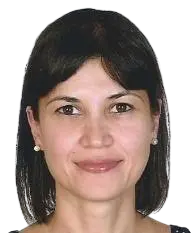
Last position:
Quality Engineer at Thermo Fisher Scientific GENEART GmbH
- Management of quality management system documents
- Management of the change control process
- Assessment and classification of customer complaints
- Assessment and classification/rating of customer complaints
- Identification and assessment of nonconforming materials and deviations
- Management of planned/unplanned deviations, CAPAs, and root cause analysis
Athul S.
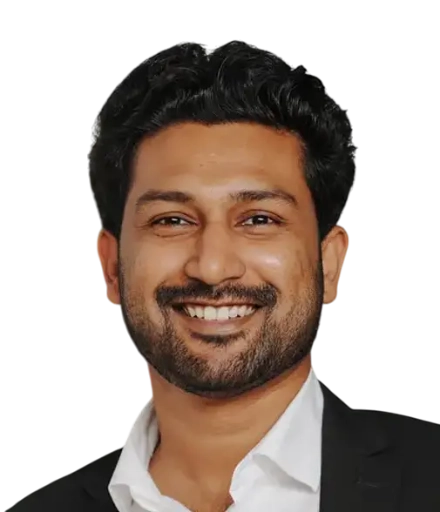
Last position:
Data Scientist at Science to Data Science – Deutsche Welle
- Built a GPT-based synthetic data pipeline that reduced acquisition cost and turnaround time by more than half.
- Modeled audience behavior across underrepresented groups using prompt workflows and statistical validation.
- Evaluated data realism with clustering, regression, and divergence analysis.
- Delivered reproducible Python workflows to automate experimentation in an Agile environment.
- Translated analytical results into clear insights for content and strategy teams.
- Technologies and skills: Python, Generative AI, GPT, Machine Learning, exploratory data analysis, Agile, GitHub, cloud computing, hallucination analysis.
Muhammad U.
Last position:
Research Assistant at Saarland University
- Applied AI-driven CADD methodologies for biosynthetic pathway optimization and molecule screening.
- Integrated synthetic biology with computational chemistry workflows for rapid in-silico experimentation.
- Automated ML pipelines using Python, PyTorch, and Scikit-learn on Linux, improving model testing and reproducibility.
Discover over 15,000 top freelancers


Statistics of experts using Bioinformatics
Aggregated from the professional profiles of matched freelancers.

Experience
13 years

Position duration
2.3 years

Positions per freelancer
6

Top business areas
Research and Development, Information Technology, Product Development

Top industries
Biotechnology, Education, Pharmaceutical

Certification focus areas
Research and Development, Information Technology, Business Intelligence

Bachelor's degree or higher
100%

Master's degree or higher
96%

Doctorate
64%

Certifications per freelancer
2

Most common languages
German, English, French

Speak two or more languages
96%
Based on our profile pool as of 9 Oct 2026.
Daily rate distribution
The chart shows how the daily rates of experts in this technology in Germany are distributed, based on recent contracts on our platform. Each bar covers a rate range — its height shows the share of experts charging within that range.
Average rates of experts in Germany using Bioinformatics
Rates are based on recent contracts and do not include FRATCH margin.

The average daily rate is the mean of all daily rates from recent contracts of comparable freelancers on our platform.
The median daily rate is the middle value of all daily rates — half of comparable freelancers charge less, half charge more. Unlike the average, it is barely affected by outliers.
Calculated based on our freelancers’ daily rates as of 9 Oct 2026. Actual rates may vary depending on seniority level, experience, skill specialization, project complexity, and engagement length.
Bioinformatics experts industry focus
See which industries our matched freelancers work in most often — every figure is calculated live from the freelancers on FRATCH.
- Biotechnology (96%)
- Education (60%)
- Pharmaceutical (48%)
- Healthcare (44%)
- Agriculture (20%)
- Information Technology (20%)
- Professional Services (20%)
- Banking and Finance (16%)
Please note that freelancers can work across multiple industries, so percentages overlap.
About the technology
Computational Biology and Multi-Omics Pipelines
Bioinformatics unites biological discovery with computer science to parse massive molecular datasets. Organizations rely on computational biology to analyze whole-genome sequencing, transcriptomics, proteomics, and structural biology. Specialists construct automated, reproducible workflows that translate raw sequencer output into actionable biomedical discoveries.
Core Tooling and Workflow Orchestration
Modern biological data workflows depend on standard pipeline managers and specialized algorithms to handle petabyte-scale data:
- Workflow execution using Nextflow, Snakemake, and Common Workflow Language
- Alignment and processing via BWA, Bowtie2, SAMtools, and GATK
- Statistical computing with Bioconductor, R, Biopython, and pandas
- Containerization across environments using Docker, Singularity, and Apptainer
When Organizations Hire External Expertise
Biotech startups and established pharma companies frequently engage freelance professionals when handling sudden sequencing volume spikes or entering new analytical domains. Specialized help becomes essential when migrating on-premise clusters to cloud infrastructure, preparing discovery data for clinical trial submissions, or developing custom variant interpretation algorithms under tight deadlines.
German Biotech Ecosystem and Compliance
Germany hosts dynamic life science hubs in regions like Munich, Heidelberg, Berlin, and the Rhine-Neckar cluster. Freelance specialists working with German research institutions and pharma firms understand stringent European data privacy regulations, including GDPR mandates for patient genomic data, and adapt seamlessly to bilingual, cross-functional international teams.
What Distinguishes Top Practitioners
Elite computational biologists possess a dual foundation: deep statistical acumen paired with genuine biological context. They write clean, portable code, avoid treating statistical toolkits as black boxes, and design pipelines that researchers can independently inspect and reproduce years later without environment drift.
Infrastructure and High-Performance Compute
High-throughput sequencing demands scalable compute environments. Strong specialists manage hybrid architectures, orchestrating jobs across institutional Slurm clusters and public clouds like AWS, Google Cloud, or Azure while actively optimizing data egress costs and storage lifecycles.

Frequently asked questions
Questions about Bioinformatics? Start with the answers below.

Specialists delivering bioinformatics services typically build end-to-end analytical pipelines for genomics, transcriptomics, or proteomics data. They deliver documented workflow scripts in Nextflow or Snakemake, clean expression matrices, variant call sets, and statistical interpretation reports tailored for experimental biologists and decision-makers.
While general data scientists excel in standard predictive modeling, computational biology demands deep knowledge of molecular biology protocols, sequencing biases, and genomic reference standards. Applying standard algorithms without understanding assay noise or batch effects frequently produces misleading biological conclusions.
Professional bioinformatics relies predominantly on Python and R. Python powers workflow scripting, machine learning models, and pipeline backends, while R serves as the industry standard for differential expression, statistical modeling, and visualization through packages in the Bioconductor repository.
Projects involving bioinformatics in Germany must satisfy strict GDPR standards because human genetic data is classified as sensitive health information. Experienced specialists implement robust data pseudonymization, run analytical pipelines within compliant European cloud regions, and ensure no raw genomic identifiers breach local compliance rules.
Yes, nearly all computational biology tasks happen remotely since biological samples are sequenced in wet labs and converted into digital files beforehand. Remote specialists securely access cloud environments, high-performance computing clusters, and version-controlled code repositories without needing physical laboratory access.
High-quality bioinformatics code features strict environment containerization, clear unit tests, and deterministic pipeline orchestration. Top professionals share well-documented repositories, design modular workflows with built-in sanity checks, and demonstrate deep awareness of biological benchmarking benchmarks.
Beyond core biological algorithms, modern bioinformatics projects demand fluency in Linux system administration, Docker or Singularity containerization, and cloud resource management. Familiarity with high-performance schedulers like Slurm or AWS Batch ensures that high-throughput sequencing jobs execute efficiently without computational bottlenecks.
Most biotechnology and academic research organizations operating in Germany use English as their primary working language for scientific code, documentation, and data reviews. While basic German is helpful for administrative tasks, deep bioinformatics expertise and fluent technical English are usually the vital requirements.
The average hourly rate of freelancers in Germany who have used Bioinformatics in their recent projects is 90 €, which corresponds to a daily rate of about 722 € based on an 8-hour working day.
Of the freelancers in Germany who have used Bioinformatics in their recent projects, 100% hold at least a Bachelor's degree, 96% hold at least a Master's degree, and 64% hold a doctorate.
On average, freelancers in Germany who have used Bioinformatics in their recent projects have 13 years of professional experience, with a single engagement typically lasting around 2.3 years.
The most common languages among freelancers in Germany who have used Bioinformatics in their recent projects are German (100%), English (96%), and French (16%).
The most common industries among freelancers in Germany who have used Bioinformatics in their recent projects are Biotechnology (96%), Education (60%), and Pharmaceutical (48%).
The most common business areas among freelancers in Germany who have used Bioinformatics in their recent projects are Research and Development (100%), Information Technology (56%), and Product Development (48%).
Main locations of FRATCH Experts, who have recently used Bioinformatics
Our freelancers and interim experts are at home across the DACH region — available on-site in the major business hubs or fully remote. Choose a location to discover matched specialists, local market insights and up-to-date availability.
 Berlin Hamburg Munich Cologne Frankfurt Stuttgart Dusseldorf Leipzig Dortmund Essen Bremen Dresden Hanover Nuremberg
 Request a free demo
Get in touch with the FRATCH team and we will get back to you within 4 hours.
Would you rather directly get in touch?
We always have the time for a call or email!

Philipp Thomaschewski
FRATCH CEO

