


Next-Generation Sequencing Experts in Germany
in minutes with the power of AIWork with specialists who design reproducible bioinformatics pipelines, process high-throughput genomic data, and interpret complex variant sets, matched fast and reliably through our network of vetted independent talent.

Meet FRATCH Experts in Germany, who have recently used Next-Generation Sequencing
Kacper K.

Last position:
Author
Seqnaut and Sycosm (WIP) – Embedded Audio DSP & Synthesis Platform
- Embedded audio DSP framework — synthesizers, effects, drum machines; modular audio graph
- Sequencing: PianoRoll, StepGrid, MasterClock; 8-voice polyphonic synth; CLI + OSC
- Transient Detector — dual-envelope adaptive threshold, guitar attack detection
- Hardware: Teensy 4.1, custom AFE design tapping BOSS GX-100; MIDI FX integration
Label: C++23, C, Python, CMake, FreeRTOS, Teensy 4.1 (ARM Cortex-M7), Teensy Audio (Stoffregen), DaisySP, I2S/SAI, OSC, MIDI
Kevin B.

Last position:
Procurator and AI Lead at ValueData GmbH
- Serve as AI lead for life-science solutions, integrating advanced AI models directly into company workflows and ensuring seamless deployment.
- Design and implement deep learning architectures (PyTorch, Keras) for complex biomedical challenges, including cell segmentation, multimodal omics analysis, and prediction of point clouds.
- Develop and deploy robust LLM-based systems, including RAG architectures and agentic workflows using LangGraph, to facilitate natural-language interaction with complex medical data.
- Lead cross-functional initiatives to apply foundation models and explainable AI (xAI) to clinical and evolutionary algorithms.
Jürgen V.
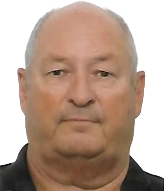
Last position:
Freelance Consultant at Freelance
- Temporary support for several medium-sized companies in the Osnabrück area in project management
- Preparation and launch of large projects with budgets of around EUR 20 million or more in machine and plant engineering
- Risk management, project definitions, head of design
Anthony P.

Last position:
Aerospace Engineer & Process Consultant at Sequentia Aero
- Lead and support industrial projects
- Design and validate robust methods and processes
- Optimize technical and managerial workflows
- Source and qualify suppliers, manage tenders and contracts
- Oversee logistics flows and first deliveries
- Monitor obsolescence and KPIs (cost, quality, lead time, inventory)
- Develop training modules and technical tutorials
- Train teams and enhance technical skills
- Track and measure effectiveness of improvement actions
Dmitriy D.
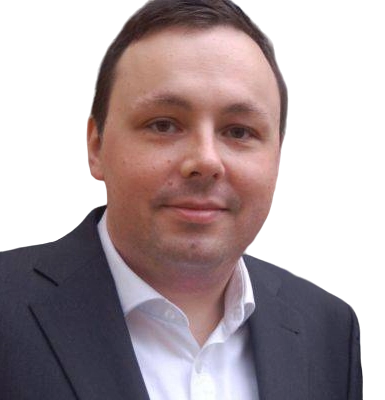
Last position:
Freelance Senior Data Scientist at Merck KgaA
- AWS
- Genedata Profiler
- Data Lake
- APIs
- Rstudio
- GitLab
- Python
- R
- Data acquisition, integration, and simulation
- Multiplex immunofluorescence
- Copy-number variation calling
- HLA typing and loss-of-heterozygosity analysis
- RNA expression analysis
Ebenezer N.
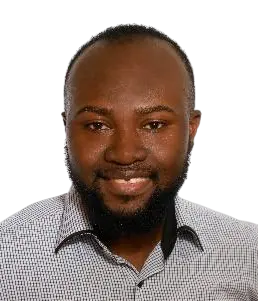
Last position:
Applied Data Science & AI Bootcamp
- Prototyped LLM/RAG document assistant; trained transcriptomics and proteomic data; used Git/Docker for reproducibility.
- Strengthened ML fundamentals applicable to omics (feature engineering, validation, leakage control).
Mathew D.

Last position:
Data Science Expert and AI Strategist at Freelancer
- Built an API to ingest, clean, translate, and index EU tenders documents in Neo4j, enabling hybrid search with RAG and Cypher queries via a Streamlit dashboard
- Deployed the API on AWS Lightsail container services with CI/CD automation via GitHub Actions, ensuring stability through pytest unit and integration tests
- Designed and developed a comprehensive online course on data analysis using ChatGPT for professionals and learners, creating instructional videos and interactive Jupyter notebooks
- Utilized OBS and professional audio equipment to ensure high-quality video and audio content
- Led a CRM data normalization and cleaning project visualized via a Sankey diagram to aid customer understanding and pipeline development
- Implemented and validated a genAI-driven web crawling strategy on AWS, ensuring data quality, scalability, and CRM data augmentation
Muhammad U.

Last position:
Research Assistant at Saarland University
- Applied AI-driven CADD methodologies for biosynthetic pathway optimization and molecule screening.
- Integrated synthetic biology with computational chemistry workflows for rapid in-silico experimentation.
- Automated ML pipelines using Python, PyTorch, and Scikit-learn on Linux, improving model testing and reproducibility.
Nandkishor V.

Last position:
Bioinformatics Analyst at Dr. Omics Research Lab
- Analyzed large-scale genomic, transcriptomic, and proteomic datasets using bioinformatics tools and pipelines.
- Performed data preprocessing, quality control, alignment, and variant identification using platforms like Python, R, and Linux-based tools.
- Conducted statistical and computational analyses to identify biomarkers, gene expression patterns, and functional annotations.
- Collaborated with laboratory scientists to integrate bioinformatics results with experimental data.
Pawandeep S.
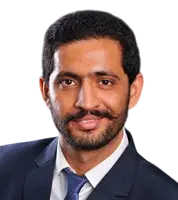
Last position:
Research Technician at QIMA Monasterium GmbH
- Establishing flow cytometry experiments, including NGS workflow antibody panel design, to investigate how various drug treatments affect TNF receptor expression and influence activation and exhaustion of human-derived T cells.
- Conducting projects on the effects of various drug treatments on a human ex vivo wound healing skin model, performing PAS staining and quantifying the length of the epithelial tongue following injury.
- Investigating effects of drug treatments on hair follicles and ex vivo wound healing skin samples at the transcriptomic level by analyzing expression of specific target genes using quantitative PCR (qPCR).
- Managing daily ordering and inventory of laboratory consumables and equipment, following ISO 9001 standards.
Pierre J.

Last position:
Postdoctoral Researcher at Anna Poetsch’s Biomedical Genomics group, Dresden
- Benchmarked multiple LLMs for genomic prediction tasks, ensuring rigorous evaluation across architectures and datasets.
- Extended and streamlined in-lab LLM architecture, enhancing interpretability and broadening applicability.
- Identified sequence and epigenetic factors underlying human genome stability, enabling deeper insights into their distinct roles in genome biology.
- Mentored and designed projects for several master’s students and interns, leading to highly graded reports and development of pipelines with lab-wide applications.
Ravindra G.
Last position:
Postdoctoral Researcher at Helmholtz Institute for Infection Research
- Developed an agent based model to elucidate the dose-uptake discrepancy of antibiotics in bacteria
- Fostered collaboration with microbiologists to develop a data driven framework for antibiotic dosing
Timo G.

Last position:
S/4HANA Project Management, Board and Strategy Consulting at Services
- S/4HANA project management: book project with an online hub to derive an agile project management methodology (Scrum) based on SAP Activate, Solution Manager Focused Build, SAP Enable Now, many SAP project accelerators, community solutions and custom developments.
- Strategy consulting: overview of service providers and product vendors as well as demos and videos to present best practice processes, cloud solutions and SAP community products.
- Sales structure development: scaling the network organization via partnerships, public relations (PR), marketing, digital events etc.
- Contract terms & general terms and conditions: manufacturing and service contracts, personnel placement contracts, copyrights etc.
Ege O.

Last position:
Guest Researcher, Dunkelmann Lab, Plant Synthetic Biology at Max Planck Institute of Molecular Plant Physiology
- Developed and maintained data analysis pipelines for plant synthetic genomics with a focus on chloroplast engineering.
- Developed a pipeline to detect true NUPTs (nuclear plastid DNA insertions) in plant genomes using long-read sequencing data.
Rebecca S.

Last position:
Senior Territory Manager, Scientific Advisor and Business Development Strategist at VectorBuilder
- Provide tailored scientific advice on gene delivery strategies to pharma and academic partners, rapidly assessing complex project needs and aligning them with vector design and service capabilities.
- Plan CRO projects for our team to execute.
- Work closely with the CDMO team, gaining exposure to regulatory requirements and manufacturability considerations.
- Key member of the business development team; recently began shaping strategic collaborations to expand company capabilities and market reach.
- Achieved 52 percent territory revenue growth in 2024 by combining scientific insight with strategic consulting and customer engagement.
- Contributed to internal capability building through onboarding, mentoring, and knowledge-sharing across national teams.
Discover over 15,000 top freelancers


Statistics of experts using Next-Generation Sequencing
Aggregated from the professional profiles of matched freelancers.

Experience
16 years

Position duration
1.8 years

Positions per freelancer
9

Top business areas
Research and Development, Information Technology, Product Development

Top industries
Biotechnology, Education, Pharmaceutical

Certification focus areas
Business Intelligence, Information Technology, Research and Development

Bachelor's degree or higher
100%

Master's degree or higher
88%

Doctorate
59%

Certifications per freelancer
2

Most common languages
English, German, French

Speak two or more languages
100%
Based on our profile pool as of 9 Oct 2026.
Daily rate distribution
The chart shows how the daily rates of experts in this technology in Germany are distributed, based on recent contracts on our platform. Each bar covers a rate range — its height shows the share of experts charging within that range.
Average rates of experts in Germany using Next-Generation Sequencing
Rates are based on recent contracts and do not include FRATCH margin.

The average daily rate is the mean of all daily rates from recent contracts of comparable freelancers on our platform.
The median daily rate is the middle value of all daily rates — half of comparable freelancers charge less, half charge more. Unlike the average, it is barely affected by outliers.
Calculated based on our freelancers’ daily rates as of 9 Oct 2026. Actual rates may vary depending on seniority level, experience, skill specialization, project complexity, and engagement length.
Next-Generation Sequencing experts industry focus
See which industries our matched freelancers work in most often — every figure is calculated live from the freelancers on FRATCH.
- Biotechnology (79%)
- Education (47%)
- Pharmaceutical (42%)
- Agriculture (32%)
- Healthcare (32%)
- Information Technology (21%)
- Aerospace and Defense (16%)
- Automotive (16%)
Please note that freelancers can work across multiple industries, so percentages overlap.
About the technology
High-throughput genomic analysis and discovery
Next-Generation Sequencing, frequently called NGS or massively parallel sequencing, enables large-scale sequencing of DNA and RNA. Organizations rely on this technology to analyze whole genomes, target specific exomes, profile transcriptomes via RNA-seq, and characterize complex microbial communities through metagenomics.
Core analytical toolchains and data workflows
- Raw data preprocessing and quality control using FastQC and Trimmomatic
- Sequence alignment and mapping with BWA-MEM, Bowtie2, and STAR
- Variant calling and filtering via GATK, FreeBayes, and DeepVariant
- Functional annotation with Ensembl VEP, SnpEff, and ANNOVAR
- Workflow orchestration using Nextflow, Snakemake, and containerized Docker pipelines
Platforms, chemistry, and sequencing formats
Modern sequencing workflows integrate platforms from Illumina, Oxford Nanopore Technologies, and Pacific Biosciences. Short-read approaches deliver high base accuracy for variant discovery, while long-read sequencing resolves structural variations, repetitive genomic elements, and complex transcript isoforms across diverse sample types.
Specialized freelance roles across German industries
Biotechnology hubs, university clinics, and pharmaceutical operations across Germany frequently require specialized support to handle peak data loads. External specialists provide immediate capacity for validating diagnostic assays, scaling cloud infrastructure, and automating repetitive processing tasks without lengthy recruitment cycles.
Regulatory compliance and operational standards
Genomic projects in European clinical and diagnostic environments demand stringent data integrity and governance. Specialists configure pipelines that align with General Data Protection Regulation requirements, implement version-controlled software environments, and validate laboratory processes for ISO standards and clinical research protocols.
Hallmarks of proficient bioinformatics specialists
- Proven capability to build reproducible Nextflow or Snakemake pipelines
- Deep expertise in handling FASTQ, BAM, CRAM, and VCF file structures
- Proficiency in statistical genomics and exploratory analysis using Python and R
- Practical knowledge of public genomic repositories and clinical databases
- Experience optimizing high-performance computing clusters and cloud storage

Frequently asked questions
What clients ask us most about Next-Generation Sequencing — answered in short.

An expert in Next-Generation Sequencing transforms raw instrument readouts into validated biological insights. They design automated quality control steps, construct reproducible alignment pipelines, execute variant calling, and interpret structural changes or expression patterns for research and clinical applications.
Traditional Sanger approaches sequence single fragments with high precision, making them ideal for targeted validations. In contrast, NGS processes billions of fragments simultaneously, allowing comprehensive whole-genome, exome, and transcriptome profiling at unprecedented scale and efficiency.
Proficiency in high-throughput sequencing requires strong Linux environments, pipeline frameworks like Nextflow or Snakemake, and programming skills in Python or R. Specialists also need extensive knowledge of command-line tools like SAMtools, BEDtools, and the GATK suite.
Most analytical Next-Generation Sequencing workflows occur entirely in cloud environments or remote compute clusters, making off-site collaboration straightforward. Occasional on-site presence may be beneficial during the initial setup of sequencing instrumentation or laboratory information management systems.
Handling massively parallel sequencing data requires strict adherence to European GDPR regulations and local health data protection standards. Freelancers must implement robust encryption, anonymize patient identifiers, and restrict access to secure, auditable cloud or on-premise infrastructure.
Short-read platforms excel at accurate single-nucleotide variant identification and high-volume profiling. Adding long-read NGS chemistry resolves complex structural rearrangements, repetitive regions, and full-length RNA transcripts that short reads cannot span reliably.
Setting up validated pipelines for Next-Generation Sequencing in diagnostic settings requires senior specialists with demonstrable experience in assay validation and clinical reporting. They must know how to calibrate false discovery rates and document processes to satisfy medical auditing requirements.
Review public code repositories, containerized pipelines, and past benchmark results on standardized datasets. A capable specialist in deep sequencing demonstrates structured documentation, transparent parameter logging, and automated unit testing for pipeline integrity.
The average hourly rate of freelancers in Germany who have used Next-Generation Sequencing in their recent projects is 91 €, which corresponds to a daily rate of about 725 € based on an 8-hour working day.
Of the freelancers in Germany who have used Next-Generation Sequencing in their recent projects, 100% hold at least a Bachelor's degree, 88% hold at least a Master's degree, and 59% hold a doctorate.
On average, freelancers in Germany who have used Next-Generation Sequencing in their recent projects have 16 years of professional experience, with a single engagement typically lasting around 1.8 years.
The most common languages among freelancers in Germany who have used Next-Generation Sequencing in their recent projects are English (95%), German (89%), and French (37%).
The most common industries among freelancers in Germany who have used Next-Generation Sequencing in their recent projects are Biotechnology (79%), Education (47%), and Pharmaceutical (42%).
The most common business areas among freelancers in Germany who have used Next-Generation Sequencing in their recent projects are Research and Development (84%), Information Technology (53%), and Product Development (42%).
Main locations of FRATCH Experts, who have recently used Next-Generation Sequencing
Our freelancers and interim experts are at home across the DACH region — available on-site in the major business hubs or fully remote. Choose a location to discover matched specialists, local market insights and up-to-date availability.
 Berlin Hamburg Munich Cologne Frankfurt Stuttgart Dusseldorf Leipzig Dortmund Essen Bremen Dresden Hanover Nuremberg
 Request a free demo
Get in touch with the FRATCH team and we will get back to you within 4 hours.
Would you rather directly get in touch?
We always have the time for a call or email!

Philipp Thomaschewski
FRATCH CEO

