


Generative AI Engineers in Germany
in minutes with the power of AI from over 15,000 CVs.Access freelance experts specializing in Large Language Models, RAG architectures, and custom AI agents. Secure vetted, available specialists matched precisely to your technical requirements and deployment goals.

Meet FRATCH Generative AI Engineers in Germany
Patrick L.

Last position:
Senior GenAI Fullstack Developer at SBH (Schulbau Hamburg)
Remote freelance role focused on Agentic AI strategy, secure application patterns, and reusable agentic workflows for a government agency.
- Development and implementation of an open-source Agentic AI strategy for a government agency, with a focus on GDPR, security, and self-hosted solutions
- Development of reusable agentic workflows and business applications that enable non-technical employees to solve business problems independently
- Implementation of nine business applications with Single Sign-On (SSO) and Azure PostgreSQL integration on Hetzner Linux servers
Techstack: Python, Streamlit, Anthropic SDK (Claude), Azure, Linux, PostgreSQL, MS SQL, Angular
Kareem S.

Last position:
Business Analyst & Consulting Manager at S&M Unternehmensberatung PartG
- I support medium-sized clients with their funding needs.
- I evaluate operational business processes and translate complex legal and regulatory requirements into business requirements, target models and actionable roadmap epics.
- I use Generative AI tools and automation in a targeted way to efficiently create requirements documentation, process analyses, evaluations, meeting preparation materials, customer analyses and decision papers.
Gabin Maxime N.

Last position:
Multi-Agent R&D Pipeline (3 Custom Agents) at Independent Project
Claude Code subagents, MCP, Pydantic V2, pytest, bandit
Designed and shipped 3 specialized agents that hand work down a line: a research agent writes a cited implementation spec, a coding agent builds the modular code and its tests, a review agent ranks findings by severity and applies the fixes. Each handoff is a structured document, so no stage depends on another agent's context window.
Connected the research agent to an academic-research MCP server (Semantic Scholar, ArXiv, Hugging Face Hub, citation snowballing) so every reference traces to a tool result rather than the model. Gated commits behind ruff, mypy, pytest and bandit, required human sign-off before installs and commits, and persisted session state on disk so long runs survive a context reset.
Mirza K.

Last position:
Agentic Automation and a RAG system
- This project involved extraction of intelligence data to support report writing for a company that provides geopolitical, global, commercial intelligence. The data have been gathered from a number of resources (interview transcripts, online data, internal documents), and then a knowledge base has been build from it. This was the basis of a complex RAG system, that was evaluated against a golden dataset. Agents have been used to find out the contradicting intelligence, the statements supporting each other, and to store back the generated knowledge.
Used: Python, RAG, LangGraph, LangChain, deepeval, MCP
Bidya B.

Last position:
Product Manager – Payments & Platform at Pipedrive
CRM and revenue platform managing billing and subscription workflows.
- Scaled payments infrastructure across data products, direct debit expansion and automated abuse prevention, generating $416K in annualized operational savings ($8K/week) by eliminating redundant gateway calls.
- Owned backlog and sprint execution for autonomous checkout abuse detection pipelines, designing real-time risk guardrails and velocity heuristics that blocked card testing attacks.
- Architected enterprise billing migrator user stories and data reconciliation mechanisms, achieving zero-downtime subscription state transitions and cutting $60K in infrastructure overhead.
- Expanded European direct debit (SEPA) payment capabilities, managing cross-squad API dependencies and automated webhook error-handling to eliminate checkout friction.
Christopher V.

Last position:
Manager AI & Innovation | Digital Transformation | Communications at Deutscher Golf Verband e.V.
I am responsible for developing and implementing AI, innovation and digitalization initiatives at the German Golf Association. My focus is on developing digital products, identifying new technologies and successfully connecting strategy, communications and innovation.
I work closely with the executive board, specialist departments, the communications department as well as external agencies and technology partners, and support projects from the initial idea through to successful implementation.
Highlights:
- Strategic co-responsibility for the relaunch of golf.de, Germany's leading digital platform in golf
- Development and implementation of the German Golf Association's AI strategy
- Development of new AI-supported products and digital services for golf clubs, coaches and golfers
- Management of innovation and transformation projects
- Close collaboration with communications and press relations on future-focused and innovation topics
- Design and delivery of workshops, presentations and AI training sessions
- Management of external software, digital and technology partners
- Preparation of strategic concepts and decision papers for the executive board and management committees
Focus areas: Digital Product Development, AI & Innovation, Digital Transformation, Marketing, Corporate Communications, Public Relations, Business Development, Stakeholder Management
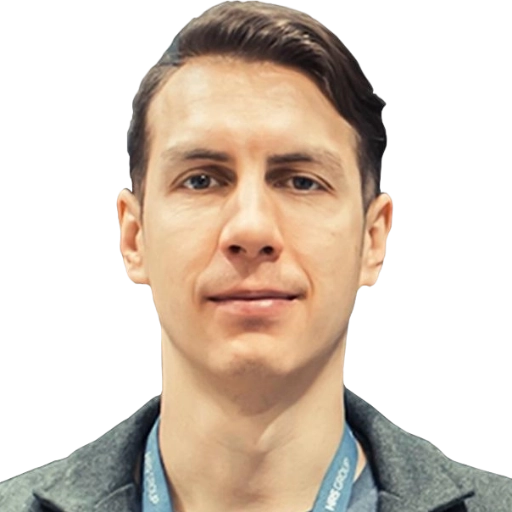
Viktor S.
Last position:
AI Engineer (Freelance) at Empion
Enterprise AI content categorization and AI-powered web research.
- Built multi-LLM evaluation framework with annotated data
- Iterated LLM error rates based on annotated datasets
- Implemented AI-powered web research pipeline Stack: LLM, evals, OpenRouter, Python, Node.js, TypeScript, React
Tommy S.

Last position:
Process Manager · Order-to-Cash & Automation at EWE Tel GmbH
- Root cause analysis of complex business, technical, and data-related errors in PowerCloud across process, booking, and system boundaries.
- Data-driven management of payments and receivables; contributed to reducing historical receivables from over 100 Mio. EUR to under 25 Mio. EUR.
- Identification of automation and straight-through processing potential at the interface between business departments, IT, and external service providers.
Patrick D.

Last position:
Fullstack Developer
- SPA for automated communication of medical findings with role-based access (Sanctum)
- Server-side LLM integration (OpenRouter) with structured processing
- Automated sending via SMS/voice call (Twilio, ElevenLabs) with queue + status retry
- Full test coverage with 80+ documented test cases
Technologies: PHP, Laravel, LLM API (OpenRouter), Twilio, ElevenLabs, Laravel Sanctum, PHPUnit, Playwright, Docker, REST
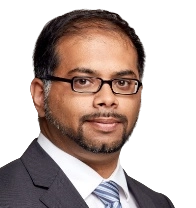
Saqib J.
Last position:
AI Developer / AI Engineer (Lead) at KOM4TEC GmbH
- Conceptual design and implementation of modular AI assistants for sales and business processes in the Microsoft ecosystem (Agentic AI, Copilot extensions)
- Frontend architecture and development with React + TypeScript for embedded chat and assistant surfaces (streaming UI, hooks, React Query, OpenAPI clients)
- Enterprise-level agent development: reusable skill/agent library, MCP server, review and compliance gates
- LLM integration into the user experience: Anthropic (Claude), OpenAI, tool use, RAG pipelines, prompt engineering, guardrails
- Architecture and code review consulting as well as mentoring in the AI development team
- Integration with Microsoft Graph, Power Platform, and Azure services
- Technologies: React, TypeScript, Anthropic Claude, OpenAI, MCP, RAG, Microsoft Graph, Power Platform, Azure
Saman S.

Last position:
AI Product Builder at Instalemon.com
- Architected and built an agentic creative automation platform on Mastra, with a custom RAG pipeline, custom hooks, tools and skills, Chroma for vector storage, and a MongoDB/Express backend.
- Built the agent orchestration layer powering Pixomi's multi-agent workspace, including 72 custom marketing skills, tools and hooks, and a custom context-management pipeline.
- Designed and implemented evals and observability through Mastra studio.
- Onboarded 10 pilot SMB customers producing 10x publish-ready creative output per campaign versus manual production in 3 months.
- Ran customer discovery and pilot feedback loops to shape the roadmap for an AI-native, workflow-based creation platform.
Mukund B.

Last position:
Voice AI Chatbot - Real-Time Audio Assistant
- ▶ Built real-time voice assistant (STT → LLM → TTS pipeline) benchmarking and evaluating multiple STT providers including faster-whisper and Azure Speech. achieved sub-3s latency, Groq API (Llama 3) with multi-turn memory - directly handling edge cases in dictation, names and passcode recognition.
Samuel K.

Last position:
Founder & Agentic AI Engineer at Agentakt LLC
Independent engineering practice focused on custom AI systems, production delivery, and fractional technical leadership.
Selected client engagement: Scalutions
Role: Serve as fractional CTO and hands-on technical lead, responsible for the architecture and agentic infrastructure behind its managed B2B outbound operation.
Product: Designed and built OutboundLoop, an agentic SDR operating system for research, qualification, personalized outreach, campaign management, human approvals, measurement, and continuous improvement.
Scope: Own the full system lifecycle—from business processes and agent behavior to context design, model routing, integrations, evaluation, telemetry, reliability, cost control, and production operations.
Nemanja M.

Last position:
AI Engineer / Senior Backend Engineer at Intelycx
Manufacturing intelligence platform with enterprise workflows, RAG, real-time AI assistant features, and multi-repository backend architecture.
- Built and extended production AI/backend services with Django, DRF, FastAPI, GraphQL, Celery, PostgreSQL, MySQL, Redis, and WebSockets across a modular multi-repository platform.
- Contributed to ARIS V2, a real-time manufacturing AI assistant using LangChain, LangGraph, MCP tool orchestration, planning/execution flows, OpenAI, AWS Bedrock, Qdrant, and Elasticsearch/OpenSearch-backed retrieval.
- Supported rollout expansion from ARIS V1 in 4 of 17 client production plants to ARIS V2 currently active in 13 of 17 plants, increasing real-world deployment coverage to more than 50% of the client footprint.
- Worked on document-grounded RAG functionality including ingestion, OCR, chunking, embeddings, indexing, retrieval, reranking, and grounded answer generation for industrial workflows.
Stack: Python, Django, DRF, FastAPI, LangChain, LangGraph, GraphQL, Celery, WebSockets, OpenAI, AWS Bedrock, Qdrant, Elasticsearch/OpenSearch, PostgreSQL, MySQL, Redis, Docker.
Alfred M.

Last position:
Project Manager, System Architect, AI Implementation at Software
Development of an AI console for integration into different open source solutions (ERP, CRM..)
Development of the target architecture Integration of different AI platforms (ChatGPT, Anthropic, Perplexity) Workflow with cross-platform use of the AI platforms Voice input and voice output History Console-based project management Generation of custom agents (Crewai..) Integration of the agents into the AI workflow
Discover over 15,000 top freelancers


Generative AI Engineers statistics
Aggregated from the professional profiles of matched freelancers.

Experience
16 years

Position duration
2.1 years

Positions per freelancer
10

Top business areas
Information Technology, Product Development, Business Intelligence

Top industries
Information Technology, Banking and Finance, Professional Services

Certification focus areas
Information Technology, Product Development, Business Intelligence

Bachelor's degree or higher
87%

Master's degree or higher
71%

Doctorate
13%

Certifications per freelancer
2

Most common languages
English, German, French

Speak two or more languages
97%
Based on our profile pool as of 26 Oct 2026.
Daily rate distribution
The chart shows how the daily rates of experts in this role in Germany are distributed, based on recent contracts on our platform. Each bar covers a rate range — its height shows the share of experts charging within that range.
Average rates for Generative AI Engineers in Germany
Rates are based on recent contracts and do not include FRATCH margin.

The average daily rate is the mean of all daily rates from recent contracts of comparable freelancers on our platform.
The median daily rate is the middle value of all daily rates — half of comparable freelancers charge less, half charge more. Unlike the average, it is barely affected by outliers.
Calculated based on our freelancers’ daily rates as of 26 Oct 2026. Actual rates may vary depending on seniority level, experience, skill specialization, project complexity, and engagement length.
Generative AI Engineers experts industry focus
See which industries our matched freelancers work in most often — every figure is calculated live from the freelancers on FRATCH.
- Information Technology (95%)
- Banking and Finance (45%)
- Professional Services (45%)
- Manufacturing (42%)
- Automotive (39%)
- Retail (39%)
- Education (37%)
- Energy (37%)
Please note that freelancers can work across multiple industries, so percentages overlap.
About the role
Technical Scope of Generative AI Engineering
Freelance Generative AI engineers design, build, and deploy intelligent systems leveraging advanced foundation models. They integrate proprietary company data with existing large language models to automate complex cognitive tasks, enhance search interfaces, and build custom agents. Their work directly translates into production-ready software architectures that respect data privacy and minimize operational API costs.
Core Technologies and Technical Skills
- Deep understanding of LLM integration frameworks like LangChain, LlamaIndex, and AutoGen.
- Hands-on experience with vector databases such as Qdrant, Pinecone, or Milvus for efficient retrieval.
- Fine-tuning and quantization of open-source models like Llama, Mistral, or Falcon.
- Python development, API design, and cloud deployments on AWS, Azure, or GCP.
- Implementation of guardrails, evaluation frameworks, and prompt engineering techniques.
Deploying AI in the German Enterprise Landscape
Businesses in Germany face specific regulatory environments, particularly regarding GDPR, data sovereignty, and cloud storage localization. Freelance engineers in this region specialize in deploying private, self-hosted open-source models on local cloud infrastructure or on-premise servers. This ensures compliance with European privacy standards while enabling advanced AI capabilities in sectors like automotive, manufacturing, and finance.
Strategic Benefits of Freelance GenAI Specialists
Setting up an internal artificial intelligence lab is slow and expensive. Hiring a freelance specialist allows companies to rapidly validate proof-of-concept applications, set up secure Retrieval-Augmented Generation architectures, and train existing software teams. This flexible approach lets organizations capitalize on immediate technological shifts without committing to permanent overhead before the business value is fully proven.

Frequently asked questions
The facts hiring teams ask for most often when it comes to Generative AI Engineers.

A Generative AI engineer designs and implements software systems that use foundation models to generate text, code, or media. They build pipelines to connect company databases with models, optimize model prompts, and manage retrieval-augmented generation architectures. Their primary goal is to make artificial intelligence models useful and secure for specific business applications.
While a traditional machine learning engineer focuses on training custom models from scratch using structured data, a Generative AI specialist works primarily with pre-trained foundation models. They spend less time on basic data preprocessing and more time on orchestration, fine-tuning, prompt engineering, and vector database integration.
For many technical roles in international teams, English is the primary language of development. However, a Generative AI developer working with local clients in Germany often benefits from German language skills, especially when developing customer-facing conversational agents or processing German-language corporate archives.
Companies hire a freelance AI specialist when they need to rapidly launch a proof of concept or solve a specific architectural bottleneck. Freelancers bring immediate hands-on experience from various industries, helping internal teams bypass the initial learning curve and deploy stable applications much faster.
Yes, almost all GenAI development tasks can be executed remotely using cloud environments and secure remote access tools. Some enterprises in Germany may require occasional on-site workshops for initial scoping, data privacy alignment, or final system integration.
A high-quality AI developer should be evaluated by their portfolio of running production applications rather than just theoretical knowledge. Look for experience in optimizing model latency, setting up reliable evaluation pipelines, and managing API costs efficiently.
A proficient Generative AI engineer must be highly skilled in Python and popular orchestration libraries such as LangChain or LlamaIndex. They should also demonstrate practical experience with vector databases and API integration.
A knowledgeable freelance AI engineer in Germany addresses strict data regulations by choosing self-hosted, open-source models over public cloud APIs. They configure secure local deployments using Docker and Kubernetes to ensure that sensitive company and customer data never leaves the local infrastructure.
The average hourly rate for Generative AI Engineers in Germany is 97 €, which corresponds to a daily rate of about 773 € based on an 8-hour working day.
Of the freelancers working as Generative AI Engineers in Germany, 87% hold at least a Bachelor's degree, 71% hold at least a Master's degree, and 13% hold a doctorate.
On average, freelancers working as Generative AI Engineers in Germany have 16 years of professional experience, with a single engagement typically lasting around 2.1 years.
The most common languages among freelancers working as Generative AI Engineers in Germany are English (100%), German (97%), and French (21%).
The most common industries among freelancers working as Generative AI Engineers in Germany are Information Technology (95%), Banking and Finance (45%), and Professional Services (45%).
The most common business areas among freelancers working as Generative AI Engineers in Germany are Information Technology (97%), Product Development (95%), and Business Intelligence (55%).
FRATCH Generative AI Engineers main locations
Our freelancers and interim experts are at home across the DACH region — available on-site in the major business hubs or fully remote. Choose a location to discover matched specialists, local market insights and up-to-date availability.
 Berlin Hamburg Munich Cologne Frankfurt Stuttgart Dusseldorf Leipzig Dortmund Essen Bremen Dresden Hanover Nuremberg
  Berlin
 Request a free demo
Get in touch with the FRATCH team and we will get back to you within 4 hours.
Would you rather directly get in touch?
We always have the time for a call or email!

Philipp Thomaschewski
FRATCH CEO

