


Heads of IT Infrastructure in Germany
in minutes from 15,000 CVs with AI supportCover data center operations, cloud and hybrid infrastructure, network design, server and storage management, backup and disaster recovery, and infrastructure modernization. Get fast, precise matching with vetted, available freelancers.

Meet FRATCH Heads of IT Infrastructure in Germany
Alexandru G.

Last position:
Principal Cloud DevOps Architect at BP
In my role as Senior Cloud DevOps Architect for BP, an oil and gas company, I had the mission to migrate the Electric Vehicle Charging platform of the EV Division from on-premises and Azure to AWS cloud, resulting in a hybrid multi-cloud, multi-tenant SaaS solution.
Deployment with Kubernetes for the application layer meant provisioning Kubernetes clusters managed by EKS and AKS, with a focus on integrating them into a multi-tenant environment. This integration was achieved by using Kubernetes namespaces and access controls to ensure data isolation and privacy enforcement.
In the database layer, we chose an RDS instance with PostgreSQL to support the backend infrastructure of our applications. Tenants shared the same RDS instance, but each had a dedicated schema.
To ingest near real-time data from physical charge points (CPOs), as IoT devices, via the OCPI protocol, we ran into significant delays with batch processing. As a result, we built a real-time streaming data pipeline using Apache Kafka, while prioritizing an event-driven architecture.
Led collaboration across multiple internal teams, external vendors, cloud providers, and on-site partners to integrate over five systems into a unified solution.
Achievements:
- Successfully designed and implemented hybrid multi-cloud solutions, integrating multiple cloud platforms (AWS, Azure) with on-premises infrastructure, using Site-to-Site VPNs, Firewalls, and Load Balancing.
- Led the migration of on-premises infrastructure to multi-cloud, multi-tenant infrastructure, resulting in 30% faster processing times.
- Migrated workloads from VMware and Hyper-V environments to cloud-based VMs, leveraging cloud-native services to optimize performance, cost efficiency, and scalability.
- Designed a multi-tenant Kubernetes platform leveraging the Kubernetes ecosystem, using Karpenter for dynamic EC2 node provisioning, KEDA for event-driven pod autoscaling (e.g., Kafka message lag), and Rancher for centralized monitoring of multiple clusters (EKS, AKS, or on-prem K8s), replacing Microsoft-centric Azure Arc management service.
- Designed and implemented Python-based FastAPI microservices as part of the EV core-backend on AWS EKS application layer, powering data ingestion and customer analytics pipelines.
- Developed asynchronous, event-driven APIs (Python-FastAPI) for real-time integration with CPOs, supporting OCPI 2.3 and OICP protocols.
- Designed and implemented a secure, production-grade Azure Databricks platform using Terraform, ensuring scalability and cost efficiency.
- Migrated on-premises ERP to a hybrid Dynamics 365 architecture with ERP hosted locally and CRM running in Azure, integrated via Azure Arc.
- Automated CI/CD pipelines for Databricks notebooks and jobs using GitHub Actions & Databricks CLI, reducing deployment time. Reduced infrastructure provisioning time by 70% by automating cloud resource deployment with GitOps.
- Ensured compliance with internal audit and data governance standards (GDPR) through OAuth2/OIDC-based authentication and fine-grained role-based access controls.
- Developed a Zero Trust security model, enforcing least-privilege access and microsegmentation, enhancing security posture and compliance with GDPR and NIST.
- Built interactive analytics dashboards in Amazon QuickSight, integrating data from S3 and Redshift to deliver real-time business insights and visualizations with embedded access for multi-tenant users.
- Led cloud security assessments and full-lifecycle cybersecurity integration during M&A, covering AWS, Azure, IAM (Entra ID), and data protection, while aligning security posture with NIST, ISO 27001, and GDPR across hybrid and cloud-native environments.
- Reduced cloud costs by 64% for a client's dev environment by implementing automated start/stop schedules for EC2 and RDS instances via AWS CDK with EventBridge Scheduler or AWS Systems Manager.
Tech stack:
- Infrastructure as Code: Terraform, AWS CDK, Ansible.
- Containers: Kubernetes on EKS, AKS, Docker.
- Streaming Data Processing: Kafka to Confluent Cloud, after AWS MSK.
- Frontend: TypeScript, React, NextJS, Hooks, Styled Components.
- Backend: Python with FastAPI, also Node.js with NestJS.
- Database: Aurora on PostgreSQL with TypeORM, RDS on SQL Server, Azure Databricks full setup and administration, ETL Pipelines.
- CI/CD and GitOps: GitHub Actions, Azure DevOps, ArgoCD.
- Monitoring and Observability: Prometheus and Grafana.
- Virtualization: Hyper-V, VMware Cloud on AWS, Azure Migrate.
- ERP Systems: Odoo, Microsoft Dynamics 365 Business Central on Azure, integrated with Azure Arc.
- Networking: Site-to-Site VPNs, AWS Direct Connect, Azure ExpressRoute, Firewalls (AWS Network Firewall, Azure Firewall).
- Security: IAM, NIST Framework, Zero Trust Security, AWS WAF, AWS Shield, GuardDuty.
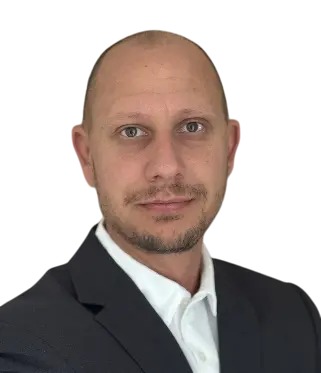
Tobias E.
Last position:
C# Fullstack Developer / Scrum Master / Product Owner Cloud Services / Product Owner Infrastructure & Core Services / Head of at TRUMPF Werkzeugmaschinen SE & Co. KG
- Many years of work in different roles within the MES product area, with technical development, agile leadership, and strategic product responsibility for key MES components.
- As C# Fullstack Developer / Scrum Master (2018–2020): further development of a programming system for laser machines, introduction and moderation of Scrum processes, quality assurance through automated tests and documentation.
- As Product Owner Cloud Services (2019–2020): leadership of two AWS-based cloud services for providing laser data and legal documents, definition of the product vision, backlog maintenance, and stakeholder communication.
- As Product Owner Infrastructure & Core Services / Head of DevOps / Product Security (2020–2025): responsibility for core MES components such as Service Orchestrator, Licensing Service, IAM, and AppLauncher, building and maintaining Azure DevOps pipelines for over 70 components, and introducing security standards (CRA).
- Company-wide contact for Azure DevOps and largely responsible for its introduction.
- Standardized versioning of all components.
- Structuring of CI/CD and release pipelines.
- Building an agent scale set with special software configuration.
- Connecting Azure DevOps with ServiceNow.
- Standardizing the integration of security tools such as SonarCloud, Dependency Track, and digital signing.
- Technologies & tools: .NET (C#, 4.8 / Core 3.x / 8), WPF, WCF, REST, OData, JSON, DevExpress, Duende IDP, Azure DevOps, AWS, PowerBI, SonarCloud, Dependency Track, Visual Studio Pro.
- Method: Scrum.
- Project language: German / English.
Sami B.

Last position:
German Customer (Pharma Supply-Chain Sector)
- Integration of a FortiManager into the existing FortiGate firewall infrastructure to centralize and optimize firewall management.
Volker R.

Last position:
Architect and Senior System Administrator at International Trading Company
- Analysis and optimization of the VMware environment for operation in a critical infrastructure environment
- Planning and execution of updates for the VMware and hardware environment in a critical infrastructure environment
- Deployment of Skyline Health Diagnostics
- Review of existing documentation
- Training and onboarding of new internal staff
- Support for migration and upgrade projects
- Preparation for moving scripts in the virtualization environment to GitLab
- Ticket handling with ServiceNow
Gyan P.

Last position:
Senior DevOps and Cloud Architect at Bosch
- Architected and operated cloud-based data and ML platforms for autonomous driving and parking systems, supporting large-scale (multi PB scale) simulation and vehicle data ingestion.
- Implemented security, compliance, and governance standards across Azure subscriptions and cloud resources.
- Managed GitHub organizations and CI/CD pipelines to improve deployment reliability and developer productivity.
- Contributed to hiring and technical interviews as part of the recruitment panel.
Daniel K.

Last position:
Project planning and implementation of a 95 kWp PV system at Asset management company
- Analysis of technical and economic feasibility
- Creation of a detailed project plan including time and resource management
- Requesting and evaluating offers, selecting components, and managing suppliers
- Coordination of all involved trades (e.g. electricians, installation companies)
- Monitoring the construction work and ensuring deadlines, budgets, and quality standards are met
- Acceptance and commissioning of the PV system including documentation
- After project completion: optimizing monitoring and supporting grid connection
Mohammed M.
Last position:
IT Infrastructure Management at E.On, Bayernwerk, West energy
- Many years of experience in IT Service Management based on Agile and ITIL processes
- Carrying out measures to ensure smooth incident and problem management processes
- Fast handling of requests in request management
- Solving business requirements and inquiries based on expertise
- Advising users on all IT topics
- Monitoring Service Level Agreements
- Working with internal teams and establishing standard solutions for recurring issues
- Proactive maintenance and monitoring
- Automation and standardization
- Continuous learning, evaluation, and improvement
- Documentation in the ServiceNow and Jera ticketing systems
- Document management with SharePoint and Confluence
- Knowledge of Microsoft 365, Microsoft Azure, and cloud computing
- Backup and replication systems with Veeam
- Knowledge of SAP S/4HANA
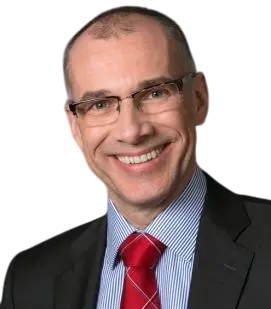
Günter G.
Last position:
Infrastructure Manager at MCPV Nederland BV
- Creating technical specifications for tenders
- Many years of experience in technology, compressed air supply, ultrapure water production, wastewater treatment, process gas supply, process, product and exhaust gas treatment, heat/cold recovery, cooling water supply
- Developing the facility supply matrix
- Developing water balance and energy flow diagrams
- Coordinating between R&D and production teams
Kay M.

Last position:
NGO, German Party
- Built advanced expertise in designing and deploying Model Context Protocol (MCP) infrastructures to enhance AI agent capabilities for an NGO.
- Developed and maintained MCP servers (e.g., using FastMCP) exposing external tools and data sources to LLMs via a standardized API (JSOB).
- Enabled seamless tool integration by adhering an MCP client-server architecture, allowing AI hosts or agents to dynamically discover and invoke tools, access resources, and leverage custom prompts (File Storage, SQL DBs, weaviate, chroma).
- Automated deployment (CI/CD) in AWS with IaC (CDK) and Jenkins (scheduler).
- Conducted comparative model evaluation due to German language needs (Hugging Face over Anthropic, Coehere, others) and AWS Bedrock.
- Evaluated legal and regulatory aspects, ensuring the MCP-based solutions complied with emerging EU AI Act requirements, such as risk classification, transparency, documentation, and responsible tool provisioning within the European context.
Fabian F.

Last position:
Head of IT Infrastructure at Carthago Reisemobilbau GmbH
- Personal and professional leadership of a team of 14 employees at three locations
- Responsibility for the IT infrastructure (clients, servers, storage, network, and security) and the IT service desk for the entire group
- Designing an innovative IT infrastructure and ensuring compliance
- Budget responsibility
- Requirements management
- IT governance (strategy, ITIL, management, security, cost controlling)
- Planning and implementing measures to modernize, expand, and standardize IT systems
- Ensuring disruption-free IT operations and scalability of the IT infrastructure
- Risk management, including designing and implementing disaster recovery plans
- Trainer for all IT specialist apprentices
- Planning and implementing the entire IT infrastructure of a new production plant
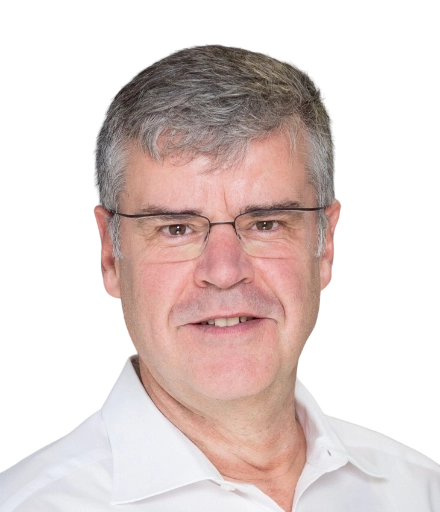
Jens-Uwe N.
Last position:
Head of Infrastructure/Procurement/Logistics at ENPROM GmbH
- Disciplinary and professional leadership of 8 employees
- Digitization of the procurement process
- Setup of inventory management
Uwe S.

Last position:
Information Technology Infrastructure Manager at Rahn Education
ITIM (Educational Area) | Planning and implementation of an IT strategy for the software and hardware area to improve client management
Project management, including monitoring progress and quality
Coordination of cooperation with colleagues and external service providers
ITIM (educational area) | planning and implementation of an IT strategy for the software and hardware area to improve client management
project management, including progress and quality control
coordination of collaboration with colleagues and external service providers
Tobias U.

Last position:
Head of IT Infrastructure and Support at Fuchs Gruppe
Discover over 15,000 top freelancers


Heads of IT Infrastructure statistics
Aggregated from the professional profiles of matched freelancers.

Experience
27 years

Position duration
3.2 years

Positions per freelancer
12

Top business areas
Project Management, Information Technology, Operations

Top industries
Information Technology, Automotive, Manufacturing

Certification focus areas
Information Technology, Project Management, Human Resources

Bachelor's degree or higher
100%

Master's degree or higher
60%

Doctorate
60%

Certifications per freelancer
1

Most common languages
German, English, Danish

Speak two or more languages
92%
Based on our profile pool as of 9 Oct 2026.
Daily rate distribution
The chart shows how the daily rates of experts in this role in Germany are distributed, based on recent contracts on our platform. Each bar covers a rate range — its height shows the share of experts charging within that range.
Average rates for Heads of IT Infrastructure in Germany
Rates are based on recent contracts and do not include FRATCH margin.

The average daily rate is the mean of all daily rates from recent contracts of comparable freelancers on our platform.
The median daily rate is the middle value of all daily rates — half of comparable freelancers charge less, half charge more. Unlike the average, it is barely affected by outliers.
Calculated based on our freelancers’ daily rates as of 9 Oct 2026. Actual rates may vary depending on seniority level, experience, skill specialization, project complexity, and engagement length.
Heads of IT Infrastructure experts industry focus
See which industries our matched freelancers work in most often — every figure is calculated live from the freelancers on FRATCH.
- Information Technology (77%)
- Automotive (62%)
- Manufacturing (54%)
- Education (38%)
- Banking and Finance (38%)
- Healthcare (38%)
- Professional Services (38%)
- Chemical (31%)
Please note that freelancers can work across multiple industries, so percentages overlap.
About the role
Infrastructure leadership A Head of IT Infrastructure keeps the technical backbone stable, secure, and ready for change. The role covers servers, storage, networks, cloud foundations, endpoint services, backup, disaster recovery, and the standards that keep operations consistent.
Typical deliverables include:
- Infrastructure roadmaps and modernization plans
- Operating models for on-premise, cloud, or hybrid setups
- Migration plans for platforms, services, and workplaces
- Risk reviews, resilience concepts, and incident follow-up
Where they help Companies bring in a freelance Head of IT Infrastructure when internal teams need senior guidance for a transition, a restructuring, or a critical platform change. This is common in manufacturing, logistics, retail, healthcare, and other environments where uptime matters and systems are tightly connected.
In Germany, they often support international teams, local IT operations, and vendor coordination at the same time. They are useful when the business needs leadership before a permanent hire is in place, or when the project is too specific for a full-time role.
Core skills A strong professional combines technical depth with clear decision-making. They do not only manage systems; they set priorities, negotiate trade-offs, and keep stakeholders aligned.
- Strong knowledge of IT operations, network architecture, and platform resilience
- Hands-on experience with cloud, virtualization, storage, identity, and backup tooling
- Familiarity with ITSM, change control, monitoring, and service continuity
- Vendor management and communication with security, finance, and business leads
Common tools The exact stack depends on the environment, but the work often touches VMware, Hyper-V, Azure, AWS, Microsoft 365, firewalls, endpoint management, monitoring systems, and backup platforms. In larger firms, the role may also involve ITIL-based processes, CMDBs, and standardized release and incident workflows.
A good Head of IT Infrastructure can step into an existing landscape, understand what is fragile, and improve it without slowing the business down.
Signs you need one You likely need this role if your team is struggling to keep systems stable while also delivering change. It also fits when infrastructure ownership is split across too many people and no one has a full view.
- Frequent escalations or recurring outages
- Cloud or data center migration in progress
- Security, backup, or recovery gaps
- Unclear ownership across internal teams and vendors
- A need for temporary senior leadership during transformation
What good looks like The best Heads of IT Infrastructure balance control and speed. They document decisions, simplify complexity, and leave the team stronger than they found it. They are comfortable with operational detail, but they think in service levels, dependencies, and business continuity.
For the company, that means fewer surprises and clearer accountability. For freelancers, it means stepping in with confidence, making fast assessments, and building trust with technical teams and management alike.

Frequently asked questions
Before you brief your next project: the most common questions about Heads of IT Infrastructure.

A Head of IT Infrastructure leads the technical backbone of the company for a defined period or project. That can include infrastructure assessment, roadmap design, cloud or data center transition planning, and coordination with vendors and internal IT teams. The role is both operational and strategic, so the work is rarely limited to one system.
Look for strong hands-on knowledge of servers, networks, storage, cloud platforms, identity, backup, and recovery. Just as important are service management, incident handling, change control, and the ability to lead people who do not report directly to the freelancer. A solid profile can explain trade-offs clearly and turn technical risk into practical decisions.
An IT Operations Manager usually focuses more on day-to-day service delivery, while an Infrastructure Architect often concentrates on design and standards. A Head of IT Infrastructure combines both worlds and adds leadership, prioritization, and ownership of outcomes. In smaller or changing organizations, one person often covers all three angles.
A freelancer is a strong choice when you need senior leadership fast, but only for a limited period. That is common during migrations, restructurings, post-incident stabilization, or while you search for a permanent leader. It also helps when you need outside perspective without changing the long-term org chart.
Yes, much of the planning, documentation, and vendor coordination can be done remotely. On-site presence is still valuable for data center reviews, stakeholder workshops, critical cutovers, and team alignment. In Germany, many companies prefer a hybrid setup, especially when the infrastructure is closely tied to local operations.
The role is common in manufacturing, logistics, retail, healthcare, financial services, and multi-site companies with complex internal systems. It is especially useful where uptime, security, and recovery are business-critical. In Germany, it also fits organizations balancing local operations with international IT standards.
A strong Head of IT Infrastructure quickly maps the current environment, identifies weak points, and clarifies who owns what. Early deliverables often include a risk overview, a prioritized action list, and a realistic roadmap for change. Good candidates do not wait to be asked; they surface dependencies and make decisions easier.
Ask for examples of similar infrastructure environments, the kinds of changes they led, and how they handled outages, migrations, or vendor issues. Strong answers are specific and focused on outcomes, not jargon. You should also check whether the candidate can speak comfortably with both technical teams and business stakeholders.
The average hourly rate for Heads of IT Infrastructure in Germany is 113 €, which corresponds to a daily rate of about 907 € based on an 8-hour working day.
Of the freelancers working as Heads of IT Infrastructure in Germany, 100% hold at least a Bachelor's degree, 60% hold at least a Master's degree, and 60% hold a doctorate.
On average, freelancers working as Heads of IT Infrastructure in Germany have 27 years of professional experience, with a single engagement typically lasting around 3.2 years.
The most common languages among freelancers working as Heads of IT Infrastructure in Germany are German (100%), English (92%), and Danish (8%).
The most common industries among freelancers working as Heads of IT Infrastructure in Germany are Information Technology (77%), Automotive (62%), and Manufacturing (54%).
The most common business areas among freelancers working as Heads of IT Infrastructure in Germany are Project Management (100%), Information Technology (92%), and Operations (69%).
FRATCH Heads of IT Infrastructure main locations
Our freelancers and interim experts are at home across the DACH region — available on-site in the major business hubs or fully remote. Choose a location to discover matched specialists, local market insights and up-to-date availability.
 Berlin Hamburg Munich Cologne Frankfurt Stuttgart Dusseldorf Leipzig Dortmund Essen Bremen Dresden Hanover Nuremberg
 Request a free demo
Get in touch with the FRATCH team and we will get back to you within 4 hours.
Would you rather directly get in touch?
We always have the time for a call or email!

Philipp Thomaschewski
FRATCH CEO

