


Cloud Architects in Germany
in minutes from over 15,000 CVs with AI matchingDesign secure AWS, Azure, or Google Cloud landing zones, plan hybrid and multi-cloud setups, and shape migration roadmaps, network patterns, and governance. Get fast, precise matching with vetted, available freelancers.

Meet FRATCH Cloud Architects in Germany
Mohammed N.
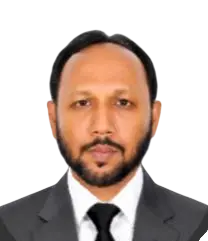
Last position:
IT System Manager at Corporate Network Solution Provider
- Architected, Deployed and Supported hosted email solutions in Linux and Windows environments with enterprise-grade anti-spam and security architecture for service-provider environments.
- Managed Microsoft Azure environments including Virtual Machines, VNets, Storage, VPN, and Firewall configuration.
- Administered Microsoft Exchange Server (2010-2019), Microsoft Exchange Server SE, Active Directory, PKI, Hyper-V and Zimbra environments with disaster recovery planning and operational support.
- Led Microsoft 365 onboarding and migration projects from Exchange, IMAP, and Zimbra platforms to Microsoft 365.
- Prepare security and compliance to support Microsoft 365 Copilot.
- Implement information protection and data loss prevention by using Microsoft Purview.
- Implement retention, eDiscovery, and communication compliance in Microsoft Purview.
- Integrated Active Directory Domain Services (AD DS), Active Directory Certificate Services (AD CS), and Active Directory Federation Services (AD FS).
- Delivered secure hybrid infrastructure solutions integrating Microsoft Windows Server and Linux-based enterprise environments.
- Supported enterprise integration projects involving Debian, Ubuntu, CentOS, Red Hat, Barracuda ESG, Qmail and Zimbra Platforms.
Paul W.

Last position:
Enterprise Architect at ePrimo GmbH
Led the end-to-end integration and migration architecture for decommissioning SAP IS-U market communication and transitioning to Salesforce Marketing Cloud (SFMC) with E.ON IT Services — covering regulated EDIFACT market messaging, a three-phase data migration (transfer of market message inventory after cutover), redesign of market communication processes, and full GDPR and German energy-market compliance.
- Designed the three-tier target architecture (SAP IS-U → NScale B2B gateway → SFMC) processing 50,000–100,000 EDIFACT messages daily within sub-5-minute SLAs.
- Architected the three-phase data migration: 36 months of historical data, zero-loss cutover of in-flight market messages, and near-real-time CDC synchronization.
- Delivered secure, BDEW/GDPR-compliant integration (AS2/OFTP2, RFC/IDoc, REST APIs, OAuth 2.0, Azure AD, AWS S3) achieving >99.5% uptime, <0.1% migration discrepancy, and RTO <4 hours.
- Applied BPMN to model and optimize the market communication processes.
Technologies: SAP IS-U, NScale, Salesforce Marketing Cloud, EDIFACT, OAuth 2.0, Azure AD, AWS S3, BPMN, Jira, Confluence, Draw.io
Jens H.
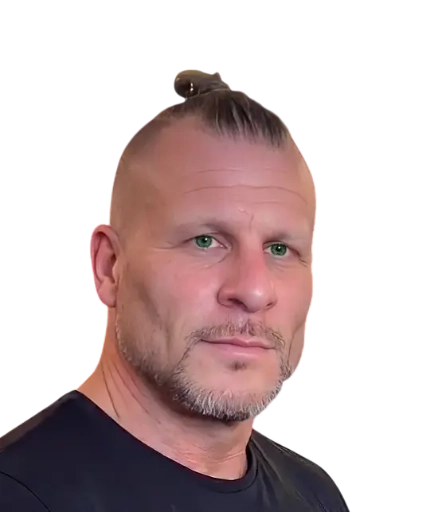
Last position:
Interim CTO (occasional assignments) at Fujitsu / FSAS
Stabilization of an Azure/.NET landscape in live operation.
- Architecture, DevOps, and operational readiness; technical decisions under time pressure
- Azure DevOps, monitoring, ETL/ELT, cloud security, FinOps, and data-mesh-related topics
Technologies: Azure DevOps, .NET, CI/CD, monitoring, FinOps
Yashar S.

Last position:
Compliance Consultant at RAS Reinhardt Maschinenbau GmbH
- Designed and moderated a NIS2 preparation workshop for RAS Reinhardt Maschinenbau GmbH and its IT service provider Catuno GmbH. Together with executive management and IT leadership, the current status was assessed, an initial GAP analysis was conducted and areas for action were prioritized based on ISO 27001.
- Developed an ISO-27001-based regulatory framework (ISMS) for NIS2 compliance, including a structured current/target GAP analysis, targeted improvement of the security maturity level and preparation of the organization for NIS2 audit readiness.
Ali A.

Last position:
Founder & Architect at Independent AI R&D
- Fully on-premises LLM document-examination platform for a compliance-critical banking domain: agentic LangGraph pipeline with deterministic verification, every AI judgment structured and source-anchored; ~960 automated tests, zero data egress
- GPU throughput engineering (quantized serving, speculative decoding, prefix caching): 9.5x extraction speed-up, 500+ multi-document case files per day on a single A100
- AI-native EDI/EDIFACT integration platform (~116k LOC Java 25 / Spring Boot 4, 1,900+ tests): LLM-drafted partner mappings machine-verified before go-live (DFDL conformance, field-coverage checks, dry runs), ~99.5% byte match on real customer files — replacing weeks of manual mapping per partner
Oliver K.

Last position:
Azure Cloud Engineer at DVAG-Deutsche Vermögensberatung AG
Financial services provider, >10,000 employees
- Entra ID: App Registrations, Hybrid Identities, group and permission concepts, Conditional Access, MFA, RBAC, and PIM.
- Azure IaaS/PaaS, Networking, Security, Governance, Monitoring, and automation with Bicep and PowerShell.
- Consulting and technical support for internal cloud projects.
Nasif M.

Last position:
Solution Architect at SAP
Red Hat OpenShift Container Platform
Scope:
- Operation and configuration of the Red Hat OpenShift Container Platform, including network, storage, and security design.
- Implementation of centralized observability solutions (Prometheus, Grafana, alerting).
- Development of CI/CD pipelines, GitOps workflows, and automation frameworks.
- Training and enablement of operations and development teams.
Result: Accelerated service delivery, transparent operational metrics, and sustainable knowledge transfer.
Felix O.

Last position:
Cloud Engineer at GUS Group
Cloud Journey Kickoff on STACKIT
- Helped the client kickstart their cloud journey on sovereign EU STACKIT platform.
- Bootstrapped IAC & GitOps architecture with Opentofu and ArgoCD.
- Setup platform fundamentals for a fresh, holistic cloud experience: Kubernetes, external secrets, certificate management, gateway API, DNS & routing, observability basics.
Marijn S.

Last position:
Senior Software Engineer at Puls Security GmbH
Optimizing and acceleration of our Gitlab CI pipeline
Conceptual work for the PoC of the Zero Trust system
Extension of the policy-engine backend in Go
Extension of the policy-testing mechanism in Python
Architectural design of the PEP component of Zero Trust
Documentation of the product
Technologies: Zero Trust, Go, Python, Gitlab CI, Docker, JWT, Domain-Driven Design
Frédéric K.
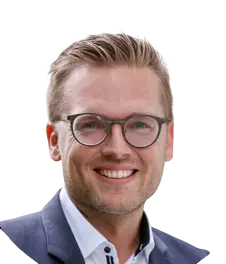
Last position:
Project Manager (Enterprise Cloud Governance) at CompuGroup Medical SE & Co. KGaA
Short description: Lead a group-wide project to establish standardized cloud governance for Microsoft Azure, including policies, security and compliance controls, automation, and cost and operations control while preserving the autonomy of decentralized business units within regulatory boundaries.
Tasks and activities:
Overall responsibility for the design, setup, and implementation of an enterprise-wide cloud governance structure (Azure), incl. target picture, roadmap, and operating model.
Management of internal and external stakeholders (C-level, IT, Security, Compliance, Cloud Architecture, DevOps) incl. decision-making and escalation management.
Planning and facilitation of workshops on cloud strategy, governance principles, and the design of areas such as Identity, Connectivity, and Platform Management.
Definition, implementation, and rollout of cloud policies (Azure Policy / custom policies), security standards, and compliance requirements (including GDPR, ISO 27001, BSI C5).
Building a cloud governance framework aligned with the Azure Cloud Adoption Framework (CAF), incl. landing zone and guardrail concepts.
Introduction of automation solutions for governance, security, and cost control (policy/control automation, IaC, CI/CD-based control mechanisms).
Implementation of cloud security and compliance monitoring mechanisms as well as continuous improvement processes.
Establishment and operationalization of FinOps in an enterprise environment (central and decentralized FinOps teams), incl. cost management strategies, reporting, and guardrails.
Integration of governance policies into DevOps processes (e.g. CI/CD principles for security and compliance checks, GitLab Runner concept in spokes, GitLab CI/CD for CAF landing zones).
Implementation of access concepts incl. RBAC design and "break glass" mechanisms (emergency access) as well as certificate automation (ACME / step-ca).
Achievements:
Created a unified, auditable governance and control set for Azure (policies, standards, compliance mapping) and thus laid the foundation for scalable cloud usage in a regulated environment.
Established repeatable automation for governance, security, and cost control (IaC + CI/CD), reducing manual effort and implementation risks.
Improved operational and decision-making capabilities across central and decentralized units (clearer roles, responsibilities, escalation paths, balance between autonomy and group requirements).
Significantly increased workload compliance for lift-and-shift migrations.
Technologies used:
Microsoft Azure Policy, custom policies.
Terraform, OpenTofu, Terragrunt.
step-ca (ACME).
Entra ID.
Azure Firewall.
Azure networking, hub-and-spoke architecture.
Azure vWAN (evaluation).
Azure Front Door, Azure Application Gateway.
Azure ExpressRoute.
Azure Key Vault.
NetBox.
GitLab (on-premises).
Infrastructure, concepts used:
Cloud shared responsibility model.
Hub-and-spoke connectivity / central shared services (from a hub-spoke context).
Central governance with decentralized delivery (business unit autonomy with guardrails).
Methods used:
Scrum.
Stakeholder management (C-level to engineering).
Cloud governance, Azure Cloud Adoption Framework (CAF).
DevOps, CI/CD.
Cost and FinOps approaches: tagging/chargeback models, budget/alert concepts, reserved instances/savings plans vs. on-demand scenarios, sensitivity analyses.
RBAC, "break glass" concepts.
ACME / certificate automation.
GitLab Runner concept in spokes, GitLab CI/CD pipelines for CAF landing zones.
Stephan F.
Last position:
AI & Data Engineer - Azure Enterprise AI and Knowledge Engineering at IB Schlegel - King
Designed and developed an Azure-based AI and data platform transforming distributed project documents into searchable, structured knowledge for an enterprise AI assistant. Combined incremental document processing, hybrid keyword/vector retrieval, knowledge graph extraction, and conversational AI for Microsoft Teams and Microsoft 365 Copilot. Implemented Python document-processing pipelines for PDF, Word, Outlook and text files; Azure Cosmos DB lifecycle management; Azure AI Search; Azure AI Foundry and Azure OpenAI; identity-aware retrieval with Microsoft Entra ID; project authorization; a TypeScript Microsoft Agents SDK agent; Pulumi infrastructure; resilient scheduling, retry and diagnostic tooling. Technology stack: Python, TypeScript, FastAPI, Pydantic, Azure AI Foundry, Azure OpenAI, Azure AI Search, Azure Cosmos DB, Blob/Table Storage, Container Apps/Jobs, Service Bus, Key Vault, Entra ID, Docker, Pulumi, pytest, Microsoft Teams and Microsoft 365 Copilot.
Salim C.

Last position:
Cloud / Systems Architect
- Development and introduction of operations processes
- Preparation of complete documentation packages (including incident management and operations support) to meet compliance requirements
- Introduction of a workshop on IaC (Infrastructure as Code)
- Technical consulting for the project security concept (ISMS)
- Installation and operation of Kubernetes clusters on AWS, on-prem, and Azure
- Hybrid cloud architecture design (on-prem, Hetzner, AWS)
- Analysis and troubleshooting of incidents and system outages
- Network adjustments for firewall rules, gateways, OpenVPN settings, and IPsec tunnels (pfSense)
- Technical consulting on Bitbucket, Jenkins, and GitLab CI/CD pipelines
- Consulting on Ansible deployments and infrastructure automation
- Consulting on building a scalable system in the cloud (AWS / Azure)
- Technologies / Tools: Ansible, Terraform, AWS, Azure, VPN, pfSense, Jenkins, Bitbucket, Kubernetes, GitLab Runner, ISMS, Golang, Prometheus, Grafana, S3, Lambda, RDS, ECS, Cognito, OIDC, Harbor, MinIO, Postgres, Redis, Keycloak, Ceph, Proxmox, CloudFormation, PostgreSQL, Flux CD, Hetzner, IONOS, Sonatype Nexus Repository, Entra ID, Dex IdP, Pulumi
Saqib J.
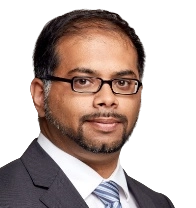
Last position:
AI Developer / AI Engineer (Lead) at KOM4TEC GmbH
- Conceptual design and implementation of modular AI assistants for sales and business processes in the Microsoft ecosystem (Agentic AI, Copilot extensions)
- Frontend architecture and development with React + TypeScript for embedded chat and assistant surfaces (streaming UI, hooks, React Query, OpenAPI clients)
- Enterprise-level agent development: reusable skill/agent library, MCP server, review and compliance gates
- LLM integration into the user experience: Anthropic (Claude), OpenAI, tool use, RAG pipelines, prompt engineering, guardrails
- Architecture and code review consulting as well as mentoring in the AI development team
- Integration with Microsoft Graph, Power Platform, and Azure services
- Technologies: React, TypeScript, Anthropic Claude, OpenAI, MCP, RAG, Microsoft Graph, Power Platform, Azure
Maurice K.
Last position:
Solution Architect – Cloud-Native Transformation of IoT Monitoring Platform at NDA / Wind Energy Sector
- Led the end-to-end architecture and migration of a legacy on- premise IoT monitoring system to a cloud-native Azure platform within a 17-member development team
- Designed and implemented a scalable microservices architecture (Java 21, Spring Boot, Kubernetes, Azure Services), decoupling IoT data streams and eliminating legacy system bottlenecks
- Defined technology stack, mentored developers, and orchestrated cross-functional teams in 4 countries to ensure high-quality delivery and alignment with architectural standards
- Drove requirements engineering and system redesign, removing years of technical debt and introducing event-driven processing and automated workflows
- Key Achievements
- Increased system stability and uptime by ~10x, eliminating need for 24/7 DevOps intervention
- Reduced hosting costs by ~80% (5x savings) through cloud optimization
- Improved performance and scalability, enabling stable handling of high-volume IoT data streams
- Delivered successful zero-disruption migration from on-prem to cloud, with strong user satisfaction and reliability from day one
Artyom N.

Last position:
AI Automation Engineer & Solution Architect at Technology Research Project
Designed and developed an AI-powered automation platform using n8n to analyze social media niches, identify target audiences, and automate marketing strategy generation. The solution combined AI agents, workflow orchestration, and data analysis to automate research processes and generate data-driven insights.
- Designed and implemented complex automation workflows using n8n
- Developed AI-powered analysis agents for market and audience research
- Integrated multiple APIs and AI services into automated workflows
- Built automated market, competitor, and target audience analysis pipelines
- Leveraged Large Language Models (LLMs) for information summarization, classification, and prioritization
- Containerized and deployed the platform using Docker
Technologies: n8n, AI Agents, OpenAI APIs, Prompt Engineering, LLMs, Docker, Linux, REST APIs, Webhooks
Discover over 15,000 top freelancers


Cloud Architects statistics
Aggregated from the professional profiles of matched freelancers.

Experience
18 years

Position duration
2.9 years

Positions per freelancer
13

Top business areas
Information Technology, Product Development, Project Management

Top industries
Information Technology, Banking and Finance, Automotive

Certification focus areas
Information Technology, Business Intelligence, Project Management

Bachelor's degree or higher
89%

Master's degree or higher
49%

Doctorate
6%

Certifications per freelancer
6

Most common languages
English, German, French

Speak two or more languages
98%
Based on our profile pool as of 26 Oct 2026.
Daily rate distribution
The chart shows how the daily rates of experts in this role in Germany are distributed, based on recent contracts on our platform. Each bar covers a rate range — its height shows the share of experts charging within that range.
Discover detailed Cloud Architects rate benchmarks:
Explore rate insightsAverage rates for Cloud Architects in Germany
Rates are based on recent contracts and do not include FRATCH margin.

The average daily rate is the mean of all daily rates from recent contracts of comparable freelancers on our platform.
The median daily rate is the middle value of all daily rates — half of comparable freelancers charge less, half charge more. Unlike the average, it is barely affected by outliers.
Calculated based on our freelancers’ daily rates as of 26 Oct 2026. Actual rates may vary depending on seniority level, experience, skill specialization, project complexity, and engagement length.
Cloud Architects experts industry focus
See which industries our matched freelancers work in most often — every figure is calculated live from the freelancers on FRATCH.
- Information Technology (94%)
- Banking and Finance (59%)
- Automotive (42%)
- Manufacturing (41%)
- Transportation (39%)
- Professional Services (36%)
- Healthcare (32%)
- Telecommunication (30%)
Please note that freelancers can work across multiple industries, so percentages overlap.
About the role
Cloud strategy
A Cloud Architect shapes the technical foundation for cloud projects. The work starts with the target state: platform choice, account structure, network design, security model, and operating model. Strong candidates translate business goals into a setup that developers, ops teams, and security can actually run.
- Cloud landing zones and reference architectures
- Migration plans for legacy applications and data
- Governance, identity, and access design
- Cost, resilience, and compliance principles
Typical toolset
The best Cloud Architects know the major public clouds and the tools around them. That often includes AWS, Microsoft Azure, and Google Cloud, plus Terraform, Kubernetes, IAM, and CI/CD pipelines. They also understand observability, backup, disaster recovery, and how to connect cloud systems with on-premise environments.
- Infrastructure as code and platform automation
- Network, identity, and security architecture
- Container and Kubernetes platform design
- Monitoring, logging, and recovery concepts
When companies hire
Companies bring in a freelance Cloud Architect when a cloud move needs structure, or when an existing setup has grown too complex. Common cases are platform rework, application migration, new security requirements, and support for a product launch. In Germany, this role is often needed by industrial groups, SaaS firms, and regulated businesses that want clear architecture without adding permanent headcount too early.
What strong experts deliver
A strong cloud architect does more than draw diagrams. They produce decisions that teams can use: target architecture, migration waves, security controls, shared services, and standards for developers and operators. They also challenge unclear scope and spot risks early, before they turn into expensive rework.
- Clear architecture decisions and trade-offs
- Practical migration and rollout plans
- Standards for security, networking, and platform use
- Guidance for teams during implementation
Related roles and titles
Searches for this work may also use cloud solution architect, infrastructure architect, or platform architect. In some teams, the role overlaps with a cloud engineer, especially when architecture and hands-on implementation sit close together. The difference is usually scope: a Cloud Architect owns the overall design and the rules that hold the environment together.
Freelance engagement fit
Freelancers are a good fit when the company needs senior cloud thinking for a defined phase, not a permanent seat. They can join an existing team for discovery, architecture review, migration planning, or recovery from a messy rollout. Remote work is common, but in Germany on-site sessions can help with workshops, stakeholder alignment, and access to internal system owners.

Frequently asked questions
Questions about Cloud Architects? Start with the answers below.

A Cloud Architect defines how the cloud environment should be built, secured, and operated. That usually includes target architecture, landing zones, identity, networking, governance, and the migration path from existing systems. On freelance work, the focus is often on clear decisions and handover-ready documentation rather than day-to-day operations.
A strong Cloud Architect combines platform knowledge with system design and communication skills. They should understand AWS, Azure, or Google Cloud, plus Terraform, Kubernetes, IAM, network design, and security basics. Just as important is the ability to explain trade-offs to engineering, security, and business stakeholders.
A cloud architect defines the structure, standards, and technical direction. A cloud engineer usually implements parts of that design and keeps the platform running. In smaller projects, the same person may do both, but the architectural role stays focused on the bigger picture and long-term fit.
A freelance Cloud Architect is useful when the need is tied to a project phase, such as migration, platform redesign, or a new product launch. Companies also choose freelancers when they need senior guidance quickly but do not yet know the long-term shape of the role. It is a good fit when the outcome is clearly defined and internal teams will take over later.
A Cloud Architect should leave behind concrete assets, not vague advice. Typical deliverables include target architecture diagrams, migration roadmaps, security and network concepts, platform standards, and decision records. Good freelancers also document assumptions and open risks so the team can continue without them.
Yes, a Cloud Architect can often work remotely, especially for design, reviews, and workshop preparation. For clients in Germany, a mix of remote sessions and a few on-site meetings can be useful when many stakeholders need alignment. German and English are both common in practice, depending on the company and team setup.
Look for clear thinking, not just cloud buzzwords. A strong cloud solution architect can explain why a design choice was made, how it affects security and cost, and what could go wrong during migration. Ask for examples of past architectures, the problems they solved, and how they worked with developers, ops, and security teams.
A Cloud Architect is best used on projects where the platform itself is part of the challenge. That includes migrations to AWS, Azure, or Google Cloud, hybrid setups, multi-cloud governance, container platforms, and security-driven redesigns. If the work is mainly routine implementation, a cloud engineer may be the better fit.
The average hourly rate for Cloud Architects in Germany is 107 €, which corresponds to a daily rate of about 853 € based on an 8-hour working day.
Of the freelancers working as Cloud Architects in Germany, 89% hold at least a Bachelor's degree, 49% hold at least a Master's degree, and 6% hold a doctorate.
On average, freelancers working as Cloud Architects in Germany have 18 years of professional experience, with a single engagement typically lasting around 2.9 years.
The most common languages among freelancers working as Cloud Architects in Germany are English (98%), German (97%), and French (23%).
The most common industries among freelancers working as Cloud Architects in Germany are Information Technology (94%), Banking and Finance (59%), and Automotive (42%).
The most common business areas among freelancers working as Cloud Architects in Germany are Information Technology (100%), Product Development (79%), and Project Management (62%).
FRATCH Cloud Architects main locations
Our freelancers and interim experts are at home across the DACH region — available on-site in the major business hubs or fully remote. Choose a location to discover matched specialists, local market insights and up-to-date availability.

 Berlin
  Munich
  Frankfurt
 Request a free demo
Get in touch with the FRATCH team and we will get back to you within 4 hours.
Would you rather directly get in touch?
We always have the time for a call or email!

Philipp Thomaschewski
FRATCH CEO

