


Enterprise Architecture Experts in Berlin
for clear transformation plans, matched in minutesHire experts who align business strategy, applications, data and technology across complex organizations. Work with specialists in target operating models, capability maps, governance and cloud transformation, matched quickly with vetted, available freelancers.

Meet FRATCH Experts in Berlin, who have recently used Enterprise Architecture
Marcus B.
Last position:
Senior PMO Lead / Transformation Office Consultant at International Family-Owned Company
International Family-Owned Company | Revenue of more than 1 billion EUR | CONFIDENTIAL
- Established and operationalized a company-wide PMO; took over the initial management function during ongoing operations.
- Structured a portfolio of more than 15 strategic transformation initiatives across several countries and functions.
- Designed project intake, decision levels, responsibilities and regular steering meetings; management reporting as well as risk and dependency management.
- Established the PMO environment with Microsoft 365, Planner Premium, Teams, SharePoint and Forms; planned reporting and prepared the structured handover to an internal PMO organization.
Kenan Š.
Last position:
Enterprise Architecture at Swiss Krono
- Building up the Enterprise Architecture department. Preparing the convergence of IT / OT.
- Mapping the global business application landscape (6 countries).
- Concept for a graph model of the application landscape. Storing the results in the open-source graph database Neo4J. Various reports in the database query language CYPHER and the visualization component BLOOM. Automatic generation of IT architecture diagrams.
- Development of an application taxonomy to identify redundant applications.
- Applying Gartner's Software Portfolio Management TIME model (Tolerate, Invest, Migrate, and Eliminate) for portfolio management.
- Enterprise Architecture Governance: establishing architecture guidelines for documenting measures and decisions.
- Process modeling according to Porter (Value Chain).
- Various architecture approvals for change requests and documentation in Architecture Decision Records (ADR).
- Working on the RACI matrix for various processes.
- Working on business capabilities as preparation for a LeanIX rollout.
- Contributing to the concept for IT/OT convergence.
- Establishing architecture guidelines in a very pragmatic corporate culture. Knowledge about applications and responsibilities is spread across the world.
Shalabh K.
Last position:
Founder & Principal at SK SAP Advisory
Following the Vaillant engagement, established independent practice focused on senior SAP advisory and building ASTRA — a methodology, not a tool. ASTRA is independent and unbiased: the same four pillars serve CIO / Business Leadership, SI / SAP Practice, and Programme Director / Principal with equal weight. No audience is primary.
ASTRA serves three audiences with equal weight — CIO / Business Leadership · SI / SAP Practice · Programme Director / Principal. ASTRA is independent and unbiased — it does not sit inside any SI practice and does not serve any single audience as primary customer. Each audience receives a role-calibrated output from the same analysis.
One methodology, two outcomes:
OUTCOME 1 — SAP TRANSFORMATION GOVERNANCE:
Any active SAP programme: ECC→S/4HANA Greenfield, Brownfield, Global Rollout, AMS. The four pillars answer the four questions that determine whether a transformation succeeds — for any of the three audiences.
- Are business requirements clean — or is the SI building what SAP standard already covers? (Functional Auditor → all three audiences)
- Is the custom object inventory healthy — or accumulating debt that blocks upgrades? (RICEFW Auditor → Director and CIO)
- Is the SteerCo reporting accurate — or is leadership seeing a Watermelon? (Truth Engine → CIO and Director)
- Are people ready for the system they are receiving? (Human Signal → CIO and Director)
OUTCOME 2 — AUTONOMOUS ENTERPRISE READINESS:
Any programme deploying Joule, pursuing RISE, or planning an AE migration. The same four pillars answer the questions SAP does not — again, calibrated per audience.
- Which custom objects block the 224 Joule AI agents? (RICEFW Auditor → SI gets remediation paths, Director gets verdicts, CIO gets financial impact)
- Is the Fiori deployment complete enough to activate Joule? (Truth Engine → all three audiences)
- Is the workforce trained for AI-native working? (Human Signal → CIO and Director)
Four pillars (each serves all three audiences):
- Functional Auditor: Clean Core Score 0–100. Section A (CIO): KG fidelity risk in €. Section B (Director): SI challenge questions, man-day saving. Section C (SI): Language Translation Ledger, SAP alternatives.
- RICEFW Auditor: Joule API Pathway Audit, Clean Core Level A–D, Technical Debt Index 1–10. Section A: financial impact of blocked AI agents. Section B: RETIRE/MIGRATE/REDESIGN/KEEP verdicts. Section C: BTP remediation paths.
- Truth Engine: Watermelon Detection, Fiori Deployment check, Programme Truth Score 0–100. Section A: 3 SteerCo questions. Section B: 48-hour action list. Section C: vendor friction map.
- Human Signal: three-stage Fiori adoption model, HITL Policy readiness, Human Signal Score 0–100. Section A: GUI training weight, AE adoption financial risk. Section B: go-live recommendation, stakeholder resistance map.
On-Demand SAP Advisory:
- SAP Programme Management — end-to-end governance, factory management, multi-stream delivery, vendor oversight, SteerCo reporting for Greenfield, Brownfield, Rollout and AMS programmes.
- Delivery Management — RICEFW oversight, Data Migration governance, Release & Cutover management, Hypercare, SLA/KPI management.
- Due Diligence & Landscape Assessment — SAP landscape review, AS-IS/TO-BE roadmap, RFP structuring, SI selection advisory.
- IT Strategy & CIO Advisory — transformation roadmap, Clean Core strategy, Autonomous Enterprise readiness planning.
- Programme Recovery — distressed programme assessment, rapid governance setup, escalation resolution.
Operating through senior professional networks across EMEA.
Jevgeni B.

Last position:
orderbird
- Supported orderbird in setting up and driving an internal advanced analytics project for the internal customer dashboard
- Structured the internal dashboard project for later development
Björn S.

Last position:
External IT Director SAP / IT Transformation Manager at Finanzministerium Berlin
IT infrastructure / SAP Grantor / SAP-BTP transformation project in the public sector for the digitalization of government funding programs. The goal was a clean-core-oriented SAP-BTP solution architecture with CAP/RAP services, APIs, integrations and operational readiness for Run, AMO and AMS structures.
- Industry: Public
- Budget 2026 5 Mio EUR
- Budget planned for 2027 8,7 Mio EUR
- Team size 45 FTE
Hüseyin O.

Last position:
Interim Head of Project and Delivery Management at ELV Elektronik AG
- Development of a Target Operating Model for integrated hardware, firmware and software delivery.
- Establishment of a PDMO governance model with clear roles, responsibilities and decision rights.
- Improvement of portfolio and delivery transparency for senior management and executive management.
- Integration of a stage-gate product development process with agile software delivery.
- Redesign of release, quality, change and prioritization processes.
- Development of a scalable tooling and reporting architecture for Jira and PPM systems.
Broder F.

Last position:
Program Manager - IT Networks Service Management and Transition at Die Autobahn GmbH des Bundes
Managing the further development of IT network service management
Overall leadership of the transition, consulting on the transition of IT network services
IT coordination of a tender in the area of IT network services
For (3) Further development of IT network service management Managing follow-up work for the transition (including setup of issue management) Managing and monitoring the performance of external service providers Consulting and managing the further development of IT network service management (processes, procedures, organization, tools)
For (2) Transition of IT network services Overall leadership of the transition (transfer of operational responsibility for IT network services to an IT service provider) Definition and setup of transition governance Planning and tracking of milestones, dependencies and cutover windows Managing the preparation, achieving operational readiness & process/tool integration Carrying out service handovers (cutover, parallel run, stabilization) Ensuring risk management, progress tracking, steering committee and management reporting, stakeholder management
For (1) IT coordination of the IT network services tender Managing all IT work streams of an IT network tender Coordinating the creation of all service descriptions IT review / evaluation of offers IT representative in bidder talks/negotiations Creating presentations/decision papers
Victor R.
Last position:
Senior Consultant - Innovation & Transformation at advisio GmbH
- Led cross-industry initiatives in product management, IT governance, agile transformation, and business development.
- Advised executives on portfolio strategy, innovation roadmaps, governance frameworks, and operational execution.
- Developed KPI dashboards and frameworks translating strategy into measurable results.
Mohamed K.

Last position:
Interim Senior Camunda & BPMN Consultant, Spring Boot & Java Backend Developer at GEMA/IT4IPM GmbH
- Subject matter expert for the client on modeling and developing Camunda BPMN 2.0
- Development of new features and APIs, and coordination of tasks
- Design and development of RESTful APIs with Swagger (code first)
- Creation of target designs, high-level concepts, and requirement specifications
- Analysis and evaluation of alternative solution approaches
- Integration of external IT systems (ANUBIS, SES, ZPS) via Google GCP Pub/Sub and RESTful web services
- Pair programming, code reviews, and collaboration with API product owners
- Consulting on transforming legacy BPMN workflows and configuring Camunda BPM
- BPMN and DMN modeling and implementation in short iterations
- Operational support, bug fixing, and knowledge documentation
- Use of TDD, static code analysis with SonarQube, and integration tests
- Automation of test cases in Java and analysis of stack traces/logs on GCP-PROD
- Identification and execution of test data and documentation of test results
Tino T.
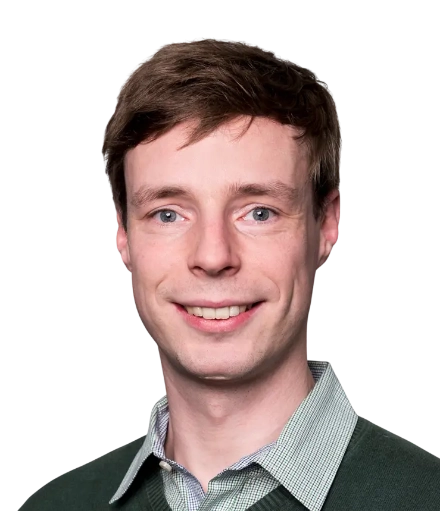
Last position:
Director Technology at Forte Digital Germany
- Leading 20+ staff in development, site reliability engineering, and architecture.
- Leading the group-wide agentic AI initiative (Norway, Poland, Germany).
- Hands-on solution architect and AI consultant for over 50% of my working time on client projects in the publishing sector – from local publishers to international corporations.
- Strategic consulting and technical implementation of AI workflow platforms (n8n, Workato).
- Developing prototypes for traditional, AI-based, and agentic AI workflows.
Gunnar M.
Last position:
Head of IT & Procurement at S-Servicepartner Deutschland GmbH
- Responsibility for IT infrastructure across 8 sites, 2,500 users, 80 systems, 8,000 assets
- Responsibility for IT/non-IT procurement with €18M annual budget
- Central service provider management, digitalization of contracts and procurement
- Project management for scanning solution, site integration, MS SharePoint
- Leadership of 18 FTE across 3 teams
- Agile leadership in implementation of Digital Office and Digital Coach
Mohamed G.
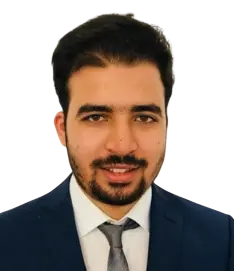
Last position:
Lead / Principal Cloud, AI & Security Architect at Freelancer / CC Conceptualise GmbH
Projects:
Project: RWE – Development of a company-wide Zero Trust cybersecurity architecture (CITADEL) Role: Senior Enterprise Cybersecurity Architect / Zero Trust Architect Company: RWE AG Description: Concept and implementation of the strategic CITADEL cybersecurity target architecture at RWE, based on the Zero Trust architecture principle and aligned with regulatory requirements such as NIS2, ISO 27001 and company-wide security governance policies. The goal was to build a measurable, auditable and scalable security architecture with a strong focus on Identity Governance, compliance transparency and operational manageability. Responsibilities & Achievements:
- Zero Trust architecture design: Developed a company-wide Zero Trust reference architecture (Identity, Device, Network, Application, Data) including trust zones, control points and enforcement mechanisms according to NIS2.
- Identity & Access Governance (IGA): Designed and introduced IGA governance structures including role models, recertification processes, segregation of duties (SoD) and lifecycle management for identities and access.
- Security governance & KPIs: Defined and implemented security KPIs and metrics to manage Zero Trust maturity, identity risks and compliance at the management level.
- Compliance & reporting: Built standardized compliance reports and dashboards to support internal audits, external assessments and regulatory evidence (e.g. NIS2).
- Architecture & stakeholder alignment: Worked closely with Enterprise Architecture, IT operations and business units to integrate the CITADEL architecture into existing IT and security landscapes.
- Strategic security consulting: Advised programs and projects on Zero Trust compliance, identity centricity and regulatory requirements in the energy and critical infrastructure (KRITIS) environment. Technologies & Methods: Zero Trust Architecture, NIS2, Identity Governance & Administration (IGA), IAM, RBAC, SoD, Entra ID, SailPoint, Zscaler, Terraform / IaC, Policy as Code, security KPIs, compliance reporting, NIST 2.0, ISO 27001, Enterprise Security Architecture, governance frameworks, risk & control management
Project: Scalable AI Workbench Platform on Microsoft Azure Role: Cloud Architect & Engineer Company: Siemens Energy Description: Design, development and operation of a secure, modular cloud infrastructure to support Data Science, Machine Learning and AI applications for various engineering teams at Siemens Energy. Responsibilities & Achievements:
- Cloud architecture: Designed and implemented an Infrastructure-as-Code solution (Terraform) for automated provisioning of Azure resources (Resource Groups, Storage Accounts, Cosmos DB, Application Insights, networking, PostgreSQL Flexible Server, Azure Container Apps, Azure Container Registry).
- Developer portal: Used Backstage with custom frontend and backend plugins (Node.js, TypeScript, React.js, PostgreSQL, Container Apps) to enable self-service and empower developers, data scientists and AI/ML engineers.
- Role-based access control: Implemented Azure RBAC to grant targeted access (e.g. Storage Blob Data Contributor, Reader) to engineering groups (e.g. AI Engineers) for relevant resources.
- Data platform engineering: Built and configured a multi-layered storage landscape (Raw, Curated, Vector data), including automated container creation and access control for advanced analytics and AI workloads.
- DevOps integration: Integrated with Azure DevOps for CI/CD pipelines to automate deployment, monitoring and compliance.
- Security & compliance: Implemented Private Endpoints, network policies and Managed Identities to ensure data protection and regulatory compliance.
- Collaboration: Worked closely with cross-functional teams to align the cloud infrastructure with business and technical requirements and drive digital transformation at Siemens Energy. Technologies: Azure, Terraform, Azure DevOps, Cosmos DB, Application Insights, Azure Storage, Private Endpoints, Azure Synapse, Azure Machine Learning, Azure Entra ID, RBAC, Backstage, Node.js, React.js, PostgreSQL, Python (automation), Git
Alex I.

Last position:
Public Speaker at WeAreDevelopers
- Participated as a public speaker regarding leadership and transformational topics at the WeAreDevelopers World Congress with 15 thousand visitors.
Yves W.
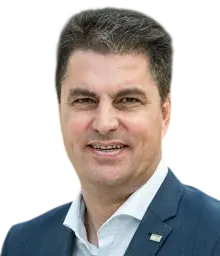
Last position:
Program Director, Project Manager
- Senior program director and enterprise architect with nearly 30 years of operational experience in HR, ERP, security, risk management, finance, PLM and SLM.
- Expertise in IT program and project management, engineering, process management and organizational development.
- Experience working for the world leader in service management software, rail transportation and a leading tier 1 automotive supplier.
- Subject matter expertise in finance, automation processes, logistics, ERP and PLM and integration, including related end-to-end lifecycle data management and enterprise architecture.
- Specializes in managing large and complex engagements, programs and projects from demand, idea and strategy to operation, including stakeholder and change management.
- Expertise areas: HR, ERP, SecOps, integrated risk management, supply chain and operations, finance, SLM, product strategy, lifecycle management, shared services, IT and PLM.
- Industry experience in technology, tier 1 automotive, transportation and logistics, manufacturing, high technology and software industries, banking and insurance, and railway.
- Experience with SecOps (security incident response and vulnerability management), digital portfolio management, integrated risk management, service portfolio management and business continuity planning.
- Experience defining and designing integrated risk management including security and operations (response plans), CMDB initiatives and shared service implementations.
- Implemented integrated risk management including digital business continuity plans, disaster recovery plans, digital maturity assessments and security risk registers.
- Technology skills include SAP, HR, time and attendance, ERP, PLM, ALM, ITSM and CAD systems.
- Experience with cloud-based services and master data management.
- Familiar with TOGAF, IT4IT, SAFe and PPM.
- Project client exposure to companies such as Siemens, BMW, Daimler, BASF, Bayer, Bosch, DHL, DB Schenker, ServiceNow, Bombardier, KION, Johnson Controls, Schaeffler, Deutsche Telekom, SAP, FEMSA, CEMEX, Nestlé, Heineken, Air France/KLM, Airbus, Vodafone, Majorel, Virgin Trains, Equinor, ASML and Volvo.
- Holds a master’s degree in informatics and a bachelor’s degree in applied economics.
Benjamin Q.
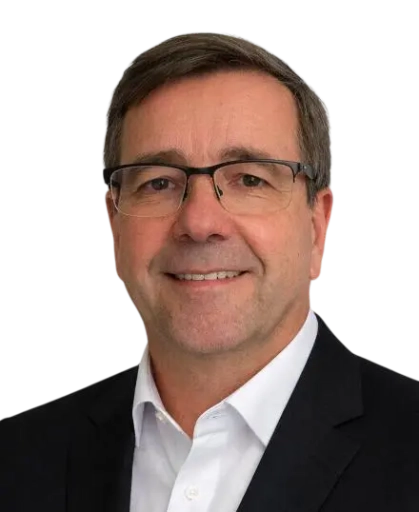
Last position:
Transformation Advisor and Overall Program Manager at Vereinigte Hagelversicherung VVaG
- Transformation management for the renewal of core insurance systems
- Overall management of the transformation program with 10 projects and many subprojects
- Advising the management board
- Designing the new insurance processes
- Ensuring compliance with DORA, GDPR and BaFin
- Program management (multi-project management) based on PMI principles
- Continuous coordination with all service providers and internal stakeholders
- Reporting to all stakeholders
- Preparing and running steering committees
- Detailed task and resource planning
- Tracking effort and budget as well as forecasting
- Decision and escalation management
- Managing the different program phases such as solution design phase, agile implementation phase, test phase, training phase and migration phase
- Building 15 cloud environments in redundant data centers
- Preparing iterative rollouts to European countries
Discover over 15,000 top freelancers


Statistics of experts using Enterprise Architecture
Aggregated from the professional profiles of matched freelancers.

Experience
22 years

Position duration
2.2 years (Germany: 2.4 years)

Positions per freelancer
14

Top business areas
Information Technology, Project Management, Product Development

Top industries
Information Technology, Banking and Finance, Automotive

Certification focus areas
Information Technology, Project Management, Product Development

Bachelor's degree or higher
92%

Master's degree or higher
85% (Germany: 58%)

Doctorate
8% (Germany: 7%)

Certifications per freelancer
3 (Germany: 5)

Most common languages
German, English, French

Speak two or more languages
93% (Germany: 99%)
Based on our profile pool as of 9 Oct 2026.
Daily rate distribution
The chart shows how the daily rates of experts in this technology in Berlin are distributed, based on recent contracts on our platform. Each bar covers a rate range — its height shows the share of experts charging within that range.
Average rates of experts in Berlin using Enterprise Architecture
Rates are based on recent contracts and do not include FRATCH margin.

The average daily rate is the mean of all daily rates from recent contracts of comparable freelancers on our platform.
The median daily rate is the middle value of all daily rates — half of comparable freelancers charge less, half charge more. Unlike the average, it is barely affected by outliers.
Calculated based on our freelancers’ daily rates as of 9 Oct 2026. Actual rates may vary depending on seniority level, experience, skill specialization, project complexity, and engagement length.
Enterprise Architecture experts industry focus
See which industries our matched freelancers work in most often — every figure is calculated live from the freelancers on FRATCH.
- Information Technology (93%)
- Banking and Finance (73%)
- Automotive (67%)
- Manufacturing (53%)
- Education (47%)
- Transportation (47%)
- Media and Entertainment (47%)
- Professional Services (47%)
Please note that freelancers can work across multiple industries, so percentages overlap.
About the technology
What Enterprise Architecture covers
Enterprise Architecture, often shortened to EA, connects business goals with the processes, information, applications and technology that support them. It gives companies a structured view of their current environment and a practical direction for change. The work can cover strategy, operating models, governance and transformation roadmaps.
Where it creates value
Companies use EA to reduce duplication, clarify ownership and make major technology decisions easier to assess. It is relevant when organizations modernize core systems, integrate acquisitions, move to cloud services or redesign customer and operational processes. Typical deliverables include:
- Capability maps and target operating models
- Application and technology landscapes
- Transition roadmaps and investment priorities
- Principles for data, integration and security
Frameworks and tooling
Enterprise Architecture work may draw on TOGAF, ArchiMate, the Zachman Framework or an organization’s own method. Strong professionals know when a framework adds structure and when it would create unnecessary overhead. They combine repository tools, modeling software, portfolio data and workshop outputs into views that decision-makers can use.
When companies bring in specialists
Freelance expertise is useful when internal teams need an independent view or a transformation requires focused capacity. A specialist can establish an EA practice, assess a fragmented landscape, prepare a modernization case or support governance during delivery. In Berlin, this work often spans established enterprises, public organizations and technology-led businesses with distributed teams.
- Strategy and operating model changes need a shared design
- Legacy applications limit product or process change
- Cloud, data or integration decisions affect many departments
- A merger creates overlapping systems and responsibilities
Skills that distinguish strong professionals
The best Enterprise Architecture professionals connect high-level direction to decisions that delivery teams can act on. They understand business capabilities, domain boundaries, APIs, integration patterns, data ownership, cybersecurity and cloud models without losing sight of governance and value. They facilitate difficult workshops, document trade-offs clearly and adapt their communication to executives, product teams and technical specialists.
Choosing the right fit
Start with the outcome: a target state, a roadmap, governance support or a decision about a specific platform landscape. Then look for evidence of comparable organizational complexity, clear deliverables and constructive collaboration with stakeholders. Remote work is effective when workshops, repositories and decision records are well managed; Berlin-based teams may also value on-site sessions and fluent communication in the languages used by their stakeholders.

Frequently asked questions
Need clarity? These are the questions we hear most often about Enterprise Architecture.

Enterprise Architecture is used to connect business strategy with processes, data, applications and technology. It helps organizations understand their current landscape, define a target state and sequence changes through a practical roadmap.
Enterprise Architecture looks across the organization rather than focusing on one solution or system. It addresses capabilities, operating models, dependencies, governance and investment choices, while solution and technical design usually work at a narrower delivery level.
A strong Enterprise Architecture professional may also bring business analysis, portfolio management, cloud strategy, data governance, cybersecurity, integration design and change management. Experience with TOGAF, ArchiMate or repository tooling can help, but practical judgment matters more than framework terminology alone.
The required depth depends on the scope, decision authority and complexity of the organization. A landscape assessment may suit a professional with focused domain experience, while an operating model redesign or cross-business transformation calls for someone who has guided comparable decisions and stakeholder groups.
Yes, Enterprise Architecture work can be delivered remotely when stakeholders share access to models, documentation and decision records. Berlin-based teams may still prefer on-site workshops for sensitive strategy discussions, and the right professional should match the collaboration style and language needs of the organization.
A capable Enterprise Architecture freelancer should first confirm the business outcome, scope, stakeholders and decision points. Early deliverables often include a current-state view, agreed principles, key gaps and a roadmap structure that makes later recommendations testable.
Quality in Enterprise Architecture is visible in clear boundaries, traceable decisions and recommendations that can be implemented. Ask to see anonymized examples of models or roadmaps, discuss how trade-offs were handled and test whether the professional can explain complex dependencies in plain language.
Organizations with complex portfolios, multiple business units, legacy constraints or major transformation programs often gain the most from Enterprise Architecture. It is especially useful when technology choices affect operating models, regulatory responsibilities, customer journeys or shared data across the business.
The average hourly rate of freelancers in Berlin, Germany who have used Enterprise Architecture in their recent projects is 125 €, which corresponds to a daily rate of about 1,002 € based on an 8-hour working day.
Of the freelancers in Berlin, Germany who have used Enterprise Architecture in their recent projects, 92% hold at least a Bachelor's degree, 85% hold at least a Master's degree, and 8% hold a doctorate.
On average, freelancers in Berlin, Germany who have used Enterprise Architecture in their recent projects have 22 years of professional experience, with a single engagement typically lasting around 2.2 years.
The most common languages among freelancers in Berlin, Germany who have used Enterprise Architecture in their recent projects are German (100%), English (93%), and French (20%).
The most common industries among freelancers in Berlin, Germany who have used Enterprise Architecture in their recent projects are Information Technology (93%), Banking and Finance (73%), and Automotive (67%).
The most common business areas among freelancers in Berlin, Germany who have used Enterprise Architecture in their recent projects are Information Technology (100%), Project Management (100%), and Product Development (87%).
Main locations of FRATCH Experts, who have recently used Enterprise Architecture
Our freelancers and interim experts are at home across the DACH region — available on-site in the major business hubs or fully remote. Choose a location to discover matched specialists, local market insights and up-to-date availability.
 Berlin
  Hamburg Munich Cologne Frankfurt Stuttgart Dusseldorf Leipzig Dortmund Essen Bremen Dresden Hanover Nuremberg
  Hamburg
  Munich
  Cologne
  Frankfurt
  Dusseldorf
 Countries:
Request a free demo
Get in touch with the FRATCH team and we will get back to you within 4 hours.
Would you rather directly get in touch?
We always have the time for a call or email!

Philipp Thomaschewski
FRATCH CEO

