


TOGAF Foundation
experts in Germany, matched in minutes from 15,000 CVs with the power of AI.The Open Group certification signals solid grasp of enterprise architecture basics, the TOGAF method, and how strategy, business goals, and architecture work together. Find vetted freelancers with TOGAF Foundation fast and with precision.

Meet FRATCH TOGAF Foundation in Germany
Stefan O.

Last position:
Founder at ProtocolEngine.io
Evidence-led health intelligence platform turning published research into personal health protocols. It scores 430 habits, foods, and supplements against the studies behind them, and moves the score when the evidence moves. Built solo.
- Built the daily ingestion pipeline across PubMed, bioRxiv, and medRxiv: 43,000+ papers from 3,400+ journals processed into 230,000+ typed evidence claims, each one traceable back to the study it came from.
- Designed the six-factor evidence scoring model and the public changelog behind it, so no recommendation ever appears without the papers underneath it. 23,000+ grade changes recorded and explained to date.
- Shipped an entity information model connecting every intervention to its mechanisms, biomarkers, and outcomes: 118 biomarkers with region-specific reference ranges, 77 mechanisms, 32 graded outcomes.
- Built the personalisation layer: blood panel ingestion that reads lab PDFs with a vision model and corrects results for draw time against the user's wake anchor, plus Oura, WHOOP, and Withings integration for daily readiness context.
- Operate eleven specialised review agents over the corpus and codebase, covering paper curation, retrieval quality, health-claim compliance across EU and US regimes, and security.
- Shipped the Evidence Assistant, a RAG assistant that answers from the claim database and cites the underlying papers, plus a B2B practitioner tier, an Expo React Native app, and localisation across 3 languages and 7 markets.
Stack: Next.js 16, TypeScript, Supabase, pgvector, Anthropic Claude, Vercel, DeepInfra.
Karl-Heinz R.

Last position:
Supporting the further development of a European IT branch service organization (15 countries) at European retail company (discount retailer)
- Documenting the current Incident Management, IT Service Request Management, Problem Management, Change Management and Service Configuration Management processes (including CMDB)
- Conducting maturity assessments for these processes based on the ITIL® 4 Maturity Model
- Analyzing the various service value streams based on the ITIL® 4 value stream model
- Agreeing on maturity levels for the assessed processes
- Developing and approving a roadmap to achieve and measure the respective maturity levels
- Presenting the approach, including milestones, to management for approval
- Managing external service providers in 1st Level Support
Markus M.

Last position:
Project Manager: Engineering Excellence at EnBW Energie Baden-Württemberg
- Evaluation and further development of Engineering Excellence initiatives as part of the “Digital First” program
- Validation of efficiency, productivity, and cost-saving potential in the Software Development Lifecycle (SDLC)
- Organization-wide analysis of the use of Generative AI in the Software Development Lifecycle (SDLC)
- Evaluation of optimization measures in the areas of product management, delivery, developer experience, metrics, and quality assurance
- Comparison of the target vision “Next Level Architecture (NLA)” with regard to organizational design, governance model, and scalability
- Identification of structural bottlenecks in the delivery organization and development of alternative optimization approaches
- Preparation of decision-making and management documents for division management and the Executive Board to evaluate efficiency potential and transformation measures
Skillset: Engineering Excellence, Operating Model Design, Generative AI, AI in SDLC, SAFe, DevOps, Software Delivery Metrics, Value Streams, Team Topologies, Domain Driven Design, Azure DevOps, Jira, Confluence, Management Reporting, Business Case Assessment
Kai-Uwe P.
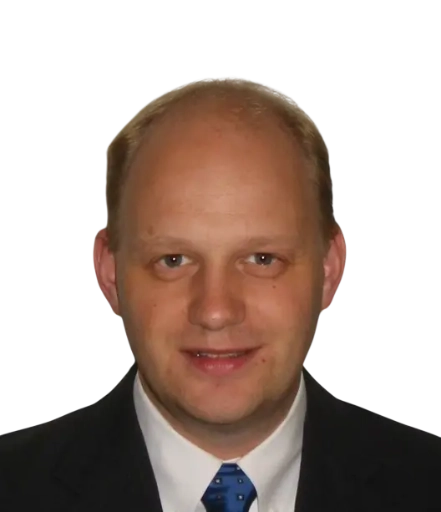
Last position:
Technical Project Management at CHG Meridian AG
- CHG Meridian AG is a financial company focused on leasing in the areas of IT technology, logistics and medical technology and is regulated by BaFin. One part of the company is Return to Remarketing, where devices delivered to the technology center (notebooks, smartphones, tablets, etc.) are prepared for resale. The project I supported was responsible for enabling damage assessment of returned lease devices, documenting them visually in the form of pictures, enabling invoicing for the customer, and making the pictures available via the in-house customer platform. This was achieved through a combination of in-house development within the internal development department and the use of SaaS products. The second project was the transition of SaaS tendering software, purchased by the business unit, into the operations of the CHG IT department. Evaluation of security questions in relation to BaFin requirements, development of an authorization concept, implementation of single sign-on, documentation of the application in the CHG systems (CMDB, iKnow, etc.) and handover into operations.
Used technologies and methods: NIS2, DORA, agile software development, Scrum, Kanban, ServiceNow, SaaS, MS Teams, MS SharePoint, Active Directory, Entra ID, CMDB, incident management, change management, request management, service level agreement
Ralph B.

Last position:
Senior Solution Architect Cloud, Data & AI at Sogeti Deutschland GmbH – Part of Capgemini
Evaluation, structuring, and handling of complex tenders for Sogeti as well as as part of larger Capgemini proposals. Focus on analyzing demanding customer requirements, deriving solid solution concepts, and translating technical, functional, and commercial aspects into convincing proposal storylines. In close alignment with delivery, sales, account, and bid teams, scalable and implementable Quality Engineering solutions were designed, evaluated, and prepared for customer decisions. This included selecting suitable role profiles and right-shore staffing options, assessing available skills and capacities, as well as the commercial preparation of reliable price and effort calculations.
A special focus was on bid management and handling service proposals (RfP/RfI analysis), solution design, presentation and management materials, as well as the functional and technical evaluation of customer requirements in the context of Quality Engineering & Testing, agentic AI-supported test automation using modern quality assurance approaches.
SOGETI projects:
- BMW: Development of a test strategy including test management, test automation, and provision of a rightshore delivery model.
- GEA: SAP Business Assurance and Quality Engineering for an SAP rollout including test governance, test automation, AI agent layer, and hypercare concept.
- AIXTRON: SAP S/4HANA Cloud migration explore phase with QA assessment, testable blueprint structure, staffing, and scalable Sogeti delivery approach.
- Deutsche Glasfaser: Quality Engineering & Testing for DG development squads, including ServiceNow and Salesforce, testing automation and governance.
- ERGO: RfP/proposal support for Managed Service Test Data Provisioning as well as a Jira/Atlassian rollout with assessment, target picture, MVP, rollout, and governance.
- Munich Re: Proposal and solution design in the insurance environment with a focus on test data provisioning, process analysis, compliance, and automation.
- BWI: Project/proposal context in the public/IT service environment with reference to Quality Engineering, Test Factory, and digital transformation support.
- Rolls-Royce: Proposal/project support in the Sogeti context with a focus on structured RfP analysis, solution design, and customer-oriented proposal preparation.
Mahabub A.

Last position:
Team Lead – Engagement & Relevance at OLX eCommerce
- Lead a cross-functional squad of backend, frontend, and ML/data engineers, balancing hands-on contribution (architecture, coding, reviews) with team leadership (mentoring, backlog prioritization, roadmap alignment).
- Designed and delivered ML-powered search and discovery features, including Learning-to-Rank (LTR), query expansion, and vector search, improving result relevance and user engagement.
- Implemented personalization and recommendation pipelines, using behavioral data and segmentation to increase customer retention and lifetime value.
- Established data-driven practices, building A/B testing and experimentation workflows (Odyn, MLflow) to measure feature impact on CTR, NDCG, and conversion.
- Owned the squad’s architecture and delivery roadmap, modernizing services with cloud-native microservices and event-driven systems (AWS, Pulumi, Terraform) to improve scalability and reliability.
- Improved reliability and operational excellence, introducing observability (Prometheus, Grafana, NewRelic), incident management, and postmortems that reduced downtime for customer-facing services.
- Mentored and supported engineers, fostering technical growth, collaboration, and a customer-first mindset through regular feedback, coaching, and code reviews.
- Worked closely with product managers, researchers, and business stakeholders to translate customer insights into technical solutions that improved discovery, engagement, and retention.
- Explored Generative AI/LLM use cases (GPT-4, LangChain, RAG), prototyping intelligent assistants and personalized discovery workflows that increased user satisfaction.
- Delivered tangible results: boosted engagement through personalization, contributed to revenue uplift, and reduced incidents by embedding resilience and observability.
Bruno M.

Last position:
Enterprise Architect at Hornbach
- Lead enterprise architecture, data and AI strategy initiatives across business domains, value streams, SAP, cloud, integration, process intelligence and governance, aligning transformation roadmaps with strategic business outcomes.
- Define enterprise data and knowledge strategy across business domains and enterprise taxonomy, including knowledge graph, data governance with focus on ownership, metadata frameworks, business glossaries, data product orientation, interoperability and AI-enabling architecture.
- Shape AI governance and decision-intelligence strategy using autonomous enterprise concepts, including policies, guardrails, reference architectures and knowledge-based patterns for responsible AI adoption and enterprise knowledge reuse.
- Support SAP S/4HANA cloud migration strategy and evaluate the future SAP ecosystem, including SAP BTP, Integration Suite, Business Data Cloud, SAP Analytics Cloud and Datasphere.
- Drive architecture debt management, portfolio transparency and application rationalization through architecture principles, governance models, decision frameworks and LeanIX-based Enterprise Architecture Management.
- Align business architecture and process intelligence using Signavio to connect value chains, capabilities, processes, data strategy, knowledge flows and transformation roadmaps.
- Define operating models for data governance, architecture governance, cloud, integration, API management, AI governance and knowledge sharing.
- Act as trusted advisor to executive stakeholders and business domain leaders across product, sales, finance, logistics, customer care and shared services.
Tareq K.
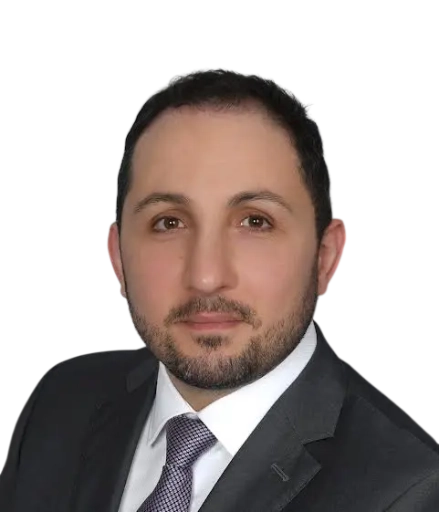
Last position:
Team Lead - Enterprise Solutions Architect at Bosch Rexroth
- Led and mentored junior developers and architects.
- Planned, coordinated, and delegated tasks to internal and external team members.
- Selected the technology stack for integrating new software products into the Industrial Hydraulics product ecosystem.
- Accelerated the integration process by initiating successful automation initiatives.
- Ensured software delivery complies with cybersecurity, regulatory, and governance requirements.
- Led the design and implementation of a Service-Oriented Architecture (SOA) for the software ecosystem, fostering collaboration across business units.
- Defined integration strategies for internal and external systems, including Customer Relationship Management (CRM) and Identity and Access Management (IAM) platforms.
- Collaborated with external suppliers and internal IT teams to design and implement robust solutions and application interfaces.
- Advocated for business unit requirements in central projects, ensuring their successful fulfillment.
Paul W.

Last position:
Agentic AI Solution Architect at Solvd GmbH
As the Solution Architect for Agentic AI in auto claims processing, I led global customer delivery implementations, encompassing solution design and detailing, multi-tenancy, process flows, integration with third-party solutions, and localization requirements.
- Architectural Analysis: Conducted in-depth analysis of business requirements, managing requirements and creating detailed specifications.
- Service Definition: Developed comprehensive technical definitions for services and integration contracts.
- AI Process Management: Automated AI process management, focusing on analysis, optimization, and continuous improvement.
- Requirements Gathering: Facilitated requirement-gathering sessions and analyzed business processes to identify optimization opportunities.
- Agile Collaboration: Employed agile methodologies, working closely with stakeholders to ensure alignment and responsiveness.
- Technical Support: Assisted senior management with technical analyses and deliverability assessments.
Serdar C.
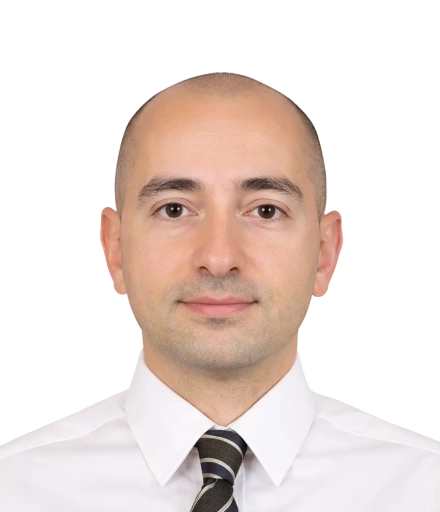
Last position:
Consultant at Freelance
- ISO 27001 implementation & audit readiness
- NIS2 & DORA compliance support
- Interim / fractional CISO services
- IT risk & controls (ITGC, SOX, COBIT, BAIT)
- M&A and IT due diligence for startups/ventures
- Business continuity management (BCM, ISO 22301)
- Cybersecurity framework development (NIST, ISO, BSI)
- GRC tool advisory (Archer, ServiceNow)
Marcel W.

Last position:
Head of Strategy & Innovation (In-House Consulting Mandate) at Mercedes-Benz Group
- Project focus: Strategic realignment of global market clusters and design of future-proof data architectures.
- Results & achievements:
- TOM design SEA & General Distributors: Development of a hub-and-spoke operating model for Southeast Asia (Thailand, Vietnam, Malaysia, Singapore) including site evaluation. Goal: Achieving significant savings in FTE and EUR.
- Data Intelligence Architecture: Conceptualization of a "Data Intelligence Unit" and a Central Data Hub for Europe, including role and process definition.
- AI-Driven Knowledge Management: Implementation of AI-based knowledge management in after-sales to consolidate heterogeneous sources.
Kai S.

Last position:
Demand Manager, Analyst, Process Consultant
- Integrating system architecture, business analysis, requirements engineering, and process consulting
- Managing business unit needs toward IT and implementation
- Capturing requirements in JIRA and breaking them down into epics
- Overseeing internal projects and programs, including stakeholder management and reporting
- Handling requirements from traditional IT developments to IoT integrations and SAP subsystem replacements
- Implementing current legal regulations (MAKO, EnWG, EEG, GWG, StromGVV, GasGVV, StromNEV, GasNEV)
- Applying agile methods (Agile, SAFe, ITIL, Scrum, Kanban, DDD, IaC, CI/CD, DevOps, automation, ETL, OOA, OOD, MDA, BPMN, BPM, UML, marketing automation, data science, ML, AI, GenAI, LLMs)
- Using tools like JIRA, SharePoint, MS Office, MS Project, MS Dyn CRM, VMware ESX/ESXi, BSI IT-Grundschutz, BSI C5, NIST, MS Azure, Typo3, mail automation, Docker, Kubernetes, OpenStack, OpenShift, Terraform, Ansible, SQL, REST, SOAP, Git, GitLab, LoRaWAN, SAP IS-U, S/4HANA, USU, KUGU, AbSys, sensors, MQTT
Peter P.

Last position:
CRM & Bid Management Project Consultant at Global mechanical engineering company
- CRM process and feature consulting
- AI infusion workshops to introduce AI apps for critical business processes
- Prototyping – Vibe coding with Lovable
- Development of several apps for global bid management in the CPQ, Salesforce, and SAP S/4HANA environment
- Requirements and process management
- Introduction of a new data governance model
- AI infusion – supporting apps and business processes with AI applications
- Portfolio management of AI ideas: identifying and selecting AI projects in bid management
- Prototyping AI projects with Lovable.dev
- Building an AI data foundation in Snowflake
- Blueprint for different business units and global rollout
- An agile prototype-first approach with design thinking and vibe coding to prototype all applications
- Presentation at a global conference on using AI in business and validating ideas with design thinking & vibe coding
- AI infusion workshops at global conferences for prototyping ideas with business stakeholders
Rakesh L.
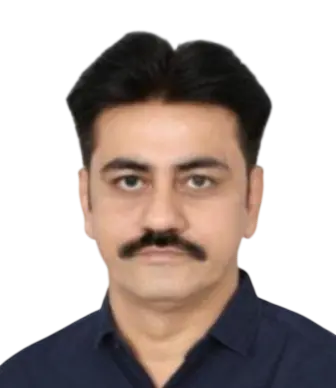
Last position:
Multi Domain Expert IT Infrastructure at Speira GmbH
- Development and implementation of multi-domain infrastructure strategies to optimize system performance in OT and IT.
- Design of security concepts for multi-domain infrastructures, including IT security management.
- Oversight of incident management, problem management, and change management.
- Managing the entire lifecycle of a strategic project, including planning, execution, delivery, and stabilization.
- Supporting IT governance, IT architecture, and risk management.
- Conducting workshops on IT security and infrastructure.
Andreas S.

Last position:
Solution Architect, Business Analyst, Consultant, Full-Stack Lead-Developer at 50Hertz Transmission GmbH
- Solution for micro-service and frontend solution for the electric grid
- Leading of development teams
- Technologies: React-Native, TypeScript, Kotlin, AWS, Infrastructure As Code, Serverless Architecture, React, NoSQL, GraphQL, Angular, Playwright, Python, ML(Ops), Kubernetes, Docker
Discover over 15,000 top freelancers


TOGAF Foundation statistics
Aggregated from the professional profiles of matched freelancers.

Experience
20 years

Position duration
2.5 years

Positions per freelancer
10

Top business areas
Information Technology, Project Management, Operations

Top industries
Information Technology, Professional Services, Banking and Finance

Certification focus areas
Information Technology, Project Management, Product Development

Bachelor's degree or higher
83%

Master's degree or higher
61%

Certifications per freelancer
9

Most common languages
German, English, Spanish

Speak two or more languages
96%
Based on our profile pool as of 16 Oct 2026.
Daily rate distribution
The chart shows how the daily rates of experts holding this certification in Germany are distributed, based on recent contracts on our platform. Each bar covers a rate range — its height shows the share of experts charging within that range.
Average rates for TOGAF Foundation in Germany
Rates are based on recent contracts and do not include FRATCH margin.

The average daily rate is the mean of all daily rates from recent contracts of comparable freelancers on our platform.
The median daily rate is the middle value of all daily rates — half of comparable freelancers charge less, half charge more. Unlike the average, it is barely affected by outliers.
Calculated based on our freelancers’ daily rates as of 16 Oct 2026. Actual rates may vary depending on seniority level, experience, skill specialization, project complexity, and engagement length.
TOGAF Foundation experts industry focus
See which industries our matched freelancers work in most often — every figure is calculated live from the freelancers on FRATCH.
- Information Technology (83%)
- Professional Services (58%)
- Banking and Finance (54%)
- Transportation (42%)
- Manufacturing (42%)
- Retail (42%)
- Automotive (33%)
- Energy (33%)
Please note that freelancers can work across multiple industries, so percentages overlap.
About the certification

What it proves
TOGAF Foundation, issued by The Open Group, shows that a professional understands the core language of enterprise architecture and the TOGAF framework. It is the entry point for people who support architecture work and need to speak clearly about business goals, current state, target state, and governance.
Core knowledge
- the purpose and structure of the TOGAF standard
- the Architecture Development Method and its flow
- business, data, application, and technology architecture basics
- architecture content, governance, and stakeholder alignment
- how architecture supports planning and change
Typical holders
You will often find TOGAF Foundation on profiles of enterprise architects, solution architects, business architects, and IT consultants who work with large organizations. It is also common among analysts and transformation specialists who must translate strategy into practical architecture work. In Germany, it is especially useful in complex corporate and public-sector settings where many teams need one shared framework.
What to expect
The certification is designed to confirm conceptual understanding rather than deep specialization. A holder should be able to follow architecture discussions, understand TOGAF terms, and support structured work across domains. For a company, that means less time spent explaining the basics and more time spent on the actual architecture decision.
Where it matters
TOGAF Foundation is useful in projects that involve target operating models, legacy modernization, cloud migration, portfolio rationalization, or large-scale transformation. It helps when several departments must agree on standards, interfaces, and governance. If you need a freelancer who can join architecture workshops in Germany and work with both business and IT teams, this certification is a strong signal.
Why companies value it
The certificate does not guarantee senior design skill, but it does show that the freelancer knows the TOGAF vocabulary and can work within a structured architecture approach. That reduces onboarding effort and helps avoid misunderstandings early in the project. For companies hiring in Germany, it is a practical filter when the role touches enterprise architecture, change programs, or cross-functional planning.

Frequently asked questions
What clients ask us most about TOGAF Foundation — answered in short.

TOGAF Foundation shows that the freelancer understands the basic principles of enterprise architecture as defined by The Open Group. It validates familiarity with TOGAF terms, the Architecture Development Method, and the way architecture supports business change. It is a strong sign that the person can take part in structured architecture work without needing the framework explained from the start.
TOGAF Foundation covers the core concepts and vocabulary. More advanced TOGAF levels go deeper into practical application, analysis, and the use of the framework in real architecture work. If you need someone to understand and follow the architecture method, Foundation can be enough; if you need lead-level ownership, look for a higher level as well.
TOGAF Foundation suits enterprise architects, solution architects, business architects, and IT consultants who work in structured environments. It is also useful for transformation managers and analysts who need to align business needs with technical design. Companies usually value it when the role involves shared standards, governance, and cross-team coordination.
A freelancer with TOGAF Foundation is especially relevant in transformation programs, target architecture work, and modernization projects. It also matters in cloud journeys, portfolio cleanup, and enterprise-wide planning where many stakeholders must agree on direction. The certification is helpful whenever architecture decisions need a common method and a shared language.
Not necessarily. TOGAF Foundation is built as an entry-level certification, so it focuses on concepts rather than deep technical specialization. That said, the most useful holders usually already know how organizations, systems, and change initiatives fit together in practice.
Most candidates prepare by studying the TOGAF standard, learning the main architecture concepts, and practicing the vocabulary used in architecture discussions. TOGAF Foundation is easier to use in practice when the person can connect the framework to real projects and not just memorize terms. Companies should expect solid conceptual understanding, not deep delivery experience from this level alone.
The Open Group may update its certification and program rules over time, so holders should always check the current policy. TOGAF Foundation itself is commonly treated as a foundational credential that supports ongoing professional development in enterprise architecture. When hiring, it is sensible to confirm that the freelancer’s knowledge reflects the current TOGAF standard.
Yes, especially in larger organizations in Germany where enterprise architecture, governance, and transformation work are often shared across business and IT. TOGAF Foundation is useful when teams need a freelancer who can join workshops, work with documentation, and communicate clearly in a structured environment. It is a practical fit for both on-site and remote collaboration.
The average hourly rate for freelancers with TOGAF Foundation in Germany is 133 €, which corresponds to a daily rate of about 1,061 € based on an 8-hour working day.
Of the freelancers with TOGAF Foundation in Germany, 83% hold at least a Bachelor's degree and 61% hold at least a Master's degree.
On average, freelancers with TOGAF Foundation in Germany have 20 years of professional experience, with a single engagement typically lasting around 2.5 years.
The most common languages among freelancers with TOGAF Foundation in Germany are German (100%), English (96%), and Spanish (21%).
The most common industries among freelancers with TOGAF Foundation in Germany are Information Technology (83%), Professional Services (58%), and Banking and Finance (54%).
The most common business areas among freelancers with TOGAF Foundation in Germany are Information Technology (100%), Project Management (92%), and Operations (63%).
FRATCH TOGAF Foundation main locations
Our freelancers and interim experts are at home across the DACH region — available on-site in the major business hubs or fully remote. Choose a location to discover matched specialists, local market insights and up-to-date availability.
 Berlin Hamburg Munich Cologne Frankfurt Stuttgart Dusseldorf Leipzig Dortmund Essen Bremen Dresden Hanover Nuremberg
 Request a free demo
Get in touch with the FRATCH team and we will get back to you within 4 hours.
Would you rather directly get in touch?
We always have the time for a call or email!

Philipp Thomaschewski
FRATCH CEO

