In indirect procurement, one priority often chases the next – and procuring freelancers is no exception. This whitepaper is structured so that you can either read it in full or specifically pick out individual chapters, for example on maverick buying or compliance.
We conducted 50 interviews with decision-makers from procurement, HR, and the business units to identify typical problems, process breaks, and best practices in freelancer procurement.
Your benefit? A pragmatic toolset to automate freelancer procurement, secure it legally, and significantly reduce manual effort and costs. That frees up more of your time for other important categories in indirect procurement.
The following chapters therefore get down to the nitty-gritty. We show you how to curb maverick buying, meet compliance requirements, tap into new automation potential, and create more price transparency in the freelancer market. Look forward to practical recommendations and illustrative examples – with the odd aha moment along the way. So, are you ready? Then let's take freelancer procurement to the next level together!

Maverick Buying, but why? – Why complicated procurement processes fail
Everyone knows it: the business unit would rather contact the freelancer they already know directly than fight their way through complicated processes. Understandable, but fatal for procurement: the consequences are a lack of transparency, risks such as bogus self-employment, and squandered savings potential.
"In most cases the department falls back on service providers they already know [...]. Usually all without the procurement department. Simply because they feel it is faster." - Mark Appun
But why exactly do business units bypass the official procurement process in the first place? Here are the typical causes of why maverick buying arises in companies.

The reasons for maverick buying – why business units prefer to take shortcuts
At the very top of the list of reasons: the official processes are too complicated and slow:
"The normal process takes so long [...] that the regular route simply can't be followed anymore, and then maverick buying happens. And that is partly intentional." Olaf Haehnel
In addition, our interviews revealed further drivers: missing clear responsibilities, a lack of consequences, and the personal relationship with freelancers or intermediaries. In summary? The reasons for maverick buying are the usual suspects:
- Acute time pressure
- Rigid and lengthy processes
- A lack of consequences
- Established relationships with the freelancer or intermediary
6 tips against maverick buying – from quick wins to big bang
1. Complicated demand requests – why do we actually make it so hard for ourselves?
Let's be honest, business units love fast solutions and hate complicated demand requests. The typical nightmare usually looks like this:
- Log into the ERP.
- Download a Word template
- Draft a project description
- Upload the document and wait for procurement or the intermediary
- Finally receive candidates
- Even more follow-up questions with the intermediary
- Wait again for new candidates
- Start interviews
No wonder business units get the impression: reaching out directly to preferred service providers is faster and easier.
"When it is clear which service provider is being engaged at what cost and with which skills, they also register the demand with us in the tool. Various parameters are filled in there – group company, cost center, category, etc. That then goes into a tool-supported approval workflow [...]." - Arnold Pritschet
In other words: the simpler the process, the more likely your managers are to stick to it. Simplifications can be implemented just as effectively on a small scale as holistically.
A particularly smart quick win: give your hiring managers practical example prompts for ChatGPT. That way, at the very least, a professional project description in the right format (and according to your specifications) is created within seconds!
Template: "I'm looking for a [position] for a [company description] in [location] ([remote share]) for [project goal]. The daily rate is [purchasing daily rate] and the workload is [utilization]. The candidate should be proficient in [specific skills]."
Example: "I'm looking for a Product Owner for a media company in Munich (90% remote) to develop an iOS news app. The daily rate is approx. €800 and the workload is 100%. The candidate should have experience in managing iOS developer teams."
Even better: specialized tools such as FRATCH GPT. These create complete project descriptions within seconds, immediately deliver matching candidate suggestions, transfer the request automatically into your ERP system, and forward it to preferred recruiters and agencies.

2. Forgotten again? Regular updates so your process stays top of mind.
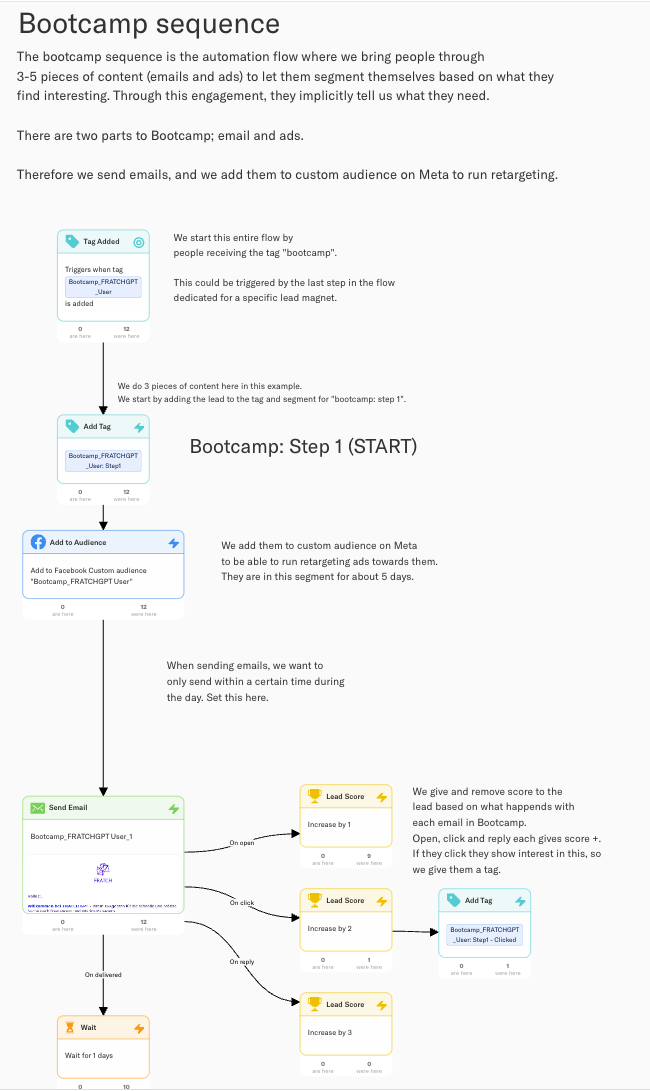
Departments often engage freelancers only rarely and therefore quickly forget what the correct process looks like. Remind your colleagues regularly – for example with short updates that you send out monthly or quarterly. Here is an example of how we remind managers at our customers to create project descriptions quickly and easily:

Get support from your marketing or internal communications team. Use standard email marketing tools or specialized campaign tools (e.g. Lemlist) to automate this reminder process.
"We have actually also brought the agencies into the responsibility. On the one hand they offer trainings, also actively for new stakeholders." - Anke Soltow
Here is an excerpt from the update flow that we at FRATCH regularly send to managers and hiring managers at our customers. We are happy to provide detailed content on request.
3. Transparency instead of flying blind – introduce digital maverick tracking
Introduce an automated database that continuously reconciles orders with approved contracts and reports deviations in real time. A clear dashboard reveals which department steps out of line most often – and how much savings potential is being lost.
So far we are only aware of in-house developed solutions – interested in an exchange of experiences? We are happy to put you in touch with our peers!
An alternative – and often easier to implement – method: track when procurement was brought into the sourcing process. For example in these four categories:
- From the very start
- For the selection of the vendor
- After the selection
- Shortly before the engagement
Combine this timing with the realized savings – and you get a clear picture: the earlier procurement is involved, the higher the savings potential.
This way you create not only transparency but also a strong argument for involving procurement early.
4. Quarterly report: "What gets measured gets managed"
"What gets measured gets managed." – Peter Drucker (unfortunately we couldn't interview him in person 😉)
Establish a regular quarterly report based on your tracking system. Visualize where process violations occur and what impact they have. Use the report not to assign blame but as an occasion for constructive conversations between procurement and the business units.
5. A look into the future – proactive demand planning
Make sure your HR department is involved from the start. Many aspects of freelancer engagement – from demand forecasting to compliance – sit at the interface of procurement and HR. Shared goals and a regular exchange between both departments are therefore key factors. Only then can guided buying be successfully embedded, demand be recognized early, and be aligned with the business unit.
"Open, transparent communication between HR, business units, and procurement is necessary. That has to go hand in hand." – Oguz Bohlig
"You also have to … extend it to the HR department, because it has a weighty say in many decisions." – Torsten Schneider
6. Preferred supplier management
Work exclusively with selected, contractually bound preferred partners and measure their performance regularly. A small, consolidated pool of service providers simplifies coordination and at the same time increases the partners' willingness to adhere to your processes and pricing standards. The decisive factor here: clear rules without exceptions – all business units may only order from defined suppliers. In addition, you should evaluate your suppliers regularly and give qualified new providers the chance to prove themselves. Want to learn more about this? Talk to us about the freelancer supplier assessment sheet.
"… there are three to five large service companies and we try to consolidate things there. That saves process costs and simplifies supplier management." – Sabrina Lüdtke
Manual processes in freelancer procurement – When email reigns and automation is on vacation
Even in 2025, many freelancer procurements still run like it's the early 2000s: by email, PDF, Excel, and gut feeling. Sounds old school? It is. While other processes have long been fully automated, many procurement departments are still stuck in copy-paste mode when it comes to freelancer sourcing.
"You work at the edge of your capacity because so much is not automated." – Daniel Bruchatz
The manual effort not only slows down the pace, it also eats up capacity. On top of that it complicates compliance and poses a data protection risk. Sending sensitive project descriptions, CVs, and budget information unencrypted by email is not just inefficient – it also carries a significant GDPR risk. No wonder frustration is rising in the business units: the processes are slow, opaque, or simply no longer up to date.

Why is so much still done by hand here? – The usual suspects
- No end-to-end process In practice, business units often report their demand informally by email. Existing systems (e.g. SAP) are bypassed or, because of their complexity, only brought in very late.
"The main channel is email … we could use SAP, but email is still the main route." – Sabrina Lüdtke
"Nah, it's purely, it's by emails and then by phone and so on, quite classic." - Filippos Siakavaras
- Missing tools for tendering & selection Many companies have no vendor management system (VMS) or no platform for standardized tendering. Instead: mailing lists and PDF quotes that are compared manually.
"13 pages, hundreds of line items – I have to put that into Excel manually." – Daniel Burchardt
Lack of integration & media breaks Even where tools exist, processes are often not free of media breaks. Excel lists, email communication, and manual approvals are the order of the day.
Individual workarounds instead of standard processes Everyone does it a little differently. Managers save prompts, forwardings, and workflows locally – central standards or a uniform process are almost completely missing.
No central reporting Maverick buying or budget overruns often only surface once the money has already been spent. Transparency is largely missing – and when it is created, then only through a great deal of manual effort.
"I developed a database that tracks maverick buying. Laborious, but we finally see the lost savings." – Sabrina Lüdtke
From handcraft to high performance – 3 ways to automated freelancer procurement
For companies that want more than manual coordination, an AI-based guided buying process is a good fit – specifically: freelancer and interim sourcing with an AI agent that can be integrated directly into existing work tools such as Microsoft Teams or Slack. This process can be implemented in two ways:
1. DIY variant
Building an individual automation with tools such as ChatGPT, Zapier, Google Sheets, or Make. Advantage: maximum flexibility.
2. Out-of-the-box solution
Using specialized solutions such as FRATCH, which are ready to use immediately and bring along all the necessary interfaces, automations, and rule sets – from demand capture to compliance-secured engagement.
A third option is implementation via an external service partner:
3. Implementation via an MSP (Managed Service Provider)
Here an external service provider takes over the steering and handling of the entire freelancer procurement. The advantage: relief for procurement. The disadvantage: the introduction is usually complex, expensive, and generally only pays off from a high volume onward. In addition, MSPs often do not increase the degree of automation, because their workflows are based on outdated standard tools. That relieves procurement, but delivers hardly any added value for the business units. Besides a base fee borne by the company, the costs amount to roughly 1.5% - 3% of the freelancer revenue. That is technically borne by the intermediaries, but they usually pass it back onto the freelancer's daily rate.
But before we dive into the tool discussion, let's take a look at the ideal-typical workflow. This process has already been successfully introduced at over 10 companies, validated by 30 more – and is of course welcome to be developed further (feedback welcome 😉):
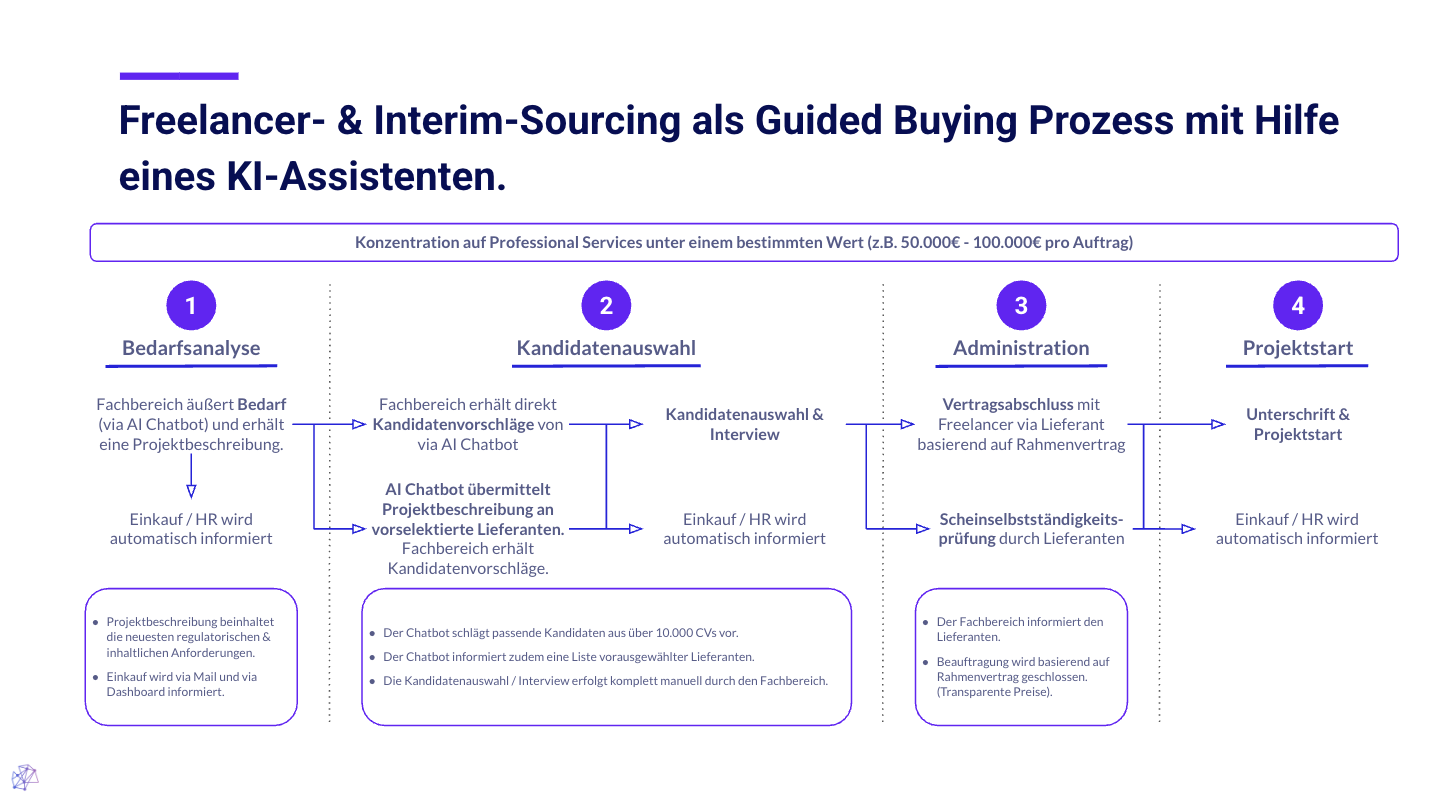
How it works with the out-of-the-box solution
Requirement: The business unit formulates its demand directly in the chat with the AI agent – the agent automatically generates a rule-compliant and bogus-self-employment-compliant project description from it. Procurement and HR are informed simultaneously and receive all information in a clear dashboard.
Candidate search: The AI agent matches the request against more than 10,000 profiles and delivers fitting suggestions – either directly from the database of the AI agent / intermediary and via a defined list of preferred service providers. Here too, procurement is informed automatically:
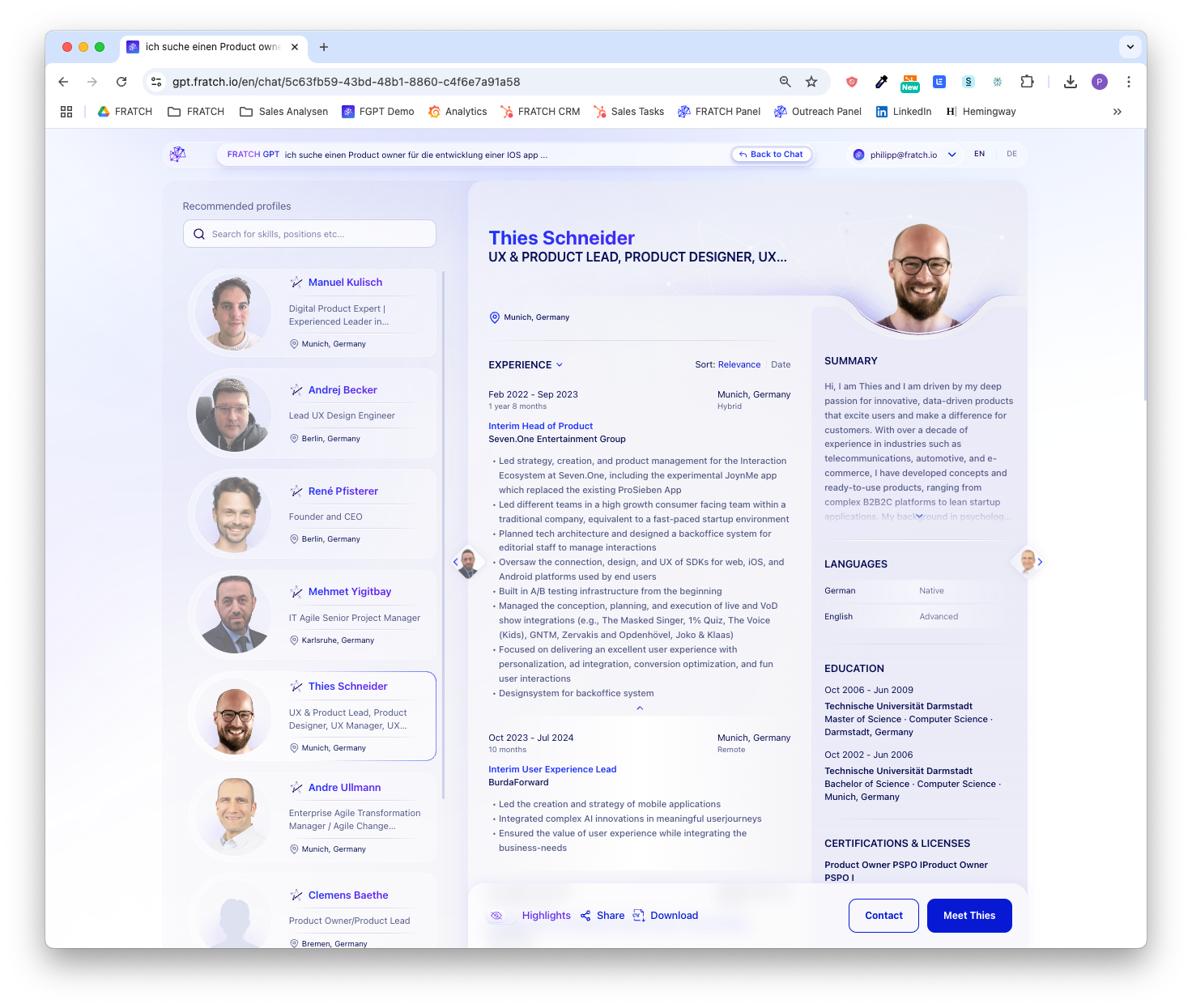
Administration: The contract is concluded on the basis of a framework agreement with the supplier (e.g. directly with FRATCH or your preferred supplier), including an automatic bogus-self-employment check. Here too, price and margin are transparently governed and can be viewed at any time in the dashboard.
Project start: After selection and contract conclusion the project starts – procurement and HR are automatically informed across all steps, or can grant the final approval.
What this delivers:
- No more manual formulation of requirements
- No follow-up ping-pong with intermediaries
- Transparency over price, margin, and supplier
- Compliance & GDPR: project descriptions and CVs are processed systematically and securely
- Business units get help immediately – procurement stays in control
How it works with the DIY variant
Requirement: The business unit enters project information – such as time frame, required skills, or target daily rate – into a simple online form (e.g. Google Forms or Microsoft Forms). A connected ChatGPT template (via Zapier or Make) automatically creates a rule-compliant project description from it – including notes on bogus self-employment. This is automatically transmitted to procurement and HR (e.g. via email or Slack) and stored in a central database (e.g. Google Sheets).
Tool example: ChatGPT (API) + Google Forms + Zapier for automatic text creation and routing
Candidate search: Based on the project description, the request is automatically sent to a defined supplier distribution list – e.g. via Lemlist or an Outlook-Zapier flow. Optionally, external platforms (e.g. LinkedIn talent pools) can also be addressed automatically. Incoming profiles are stored in a structured way in Google Sheets or Airtable
Tool example: Zapier or Make for the multi-channel request, Google Sheets or Airtable as the collection point
Administration: The final selection is confirmed by the business unit in a selection form. A two-stage approval process is mapped via a tool such as Jotform Approvals, Trello, Monday, or Google Forms with email forwarding. Contract documents are created manually or semi-automatically via pre-built templates (e.g. DocuSign or Google Docs with a Zapier trigger). An optional manual bogus-self-employment check (e.g. via a checklist form) can be included.
Tool example: Google Docs templates + DocuSign + manual review or checklist
Project start: Once approval is granted, the engagement is forwarded to accounting and HR. Project start, supplier contact details, contract terms, and daily rate are documented on a central freelancer tracking board – e.g. with Notion, Airtable, or Excel.
DIY or out-of-the-box? – A comparison
The DIY variant is flexible, individually adaptable, and technically appealing – especially for organizations with in-house automation skills. But: the setup costs time, and so does the maintaining. And let's be honest: most buyers already have too little of that. The FRATCH GPT solution, on the other hand, is ready to use immediately, integrates seamlessly into existing tools such as Microsoft Teams, and is free to use. Existing framework-agreement suppliers can also continue to be connected – without additional integration costs.
Cost transparency in freelancer procurement – What does the world cost – and how much of it the freelancer?
Freelancers have long been a fixed part of modern project teams – but when it comes to the question of what they really cost, the guessing game often begins. Business units and buyers do see the daily rate in the system – but how it is composed remains unclear in many cases. Who gets how much? How high is the margin? And is the price even in line with the market?
"I only know the sales price, but not what the freelancer gets."
This lack of transparency not only makes solid negotiations harder – it also undermines the trust between procurement, business unit, intermediary, and freelancer. Because whoever does not understand the price doubts its fairness or has diverging expectations.

Why procurement starts to brood – the invisible price drivers in detail
Why is the topic of price so opaque? In our conversations, four main reasons came up again and again:
Margin secrecy: Many service providers only name the final price. How much of it actually reaches the freelancer remains unclear. One reason: many employees on the intermediary side are incentivized via the margin. The higher the markup on the daily rate, the higher the bonus – transparency? Not in their own interest.
"The margins are actually not known to us, or only rudimentarily. [...] We see the daily rates that we have."
Prices like stock quotes: Daily rates fluctuate merrily – the same freelancer is €1,100 today and offered at €800 six months later; supply and demand set the price in real time. A FRATCH data analysis shows: some freelancers who still asked for €1,100 in 2023 were at €800 in 2024 – a price drop of around 27%. But it can go back up just as quickly – and whoever isn't flexible then loses out on top talent.
"We had negotiated a great contract – with a minimal margin. And suddenly nothing came anymore. The recruiters simply had no more interest in offering us anything, because their bonus was tied to the margin. I could pat myself on the back for the tough negotiation – but in the end I got nothing out of it. And neither did the company." - Sven Baudisch
Every role a one-off: Whether Senior UX Lead or Prompt Engineer – every freelancer profile is unique. Standardization? Difficult. Especially since the market is changing rapidly: new roles emerge constantly, old ones disappear. That makes long-term pricing guidelines a challenge.
Missing benchmarks: Without a central data basis, every price negotiation remains a gut decision. Whoever has no internal comparison values can hardly judge whether an offer is fair.
"You really have to look at how prices have changed over the last few years. It is simply difficult right now, especially in the services area." - Sabrina Lüdtke
Straight talk on costs – 4 measures for real price transparency
1. Open book price policy
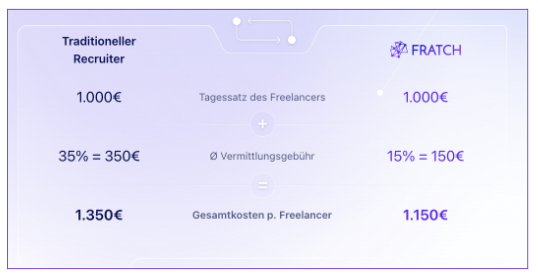
Work with partners who disclose what the freelancer costs and what margin is added – firmly anchored in the framework agreement. If the intermediary then also provides a detailed overview, procurement has an overview of all purchase and sales prices at all times. And what this can mean in monetary terms is shown by the following example.
Advantages
- Maximum transparency for procurement and business unit
- Building trust between all parties (freelancer / business unit / procurement)
- Clear cost basis for negotiations
Disadvantages
- Only works with partners who live openness
- Possibly price increases if market prices rise
2. Your own benchmarking
For every engagement, record: role, daily rate, level, intermediary, region, and skills. Whether Excel, Airtable, or a BI tool – the main thing is that you build knowledge systematically. Tip: work with a traffic-light logic or price intervals for quick assessment. Your service provider may also be able to provide you with a regular price overview.
Advantages
- Well-founded comparability of future offers
- Internal transparency and negotiating confidence
Disadvantages
- Initial effort
- Continuous maintenance required
3. Rate cards
Define realistic price ranges for standard roles – differentiated by seniority level and region. Important: as guidance, not as dogma. For specialist roles such as a SAP GTS Developer, these models usually fall short.
Advantages
- Faster assessment when demand arises
- Consistent framework conditions
Disadvantages
- Risk of over-bureaucratization
- Becomes outdated quickly when the market changes
- Quality suffers under rigid specifications
- Risky for niche roles with individual prices
- Frustration for freelancers when they discover the true margins
- Works well for standard roles – but hardly for niche profiles such as a SAP GTS Developer
4. Actively monitor market trends
Use studies, platform data, or the exchange with other buyers to develop a realistic sense of prices.
A particularly hands-on example comes from Arnold Pritschet:
"Every year we do an analysis of the current price developments of the different rate-card roles. These serve as a negotiating lever." - Arnold Pritschet
As data sources, his team uses price indices from the Federal Statistical Office, which are published quarterly and annually:
"For every engagement we track which seniority was engaged at which daily rate." - Arnold Pritschet
From this a well-founded, internal comparison basis emerges, with which new offers can be classified and evaluated much better – and which also lends itself wonderfully to an informal benchmark chat at the next industry event.
Advantages
- Realistic orientation for negotiations
- Objectifiable data basis
Disadvantages
- Market transparency often patchy or subject to a fee
- Comparability difficult or too imprecise for complex role profiles
- High effort to review data regularly and keep it up to date
Bogus self-employment in freelancer procurement – Between gray area and legal trap
In many companies, freelancers have long been part of the extended workforce – flexible, highly specialized, ready to go quickly. But with this agility, the legal risk rises as well, in particular that of bogus self-employment. And that can get expensive – in the form of back payments, criminal proceedings, and considerable reputational damage.

The problem: many companies rely on manual and outdated checklists or the personal responsibility of the business units. But legally secure processes? Nowhere to be found.
Why is the topic so complex? – Everyone does it a little differently
A key reason for the uncertainty in dealing with bogus self-employment is that there is no clear legal definition or unambiguous case law. Every case is decided individually – depending on numerous factors such as project content, integration into the organization, or the nature of communication. This gray area makes it particularly difficult for business units and procurement to establish certainty early on.
Bogus self-employment does not arise from bad intent, but from a lack of knowledge, differing interpretations – and missing standards.
A few classic causes from the interviews:
Timing of the check: The legal check often happens only after the candidate has been selected – which at first glance seems too late, but in practice is often necessary. Because a well-founded bogus-self-employment assessment requires precise knowledge of the freelancer's individual setup: does he have a limited company? Does he employ staff? Does he work for other clients in parallel? This information is usually only available after the preselection – and should then be checked in a targeted way. At the same time, a legally secure basis must already be created at the very beginning – that is, with the project description. It should be clearly formulated, checked for the freelancer being bound by instructions, and tailored to the deployment context, in order to withstand later risks during the bogus-self-employment check.
Business units without guidance: Many hiring managers don't even know what is allowed – and what is not. Keeping track of labor law, social security, and the tax office isn't exactly everyday business either. The challenge already begins with the wording of the project description: if it is formulated unclearly, too bound by instructions, or too close to the internal day-to-day business, the risk rises that the engagement is classified as bogus self-employment during an audit.
"The topic is partly not even consciously ignored – it is simply not known." - Olaf Haehnel
Trust instead of structure: Many companies rely on external service providers, in the hope: "They'll do it right." But even there, a standardized process or transparent check is often missing. In practice it turns out: the checks by these service providers are frequently superficial – for example a single standard questionnaire that is applied equally to all roles. That may formally suggest certainty, but often falls short for more complex profiles.
Unclear role requirements: What still passes for a "PMO" can be legally problematic for a "Prompt Engineer." Roles differ not only in their professional characteristics but also in their legal risk – which makes blanket assessments nearly impossible.
How to avoid expensive mistakes – 3 concrete approaches
1. Bogus self-employment cannot be assessed with a traffic light
The risk of bogus self-employment cannot simply be categorized with a traffic-light logic into "red," "yellow," or "green." Every case must be considered in a highly individual and nuanced way – a "yellow" can mean a low or a very high risk depending on the context. Whoever relies on simple color codes quickly lulls themselves into a false sense of security.
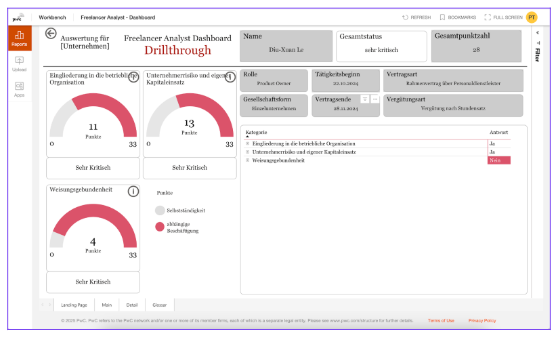
2. Role-based risk assessment
Standard questionnaires along the lines of "one size fits all" are not enough for a legally secure assessment. Instead, specifically developed question catalogs are needed for certain roles, which query the actual working conditions and the context in a differentiated way.
FRATCH works closely with PwC on this. Together they regularly create and update questionnaires based on current case law – depending on role, industry, and deployment context. The result: a role-based, dynamic risk assessment that is not only documented but also stands up to potential audits.
Dedicated questionnaires are recommended for the following roles:
- General questionnaire
- Product Owner
- Scrum Master
- Change Manager
- Software Developer
- Software Tester
- DevOps Engineer
- IT Project Manager
- Network and System Administrator
- Back office assistant
- Customer service agent
- Cyber & IT security consultants
- Management consultants
3. An automated process instead of gut feeling
Instead of Excel and Word: use structured, automated workflows. An ideal process (e.g. via guided buying) checks directly at the briefing stage, automatically steers the fitting contract types, and informs procurement, HR, and the business unit in sync.
"Once a guided buying system is introduced, there is no more excuse to use other channels." - Christoph Quick-Timmerhaus