


Fuel Cell Experts in Germany
for efficient energy systems, matched in minutes with vetted professionalsHire experts who design hydrogen fuel cell systems, integrate PEM and SOFC technologies, and validate balance-of-plant components for mobility, buildings and industrial power. FRATCH connects you with precisely matched, vetted and available freelancers quickly.

Meet FRATCH Experts in Germany, who have recently used Fuel Cell
Sabine L.

Last position:
Communications consultant for crisis communication/issue management at AQIM – Association for Quality in Interim Management
Planning, execution & moderation of crisis communication and reputation management
AQIM is a non-profit organization based in Austria. An association of interim managers from Germany and Austria. Founded in December 2024. Multi-part training with workshops and consulting for preventive crisis communication, in cooperation with the founding members and those responsible for communication. To assess crisis potential for the market entry strategy and ahead of a digital campaign.
The project in a nutshell:
Consulting and training for the purpose of:
- Analysis of crisis potential as a new market entrant and its internet-based communication activities
- Planning and developing crisis communication with targeted measures
- Developing a crisis plan to minimize reputation risks in an emergency
- Conducting training and information sessions
Success:
- What started as a one-time consulting event for preparing an information campaign became a multi-part workshop on preventive crisis communication. This not only gave the organization expertise and confidence in the event of acute challenges, but also gave the participating interim managers new skills for their day-to-day work on assignments
- The workshop enabled those responsible to launch the information campaign that was being prepared at the time and planned for six months, as scheduled at the end of January 2026 on social media
- Careful scheduling and defining how to handle critical voices in terms of terminology and tone, as well as compliance rules, ensured a smooth start and run of a 3-month information campaign
Giuseppe A.

Last position:
Embedded Software Developer at Inheco
- AI Integration (LLM & RAG): Design and build of an internal intelligent RAG system (Retrieval-Augmented Generation) based on LLMs, n8n, and vector data for the automated analysis of technical documents and error logs.
- Design & Implementation: Design of a robust RS-232/UART communication interface for an SBC-based embedded device to control medical shaker systems.
- Architecture & Protocol Design: Implementation of a highly maintainable software structure (OOP, SOLID) and definition of hardware-close, resilient communication protocols including multithreading and advanced error handling.
- Quality Assurance & DevOps: Test automation using xUnit, integration tests directly on the hardware target, and maintenance of technical documentation according to strict medical technology standards via Azure DevOps.
Label: C#, .NET, LLMs, RAG, n8n, RS-232, UART, Multithreading, async/await, xUnit, gRPC/protobuf, Blazor, MudBlazor, EF Core, Visual Studio 2026, Azure DevOps
Olfa A.

Last position:
Senior Embedded Software Engineer / Function Developer at Enginius GmbH (FAUN GROUP)
- Developed model-based software for hydrogen tank control units using MATLAB/Simulink, aligned with ISO 26262 functional safety requirements
- Performed system integration and software verification across MIL and HIL environments using dSPACE and Vector tools
- Defined software architecture (SADS) with interface specifications for CAN, analog, and digital communication protocols
- Generated production-ready embedded C code using Simulink Embedded Coder; created and maintained A2L calibration files with CANape
- Designed and executed MIL/HIL test cases ensuring full coverage of functional and safety requirements
- Implemented CODESYS PLC applications on IFM ecomatController; applied CAN and Modbus TCP/IP communication protocols
- Contributed to HMI/UI development using Qt/C++ on Linux (Qt Creator)
- Applied agile Kanban workflow with Git-based version control (Bitbucket)
Tools: MATLAB, Simulink, CANape, CANalyzer, PCAN-View, Embedded Coder, CODESYS, TTC2038/PXROS, Codebeamer, Jira, Git
Abdelrahman H.

Last position:
Research Assistant (WHK), FPGA Development – BrassSense Project at HAW Hamburg / Prof. Peter Schulz
- Real-time tone detection on FPGA (~20 ms latency target) using a filter bank architecture with a fuzzy-logic decision stage, avoiding FFT due to its window-length/frequency-resolution tradeoff.
- Responsible for system integration and architecture.
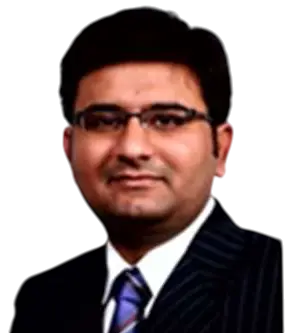
Kavin T.
Last position:
Freelance Software Expert – Functional Safety & AUTOSAR at Bosch
- Development and optimization of software architectures for safety-critical embedded systems in the automotive sector according to ISO 26262 and ASPICE.
- Performing safety analyses (FMEA, DFA, FTTI, HARA) for safety-relevant software.
- Technical consulting and support in acquisition processes for safety-critical software projects.
- Evaluation of AUTOSAR architectures and integration of safety-relevant software solutions.
- Collaboration with OEMs and suppliers to ensure compliance with safety standards and process requirements.
- Leading functional safety reviews and ASPICE assessments.
- 2016–2019: Body Computer Module – Worked as Lead Software Integrator. Responsible for software integration of safety-critical control units, implementation of AUTOSAR software components, and system integration testing.
- 2019–2022: PowerNetGuardian – Worked as Software Architect. Developed a safety-critical software architecture, ASIL decomposition, and created software safety requirements according to ISO 26262 and ASPICE.
- 2022–Today: PowerNetGuardian Plus – Worked as Lead Software Architect. Responsible for the overall software architecture, safety and cybersecurity concepts, FMEA analyses, and technical consulting during OEM negotiations.
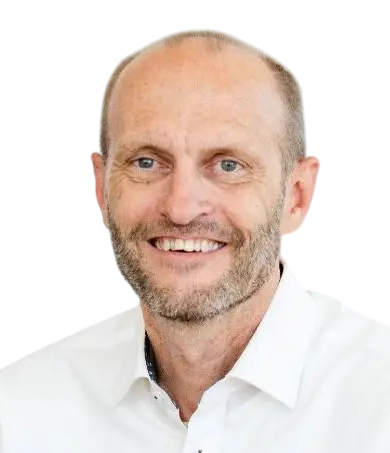
Lars B.
Last position:
Owner at LifeTech Consult
- Corporate finance advisor and strategic consultant to startup companies
- Technical analyst for investors
Subodh K.

Last position:
Senior Software Engineer at EDAG Engineering GmbH
Project Title: Path Planning Module Development (Oct 2024 – Jun 2025)
Developed path planning module using C++14 and CMake
Implemented gRPC communication protocol between modules
Performed unit testing using Pytest framework and Python
Project Title: HMI Programming for Battery, Fuel Cell Electric Vehicle (Aug 2023 – Sep 2024)
Developed HMI software for BEV/FCEV using Ruby and Crystal for backend
Implemented frontend using Vue.js framework
Conducted bug fixes and simulator testing
Project Title: IFHOST CAN Bus Programming (Jan 2023 – Jul 2023)
Programmed CAN bus software using C and C++
Executed unit tests with Google Test framework
Performed integration testing using CAPL in Vector CANalyzer
Participated in onsite testing
Dawid K.

Last position:
Plant Assembly and Commissioning at Armaco
- Project duration: 14 weeks
- Continuous debinding and sintering of MIM components for the automotive, aerospace, consumer goods (CCC), medical, military, office, and sporting equipment industries
- Example products: bipolar plates for fuel cells, orthodontic brackets, components for automotive airbag sensors, weapons
- Heating: electric
- Atmosphere: forming gas, Ar, N2, dissociated NH3, 100% H2 (e.g. for stainless steel products)
- Temperatures: 1280 °C, 1350 °C, 1450 °C, 1600 °C
- Mechanical and electrical assembly of the plant
- Routing of cable trays and cables
- Connection of machine components and sensors
- Wiring according to circuit diagrams
- Connection of control cabinets
- Performing I/O checks
- Support during commissioning
- Fault analysis and troubleshooting
- Coordination with customers and project management
Vaikunth S.
Last position:
Technology Consultant – Hydrogen Systems Engineering at Bashpa Energy Technology Solutions
- Consulting & strategic advisory in areas related systems engineering, infrastructure development, techno-economic feasibility, sector coupling and regulatory aspects of green hydrogen in India to evaluate integration and decarbonization opportunities.
- Developed data-driven models of renewable distributed energy resources (wind, solar and hydel) to evaluate the cost of green hydrogen production, distribution and application, aiming for commercial viability and affordability.
- Spearheaded the modelling of the Indian electricity grid and simulation of load balancing to estimate the short- and long-term energy market flexibility analysis to support energy trading and risk management for hydrogen assets.
- Leading AI-enabled software development to support decision-making and accelerate the adoption of a hydrogen economy in India.
Karl S.

Last position:
Software Consultant, Architect, and Developer at Forklift Truck Manufacturer
Consulting in all areas of software development such as architecture, inter- and intra-process communication, end-to-end validation
Monitoring and measuring resources such as runtime and memory usage
Specification of interface and implementation patterns as well as high-level and detailed specifications
Design and implementation of functional and safety software
Specification of unit tests and support of the integration and software tests in the HIL test department as part of software validation
Development of platform-independent control and regulation software for a fuel cell system (multi-processor 16-bit and multi-core 32-bit)
Development/concept design of state machines
Development/concept design of control algorithms
Development/concept design of inter-process safety communication
Development/concept design of basic software components for parameter, characteristic curve, and error management
Development of vehicle communication based on CAN
Development/concept design of commissioning, maintenance, and service interfaces via CAN and UDS diagnostics
Conducting validation and supporting external validation
Creating specifications for testing
Juergen S.
Last position:
Founder & Freelance Consulting Engineer at Juergen Scheele - Freelance Consulting Engineer | Electrical Safety & HVDC Systems
I provide high-value consulting services to automotive and energy industry clients, specializing in electrical safety, fault protection, and HVDC system integration.
My work helps engineering teams develop safer, standards-compliant, and more efficient products—faster.
Core Services:
Electrical safety & fault detection (DC, arc/ground (earth) faults)
HVDC protection strategies & component evaluation
Development-phase technical consultancy (fuses, PSMs, SSRs)
Custom workshops and team enablement
Who I Work With:
Tier 1–3 automotive suppliers
EV system OEMs
Renewable energy & battery storage integrators
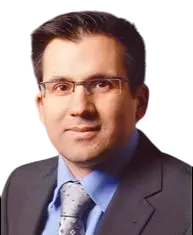
Hamdi D.
Last position:
E-Mobility Project Manager at DELTA ENERGY SYSTEMS (GERMANY) GmbH
- Analysis of subject-specific requirements considering the project goal (using Doors as tool)
- Derivation of work packages and definition of milestones based on the prior requirements analysis
- Creation and ongoing update of the project plan using MS Project
- Coordination with specialists and series production industrialization
- Review and tracking of milestones and work packages (MS Project, JIRA Confluence)
- Preparation of monthly presentations on the project, project planning, status and outlook to management
- Coordination of prototype setups and tests as part of design verification
- Documentation of all project activities, including all required forecasts, analyses, recommendations and plans (A-Spice compliant)
- Coordination with sites in China and Thailand
Alexandros M.
Last position:
Safety & Security Analyst at Startup Autonomous Logistics Vehicles
- Conducting FMEAs for safety functions and TARAs for system functions of autonomous-electric truck solutions.
Tobias A.
Last position:
Technical Development Manager - Thermal Insulation and Anchor Plates at Carcoustics
- Engine compartment/underbody
- Audi / VW / Lamborghini
Andrea B.
Last position:
Freelance Management Consultant & Coach at Consulting Andrea Ballouk
- Grant consulting for companies and research institutes
- Preparation of grant applications (national and EU)
- Drafting/reviewing interim/utilization reports
- Drafting/reviewing interim/final reports
- Project controlling (national and EU)
- Project management & coordination, PMO - national and EU
- Process management, process development, process implementation
- Organization, facilitation, and follow-up of meetings
- Reporting for internal and external stakeholders
- Conducting workshops and trainings
- Consulting on digitalization, Industry 4.0
- Coaching business owners and staff in transformation processes, e.g., digital transformation with Digital3R®
- Coaching R&D project consortia: team building, project support, interdisciplinary and intercultural communication
Discover over 15,000 top freelancers


Statistics of experts using Fuel Cell
Aggregated from the professional profiles of matched freelancers.

Experience
22 years

Position duration
2.5 years

Positions per freelancer
11

Top business areas
Product Development, Quality Assurance, Project Management

Top industries
Automotive, Manufacturing, Energy

Certification focus areas
Quality Assurance, Product Development, Project Management

Bachelor's degree or higher
100%

Master's degree or higher
69%

Doctorate
19%

Certifications per freelancer
1

Most common languages
German, English, French

Speak two or more languages
100%
Based on our profile pool as of 9 Oct 2026.
Daily rate distribution
The chart shows how the daily rates of experts in this technology in Germany are distributed, based on recent contracts on our platform. Each bar covers a rate range — its height shows the share of experts charging within that range.
Average rates of experts in Germany using Fuel Cell
Rates are based on recent contracts and do not include FRATCH margin.

The average daily rate is the mean of all daily rates from recent contracts of comparable freelancers on our platform.
The median daily rate is the middle value of all daily rates — half of comparable freelancers charge less, half charge more. Unlike the average, it is barely affected by outliers.
Calculated based on our freelancers’ daily rates as of 9 Oct 2026. Actual rates may vary depending on seniority level, experience, skill specialization, project complexity, and engagement length.
Fuel Cell experts industry focus
See which industries our matched freelancers work in most often — every figure is calculated live from the freelancers on FRATCH.
- Automotive (83%)
- Manufacturing (67%)
- Energy (50%)
- Healthcare (33%)
- Information Technology (33%)
- Professional Services (22%)
- Aerospace and Defense (17%)
- Biotechnology (17%)
Please note that freelancers can work across multiple industries, so percentages overlap.
About the technology
What Fuel Cells Do
Fuel cells convert the chemical energy of a fuel and an oxidant directly into electricity through an electrochemical reaction. Hydrogen fuel cells produce water and heat at the point of use, while different cell chemistries support distinct temperature ranges, efficiencies and operating conditions. They can provide clean power, heat or both.
Main Technologies
Proton exchange membrane fuel cells, often called PEM fuel cells, suit vehicles, backup power and compact systems because they start quickly and respond well to changing loads. Solid oxide fuel cells, or SOFCs, operate at high temperatures and can use hydrogen, natural gas or other reformed fuels. Alkaline and molten carbonate designs serve more specialised stationary applications.
Systems and Tooling
Fuel cell projects extend beyond the stack. Professionals work on hydrogen storage, humidification, cooling, air supply, power electronics, sensors, controls and balance-of-plant integration. They may use electrochemical models, multiphysics simulation, embedded control software, laboratory instrumentation and test benches to connect cell performance with a reliable complete system.
Where Companies Use Them
- Hydrogen mobility for buses, trucks, trains and fleet vehicles
- Distributed electricity and combined heat and power
- Backup power for telecom, data and critical facilities
- Hydrogen production, storage and energy-system integration
- Testing, validation and scale-up of new stack designs
Germany has active requirements across mobility, industrial energy and building technology. Remote collaboration works well for modelling, documentation and software, while commissioning, laboratory testing and safety reviews often require on-site work.
When Expertise Matters
Companies bring in freelance specialists when a concept must move into a tested prototype, when stack performance falls short, or when a system needs independent validation. Expertise is also useful for supplier evaluation, failure analysis, test planning, certification preparation and the integration of hydrogen equipment with existing electrical or thermal infrastructure.
Strong Professional Practice
Strong Fuel Cell professionals understand electrochemistry as well as practical system constraints. They define measurable requirements, manage hydrogen and electrical safety, interpret polarisation curves and degradation data, and document assumptions clearly. The best specialists connect stack behaviour to controls, thermal management, manufacturability and total operating conditions rather than optimising one component in isolation.

Frequently asked questions
Need clarity? These are the questions we hear most often about Fuel Cell.

Fuel cells are used to generate electricity, heat or combined heat and power from hydrogen or other fuels. Common applications include vehicle propulsion, stationary backup power, distributed generation and industrial energy systems.
A hydrogen fuel cell generates electricity while fuel is supplied, whereas a battery stores electrical energy internally. Fuel cells can support long operating periods and rapid refuelling, while batteries often offer simpler systems and higher round-trip efficiency for shorter duty cycles.
A strong Fuel Cell specialist may also understand hydrogen storage, power electronics, thermal management, embedded controls and functional safety. Experience with test automation, electrochemical modelling and balance-of-plant integration is valuable for complete system work.
The right fuel cell experience depends on the deliverable, not only on the technology label. A modelling task may need a specialist in electrochemistry and simulation, while prototype commissioning calls for hands-on stack, hydrogen, instrumentation and safety experience.
Fuel cell work can often be split between remote and on-site activities in Germany. System design, modelling, requirements and documentation suit remote collaboration, while laboratory testing, commissioning and hardware troubleshooting usually benefit from physical access.
Ask a fuel cell specialist to explain a relevant system from requirements through testing and failure analysis. Look for clear reasoning about stack data, degradation, thermal behaviour, controls, safety and the trade-offs between performance and maintainability.
PEM fuel cells operate at relatively low temperatures, start quickly and are common in mobility and responsive power systems. SOFCs use ceramic electrolytes and high operating temperatures, making them suitable for steady stationary generation but more demanding during start-up and thermal management.
Fuel cells appear in Germany across transport, industrial manufacturing, energy, building technology and critical infrastructure. Companies may seek specialists for vehicle platforms, hydrogen supply chains, backup systems, combined heat and power or laboratory validation.
The average hourly rate of freelancers in Germany who have used Fuel Cell in their recent projects is 111 €, which corresponds to a daily rate of about 889 € based on an 8-hour working day.
Of the freelancers in Germany who have used Fuel Cell in their recent projects, 100% hold at least a Bachelor's degree, 69% hold at least a Master's degree, and 19% hold a doctorate.
On average, freelancers in Germany who have used Fuel Cell in their recent projects have 22 years of professional experience, with a single engagement typically lasting around 2.5 years.
The most common languages among freelancers in Germany who have used Fuel Cell in their recent projects are German (100%), English (100%), and French (33%).
The most common industries among freelancers in Germany who have used Fuel Cell in their recent projects are Automotive (83%), Manufacturing (67%), and Energy (50%).
The most common business areas among freelancers in Germany who have used Fuel Cell in their recent projects are Product Development (83%), Quality Assurance (72%), and Project Management (67%).
Main locations of FRATCH Experts, who have recently used Fuel Cell
Our freelancers and interim experts are at home across the DACH region — available on-site in the major business hubs or fully remote. Choose a location to discover matched specialists, local market insights and up-to-date availability.
 Berlin Hamburg Munich Cologne Frankfurt Stuttgart Dusseldorf Leipzig Dortmund Essen Bremen Dresden Hanover Nuremberg
 Request a free demo
Get in touch with the FRATCH team and we will get back to you within 4 hours.
Would you rather directly get in touch?
We always have the time for a call or email!

Philipp Thomaschewski
FRATCH CEO

