


OMG Certified UML Professional (OCUP)
in Germany in minutes from over 15,000 CVs with the power of AI.Strong UML modeling, clear analysis of structure and behavior, and consistent documentation for software and system design. Get fast, precise matching with vetted freelancers holding OCUP.

Meet FRATCH OMG Certified UML Professionals (OCUP) in Germany
Maciej S.
Last position:
Product Owner at Bundesagentur für Arbeit
- As part of the project, the further development of the identity management system was driven forward. This included a comprehensive refactoring of the interfaces to the connected target systems. In addition, several special systems were successfully connected to the IAM to ensure end-to-end identity and authorization management.
- Technical design and solution proposals for IAM system development
- Requirements analysis and requirements management (IREB, BABOK)
- Alignment of the strategy with the future target architecture (TOGAF)
- Prototyping of solutions
- Documentation of requirements (Innovator)
- Analysis and documentation of requirements and creation of process models (UML, BPMN, ArchiMate)
- Modeling of requirements and system functionalities (OOA/OOD, UML)
- Further development of interfaces (SOAP, REST)
- Carrying out architecture reviews
Frank E.
Last position:
DevOps at Lauck-IT
Operations and extensions of Azure DevOps pipelines
Operations and extensions of AWS services
Citrix (Windows 10, Bitwarden)
AWS: ECR, EKS, CloudFront CDN, Route 53, VPC peering and CNI upgrade, Atlas MongoDB, S3 buckets, static website hosting
Azure: build and deploy with DevOps pipelines
Rainer D.
Last position:
Enterprise Architecture Management / Backend Software Developer at Polizei Hamburg
- Several projects in a police context
- Model and document police procedures/projects with Archimate (as-is/to-be) in the context of P20 (BKA)
- Create software architectures with microservices
- POC development with Springboot/Docker/Kubernetes
- Project size: 10 people
- Enterprise architecture management with Togaf and Archimate
- Backend software development Springboot
- DevOps with Kubernetes
- Implemented using: Java 17/21, Springboot 3, P20 architecture, Togaf, Archimate
Tareq K.
Last position:
Team Lead - Enterprise Solutions Architect at Bosch Rexroth
- Led and mentored junior developers and architects.
- Planned, coordinated, and delegated tasks to internal and external team members.
- Selected the technology stack for integrating new software products into the Industrial Hydraulics product ecosystem.
- Accelerated the integration process by initiating successful automation initiatives.
- Ensured software delivery complies with cybersecurity, regulatory, and governance requirements.
- Led the design and implementation of a Service-Oriented Architecture (SOA) for the software ecosystem, fostering collaboration across business units.
- Defined integration strategies for internal and external systems, including Customer Relationship Management (CRM) and Identity and Access Management (IAM) platforms.
- Collaborated with external suppliers and internal IT teams to design and implement robust solutions and application interfaces.
- Advocated for business unit requirements in central projects, ensuring their successful fulfillment.
Timm H.
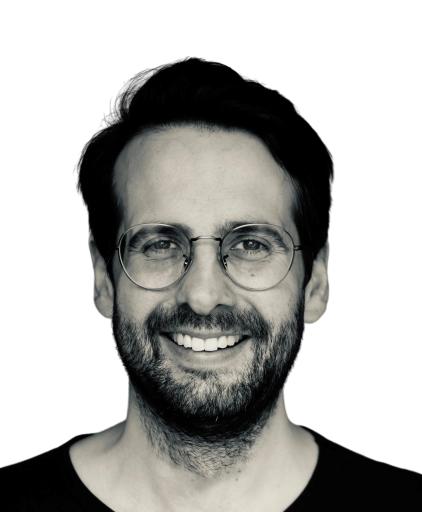
Last position:
Agile Coach & Project Manager at Telefónica Germany GmbH & Co OHG
- Coaching of project participants
- Project management for numerous content migration projects for Telefónica Germany's telecom brands
- Development and reporting of performance metrics
- Promoting collaboration between content managers and UX writers
- Running retrospectives and integrating agile elements
- Team size: 23 people
- Technical environment: Jira, Confluence, Miro, Teams, Adobe Experience Manager, Figma
Matthias B.
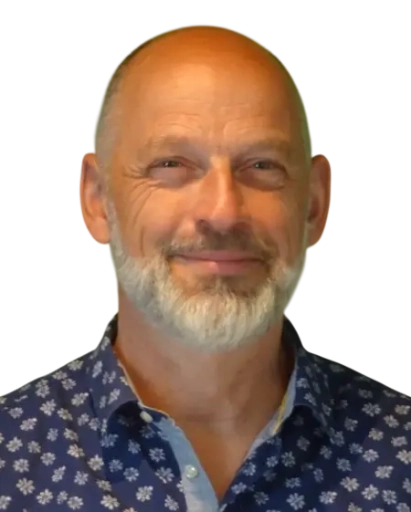
Last position:
Senior Software Developer at HARTING Technologiegruppe
- Key involvement in the technical redesign and migration of a large B2B platform from a legacy commerce system to a modern, containerized microservices architecture on Azure
- End-to-end design and implementation of the extended Contentful headless CMS ecosystem
- Led the development of a custom application based on the Contentful app framework (React, Forma36) for managing the content translation workflow
- Integrated the Across translation management system into Contentful (XLIFF via FTP, SOAP)
- Integrated Canto's Media Delivery Cloud for digital asset management
- Full-stack development with TypeScript, React, and Node.js
- Ensured high quality through pair programming, peer reviews, and automated tests (Jest, Playwright, Storybook)
- Continuous deployment with Azure DevOps in an agile/Scrum environment
Michael K.
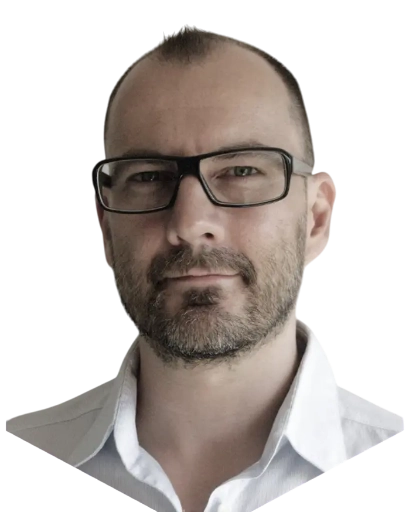
Last position:
Atruvia AG
- Further development of framework components and services in the Enterprise Banking Control Platform (EGP Framework), a set of cross-cutting libraries and services for all bounded context scopes of the platform.
- Migration from Java 17 to Java 21 and from Spring Boot 3.2 to 3.4 in about 80 library and service repositories (updating Maven POMs, Dockerfiles, Jenkins pipelines, source code migration, test updates).
- Writing unit and integration tests with JUnit and JGiven.
- Performing and analyzing performance measurements with Dynatrace.
- Enhancing multi-stage CI/CD pipelines (unit tests, security analyses, Docker builds, Harbor deployments, ...).
- Tech stack used: Java (90%), Python (10%), Spring Boot, JPA/Hibernate, JGiven, OpenAPI, Camunda 7, Podman, OpenShift/Kubernetes, Oracle DB, SonarQube, Dynatrace, Jenkins, Harbor, Bitbucket, Jira, Confluence.
Marcel S.

Last position:
Lead Developer / Software Architect at Rezeptprüfstelle Duderstadt GmbH
Responsible for the new development of billing and auditing software for prescriptions (prescriptions) to fully check and evaluate e-prescriptions for correctness (content, billing)
The system consists of several contexts that run as services (Docker containers):
Checking and processing data deliveries via FTP and email
Managing invoices, clearings, advance payments and deductions
Managing and running audit rules and audit folders
Evaluations based on Metabase
Developer Stack: Kotlin, Vue 3 / Vuetify 3, ANTLR, Spring Boot 3, REST API, Gradle, Docker, GitLab, PostgreSQL, Kafka, Keycloak, Scrum, Grafana, Loki, Testcontainers, Prometheus
Ahmed F.
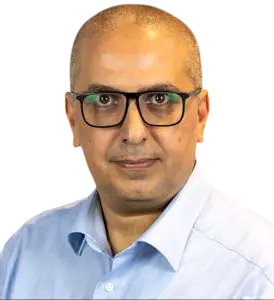
Last position:
Senior Lead Engineer (Freelance) at Atruvia AG
- Development of a wealth management application for investing in foreign currencies
- Full-stack development with Angular, Spring Boot, OpenShift, Oracle DB, Kafka
- Design and implementation of a microservice architecture
- Integration into Atruvia's BWS system and connection of multiple interfaces between Atruvia and DZ Privatbank
- Greenfield development of the application from the ground up
- Technical responsibility for architecture and interface design
- Close collaboration with business units and external stakeholders
Christof N.
Last position:
Senior Developer at Otto GmbH
- Further development of personalized advertising spaces on the Otto web shop
- Full-stack development in a Kanban-driven team of about 15 people
- Technologies: Microservices, Kotlin, Spring, Spring Boot, Gradle, MongoDB, HTML, JS, Node, SCSS, AWS
- Development process: Kanban; continuous integration with AWS CodePipeline and GitHub Actions
Stefan G.

Last position:
Senior Project Manager at Self-employed Project Manager and Consultant
Program and project management for IT projects with a focus on energy supply, process & system harmonization (SAP IS-U)
Project Health Check, Preventive Healthcare for IT projects, Turn Around Management
Strategy consulting in IT governance and IT strategy with a focus on process & system harmonization
Artem Z.

Last position:
Test Manager, Senior Tester, Agile Senior Tester at Self-employed
Discover over 15,000 top freelancers


OMG Certified UML Professionals (OCUP) statistics
Aggregated from the professional profiles of matched freelancers.

Experience
23 years

Position duration
3 years

Positions per freelancer
14

Top business areas
Information Technology, Product Development, Quality Assurance

Top industries
Information Technology, Automotive, Banking and Finance

Certification focus areas
Information Technology, Product Development, Project Management

Bachelor's degree or higher
100%

Master's degree or higher
75%

Certifications per freelancer
10

Most common languages
German, English, Arabic

Speak two or more languages
100%
Based on our profile pool as of 26 Oct 2026.
Daily rate distribution
The chart shows how the daily rates of experts holding this certification in Germany are distributed, based on recent contracts on our platform. Each bar covers a rate range — its height shows the share of experts charging within that range.
Average rates for OMG Certified UML Professionals (OCUP) in Germany
Rates are based on recent contracts and do not include FRATCH margin.

The average daily rate is the mean of all daily rates from recent contracts of comparable freelancers on our platform.
The median daily rate is the middle value of all daily rates — half of comparable freelancers charge less, half charge more. Unlike the average, it is barely affected by outliers.
Calculated based on our freelancers’ daily rates as of 26 Oct 2026. Actual rates may vary depending on seniority level, experience, skill specialization, project complexity, and engagement length.
OMG Certified UML Professionals (OCUP) experts industry focus
See which industries our matched freelancers work in most often — every figure is calculated live from the freelancers on FRATCH.
- Information Technology (100%)
- Automotive (67%)
- Banking and Finance (67%)
- Manufacturing (58%)
- Retail (42%)
- Aerospace and Defense (33%)
- Energy (33%)
- Healthcare (33%)
Please note that freelancers can work across multiple industries, so percentages overlap.
About the certification

What OCUP means
OMG Certified UML Professional, often shortened to OCUP, is a certification from the Object Management Group for professionals who can read, create, and review UML models with discipline. It signals that the holder understands the language of software and system design, not just the notation.
What it validates
OCUP is useful when a team depends on models that others must trust and reuse.
- Class, object, and package structure
- Use cases and requirements flow
- Behavior in sequence, activity, and state views
- Component and deployment thinking
- Consistent diagram use and model review
Typical holders
Companies usually look at OCUP for software architects, systems analysts, business analysts, and engineers working close to design documentation. It also fits freelancers who support large application landscapes, embedded systems, or transformation projects where UML is the common language between business and delivery teams.
In Germany, it is especially relevant when mixed teams need a clear modeling standard across internal staff, consultants, and external freelancers.
Knowledge behind the certificate
OCUP points to practical UML literacy. A certified professional should be able to choose the right diagram for the question, keep models consistent, and explain how structure and behavior fit together.
- Object-oriented analysis and design
- Requirements capture through use cases
- Dynamic behavior and interaction modeling
- Architecture communication across stakeholders
- Model quality, clarity, and traceability
What it tells a company
A freelancer with OCUP can usually join work where design must be written down clearly, reviewed by others, and kept aligned with implementation. That matters in regulated environments, long-running enterprise programs, and projects with many handovers.
For a company, the value is simple: fewer misunderstandings in design discussions and more reliable model-based communication.
Good project fit
OCUP is a strong signal in projects that use UML as a shared working method rather than as a one-time diagramming task.
- Enterprise software design
- Business and system analysis
- Platform modernization
- Integration and interface modeling
- Embedded and technical systems documentation
Freelancers in Germany may work on-site, remotely, or in hybrid teams, but the certification is most useful when the team needs precise written models and English-language technical communication.

Frequently asked questions
Key details about OMG Certified UML Professionals (OCUP), drawn from the questions we get asked most.

OMG Certified UML Professional (OCUP) shows that the holder can work with UML as a real design language, not just draw diagrams. It points to competence in modeling structure, behavior, and interactions in a way other team members can review and reuse. For companies, that means the freelancer should be able to support analysis, architecture, and documentation with discipline.
No. OCUP is a formal signal that the person knows UML in a structured and testable way. General experience may be enough for simple diagramming, but OCUP is more relevant when models must stay consistent across a larger project or team.
OMG Certified UML Professional is a good fit for software architects, systems analysts, business analysts, and engineers who work close to design models. It also suits freelancers who join enterprise programs where UML is the shared notation. If your work rarely goes beyond informal sketches, it may be more than you need.
OCUP focuses on UML, which is the standard notation for describing software and system structure and behavior. Other OMG certifications may emphasize different methods, such as business process modeling or broader architecture frameworks. If a project depends on class, sequence, state, and component views, OCUP is the more direct match.
A candidate should already be comfortable reading and applying UML notation in real design situations. Preparation usually means studying the diagram types, the meaning of relationships, and how to keep models consistent and traceable. A strong background in analysis or object-oriented design helps a lot.
For OCUP, the practical prerequisite is knowledge of UML and the ability to apply it correctly. The certification is aimed at professionals, but the main expectation is competence, not a specific job title. Candidates should check the current OMG program details before registering, since certification programs can evolve.
The OCUP program should always be checked against the current rules from OMG, because certification policies can change over time. Some professional certifications stay valid without a fixed expiry, while others require a refresh when the program version changes. Companies should ask the freelancer whether their knowledge is aligned with the current UML standard and certification track.
OMG Certified UML Professional (OCUP) matters most in projects where design communication must be precise: enterprise applications, integration work, modernization, and technical systems. In Germany, it is also useful in hybrid teams where documentation quality and clear handovers are important. Remote work is common, but the certification is just as valuable when the team needs a shared model language on site.
The average hourly rate for freelancers with OMG Certified UML Professionals (OCUP) in Germany is 99 €, which corresponds to a daily rate of about 793 € based on an 8-hour working day.
Of the freelancers with OMG Certified UML Professionals (OCUP) in Germany, 100% hold at least a Bachelor's degree and 75% hold at least a Master's degree.
On average, freelancers with OMG Certified UML Professionals (OCUP) in Germany have 23 years of professional experience, with a single engagement typically lasting around 3 years.
The most common languages among freelancers with OMG Certified UML Professionals (OCUP) in Germany are German (100%), English (100%), and Arabic (17%).
The most common industries among freelancers with OMG Certified UML Professionals (OCUP) in Germany are Information Technology (100%), Automotive (67%), and Banking and Finance (67%).
The most common business areas among freelancers with OMG Certified UML Professionals (OCUP) in Germany are Information Technology (100%), Product Development (83%), and Quality Assurance (67%).
FRATCH OMG Certified UML Professionals (OCUP) main locations
Our freelancers and interim experts are at home across the DACH region — available on-site in the major business hubs or fully remote. Choose a location to discover matched specialists, local market insights and up-to-date availability.
 Berlin Hamburg Munich Cologne Frankfurt Stuttgart Dusseldorf Leipzig Dortmund Essen Bremen Dresden Hanover Nuremberg
 Request a free demo
Get in touch with the FRATCH team and we will get back to you within 4 hours.
Would you rather directly get in touch?
We always have the time for a call or email!

Philipp Thomaschewski
FRATCH CEO

