


CompTIA Security+
professionals in Germany, matched in minutes from 15,000 CVs with the power of AI.Security+ signals practical knowledge of threat handling, secure network design, identity and access control, and incident response. It is a strong fit for security support, operations, and junior-to-mid security roles. Get fast, precise matching with vetted freelancers who hold it.

Meet FRATCH CompTIA Security+ in Germany
Andreas R.
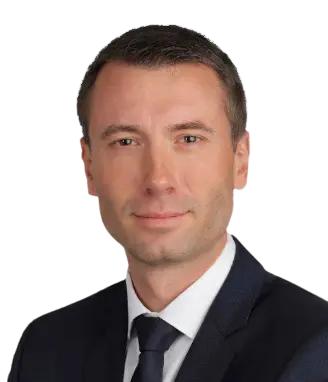
Last position:
Freelance Information Security Consultant at A-R-C Andreas Rühl Consulting
Development and implementation of customized information security strategies
Introduction and further development of ISMS according to ISO 27001, BSI-Grundschutz and other standards
Risk management and preparation of security concepts
Consulting for KRITIS, PCI DSS, TISAX and VdS 3473/10000
Establishment and optimization of security organizations
Creation and implementation of policies, guidelines, work instructions and process descriptions
Audit support and certification preparation
Delivery of training sessions, workshops and awareness campaigns
Selection and consulting for the introduction of IT security solutions such as SIEM, DLP, IDS/IPS, firewalls and encryption technologies
Conducting penetration tests and vulnerability analyses
Consulting on the selection, integration and management of security architectures in complex IT environments
Consulting on ITSM, managed security services and SOC
Management and coordination of complex projects to improve information security
Process analysis, optimization and management according to ITIL, ISO 27001 and cybernetics
Introduction and quality assurance of management, documentation and knowledge management systems
Support in complying with regulatory information security requirements (e.g. GDPR, HIPAA, SOX, GMP, KRITIS)
Development and implementation of risk analysis procedures
Organization of initial response, forensic investigations and organizational measures in security incidents
Design and delivery of targeted workshops on topics such as ISMS, IT risks and current threat scenarios
Awareness campaigns to promote a security culture in companies
Special training on ISO 27001, BSI-Grundschutz, KRITIS and other relevant standards
Simulations and exercises to prepare for information security incidents
Interim management for leading information security projects or IT security organizations
Taking on the role of external CISO (Chief Information Security Officer)
Support in developing and implementing IT security and corporate strategies
Coaching and mentoring of managers in information security
Establishment and management of security departments, including employee recruitment and qualification
Temporary assumption of management responsibility in critical situations
Alwin G.

Last position:
IT Interim Manager & AI Strategist
- Founder of CheironX: AI-supported GRC management (ISO 27001, BSI IT-Grundschutz, TISAX, DORA)
- Strategic focus on Agentic AI and GenAI for modern IT Governance, Risk & Compliance Management
- IT interim management and strategic consulting
Olaf S.

Last position:
Trainer & Facilitator for Digital Sovereignty at ITSM-COLOGNE
Project: Digital Sovereignty – Toll Collect
Workshop: Digital Sovereignty Recognize dependencies, reduce risks, remain capable of acting
Format
- One-day practical seminar
Target group
- Executive management
- IT managers
- Data protection officers
- Compliance functions
Content and objectives
- Systematic analysis of digital dependencies
- Assessment of legal and operational risks
- Development of a concrete plan to increase digital sovereignty
- Mapping of the entire IT infrastructure by participants
- Identification of critical dependencies on non-European providers
- Creation of a prioritized risk matrix based on:
- GDPR
- NIS2
- EU AI Act
- Joint development of options for action – from a hybrid model to complete migration to European solutions
- Development of an individual sovereignty roadmap with:
- Responsibilities
- Milestones
- Budget framework
Agenda
- Preliminary self-assessment (current infrastructure)
- Digital sovereignty? Nothing but an illusion
- Digital sovereignty 2026 – Germany’s dangerous dependency in focus
- Digital sovereignty & open source
- What is digital sovereignty?
- Three questions raised by digital sovereignty
- Reflection: Digital sovereignty in your own life
- Why is digital sovereignty existential now?
- Practical examples of digital sovereignty
- Schleswig-Holstein initiative
- Benefits of digital sovereignty for your company
- Assessing strategy options (cost-benefit matrix)
- Sovereign provider? 10 questions
- What does digital sovereignty specifically mean for your company?
- How do you shape digital sovereignty?
- Digital sovereignty and psychological safety
- Psychological safety: The key to high-performing teams
- Why psychological safety in your company?
- Benefits of psychological safety
- Invitation to group work: PsySafety Check (PS-C)
- The “Braintrust” experiment
- Creating a risk matrix
- Creating a roadmap & project plan
- European alternatives to US Big Tech
- 10-point plans:
- NIS2
- EU AI Act
- GDPR
- ISO 27001
Mohammed N.
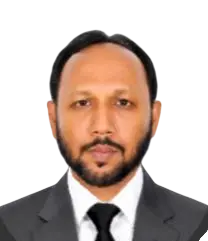
Last position:
IT System Manager at Corporate Network Solution Provider
- Architected, Deployed and Supported hosted email solutions in Linux and Windows environments with enterprise-grade anti-spam and security architecture for service-provider environments.
- Managed Microsoft Azure environments including Virtual Machines, VNets, Storage, VPN, and Firewall configuration.
- Administered Microsoft Exchange Server (2010-2019), Microsoft Exchange Server SE, Active Directory, PKI, Hyper-V and Zimbra environments with disaster recovery planning and operational support.
- Led Microsoft 365 onboarding and migration projects from Exchange, IMAP, and Zimbra platforms to Microsoft 365.
- Prepare security and compliance to support Microsoft 365 Copilot.
- Implement information protection and data loss prevention by using Microsoft Purview.
- Implement retention, eDiscovery, and communication compliance in Microsoft Purview.
- Integrated Active Directory Domain Services (AD DS), Active Directory Certificate Services (AD CS), and Active Directory Federation Services (AD FS).
- Delivered secure hybrid infrastructure solutions integrating Microsoft Windows Server and Linux-based enterprise environments.
- Supported enterprise integration projects involving Debian, Ubuntu, CentOS, Red Hat, Barracuda ESG, Qmail and Zimbra Platforms.
Sven L.

Last position:
Project Controller at Iqony
- Acting as project controller for the STEAM sub-project within Iqony's long-term modernisation programme for an industrial water demineralisation plant at the BP refinery site in Gelsenkirchen-Scholven alongside the parallel WATER sub-project
- Managing cost control, SAP PS data integrity and project tracking in a challenging data environment
Jürgen K.

Last position:
Interim Management / Company Succession – Process Analysis & Stakeholder Management
As part of preparing and providing operational support for a company succession:
- Company analysis: Analysis of the overall economic, organizational and structural situation (current status, strengths/weaknesses, potential risks)
- Process analysis: Recording and documentation of all relevant business processes (BPMN, UML) in the areas of management, finance, purchasing, sales and operations
- Process optimization: Identification of weaknesses and inefficiencies, development and operational implementation of improvement measures
- Stakeholder management: Identification and analysis of all relevant internal and external stakeholders; structured communication and coordination with former and future owners, shareholders and employees
- Change management: Supporting employees and management throughout the handover process; building acceptance and trust among all parties involved
- Governance & documentation: Preparation and handover of structured operating manuals, process documentation and an organizational manual for the new business owner
- Risk & weakness analysis: Assessment of operational and strategic risks in the handover process and development of recommendations for action
- Operational support: Interim assumption of management responsibilities; ensuring business continuity during the transition phase
Shamaila M.

Last position:
Founder/Kubernetes and Cloud Architect at Kubekanvas
- Developed browser based platform for kubernetes no-code deployment and cluster management
- Developed CLI in Typescript to deploy the resources in the cluster without leaving the browser UI.
- Implemented DevSecOps pipelines: image scanning, SBOM, policy enforcement, supply-chain security and used Kyverno. Implemented IAM integration for the command line utility tool.
- Designed role & permission models for Keycloak, oAuth/OIDC, social login flows.
- Used LLM to convert user intent into the diagram.
- Worked on integration with multiple Sovereign Cloud like stackIt, Hetzner, CIVO, UpCloud plus public clouds like AWS, GCP, Azure
- The technology stack includes Java, SpringBoot, Kubernetes, OpenAI, Kubernetes multi-tenancy using vCluster, Karpenter, RBAC for CLI, Helm, React
Paul W.

Last position:
Enterprise Architect at ePrimo GmbH
Led the end-to-end integration and migration architecture for decommissioning SAP IS-U market communication and transitioning to Salesforce Marketing Cloud (SFMC) with E.ON IT Services — covering regulated EDIFACT market messaging, a three-phase data migration (transfer of market message inventory after cutover), redesign of market communication processes, and full GDPR and German energy-market compliance.
- Designed the three-tier target architecture (SAP IS-U → NScale B2B gateway → SFMC) processing 50,000–100,000 EDIFACT messages daily within sub-5-minute SLAs.
- Architected the three-phase data migration: 36 months of historical data, zero-loss cutover of in-flight market messages, and near-real-time CDC synchronization.
- Delivered secure, BDEW/GDPR-compliant integration (AS2/OFTP2, RFC/IDoc, REST APIs, OAuth 2.0, Azure AD, AWS S3) achieving >99.5% uptime, <0.1% migration discrepancy, and RTO <4 hours.
- Applied BPMN to model and optimize the market communication processes.
Technologies: SAP IS-U, NScale, Salesforce Marketing Cloud, EDIFACT, OAuth 2.0, Azure AD, AWS S3, BPMN, Jira, Confluence, Draw.io
Christian F.

Last position:
Project Lead & Cyber Security Consultant at Deutsche Börse Gruppe
- Established a cyber resilience framework for AI-accelerated threats in the Frontier AI Threat Endurance (FATE) program: capability assessments, maturity assessments and gap analyses covering cyber security, operational resilience, incident response, recovery and governance, followed by target concepts and improvement measures
- Supported action owners from specification through implementation: implementation roadmaps, decision papers, management presentations and governance reporting, as well as audit- and supervision-ready documentation; managed stakeholders from IT, Information Security, Risk Management, Operational Resilience, Business Continuity and the business units
Geoffrey G.

Last position:
Lead Researcher at York St John Business School
- Independently designed, conducted and evaluated a research project examining dynamic management capabilities (DMCs) in the implementation of HR practices at different management levels (top, middle and frontline management).
- Focus on the strategic role of frontline management in implementing effective HRM measures.
- Self-initiated project with academic collaboration involving York St John University, Robert Kennedy College and the University of Cambridge.
Paul K.
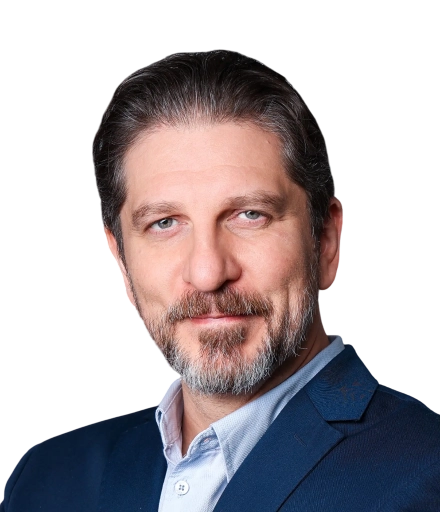
Last position:
Program Manager – Multi-Project Operational Stabilization (Operational Excellence) at ITDZ - IT Service Center Berlin
- Overall leadership of several strategic operations projects focusing on Workplace Services, SLA Framework, access management, certificate management, e-learning, backup & recovery, test management, and capacity management, as well as the introduction of system monitoring and feasibility studies for 24x7 operations, in some cases including implementation in ServiceNow
- Creation of various ServiceNow operating concepts covering training, access rights, and emergency management as part of a new cloud hosting initiative for the ServiceNow platform
- Executive board reports and leadership of steering committees as part of company-wide strategic objectives, as well as the establishment of new balanced scorecards for measuring KPIs related to optimization-driven project results
Steffen H.

Last position:
Interim CIO and IT and Business Transformation Consultant at Telelift GmbH
Started as a Business Transformation Consultant for IT and process analysis, and from 09/2025 additionally took on the role of Interim CIO with overall responsibility for IT.
- Reduced IT operating costs by 28 %.
- IT and process analysis, target vision and roadmap; governance with SLA, RPO/RTO, RACI and TOMs.
- Led the introduction of Microsoft Dynamics 365: migration, integration and connection of existing systems.
- Established reporting with Power BI; prepared decision documents and 30/60/90-day quick wins for the executive management.
Frank J.

Last position:
Senior Project Manager / IT Manager - Email Gateway Migration & Information Security at Public Authority
- Strategic planning, detailed technical preparation and operational management of an email gateway migration in a security-critical government environment.
- Preparation of the technical specification and development of technical concepts and migration approaches in line with BSI requirements.
- Technical requirements management with business units, information security and operations.
- Coordination of external service providers, integrators and implementation partners; maintenance of project plans, milestones, resources, risks and dependencies.
- Regular reporting to project management, the program environment and internal stakeholders.
Falko M.

Last position:
Requirements Manager at Private company - for Umweltbundesamt
- Functional requirements management for DIVID, the Umweltbundesamt platform for administering the single-use plastics fund. Focus: entitled parties, sub-entitled parties, and benefit reports.
- Consolidation and analysis of specifications, Jira, Confluence, functional concepts, and UX designs. Independent structuring and delimitation of requirements, as well as identification of contradictions, gaps, and dependencies.
- Creation and quality assurance of implementable user stories with clear, testable acceptance criteria. Preparation of decision alternatives and coordination with business, development, UX, and QA through team refinement.
- Conducting manual and technically assisted accessibility tests. Coordinating findings with QA and the Product Owner for further planning and implementation.
- Result: more consistent requirements, clearly defined processes and stories, and transparent open decisions. Separation of assumptions from confirmed requirements; better basis for implementation, refinements, and QA test cases.
Tools used: Jira, Confluence
Peter D.

Last position:
Security Consultant at Public-law institution of the city administration
- Requirements management, process planning, interface function, ISMS setup, and documentation
- Setup and establishment of an ISMS according to ISO 27001 and establishment of emergency management / ITSCM
- Coordination of the circumstances with the public-sector IT service provider
- Consideration of KRITIS relevance within the scope and implementation of a B3S
- Development of requirements for document control and the continuous improvement process
- Preparation of relevant project documents
- Analysis of existing processes and preparation of guidelines
- Requirements gathering for ISMS and ITSCM and coordination with the IT service provider, including definition of interfaces
- Analysis of communication processes and escalation paths
- Review of documents for risk management, ISMS, emergency preparedness, and emergency response
- Redesign of the complete documentation and preparation of new relevant documents
- Development of necessary rules, policies, and concepts
- Interface between customer and service provider to ensure document quality
- Coordination of protection needs with specialist departments, particularly regarding KRITIS relevance, and planning of resulting measures
- Development of preventive measures to minimize the risk of data center outages in scenarios such as pandemics or ransomware attacks
- Definition of the test strategy for IT emergency exercises
- Initiation of necessary awareness training measures for specialist departments
- External Information Security Officer
- Introduction of document control
Discover over 15,000 top freelancers


CompTIA Security+ statistics
Aggregated from the professional profiles of matched freelancers.

Experience
22 years

Position duration
3.1 years

Positions per freelancer
14

Top business areas
Information Technology, Project Management, Operations

Top industries
Information Technology, Professional Services, Manufacturing

Certification focus areas
Information Technology, Quality Assurance, Project Management

Bachelor's degree or higher
87%

Master's degree or higher
52%

Doctorate
9%

Certifications per freelancer
9

Most common languages
German, English, French

Speak two or more languages
97%
Based on our profile pool as of 26 Oct 2026.
Daily rate distribution
The chart shows how the daily rates of experts holding this certification in Germany are distributed, based on recent contracts on our platform. Each bar covers a rate range — its height shows the share of experts charging within that range.
Discover detailed CompTIA Security+ rate benchmarks:
Explore rate insightsAverage rates for CompTIA Security+ in Germany
Rates are based on recent contracts and do not include FRATCH margin.

The average daily rate is the mean of all daily rates from recent contracts of comparable freelancers on our platform.
The median daily rate is the middle value of all daily rates — half of comparable freelancers charge less, half charge more. Unlike the average, it is barely affected by outliers.
Calculated based on our freelancers’ daily rates as of 26 Oct 2026. Actual rates may vary depending on seniority level, experience, skill specialization, project complexity, and engagement length.
CompTIA Security+ experts industry focus
See which industries our matched freelancers work in most often — every figure is calculated live from the freelancers on FRATCH.
- Information Technology (78%)
- Professional Services (54%)
- Manufacturing (53%)
- Automotive (45%)
- Banking and Finance (42%)
- Healthcare (32%)
- Energy (32%)
- Government and Administration (31%)
Please note that freelancers can work across multiple industries, so percentages overlap.
About the certification

What Security+ means
CompTIA Security+ is a well-known entry-to-intermediate cybersecurity certification. It shows that a professional understands core security concepts and can work with the day-to-day controls that protect systems, users, and data. For companies, it is a clear signal that a freelancer speaks the language of modern security work.
What it validates
- Threats, attacks, and common attack paths
- Secure network and cloud fundamentals
- Identity, authentication, and access control
- Risk awareness, policies, and governance basics
- Incident response and security operations
- Cryptography and data protection concepts
The certification is broad on purpose. It is useful when you need someone who can support a security team, follow established controls, and spot weak points before they become incidents.
Typical holder profile
Security+ is often held by people who work in support, operations, infrastructure, or early-stage security roles. It is also common among freelancers who help with hardening, awareness, documentation, or security tasks inside broader IT projects. In Germany, it can be relevant for both remote work and on-site collaboration where English is the main project language.
Knowledge areas behind the badge
A Security+ holder should be comfortable with:
- Secure configuration and basic hardening
- Vulnerability handling and risk prioritization
- Security monitoring and log review
- Authentication methods and access management
- Business continuity and resilience basics
- Secure practices for endpoints, networks, and cloud services
This is not a specialist penetration testing or architecture certification. It is a practical foundation for security work across many environments.
What it tells a company
When you engage a freelancer with CompTIA Security+, you are usually getting someone who can join security-related tasks without needing a full introduction to the basics. That matters in assessments, operational support, rollout work, and internal projects that need reliable security habits. The certification helps reduce uncertainty when you need a person who understands common threats and standard defensive controls.
Where it fits best
Security+ is relevant in projects such as access reviews, policy updates, endpoint protection, incident handling support, cloud security setup, and security awareness work. It also fits well in teams that need a general security contributor rather than a niche specialist. For German organizations, it can be especially useful when the role involves coordinating with international teams, security vendors, or shared service centers.

Frequently asked questions
Quick answers to the questions that come up most around CompTIA Security+.

CompTIA Security+ shows that the freelancer has a solid grasp of core cybersecurity concepts and can apply them in practical work. It points to knowledge of threats, access control, incident response, and secure operations. For companies, that usually means less ramp-up on basic security topics.
Security+ is broader and more foundational than advanced credentials that focus on architecture, governance, or deep specialist work. It is meant to validate practical security literacy rather than senior-level design or leadership. If you need a freelancer for everyday security tasks, Security+ is often the more relevant signal.
Security+ suits people moving into cybersecurity, as well as IT professionals who already support networks, systems, or cloud environments. It is a good fit for freelancers who need to handle security-related tasks across different client setups. Employers often look for it in roles that blend operations and security.
Preparation for CompTIA Security+ usually combines study of core concepts with practical review of common scenarios. A candidate should understand threats, controls, secure networking, identity management, and incident handling at a working level. Hands-on IT experience helps, but the certification is designed to be accessible to motivated learners.
CompTIA does not position Security+ as a certification with strict formal prerequisites. In practice, many candidates benefit from prior exposure to networking, systems, or support work. That background makes the security terms and scenarios easier to apply in real projects.
Like other CompTIA certifications, Security+ is maintained through a renewal cycle rather than being a one-time achievement. Holders typically keep it current by meeting CompTIA's continuing education requirements or by retesting when needed. Companies should therefore still check how recently the freelancer has stayed active in the field.
Security+ matters most in projects that need practical security judgment without a highly specialized niche skill set. Common examples include security hardening, access reviews, endpoint protection, awareness training, and incident response support. It is also useful in projects that need a freelancer to coordinate security work across IT and business teams.
Yes, especially in international teams, shared service environments, and projects where English documentation and collaboration are common. In Germany, it can be useful when a company needs a freelancer who can join security work quickly and communicate clearly with technical stakeholders. The certification is a helpful signal, but local language needs still depend on the client and project setup.
The average hourly rate for freelancers with CompTIA Security+ in Germany is 109 €, which corresponds to a daily rate of about 873 € based on an 8-hour working day.
Of the freelancers with CompTIA Security+ in Germany, 87% hold at least a Bachelor's degree, 52% hold at least a Master's degree, and 9% hold a doctorate.
On average, freelancers with CompTIA Security+ in Germany have 22 years of professional experience, with a single engagement typically lasting around 3.1 years.
The most common languages among freelancers with CompTIA Security+ in Germany are German (99%), English (96%), and French (24%).
The most common industries among freelancers with CompTIA Security+ in Germany are Information Technology (78%), Professional Services (54%), and Manufacturing (53%).
The most common business areas among freelancers with CompTIA Security+ in Germany are Information Technology (86%), Project Management (78%), and Operations (65%).
FRATCH CompTIA Security+ main locations
Our freelancers and interim experts are at home across the DACH region — available on-site in the major business hubs or fully remote. Choose a location to discover matched specialists, local market insights and up-to-date availability.

 Berlin
 Hamburg
 Munich
 Cologne
 Frankfurt
 Stuttgart
 Dusseldorf
 Dortmund
 Essen
 Nuremberg
Request a free demo
Get in touch with the FRATCH team and we will get back to you within 4 hours.
Would you rather directly get in touch?
We always have the time for a call or email!

Philipp Thomaschewski
FRATCH CEO

