


Jaeger Experts in Germany
, matched with vetted freelancers in minutesHire experts who instrument microservices, design trace storage, and connect Jaeger with OpenTelemetry, Kubernetes, and Grafana. FRATCH matches you quickly and precisely with vetted, available freelancers.

Meet FRATCH Experts in Germany, who have recently used Jaeger
Ornel Franck W.

Last position:
Sales Partner at ERGO PRO
- Industry: Insurance, Trade, IT
- Customers & Projects: Consulting and selling insurance and similar services
- Main tasks: Insurance consulting (health insurance, retirement planning, wealth building); commercial services, inside and field sales; sales data analysis and forecasting; customer consulting and support; opening a new sales headquarters for private and business customers; business development & innovation management; business use case development; process optimization; stakeholder management; team leadership and training; preparation and delivery of trainings;
- Technologies used: Microsoft Office 365, Microsoft Teams, Jira, Draw.IO, Camunda 8, Java (8, 17,21,25), Git, Spring Boot, Spring Batch, Spring Data REST, Spring Web, Spring Security, J-Unit, Playwright, Lombock, Vaadin, H2, PostgreSQL (16, 17 18), pgAdmin, Docker, LLMs, JasperSoft Studio, JasperReports
Collin K.
Last position:
Software Architect / Fullstack Developer at Equity Bytes
Built an international e-commerce platform for a multi-vendor marketplace for digital assets from scratch. Designed and operated cloud native architectures at enterprise scale.
- Designed and operated a highly scalable microservice and serverless architecture
- Built the complete cloud infrastructure with Terraform + AWS CDK in AWS
- Provisioned ECS/EKS clusters (Fargate), Application Load Balancers (reverse proxy), and Lambda functions
- Observability & tracing with CloudWatch, DataDog, Prometheus, and Grafana
- End-to-end setup with DataDog (formerly AWS CloudWatch), Prometheus, and custom Grafana dashboards
- Integration of advanced metrics (including ORM mapper) and distributed tracing with Jaeger
- Robust backup and disaster recovery strategies
- RDS Postgres backups and hourly snapshots
- Read-only, asynchronously synchronized replicas with automated master failover in emergencies
- Minute-level rollback capability through versioned Docker images on ECS and Git-based CI/CD pipelines
- Created CI/CD pipelines with GitHub Actions for automated multi-stage deployments (Dev, Testing, Prod)
- Integrated Stripe for international payment processing
- Built a marketplace payment system with multiple parties and payout routines
- Used Algolia for high-performance real-time search of digital assets on the platform
- Federation of services with GraphQL and Hasura
- Later migration to GraphQL Mesh
- Test Driven Development (TDD) - unit, integration, and E2E testing with Jest, Vitest, and Playwright
- Used Next.js / React for modern frontend applications in the nx monorepo
- Enterprise security architecture & access control
- Integration of JWT tokens with Auth0, OAuth, OIDC, IP guards, BOLA protection, and secret vaults
- Authorization concepts with RBAC, ABAC, and native Postgres Row-Level Security (RLS)
- Built internal microfrontends with Retool for fast prototyping and operational business processes
Technologies: ABAC, AWS CDK, AWS CloudWatch, AWS ECS, AWS EKS, AWS Fargate, AWS RDS, AWS S3, Algolia, Auth0, DataDog, Docker, GitHub Actions, Grafana, GraphQL, GraphQL Mesh, Hasura, JWT, Jaeger, Java, JavaScript, Jest, Kotlin, Kubernetes, Monorepo, Next.js, OIDC, Playwright, Postgres, Postgres RLS, Prometheus, RBAC, Redis, Retool, Serverless, Stripe, Terraform, TypeScript, Vitest
Salim C.

Last position:
Cloud / Systems Architect
- Development and introduction of operations processes
- Preparation of complete documentation packages (including incident management and operations support) to meet compliance requirements
- Introduction of a workshop on IaC (Infrastructure as Code)
- Technical consulting for the project security concept (ISMS)
- Installation and operation of Kubernetes clusters on AWS, on-prem, and Azure
- Hybrid cloud architecture design (on-prem, Hetzner, AWS)
- Analysis and troubleshooting of incidents and system outages
- Network adjustments for firewall rules, gateways, OpenVPN settings, and IPsec tunnels (pfSense)
- Technical consulting on Bitbucket, Jenkins, and GitLab CI/CD pipelines
- Consulting on Ansible deployments and infrastructure automation
- Consulting on building a scalable system in the cloud (AWS / Azure)
- Technologies / Tools: Ansible, Terraform, AWS, Azure, VPN, pfSense, Jenkins, Bitbucket, Kubernetes, GitLab Runner, ISMS, Golang, Prometheus, Grafana, S3, Lambda, RDS, ECS, Cognito, OIDC, Harbor, MinIO, Postgres, Redis, Keycloak, Ceph, Proxmox, CloudFormation, PostgreSQL, Flux CD, Hetzner, IONOS, Sonatype Nexus Repository, Entra ID, Dex IdP, Pulumi
Kersten L.
Last position:
Lead Architect / Lead Developer at Bettles: Sports Betting Platform
- Complete greenfield rebuild across the whole stack — built AI-native: backend in Go and NestJS, PostgreSQL (CNPG) on K3s with GitOps/Terraform; frontend on Angular 22, zoneless.
- Orchestrated coding agents (e.g. Claude Code, Cursor) across the entire lifecycle — architecture, implementation, testing, reviews, documentation — driven by Specification-Driven Development (SDD).
- “Bruno” — LLM commentator persona backed by RAG and MCP for a personality that stays consistent across all generations (match previews, post-match reports, his own virtual bets).
Angular 22 (zoneless, without Zone.js), Claude Code, Claude Code Skills, CNPG, Cursor, Design Tokens (Spec for Code), Docker, Gherkin, Git, GitLab, GitOps, Go, Google Gemini, Grafana, Hetzner Cloud, K3s, Keycloak, Kubernetes, Lighthouse, LLM Integration, Model Context Protocol (MCP), NestJS, Node.js, NPM, Playwright, PostgreSQL, Prometheus, RAG, REST, Specification-Driven Development (SDD), Structured Outputs, Terraform, TypeScript, Vitest
Daniel S.

Last position:
Senior Software Engineer at energielenker solutions GmbH
- Designed and implemented a Python-based ETL pipeline with the Dagster framework to transform raw energy data from heterogeneous sources using InfluxDB and visualizations in Grafana
- Defined time-based and dependency-based jobs
- Deployed to managed Kubernetes clusters using Helm
- Integrated InfluxDB Cloud
- Prepared data for use in Grafana, including cleaning, normalization, and time-based resampling in Python
- Developed dashboards and visualizations in Grafana
- Developed unit tests with mocking using pytest
- Set up a CI/CD pipeline in GitLab
Technologies: Python, Dagster, InfluxDB, Grafana, pandas, pytest, REST, CI/CD, GitLab, Container, Kubernetes, Helm, Docker, Cloud
Patrick E.
Last position:
Honorary Lecturer at SRH University Berlin
- Cloud Computing Fundamentals & Architecture: Expertise in core cloud concepts, including the three main Service Models (IaaS, PaaS, SaaS) and diverse Deployment Models (Public, Private, Hybrid, Multi-cloud).
- Modern Application Deployment Strategies (GCP Focus): Instruction on the GCP Application Hosting Spectrum, covering Virtual Machines, Containers (Kubernetes and Cloud Run), Platform as a Service (App Engine), and Serverless Computing (Functions as a Service - FaaS).
- Data Management & Big Data Analytics: Comprehensive coverage of Cloud Storage options (Object, Block, File) and Database solutions, including Relational (Cloud SQL), NoSQL (Firestore, BigTable, Memorystore), and serverless enterprise data warehousing (BigQuery).
- DevOps and Infrastructure Automation: Skills in DevOps principles, including Continuous Integration (CI), Continuous Delivery (CD), Infrastructure as Code (IaC) using tools like Terraform, and implementing effective Monitoring and Logging for system observability.
- Emerging Technologies & Responsible Cloud Use: Focus on crucial topics like Cloud and IoT Security, Identity and Access Management (IAM), data privacy, and the ethical considerations of cloud and massive data collection.
Werner K.
Last position:
Test Coordinator, Designer and Engineer at IBM
- Testing the SekIDP and related components
- Test design, execution and automation, microservices, GitHub Enterprise, Eclipse, Katalon Test Platform, API Testing, Confluence 8, JIRA/Xray, Draw.io, Swagger/OpenAPI, Postman, Docker, Kubernetes, Podman, PuTTY, E-Health, Telematik, Gematik standards, EPA, E-Rezept, sektoraler IDP, encryption, XaDES, PaDES, DICOM, HL7, FHIR, IHE, ICD, SSO, SAML/Shibboleth, OAuth, smartcards, JWT, two factor authentication Android and iOS, Wireshark, BrowserStack, Cypress, gRPC, REST, SOAP, WS-Security, Linux Shell, PowerShell, SSH/SSL, Java, Kotlin, Cordova, Gradle, Groovy, Python, TypeScript
Muthukumar K.

Last position:
Senior Java Backend Developer at Upwork
- Developed Java 21 / Spring Boot 3.2 microservices with REST and GraphQL APIs for GDPR-compliant consent workflows using Hexagonal Architecture
- Enhanced Backend-for-Frontend (BFF) performance using AI-assisted tools for code refactoring and optimization
- Built event-driven workflows with Kafka, RabbitMQ, AWS SQS, and integrated Salesforce Marketing Cloud for real-time consent tracking
- Implemented OAuth2 and Keycloak security, automated CI/CD with Jenkins, GitHub Actions, and Gradle, and deployed containerized services on Docker and Kubernetes with AWS and Azure
- Executed unit, integration, and contract testing with JUnit 5, TestNG, Mockito, and TestContainers; monitored performance via Grafana, Kibana, and AWS CloudWatch
- Developed microservices for digital identity verification and e-signature management with Hexagonal Architecture
- Integrated Keycloak 24.x with OAuth2.1 and OpenID Connect for SSO and RBAC, ensuring EU eIDAS compliance
- Designed API-first microservices with OpenAPI 3.1, Swagger, and GraphQL for improved interoperability
- Automated CI/CD pipelines with Jenkins, GitHub Actions, and Gradle; deployed containerized services on AWS EKS and Azure; monitored with Grafana, Kibana, CloudWatch, and TestContainers
Jürgen F.
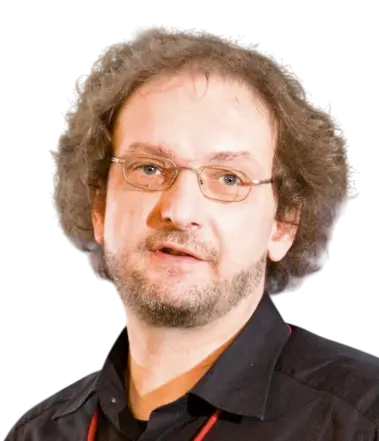
Last position:
AR/VR/XR Architect at Deutsche Telekom
- Defined a generic, universal system platform for XR (AR, VR) use cases as part of the European IPCEI initiative
- Evaluated available options for backend, streaming and client implementations
- Developed PoC implementations and conducted technical evaluation of potential components
- Led the development team and defined the target system architecture for a complete end-to-end solution
- Designed and integrated GenAI PoCs (LLM, time series, prediction, agents)
- Researched NeRFs and Gaussian Splatting for XR content creation and analyzed methods to measure and reduce system latencies
- Worked on GPU scheduling, CUDA and related topics
- Defined and implemented backoffice and end user dashboards using Grafana and Superset
- Used Jaeger tracing to analyze specific events
- Defined a GenAI-based automatic alerting feature for specific events and event clusters with KPI values
- Integrated AR/VR/XR IoT devices
- Collaborated with business development and UX teams in a parallel design thinking track to align technical and customer journey scopes
- Integrated the new services and platform into existing telco environments and analyzed tools like Camara for partial integration and handover scenarios
Kalpesh P.

Last position:
Intern Java Developer at Unzer GmbH
- Developed a Proof of Concept for distributed tracing using OpenTelemetry within a microservices architecture, enhancing system observability and reducing mean-time-to-resolution for issues.
- Built and maintained backend services using Java and Spring Boot, ensuring high reliability and performance for payment transaction workflows.
- Implemented comprehensive automated testing with JUnit and Mockito, achieving 95% test coverage to ensure code quality and maintainability.
- Gained insight into payment transaction workflows, validating end-to-end system reliability and gaining domain knowledge in financial processes.
- Tech used: Java, Spring Boot, Microservices, REST API, Kafka, Grafana, Datadog, Docker, MongoDB
Patrick S.

Last position:
Site Reliability / Platform Engineer – AIS Healthcare Platform at Labtastic Solutions UG (limited liability)
- Operated and stabilized Kubernetes platform
- Implemented a complete observability stack
- Set up GitOps deployment processes with ArgoCD
- Defined SLIs/SLOs and governance
- Conducted incident analysis and automated operations
Bela B.
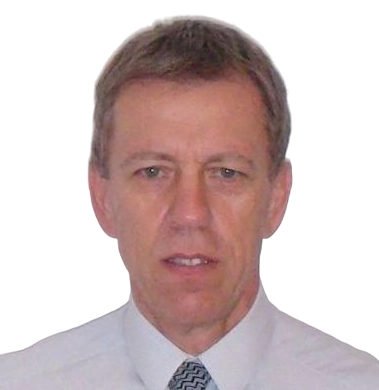
Last position:
Full Stack Lead Developer, Backend Architect at Telefonica (O2)
The software supports the complete planning and approval of antennas for mobile telephony.
The system was implemented using an event-driven microservice architecture for cloud-native deployment with Quarkus on the backend, Kafka for communication, and Angular for the frontend. Services run on Kubernetes in Google Cloud. A special challenge was synchronizing with the legacy system still used by some users.
Rashid I.

Last position:
Java Developer at IT company
- Data transformations
- IT company with more than 100 employees
- Software production
- Data augmentation and normalization, image transformation, format conversion, merging data from multiple sources
- Toolset: Java, Helm, Kubernetes, Kafka, OpenCV, IntelliJ IDEA, Gradle, Git, Docker, Containers, Scrum
Emre A.
Last position:
Development of a software solution for archiving and a GenAI-based Q&A tool
- Banking industry
- Configuration and setup of a Google Cloud project with the Vertex AI API, Vertex AI Matching Engine, and Google Cloud Storage
- Development of Python services for ingesting and analyzing data in various formats using the Q&A API
- Containerization of components and implementation of Kubernetes configurations
- Development of a .NET service and a React frontend for data-driven capture with dynamic process steps
- Refactoring and functional extension of existing code to meet new requirements in ingestion and reconciliation
- Technologies: .NET Core, Moq, C#, PostgreSQL, Entity Framework, Avro, Python, Flask, Flask unittest, Pip, LangChain, RabbitMQ, REST, Jupyter, Docker, GitHub, kubectl, Google Vertex AI, Google Vertex AI Matching Engine, BigQuery, Google Gemini, React, Bootstrap, Vite, Vitest, npm
Discover over 15,000 top freelancers


Statistics of experts using Jaeger
Aggregated from the professional profiles of matched freelancers.

Experience
17 years

Position duration
1.6 years

Positions per freelancer
15

Top business areas
Information Technology, Product Development, Operations

Top industries
Information Technology, Banking and Finance, Insurance

Certification focus areas
Information Technology, Product Development, Human Resources

Bachelor's degree or higher
90%

Master's degree or higher
70%

Doctorate
30%

Certifications per freelancer
3

Most common languages
German, English, Spanish

Speak two or more languages
93%
Based on our profile pool as of 9 Oct 2026.
Daily rate distribution
The chart shows how the daily rates of experts in this technology in Germany are distributed, based on recent contracts on our platform. Each bar covers a rate range — its height shows the share of experts charging within that range.
Average rates of experts in Germany using Jaeger
Rates are based on recent contracts and do not include FRATCH margin.

The average daily rate is the mean of all daily rates from recent contracts of comparable freelancers on our platform.
The median daily rate is the middle value of all daily rates — half of comparable freelancers charge less, half charge more. Unlike the average, it is barely affected by outliers.
Calculated based on our freelancers’ daily rates as of 9 Oct 2026. Actual rates may vary depending on seniority level, experience, skill specialization, project complexity, and engagement length.
Jaeger experts industry focus
See which industries our matched freelancers work in most often — every figure is calculated live from the freelancers on FRATCH.
- Information Technology (100%)
- Banking and Finance (71%)
- Insurance (64%)
- Automotive (57%)
- Education (50%)
- Transportation (50%)
- Healthcare (43%)
- Telecommunication (43%)
Please note that freelancers can work across multiple industries, so percentages overlap.
About the technology
Distributed tracing with Jaeger
Jaeger is an open-source distributed tracing system for observing requests as they travel through microservices. It records spans, groups them into traces, and shows where latency, errors, and service dependencies occur. Teams use it to troubleshoot APIs, event-driven services, and cloud-native applications.
Core architecture
A Jaeger setup commonly includes SDKs or OpenTelemetry instrumentation, collectors, query services, and a storage backend. Experts configure sampling, propagation, retention, access control, and deployment patterns so tracing remains useful without adding unnecessary overhead. Storage may use Elasticsearch, OpenSearch, Cassandra, or other supported options.
OpenTelemetry ecosystem
Modern Jaeger work often centers on OpenTelemetry rather than proprietary instrumentation libraries. Specialists connect OpenTelemetry SDKs and collectors to Jaeger, map trace context across HTTP and messaging layers, and integrate traces with metrics and logs. They may also work with Kubernetes, Helm, service meshes, Prometheus, and Grafana.
When companies need expertise
Companies typically bring in freelance specialists when tracing is incomplete, production investigations are slow, or a platform migration needs clear service visibility.
- Instrument Java, Go, Python, Node.js, or .NET services
- Connect traces across APIs, queues, and databases
- Tune sampling and storage for production workloads
- Build dashboards and investigation workflows
Delivery and collaboration
A strong Jaeger engagement starts with a map of services, protocols, and operational goals. Remote collaboration works well when repositories, environments, and observability ownership are clearly defined; on-site work can help during major platform changes or incident-readiness programs in Germany. Clear documentation and practical language skills support distributed teams.
What strong specialists bring
The best professionals understand tracing as part of system design, not just a user interface. They can identify missing context propagation, distinguish application latency from infrastructure delay, and explain findings to engineering and operations teams. Look for hands-on experience with OpenTelemetry, distributed systems, container orchestration, data retention, and secure production operations.

Frequently asked questions
Quick answers to the questions that come up most around Jaeger.

Jaeger is used for distributed tracing across microservices and other systems with many service-to-service calls. It helps teams follow a request, locate slow operations, understand dependencies, and investigate failures that are difficult to isolate from logs alone.
Jaeger offers a mature tracing interface, query experience, and broad integration ecosystem. Zipkin is another established tracing system, while Grafana Tempo is often chosen for cost-focused trace storage within a Grafana-centered observability stack. The right choice depends on storage, query, and existing tooling requirements.
Jaeger work increasingly involves OpenTelemetry for instrumentation, context propagation, and telemetry routing. A capable specialist should also understand Kubernetes, Helm, service meshes, API protocols, message brokers, and the relationship between traces, metrics, and logs.
Jaeger projects vary widely in scope, so practical relevance matters more than a fixed experience threshold. A small instrumentation task may need strong application knowledge, while a production rollout calls for experience with sampling, storage, security, incident workflows, and operational ownership.
Jaeger projects are often well suited to remote collaboration because configuration, instrumentation, and dashboards can be reviewed through shared repositories and environments. On-site sessions may help with platform migrations or workshops, while clear German or English communication should match the wider team.
Jaeger quality is best assessed through concrete design questions. Ask how the specialist would propagate trace context through asynchronous messaging, control cardinality and sampling, protect trace data, and verify that traces explain real production behavior.
Jaeger complements logs and metrics rather than replacing them. Traces show the path and timing of an individual request, metrics reveal aggregate behavior, and logs provide detailed event context; linking all three creates a more complete investigation workflow.
Jaeger engagements commonly produce instrumentation changes, collector and storage configuration, deployment manifests, sampling policies, dashboards, runbooks, and documentation. The specialist should also define how teams validate coverage and use traces during troubleshooting.
The average hourly rate of freelancers in Germany who have used Jaeger in their recent projects is 91 €, which corresponds to a daily rate of about 726 € based on an 8-hour working day.
Of the freelancers in Germany who have used Jaeger in their recent projects, 90% hold at least a Bachelor's degree, 70% hold at least a Master's degree, and 30% hold a doctorate.
On average, freelancers in Germany who have used Jaeger in their recent projects have 17 years of professional experience, with a single engagement typically lasting around 1.6 years.
The most common languages among freelancers in Germany who have used Jaeger in their recent projects are German (93%), English (93%), and Spanish (14%).
The most common industries among freelancers in Germany who have used Jaeger in their recent projects are Information Technology (100%), Banking and Finance (71%), and Insurance (64%).
The most common business areas among freelancers in Germany who have used Jaeger in their recent projects are Information Technology (100%), Product Development (93%), and Operations (64%).
Main locations of FRATCH Experts, who have recently used Jaeger
Our freelancers and interim experts are at home across the DACH region — available on-site in the major business hubs or fully remote. Choose a location to discover matched specialists, local market insights and up-to-date availability.
 Berlin Hamburg Munich Cologne Frankfurt Stuttgart Dusseldorf Leipzig Dortmund Essen Bremen Dresden Hanover Nuremberg
 Request a free demo
Get in touch with the FRATCH team and we will get back to you within 4 hours.
Would you rather directly get in touch?
We always have the time for a call or email!

Philipp Thomaschewski
FRATCH CEO

