


Industry 4.0 Experts in Switzerland
in minutes from over 15,000 CVs with the power of AI.Hire experts who connect machines, sensors, and software across smart factories, MES and SCADA environments, and data-driven production workflows. Get fast, precise matching with vetted, available freelancers.

Meet FRATCH Experts in Switzerland, who have recently used Industry 4.0
Michael R.
Last position:
Project Manager, Hustler, & Hound "Project Metrics on the Internet" at Global-KPI
- Project management, hustler (identifying the full financial picture including sales, pitching, financial analysis, & business models) and hound (identifying real customer needs including research & analysis) to build a project metrics system on the Internet.
- The system allows users to make informed decisions to keep projects on track according to key data or to realign them when they deviate negatively from the plan.
- Providing a forecast alongside the current status.
- Automatic calculation and display of metrics based on user-entered project key data.
- Skills: project management, project metrics.
- Problem space: Co-Innovation Builder (CIB), corporate innovation team setup, team profile / team canvas, design thinking, highlighting people, creating customer personas, market exploration, defining the problem.
- Solution space: narrowing the problem, how to turn ideas into solutions, how to turn solutions into a concept, customer journey, business model canvas, value proposition canvas, prototyping, refining the prototype and business model canvas, final pitch.
Eugen P.
Last position:
Project Manager / Program Management at SMART-INTERIM Management GmbH
- Development, industrialization and production of helicopter seats (military)
- Responsible for an innovative seating system: weight < 15 kg, 100% crash safety according to EASA, side-facing, from concept to SOP
- Complete recovery of a project two years overdue: concept approval and prototype testing in 4 weeks, certification testing in 8 weeks, 100% EASA certification
- Management of global BCC development resources (> 60% share) and optimization of development cycles including FEM
- Streamlining the supply chain, on-time EASA and series approval, compliance with the NRE budget, timely delivery including FAI
Rainer T.

Last position:
Managing Director at Tolksdorf.digital GmbH
- Independent consulting for digital transformation, quick checks and business case development
- Delivered systems and digital engineering, Industrie 4.0, workflow & AI agents
- Implemented digital sales and service solutions, KMU open source introduction, data migration, hosting and maintenance of customer IT systems
- Applied methods: Lean Innovation, ISO 9001:2015, Scrum; managed teams of 2–80 people and project volumes up to 22 Mi0 USD
David B.
Last position:
External Project Manager in the Supply Chain Network at DEUTZ AG
- Project management (SAP BN (Ariba) onboarding, support for SAP ECC and SAP TM for supplier topics)
- Standardization of global value creation processes
- Basic training as well as central contact person for suppliers and support for planners
Sam L.
Last position:
Principal Consultant – Digital Strategy & Portfolio Governance at Independent Consultant
- Advise global organizations on enterprise transformation, digital operating models, and portfolio governance across safety-critical and highly regulated environments.
- Guided enterprise transformation of engineering and lifecycle governance at Alstom, Bombardier, and Thales, aligning enterprise-scale digital engineering practices across global development programs.
- Supported software-defined vehicle transformation at CARIAD (Volkswagen Group) by designing governance structures and lifecycle alignment for complex digital vehicle platforms.
- Translated Industry 4.0 digitalization strategy into capability-driven transformation portfolio at FLSmidth, enabling development of IoT-based industrial platforms.
- Applied AI-supported methods for large-scale engineering data analysis and validation, significantly reducing reporting and compliance cycle times.
Martin A.
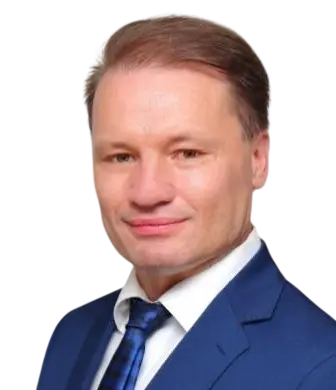
Last position:
Martin Aicher
Main areas of activity ⋅ Martin Aicher
Areas of expertise
Medical technology
Sensor technology
Technical optics
Mechatronics
Microsystems technology
Biocompatible materials
Implants and endoprosthetics
Project management
Quality management IPMA
Regulatory affairs
Education
Dr.-Ing. Medical Technology
M.Sc. Medical Technology
Dipl. Ing. (FH) Medical Technology
Surgical mechanic, precision mechanic
Methodical product development
26 years of research, development, verification and agile product development
5 years of hands-on manufacturing of micromechanical instruments and implants
Projects
Development and verification of technical optics
Microscopy
Endoscopy
Immersion optical systems
Optical sensors
Light guides
Device development — medical electronics, active medical devices
Electromagnetic therapy devices for microcirculation of blood vessels
Electric drives, precision mechanics motors
Embedded devices, Medicine 4.0 / Industry 4.0
Feasibility studies, prototype design, electromechanical, chemical and hydrodynamic characterization up to series maturity
Structural integration of motors for pump systems
Integration of motors for catheter drives
Implantable drive systems with motors
Bone saws with Maxon motors
Osteosynthesis implant (bone implant) with linear drive
Electromagnetic therapy devices for microcirculation of blood vessels
Gold and platinum substitution for electrodes
Electrochemical impedance spectroscopy (EIS)
Characterization and development of battery cells and Li-ion batteries
Biocompatible materials: stainless steel, titanium, nitinol, polymers, ceramics, composites
Vacuum device with pumps for wound healing
Braided tubes (reinforced hoses)
Shaft instruments and trocars
Surgical instruments, minimally invasive instruments (MIC)
Analytical instruments, sensors and fluid preparation
Monitoring systems
In vivo diagnostics (IVD)
Inline measurement systems for monitoring and analytical devices
Feasibility studies, prototype design, electrochemical and hydrodynamic characterization up to series maturity
Electrochemical deionization (EDI) as a monitor
Membrane technology
Measurement method and control of carbide saturation in cooling water
pH sensor
Optical sensors with laser diodes and LEDs
Dissolved O2 sensor
CO2 sensors
Ion-selective sensor (ISE)
Conductivity sensors
Turbidity sensor according to ISO 7027
Biosensors
Flow and pressure sensors
Gold and platinum substitution for electrodes
Electrochemical impedance spectroscopy (EIS)
Biocompatible materials: stainless steel, titanium, nitinol, polymers, ceramics, composites
Design of plastic injection-molded components and housings
Calculation and design of fluid channels
Design of metal die-cast components
Design of sheet metal parts
Implants and prostheses
Endoprosthetics: knee and hip endoprostheses
Bypass implants
Nitinol stents
Bone plates
Dental implants
Precision meshes
Instruments for medical technology
Angioplasty: PTCA percutaneous transluminal coronary angioplasty with balloon catheter
Catheter system as minimally invasive heart pump
EN ISO 10555-4: intravascular catheters
Braided tubes (reinforced hoses through precision meshes)
Thrombectomy with rotablation catheter
Trocars
Surgical instruments, minimally invasive instruments (MIC)
Endoscopes ISO 8600-1, EN 60601-2-18, EN 62471
Regulatory affairs for medical devices
CE for Europe (Class II and III), EU Medical Device Regulation 2017/745 (MDR)
EU Regulation 2017/746 for in vitro diagnostics (IVDR)
Ensuring complete documentation according to current regulatory requirements
FDA registration and approval 510(k), PMN, PMA, Class II, III
Design History Files (DHF), Device Master Record (DMR), Device History Record (DHR)
Internal and external audits
FDA and CE audits
Mock audits
Requirement engineering, user requirement specifications, functional requirement specifications
Quality management and relevant standards for medical technology
EN ISO 9001:2015
EN ISO 13485:2021
USA FDA 21 CFR 820 Quality Management System
FDA 21 CFR §§ 803, 806, 807, 830
In vitro diagnostics (IVD, IVDR) FDA 21 CFR §§ 600, 610, 660
USA FDA risk management for medical devices DIN EN ISO 14971:2019
P-FMEA for production
Usability of medical devices EN 62366-1:2021
CAPA (Corrective and preventive action) and GMP
Medical electrical equipment EN 60601-1:2013
EMC for medical devices DIN EN 60601-1-2:2022
Medical device software EN 62304:2018
Cell culture in cleanroom with different cell lines for biocompatibility testing of polymers and alloys
Biological evaluation of medical devices EN ISO 10993
Clinical investigation of medical devices ISO 14155
Manufacturing technology and processes
Process qualification and validation
Injection molding technology
CNC micromechanical manufacturing
Microsystems technology, printed circuit boards (PCB)
Joining technologies: laser welding of titanium, stainless steel, plastics as well as gluing and ultrasonic welding
Evaluation, setup and qualification of equipment
Thin film and surface technology
Coating of implants and tribological surfaces with chemical vapor deposition (CVD) and physical vapor deposition (PVD), sputtering of precious metals, stainless steels, nitinol, titanium alloys, polymers and ceramics
Plasma technology for functional coatings: hydrophilic and hydrophobic surfaces
Nanotechnology: surface functionalization: self-assembled monolayers (SAM)
Product Life Cycle Management
Finite element method
ANSYS FEM
Structural mechanics, statics
Fluid mechanics, flow simulations
Electrical engineering, electromagnetic fields
Characterization and testing of microelectronics
PCB (printed circuit board)
Sensor technology
Microcontrollers
CAN bus: ISO 11898, SAE
Control and data management with LabVIEW and Matlab
Programming language
Python 3.14
CAD
Autodesk Inventor
Pro/ENGINEER, PTC Creo Parametric
SolidWorks
Siemens NX
Solid Edge
Standards-compliant technical drawings
Endurance tests, mechanical, fluid mechanical, electrical and chemical characterization
Verification, V-Model, End of Line (EOL) testing
Writing work instructions for production, English regulatory documents and scientific articles
Support of clinical studies
Data processing, digital data management and statistics
Professional handling of Microsoft Office applications: PowerPoint, Word and macro programming for Excel
© 2026 M. Aicher
Discover over 15,000 top freelancers


Statistics of experts using Industry 4.0
Aggregated from the professional profiles of matched freelancers.

Experience
23 years

Position duration
3.8 years

Positions per freelancer
10

Top business areas
Product Development, Project Management, Business Intelligence

Top industries
Manufacturing, Professional Services, Education

Certification focus areas
Information Technology, Project Management, Human Resources

Bachelor's degree or higher
100%

Master's degree or higher
67%

Doctorate
33%

Certifications per freelancer
4

Most common languages
German, English, French

Speak two or more languages
100%
Based on our profile pool as of 9 Oct 2026.
Daily rate distribution
The chart shows how the daily rates of experts in this technology in Switzerland are distributed, based on recent contracts on our platform. Each bar covers a rate range — its height shows the share of experts charging within that range.
Average rates of experts in Switzerland using Industry 4.0
Rates are based on recent contracts and do not include FRATCH margin.

The average daily rate is the mean of all daily rates from recent contracts of comparable freelancers on our platform.
The median daily rate is the middle value of all daily rates — half of comparable freelancers charge less, half charge more. Unlike the average, it is barely affected by outliers.
Calculated based on our freelancers’ daily rates as of 9 Oct 2026. Actual rates may vary depending on seniority level, experience, skill specialization, project complexity, and engagement length.
Industry 4.0 experts industry focus
See which industries our matched freelancers work in most often — every figure is calculated live from the freelancers on FRATCH.
- Manufacturing (83%)
- Professional Services (67%)
- Education (50%)
- Transportation (50%)
- Aerospace and Defense (33%)
- Automotive (33%)
- Information Technology (33%)
- Government and Administration (33%)
Please note that freelancers can work across multiple industries, so percentages overlap.
About the technology
Smart industry
Industry 4.0 links production equipment, software, and data so factories can react faster and work with more control. It covers connected machines, live monitoring, automated quality checks, and production planning based on real shop-floor data.
Core stack
Typical work combines PLCs, OPC UA, MES, SCADA, edge devices, cloud services, and analytics tools. Strong professionals understand how these parts fit together and how to keep data consistent from the machine level to business systems.
Typical work
- Connect machines, sensors, and lines to a common data flow
- Set up dashboards for OEE, quality, and downtime signals
- Support predictive maintenance and traceability
- Integrate production data with ERP and MES systems
When to bring in help
Companies often need freelance expertise when a plant modernizes legacy equipment, adds new digital layers, or rolls out a pilot across several sites. In Switzerland, this is common where precision manufacturing, medical tech, and industrial suppliers need reliable integration without long internal hiring cycles.
What good specialists do
A strong professional translates between operations, maintenance, and IT. They document interfaces clearly, test with real production constraints in mind, and watch for security, latency, and uptime issues that can break a connected line.
Switzerland context
Industry 4.0 projects in Switzerland often need clear communication, careful planning, and practical on-site work around live equipment. Remote support is useful for software, data, and integration tasks, but commissioning and troubleshooting still benefit from specialists who can be present when needed.

Frequently asked questions
Curious about Industry 4.0? Here are the answers that come up again and again.

Industry 4.0 is used to connect machines, sensors, production software, and business systems so teams can see what is happening on the shop floor in real time. It supports traceability, quality control, maintenance planning, and more flexible production. Companies bring in specialists when they want better control over complex operations.
Industry 4.0 goes beyond isolated automation by linking equipment, data, and decision-making across the full production flow. Traditional automation may run a single machine or line well, while Industry 4.0 focuses on connected systems, data exchange, and continuous optimization. That usually means more integration work and stronger attention to interfaces.
A strong Industry 4.0 specialist usually knows industrial communication, control systems, data integration, and production processes. Useful adjacent skills include PLC knowledge, OPC UA, MES or SCADA experience, edge computing, and basic cybersecurity awareness. The best professionals can work across operations and IT without losing sight of plant realities.
For a small pilot, a focused Industry 4.0 expert with practical integration experience is often enough. Larger rollouts need someone who has worked with legacy equipment, data models, and multi-site coordination. The key is not just technical knowledge, but the ability to deliver stable results in a live production setting.
Industry 4.0 is the broader strategy, while IIoT usually refers more narrowly to connected devices and data exchange. Smart manufacturing is a closely related term that often overlaps with both. When hiring, the right choice depends on whether the project is about connectivity, process visibility, or full production transformation.
Much of Industry 4.0 work can be done remotely, especially software integration, data modeling, dashboarding, and analysis. But commissioning, troubleshooting on live equipment, and line changes often require time on site. In Switzerland, many projects use a hybrid setup because plant access and careful coordination matter.
Look for clear architecture, clean documentation, stable data flow, and solutions that fit the production environment. A strong Industry 4.0 professional tests edge cases, thinks about security and uptime, and avoids fragile shortcuts. Good work should be understandable to both technical teams and plant staff.
Companies often compare Industry 4.0 specialists with people focused on pure automation, MES, SCADA, or industrial data platforms. The right choice depends on the scope: a line upgrade may need control expertise, while a connected plant program needs broader integration skills. Many projects need a mix of both.
The average hourly rate of freelancers in Switzerland who have used Industry 4.0 in their recent projects is 122 €, which corresponds to a daily rate of about 978 € based on an 8-hour working day.
Of the freelancers in Switzerland who have used Industry 4.0 in their recent projects, 100% hold at least a Bachelor's degree, 67% hold at least a Master's degree, and 33% hold a doctorate.
On average, freelancers in Switzerland who have used Industry 4.0 in their recent projects have 23 years of professional experience, with a single engagement typically lasting around 3.8 years.
The most common languages among freelancers in Switzerland who have used Industry 4.0 in their recent projects are German (100%), English (100%), and French (50%).
The most common industries among freelancers in Switzerland who have used Industry 4.0 in their recent projects are Manufacturing (83%), Professional Services (67%), and Education (50%).
The most common business areas among freelancers in Switzerland who have used Industry 4.0 in their recent projects are Product Development (100%), Project Management (83%), and Business Intelligence (67%).
Main locations of FRATCH Experts, who have recently used Industry 4.0
Our freelancers and interim experts are at home across the DACH region — available on-site in the major business hubs or fully remote. Choose a location to discover matched specialists, local market insights and up-to-date availability.
Countries:
- Germany
- Switzerland
 Zurich Geneva Basel Bern
 Request a free demo
Get in touch with the FRATCH team and we will get back to you within 4 hours.
Would you rather directly get in touch?
We always have the time for a call or email!

Philipp Thomaschewski
FRATCH CEO

