


Enterprise Application Integration Experts in Germany
with precise AI matching and vetted, available freelancersHire experts who connect ERP, CRM and legacy systems, design reliable APIs and orchestrate event-driven workflows across complex environments. FRATCH matches you quickly with vetted, available freelancers whose integration skills fit your project.

Meet FRATCH Experts in Germany, who have recently used Enterprise Application Integration
Volker O.

Last position:
Senior Consultant at Mediaan Deutschland GmbH
- Program management for the development of an IoT platform on behalf of Deutsche Telekom IoT and 1NCE
- Structuring and coordinating the project teams and stakeholders involved to ensure robust project and decision-making structures
- Coaching project participants on the organization, collaboration, and implementation of the platform initiative
Boian V.

Last position:
Solution Architect at DB InfraGO AG
The Base Services of DB InfraGO form a central data hub between the company’s IT systems. Common Data Services are developed that distribute data from source systems to a variety of downstream systems (via JMS) and make them available (via REST API). The existing service landscape based on TIBCO is being migrated to DB InfraGO’s cloud-native platform.
- Architecture design and implementation for performance-optimized bulk data processing of several million datasets at specific times during the day
- Technical specification and documentation of business requirements
- Integration of various subsystems (including SAP and Salesforce) through the reimplementation of more than 40 microservices based on Spring Boot
- Migration of TIBCO Based microservices from the Enterprise Integration Platform to the Cloud Native Platform using Spring-Boot
- Establishment of a deployment pipeline using GitLab CI/CD, Artifactory, and automated deployment to a Kubernetes environment with the help of ArgoCD
- Definition and implementation of automated unit, integration, and regression tests
Team Size: 9
Technologies/Tools: Java, Spring Boot, ActiveMQ(JMS), JUnit, Tibco Business Works, Gitlab (CI/CD), Kubernetes (Amazon AWS), ArgoCD, postgreSQL, Oracle, Postman, Hoppscotch, openAPI, Sonarqube
Bruno M.

Last position:
Enterprise Architect at Hornbach
- Lead enterprise architecture, data and AI strategy initiatives across business domains, value streams, SAP, cloud, integration, process intelligence and governance, aligning transformation roadmaps with strategic business outcomes.
- Define enterprise data and knowledge strategy across business domains and enterprise taxonomy, including knowledge graph, data governance with focus on ownership, metadata frameworks, business glossaries, data product orientation, interoperability and AI-enabling architecture.
- Shape AI governance and decision-intelligence strategy using autonomous enterprise concepts, including policies, guardrails, reference architectures and knowledge-based patterns for responsible AI adoption and enterprise knowledge reuse.
- Support SAP S/4HANA cloud migration strategy and evaluate the future SAP ecosystem, including SAP BTP, Integration Suite, Business Data Cloud, SAP Analytics Cloud and Datasphere.
- Drive architecture debt management, portfolio transparency and application rationalization through architecture principles, governance models, decision frameworks and LeanIX-based Enterprise Architecture Management.
- Align business architecture and process intelligence using Signavio to connect value chains, capabilities, processes, data strategy, knowledge flows and transformation roadmaps.
- Define operating models for data governance, architecture governance, cloud, integration, API management, AI governance and knowledge sharing.
- Act as trusted advisor to executive stakeholders and business domain leaders across product, sales, finance, logistics, customer care and shared services.
Franz B.

Last position:
Product Development (AI) at Self-initiated
AI phone assistant platform
Claude Code, Google AI Studio, Python, LLM / Voice-AI, PostgreSQL
- Designed and hands-on developed an AI-powered phone assistant platform (Voice-AI / LLM)—from idea and architecture through to MVP/product.
- Built agentic workflows and end-to-end automations with Claude Code and Google AI Studio.
- Also supported AI-powered delivery in client engagements: using Claude Code for governance documentation, requirements drafts, and automations.
Timo H.

Last position:
Software Developer at Smiths Detection
- Extension of a Swing-based UI for recording Security Restricted Articles during baggage screening.
- Introduction of a new workflow for recording Deboarding Events.
- Extension of the reporting system for Security Restricted Articles and Deboarding Events.
- Implementation using JBoss Wildfly, PostgreSQL, spring-boot 3.x, Java 8/21, Swing, JSF, JAX-RS/Resteasy, Docker, Maven, Kiro.
Mike K.

Last position:
Consultant at Capgemini
- Operation, administration, and further development of an Oracle 21c database environment on Oracle Linux, including performance analysis, troubleshooting, and PL/SQL
- Setup and operation of a Kubernetes environment on AWS (EKS)
Skills: Oracle 21c DBA, Oracle Linux, Kubernetes, AWS
Helge B.

Last position:
Solution Architect at Deutsche Bahn
- Responsible for the end-to-end application and integration architecture for the S-Bahn Hamburg maintenance digitalisation program. A highlight is the introduction of robots and permanently installed camera gates to automate vehicle inspections, allowing AI image algorithms to assess the condition of trains during operation.
- Deutsche Bahn has one of the largest SAP PM implementations in the world, which is a central component of this digitalisation.
Carlos M.

Last position:
Implementation in Pimcore/Shopware
- Consulting, design, analysis, software architecture and development
- Design, development and implementation of a Pimcore environment and connection of several external API systems in a Kubernetes environment, as well as various PIM and ERP systems
- Technologies: Unix environment, design, Symfony development, design, PHP 8+, software architecture, MySQL/SQL, Shell Script, Git Dev Ops tasks, AI coding assistance, Pimcore 12, Shopware 6
- Team size: >10 people
Alexander S.

Last position:
AI Consultant for AI Voice Bot System at Rudolf Hörmann GmbH & Co.KG
- Consultant for system architecture, AI agents & integration, coach for data & process logic, Graph-RAG approaches, security and data protection.
- On-premise AI solutions with high compliance and performance requirements.
- Architecture decisions, operational setup, strategic prioritization & deployment.
- Technologies: LiveKit JS SDK, LiveKit Agents, Web Audio API, JS, AudioWorklet, Loki, vLLM, Zscaler, Docker, Neo4j, MySQL, Python.
- Models: GPT-OSS 20B, Whisper large v3 turbo, Qwen3-TTS.
Edda N.
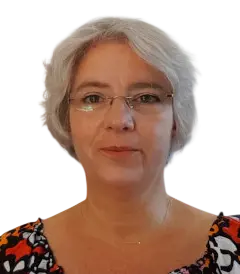
Last position:
Independent Software Developer at Professional Programming
since 03.2025: development of new functionality, customer-specific adaptations and bug fixing of an ERP system in the inventory management area for medical products (Windows 11, Mumps, GT.M)
09.2022–04.2024: creation of diagnostic routines for the entire vehicle fault memory and implementation of a diagnostic application for the after-sales area using PRODIS Automation (Windows 10, graphical J2EE platform, PRODIS Automation DSA)
09.2020–06.2022: analysis of requirements, creation of concepts and specifications, software development in C, bug fixing, code reviews, module testing, integration, series maintenance according to PTC Integrity Tracker (microprocessor SAMA5, Linux, C, Visual Studio 15/19, Polyspace, MISRA, Integrity PTC, Jenkins, make/cmake)
07.2019–11.2019: implementation and installation of customer-specific adjustments and extensions in the field of electronic payment transactions, preparation and execution of tests (Windows 7, Linux, C++, make, Eclipse, Git)
01.2019–07.2019: software development of headlamp control units according to Automotive SPICE, reviews with QA (microcontroller Renesas RH850, C, Git, Green Hills Compiler/Linker, Visual Studio 2013, Rational ClearCase, ClearQuest, Vector CANoe)
01.2017–12.2018: project management, software requirements analysis, development according to MISRA and HIS, QA plan, document reviews, configuration management, on-site support (Renesas RH850, C, Git, Visual Studio 2013, DOORS, ClearCase, ClearQuest, Vector CANoe)
02.2013–10.2016: redesign and implementation of CAN/LIN restbus software and D-PDU API, development of various restbus adapters, feature extensions, FIBEX integration, driver control, D-PDU API interface, performance optimization, module tests, documentation, commissioning (Windows 7, C++11/98, Python 3.2, IronPython, Visual Studio 2010/2012/2013, Boost, Doxygen, ClearCase, Vector CANoe, D-Server Softing DTS 8)
06.2011–09.2012: adaptation and maintenance of the MCVI Diagnostic Server according to ASAM MCD-3D 3.0.0 and ODX 2.2, development of diagnostic tools and user interfaces, transformation of ODX data, regression tests with CppUnit and JUnit (Windows 7, C++, Java)
01.2010–05.2011: design, development and commissioning of a program for customer, project and product catalog management (Windows XP, Visual Basic .NET, Microsoft Access)
04.2008–12.2009: programming of ODX data-based diagnostic routines, requirement documents and test specifications, simulation tests, maintenance and bug fixing (Windows XP, J2EE platform, Oracle)
02.2007–12.2007: implementation of the framework for pattern design and management software, functional extensions, setup project (.NET, C++, Visual Studio 8, Microsoft Access, Windows XP)
Stefan R.

Last position:
Corporate Controller / Private Equity Controller (PE) interim at Amedes Medical Services GmbH
- Responsibility for group-wide financial management with a focus on management, PE, and lender reporting.
- Focus on an integrated financial model (P&L, balance sheet, cash flow), robust liquidity and covenant management, and preparation of decision-ready materials for financiers, auditors, and rating stakeholders.
- Establishment of reporting standards, data logic, and closing routines for high-frequency scalability.
- Further development of an integrated financial model (P&L/BS/CF), including scenario capabilities, sensitivities, and driver-based forecasting logic.
- Design and management of a rolling liquidity plan (short-/mid-term), including working capital mechanisms and financing instruments.
- Preparation and quality assurance of lender reporting, including covenant calculations, bridge analyses, and variance explanations.
- Support for the CFO agenda in financier and stakeholder communication (Q&A, documentation logic, key messages, data consistency).
- Coordination and content input for rating- and financing-related deliverables (e.g., presentations, data rooms, management commentary).
- Management of IFRS/accounting topics (e.g., IFRS 16 lease logic, accrual and reconciliation concepts) to ensure reporting and audit readiness.
- Standardization of reporting structures, templates, and KPI definitions across entities to increase transparency, comparability, and speed.
Holger G.

Last position:
Senior Vice President of Engineering at Uptempo GmbH
- Responsible for development, architecture, QA, BI, AI and cloud operations across a global engineering organization of 150+ engineers in 21 teams across 6 countries
- Led the transformation from legacy single-tenant architecture to a cloud-native multi-tenant SaaS platform using AWS, Kubernetes and event-driven architectures
- Established engineering operating models, architecture governance and DevOps practices across multiple international teams
- Introduced Generative AI capabilities (Azure OpenAI, RAG) to enable AI-driven product features and secure enterprise data access
- Responsible for cloud infrastructure strategy, security and compliance (ISO 27001, SOC1/2) and cloud cost optimization (FinOps)
- Led enterprise integrations with ERP, CRM and commerce systems for global customers
Thorsten L.
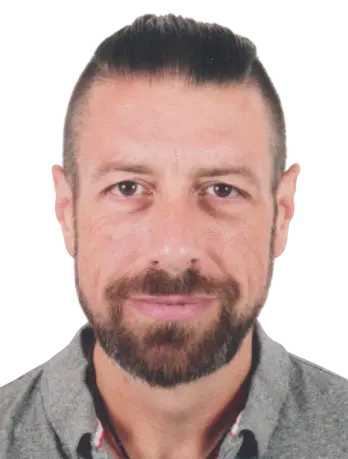
Last position:
Senior Security Analyst
- Analysis and remediation of security vulnerabilities in a risk assessment system for energy trading
- System analysis
- Threat modeling
- Decision-making on vulnerability mitigation strategies
- Implementation of vulnerability detection mechanisms
- Security scans
- DevSecOps practices
- Technical environment: Visual Studio Code, JetBrains Suite, MS Threat Modeling Tool, DevSecOps, Git, AWS, DynamoDB, SQL Server, Endur, Snowflake, Orca
- Languages: C#, JavaScript, TypeScript, Python, PowerShell, Bash, Terraform, SQL
Jan G.

Last position:
Interim Senior Application Owner for Pricing, Forecasting and Prognosis Solutions at International energy trading company
- Collaborated closely with key users, business analysts and product owners to understand requirements, define priorities and derive solutions
- Managed external service providers
- Oversaw and executed updates, patches and release management
- Handled incident, problem and change management according to ITIL
- Analyzed and evaluated incidents and changes for operational impact and business processes
- Monitored systems and interfaces, ensuring IT security and compliance requirements
- Supported IT planning, cost monitoring and contract management
- Created and executed tests for maintenance and projects
- Assisted in designing technical solutions and contributed to projects such as IT landscape harmonization and modernization
- Independently led operations-related projects and continuously optimized processes
- Achieved significant cost savings through supplier negotiations, rightsizing and decommissioning of legacy systems
- Technologies: Azure DevOps, ServiceNow, icinga, metalogic mPE/mPX, FIS, inubit, Oracle, LeanIX, One Identity, Confluence, Copilot, XML, JSON, SQL, RabbitMQ, Python, BPMN, OKR, ITIL, Kanban
Bernd S.

Last position:
Head of IT Business Applications & Partnerships at Software AG
- Strategic overall management of the global IT application landscape and further development of the roadmap for core applications (Salesforce, SAP, Workday, OpenAir, Jira)
- Realignment of the IT architecture towards cloud-native (IaaS/SaaS) and establishment of an agile DevOps culture and process automation
- Leading the IT application workstream for the successful separation of four business units (carve-outs)
- Acting as a strategic business partner for C-level functions (COO, CRO, CHRO) to ensure IT-business alignment
- Representing IT interests to employee representative bodies and ensuring compliance
- Reduced maintenance effort by 66% by designing and rolling out a new customer portal
- Implemented a fully automated CPQ self-service to accelerate sales processes
- Successfully went live with critical business platforms to support the target operating model (e.g., Dayforce for HR/payroll, Coupa for P2P, Zuora for billing)
- Replaced legacy custom software with scalable SaaS standard solutions (legacy modernization)
Discover over 15,000 top freelancers


Statistics of experts using Enterprise Application Integration
Aggregated from the professional profiles of matched freelancers.

Experience
29 years

Position duration
3.2 years

Positions per freelancer
18

Top business areas
Information Technology, Project Management, Product Development

Top industries
Information Technology, Professional Services, Telecommunication

Certification focus areas
Information Technology, Project Management, Operations

Bachelor's degree or higher
77%

Master's degree or higher
42%

Certifications per freelancer
3

Most common languages
German, English, Spanish

Speak two or more languages
97%
Based on our profile pool as of 18 Nov 2026.
Daily rate distribution
The chart shows how the daily rates of experts in this technology in Germany are distributed, based on recent contracts on our platform. Each bar covers a rate range — its height shows the share of experts charging within that range.
Average rates of experts in Germany using Enterprise Application Integration
Rates are based on recent contracts and do not include FRATCH margin.

The average daily rate is the mean of all daily rates from recent contracts of comparable freelancers on our platform.
The median daily rate is the middle value of all daily rates — half of comparable freelancers charge less, half charge more. Unlike the average, it is barely affected by outliers.
Calculated based on our freelancers’ daily rates as of 18 Nov 2026. Actual rates may vary depending on seniority level, experience, skill specialization, project complexity, and engagement length.
Enterprise Application Integration experts industry focus
See which industries our matched freelancers work in most often — every figure is calculated live from the freelancers on FRATCH.
- Information Technology (100%)
- Professional Services (67%)
- Telecommunication (55%)
- Banking and Finance (52%)
- Manufacturing (48%)
- Automotive (45%)
- Transportation (45%)
- Energy (39%)
Please note that freelancers can work across multiple industries, so percentages overlap.
About the technology
What EAI connects
Enterprise Application Integration, often called EAI, links separate business applications so they can exchange data and trigger processes. It can connect ERP, CRM, finance, supply chain and customer-facing systems without forcing a company to replace every existing application. The result is a coordinated application landscape with clearer data flows and fewer manual handovers.
Core integration patterns
EAI specialists select patterns that suit the systems, data and business process involved. They may use synchronous APIs for immediate responses, asynchronous messaging for resilient processing, or batch transfers for scheduled workloads. Strong designs define ownership, transformation rules, error handling, retries and audit trails from the start.
Ecosystem and tooling
The work spans integration middleware, API management, message brokers and cloud services. Common ecosystems include MuleSoft, Boomi, IBM App Connect, SAP Integration Suite, Microsoft Azure Integration Services and Apache Camel. Specialists also work with REST, SOAP, XML, JSON, webhooks, queues, event streams, identity services and observability tools.
Where companies use it
Companies bring in EAI expertise when applications have grown independently or a major transformation must preserve critical operations. Typical assignments include:
- Connecting SAP or another ERP with CRM, commerce and logistics systems
- Replacing point-to-point interfaces with governed integration flows
- Exposing legacy capabilities through secure APIs
- Moving workloads between on-premises systems and cloud services
- Automating order, billing, fulfilment and customer-data processes
When freelance expertise helps
Freelance specialists add value during migrations, platform selections, merger integrations and urgent delivery phases. They can assess an existing interface estate, define a target architecture, build reusable flows and document operational ownership. In Germany, remote collaboration often works well when access, security reviews and workshops are planned clearly; some programmes still need on-site sessions with business and IT teams.
What strong specialists deliver
Quality is visible in more than a working connection. Strong professionals translate business rules into maintainable integrations, test realistic failure scenarios and protect sensitive data in transit and at rest. They establish versioning, monitoring, reconciliation and support procedures so teams can operate the solution after handover. Clear documentation and practical communication matter as much as middleware knowledge.

Frequently asked questions
Key details about Enterprise Application Integration, drawn from the questions we get asked most.

Enterprise Application Integration is used to connect applications that need to share data or coordinate business processes. Typical examples include synchronising ERP and CRM records, passing orders to fulfilment systems and exposing legacy functions through APIs.
EAI covers the broader discipline of connecting applications, including APIs, messaging, transformation, orchestration, monitoring and governance. An API-only approach may handle service access well, but it does not necessarily address batch exchange, event processing or the operational control of a large interface landscape.
Enterprise Integration work often requires knowledge of API design, data modelling, SQL, cloud services, identity and access management, and message brokers. Useful additional skills include SAP or Salesforce integration, event-driven architecture, automated testing and observability.
EAI projects vary greatly in complexity. A simple interface may need focused middleware and API knowledge, while a multi-system migration requires experience with architecture, data quality, security, release management and production support.
Enterprise Application Integration can often be delivered remotely when systems are accessible and responsibilities are well defined. German projects may still benefit from on-site workshops for process mapping, security approvals or coordination across business and IT teams, while English or German communication can be agreed in advance.
MuleSoft is often considered where API-led connectivity and reusable assets are central, while Boomi, IBM App Connect, SAP Integration Suite and Azure Integration Services fit different ecosystem and operating models. The right choice depends on existing platforms, skills, security requirements, integration volume and long-term ownership.
Enterprise Integration quality is shown through clear interface contracts, reliable error handling, meaningful monitoring and documentation that another team can operate. Ask for examples of failure recovery, testing, security decisions and measurable improvements to process reliability rather than reviewing only successful happy-path flows.
EAI specialists should clarify system owners, data responsibilities, environments, access limits, compliance needs and the expected operating model. They should also confirm whether the assignment covers discovery, implementation, testing, deployment, documentation or ongoing support.
The average hourly rate of freelancers in Germany who have used Enterprise Application Integration in their recent projects is 110 €, which corresponds to a daily rate of about 880 € based on an 8-hour working day.
Of the freelancers in Germany who have used Enterprise Application Integration in their recent projects, 77% hold at least a Bachelor's degree and 42% hold at least a Master's degree.
On average, freelancers in Germany who have used Enterprise Application Integration in their recent projects have 29 years of professional experience, with a single engagement typically lasting around 3.2 years.
The most common languages among freelancers in Germany who have used Enterprise Application Integration in their recent projects are German (100%), English (97%), and Spanish (24%).
The most common industries among freelancers in Germany who have used Enterprise Application Integration in their recent projects are Information Technology (100%), Professional Services (67%), and Telecommunication (55%).
The most common business areas among freelancers in Germany who have used Enterprise Application Integration in their recent projects are Information Technology (100%), Project Management (97%), and Product Development (76%).
Main locations of FRATCH Experts, who have recently used Enterprise Application Integration
Our freelancers and interim experts are at home across the DACH region — available on-site in the major business hubs or fully remote. Choose a location to discover matched specialists, local market insights and up-to-date availability.
 Berlin Hamburg Munich Cologne Frankfurt Stuttgart Dusseldorf Leipzig Dortmund Essen Bremen Dresden Hanover Nuremberg
Request a free demo
Get in touch with the FRATCH team and we will get back to you within 4 hours.
Would you rather directly get in touch?
We always have the time for a call or email!

Philipp Thomaschewski
FRATCH CEO

