


dSPACE TargetLink Experts in Germany
, matched fast with vetted and available freelancersHire experts who turn Simulink and Stateflow models into production-ready embedded C code, configure AUTOSAR workflows and support verification for safety-critical vehicle functions. Get precise, fast matching with vetted, available freelancers.

Meet FRATCH Experts in Germany, who have recently used dSPACE TargetLink
Olfa A.

Last position:
Senior Embedded Software Engineer / Function Developer at Enginius GmbH (FAUN GROUP)
- Developed model-based software for hydrogen tank control units using MATLAB/Simulink, aligned with ISO 26262 functional safety requirements
- Performed system integration and software verification across MIL and HIL environments using dSPACE and Vector tools
- Defined software architecture (SADS) with interface specifications for CAN, analog, and digital communication protocols
- Generated production-ready embedded C code using Simulink Embedded Coder; created and maintained A2L calibration files with CANape
- Designed and executed MIL/HIL test cases ensuring full coverage of functional and safety requirements
- Implemented CODESYS PLC applications on IFM ecomatController; applied CAN and Modbus TCP/IP communication protocols
- Contributed to HMI/UI development using Qt/C++ on Linux (Qt Creator)
- Applied agile Kanban workflow with Git-based version control (Bitbucket)
Tools: MATLAB, Simulink, CANape, CANalyzer, PCAN-View, Embedded Coder, CODESYS, TTC2038/PXROS, Codebeamer, Jira, Git
Roland R.
Last position:
Support in Ongoing Project at Automotive Supplier
- closing the safety case
- creation of meaningful traceability matrices and targeted test expansion
- transferring requirements into other database systems
- structuring the requirements, assessing their completeness, and setting up new test cases based on use-case–based test strategies and the results of internal traceability matrices
- partial automation of tasks within a requirement assessment tool
- tools and languages: MS Teams, reqIF, Enterprise Architect, Codebeamer, proprietary tools for creating and evaluating traceability matrices (approx. 1000 x 1000)
Kavin T.
Last position:
Freelance Software Expert – Functional Safety & AUTOSAR at Bosch
- Development and optimization of software architectures for safety-critical embedded systems in the automotive sector according to ISO 26262 and ASPICE.
- Performing safety analyses (FMEA, DFA, FTTI, HARA) for safety-relevant software.
- Technical consulting and support in acquisition processes for safety-critical software projects.
- Evaluation of AUTOSAR architectures and integration of safety-relevant software solutions.
- Collaboration with OEMs and suppliers to ensure compliance with safety standards and process requirements.
- Leading functional safety reviews and ASPICE assessments.
- 2016–2019: Body Computer Module – Worked as Lead Software Integrator. Responsible for software integration of safety-critical control units, implementation of AUTOSAR software components, and system integration testing.
- 2019–2022: PowerNetGuardian – Worked as Software Architect. Developed a safety-critical software architecture, ASIL decomposition, and created software safety requirements according to ISO 26262 and ASPICE.
- 2022–Today: PowerNetGuardian Plus – Worked as Lead Software Architect. Responsible for the overall software architecture, safety and cybersecurity concepts, FMEA analyses, and technical consulting during OEM negotiations.
Michael B.
Last position:
Developer/Consultant at Fresenius Medical Care
- Development of automated end-of-line tests (functional tests) for dialysis machines on a PLC test bench in a production environment
- Introduction of new technology based on Vector vTestStudio, CANoe, and Siemens S7 PLC
- Creating test concepts
- Implementing test cases and libraries in CAPL and C#
- Touch screen emulation and proprietary RPC (Remote Procedure Call) via CAN
- Connecting to the PLC (Siemens Simatic)
- Defining interfaces for device communication (vCDL)
- Defining user interfaces and linking to the frontend (JSON)
- Agile work using DevOps (Azure)
- Skills: CAPL, .NET, C#, vCDL, CANOpen, DevOps, PLC
- Tools used: Vector CANoe 18, vTestStudio 4, MS Azure DevOps, MS Visual Studio 2022, Mosquito MQTT, Git, Siemens TIA Portal
Harald B.
Last position:
Software Architect at Amoria Bond
- Developed gateway demonstrator
- Defined system requirements for topology and data concentrator
- Designed zonal controllers for Leoni
Markus M.
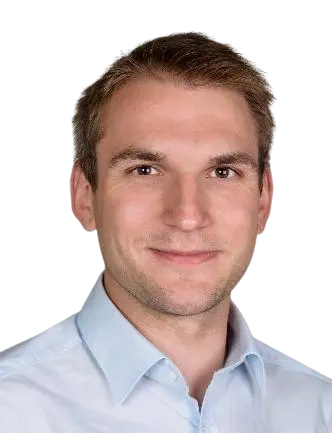
Last position:
Software Architect / Developer at APAGCoSyst Control Systems GmbH
- Development and analysis of embedded software for control units
- AUTOSAR configuration, BLDC motor control, LIN bus
- System analysis
- Programming language: C
- Tool: Targetlink
Winfried H.
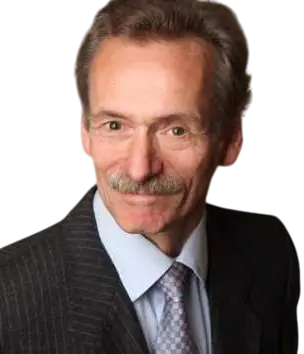
Last position:
Embedded Test Automation at Konecranes DEMAG
- Scrum, Jira, Zephyr, Bitbucket, Jenkins, Robot Framework, Python, Git

Last position:
Software Developer - Building Automation
- Testing controller ECUs
- Implementing test environment
- Implementing virtual nodes
- Commissioning CANopen network
- Defining and automating test cases
- Designing and implementing LSS automation
- Implementing data exchange between tools
- Porting requirements to XML format for vTestStudio
- Products: CANoe, vTestStudio, Playwright, Cypress, Robot, .NET
- Skills: CAPL, C++, CANopen, concept creation, Python, JavaScript, XML, C#
Amr T.

Last position:
System Architect at Valeo
- Technical responsibility for the ConMod2.0 (Connectivity Module) product, which will connect future vehicles in the network as nodes with the Internet of Things blockchain.
- Lead technical discussions to define the specifications of various components (antennas, modems, Bluetooth chips, Wi-Fi chips, and microprocessors) with ConMod2.0 component suppliers (Quectel, Qualcomm, Marvell, and STMicroelectronics) and to discuss and plan system design iterations.
- Coordinate with other stakeholders, e.g., electronics system architect, software architect, software PMs, and software developers at Valeo Egypt, to define architecture concepts.
Discover over 15,000 top freelancers


Statistics of experts using dSPACE TargetLink
Aggregated from the professional profiles of matched freelancers.

Experience
27 years

Position duration
1.5 years

Positions per freelancer
18

Top business areas
Product Development, Information Technology, Quality Assurance

Top industries
Automotive, Manufacturing, Aerospace and Defense

Certification focus areas
Product Development, Quality Assurance, Project Management

Bachelor's degree or higher
100%

Master's degree or higher
100%

Doctorate
29%

Certifications per freelancer
2

Most common languages
German, English, Arabic

Speak two or more languages
100%
Based on our profile pool as of 9 Oct 2026.
Daily rate distribution
The chart shows how the daily rates of experts in this technology in Germany are distributed, based on recent contracts on our platform. Each bar covers a rate range — its height shows the share of experts charging within that range.
Average rates of experts in Germany using dSPACE TargetLink
Rates are based on recent contracts and do not include FRATCH margin.

The average daily rate is the mean of all daily rates from recent contracts of comparable freelancers on our platform.
The median daily rate is the middle value of all daily rates — half of comparable freelancers charge less, half charge more. Unlike the average, it is barely affected by outliers.
Calculated based on our freelancers’ daily rates as of 9 Oct 2026. Actual rates may vary depending on seniority level, experience, skill specialization, project complexity, and engagement length.
dSPACE TargetLink experts industry focus
See which industries our matched freelancers work in most often — every figure is calculated live from the freelancers on FRATCH.
- Automotive (100%)
- Manufacturing (89%)
- Aerospace and Defense (44%)
- Information Technology (44%)
- Education (33%)
- Construction (22%)
- Energy (22%)
- Banking and Finance (22%)
Please note that freelancers can work across multiple industries, so percentages overlap.
About the technology
What TargetLink does
dSPACE TargetLink is a production code generator for model-based development. It converts Simulink and Stateflow models into optimized embedded C code for electronic control units. Teams use it to create repeatable software artifacts while keeping the model, generated code and calibration workflow aligned.
Automotive applications
TargetLink is used for control software in vehicles and embedded systems where predictable execution and traceability matter. Typical work includes:
- Powertrain and electrification control
- Battery management and charging functions
- Chassis, braking and body control
- Driver assistance and vehicle motion functions
- AUTOSAR-compliant ECU software
Ecosystem and tooling
Strong specialists work across the dSPACE ecosystem and the wider model-based engineering toolchain. They configure TargetLink libraries, data dictionaries, code generation settings and calibration interfaces, while connecting Simulink, Stateflow, AUTOSAR authoring tools, embedded build systems and test environments. Knowledge of C, MATLAB scripting and version-controlled model workflows is essential.
When companies need specialists
Companies often bring in freelance expertise when a new ECU platform must be industrialized, an existing model must generate maintainable code, or a team needs support during verification and release. In Germany, TargetLink work commonly connects automotive suppliers, vehicle manufacturers and embedded software teams. Remote collaboration can work well when model conventions and review processes are documented; on-site work may help during lab integration or release phases.
Delivery and verification
A capable professional can establish code-generation configurations, resolve model and data issues, integrate generated C code into an ECU build and support unit, integration and system testing. They understand traceability from requirements to models and code, static analysis, calibration data, processor constraints and safety-oriented development practices. Clear documentation makes handover easier.
Choosing the right professional
Look for someone who can explain why a TargetLink configuration produces a specific result, not just operate the tool. Relevant evidence includes delivered ECU software, AUTOSAR integration, model reviews, generated-code analysis and experience with target hardware. The strongest professionals balance model quality, execution efficiency, traceability and the practical constraints of the vehicle program.

Frequently asked questions
Quick answers to the questions that come up most around dSPACE TargetLink.

dSPACE TargetLink generates production-ready embedded C code from Simulink and Stateflow models. Companies use it for ECU software in areas such as powertrain, battery management, chassis control, body functions and driver assistance.
TargetLink supports a model-based workflow with repeatable code generation, traceability and close integration with Simulink. Hand-written C can offer direct control, while other generators may fit different model types or toolchains, so the right choice depends on safety goals, target hardware, existing models and team processes.
A strong dSPACE TargetLink specialist usually understands Simulink, Stateflow, embedded C, AUTOSAR and ECU build integration. Experience with MATLAB scripting, calibration, requirements traceability, static analysis and hardware testing is also valuable.
TargetLink projects need a professional who has handled the full path from model configuration through generated code, integration and verification. The required depth depends on whether the assignment is a focused configuration task, a platform migration or ownership of production ECU software.
dSPACE TargetLink work can often be completed remotely when models, repositories, build environments and review rules are accessible. On-site collaboration may still be useful for target-hardware tests, laboratory integration or workshops with teams in Germany, and language expectations should be agreed early.
Ask a TargetLink professional to explain a delivered code-generation setup, model review or integration issue in concrete terms. Good evidence includes clear reasoning about data types, execution behavior, generated C code, traceability and the constraints of the target ECU.
TargetLink can be used within AUTOSAR-oriented workflows to generate code that integrates with configured software components and ECU platforms. The professional should be familiar with the project's AUTOSAR authoring tools, interfaces, runnable behavior, build process and verification responsibilities.
dSPACE TargetLink assignments often depend on licensed tool versions, established model conventions, target hardware and restricted project environments. Freelancers should clarify access, deliverables, review standards, coding rules, calibration needs and whether the work covers modeling, configuration, integration or verification.
The average hourly rate of freelancers in Germany who have used dSPACE TargetLink in their recent projects is 81 €, which corresponds to a daily rate of about 647 € based on an 8-hour working day.
Of the freelancers in Germany who have used dSPACE TargetLink in their recent projects, 100% hold at least a Bachelor's degree, 100% hold at least a Master's degree, and 29% hold a doctorate.
On average, freelancers in Germany who have used dSPACE TargetLink in their recent projects have 27 years of professional experience, with a single engagement typically lasting around 1.5 years.
The most common languages among freelancers in Germany who have used dSPACE TargetLink in their recent projects are German (100%), English (100%), and Arabic (22%).
The most common industries among freelancers in Germany who have used dSPACE TargetLink in their recent projects are Automotive (100%), Manufacturing (89%), and Aerospace and Defense (44%).
The most common business areas among freelancers in Germany who have used dSPACE TargetLink in their recent projects are Product Development (100%), Information Technology (89%), and Quality Assurance (89%).
Main locations of FRATCH Experts, who have recently used dSPACE TargetLink
Our freelancers and interim experts are at home across the DACH region — available on-site in the major business hubs or fully remote. Choose a location to discover matched specialists, local market insights and up-to-date availability.
 Berlin Hamburg Munich Cologne Frankfurt Stuttgart Dusseldorf Leipzig Dortmund Essen Bremen Dresden Hanover Nuremberg
 Request a free demo
Get in touch with the FRATCH team and we will get back to you within 4 hours.
Would you rather directly get in touch?
We always have the time for a call or email!

Philipp Thomaschewski
FRATCH CEO

