


Asterisk Experts in Germany
matched in minutes by AIHire experts who design SIP-based telephony, IVR menus, call queues and integrations with CRM systems. Work with vetted, available freelancers selected for your Asterisk project through fast, precise AI matching.

Meet FRATCH Experts in Germany, who have recently used Asterisk
Martin W.

Last position:
Security Auditor at MissionMe
- Environment: AWS, Ruby on Rails, GraphQL, React Native
- Penetration test for Backend, Android-App and iOS-App
Peter K.

Last position:
Hardware and Software Developer / Project Manager at Anonymer Kunde
- Development of control units for the automotive industry incl. embedded software
- CAN bus, Vector Tools, CANoe
- Support of the development process according to ISO 26262
- Ensuring cyber security standards:
- Key exchange (PKI) between vehicle and control units
- Hardware Security Module (HSM)
- Communication with external service providers (international)
- Development (PCB) of measuring adapters, statistical analysis of sensors
- IoT and embedded software development, backend administration
Aladdin A.
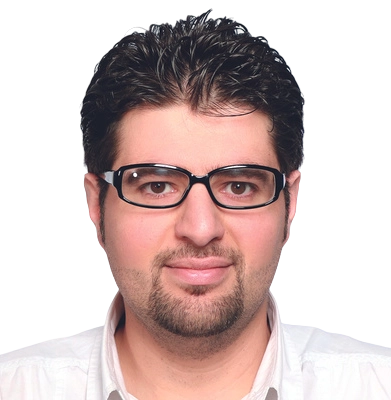
Last position:
Technical Consultant at NFON
- Presentations and workshops regarding different VOIP products and technologies
- Design of VOIP and network solutions from core to premium solutions and necessary non-standard solutions
- Processing of tenders
- Development of VOIP and network technical implementation of customer requirements
- Implement and configure different UC products on cloud
Abdelhak M.

Last position:
Network Architect at Bechtle Managed Services GmbH
- Created as-is network documentation for a Bechtle customer
- Analyzed existing configurations and adjusted them
- Advised on Fortinet and Check Point products
- Troubleshot complex routing, switching and application issues
- Tools: MS Azure, FortiManager, Cisco Nexus & Catalyst, Cisco WLAN Controller, Citrix Netscaler SD-WAN, MS Visio, Checkpoint VSX, Wireshark
Andreas N.

Last position:
Open Source Founder at Privatier
- AI-supported source code analysis
- AI image generation for a shirt shop
- AI-supported analysis of connected YouTube channels and commenting users
- AI-supported software prototyping
- Operation of a local AI environment
- 3D printing and scanning: development of a process to repair GfK parts using 3D-printed negative molds
The focus is on practical applications of new technologies, founding an open-source project for a yacht autopilot, as well as yacht refit and motorhome conversion.
Bernhard M.
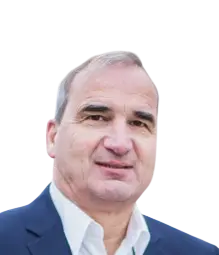
Last position:
Leading Red Hat OpenShift Architect at Deutsche Rentenversicherung
- Architecture review and continuation of the architecture of two Red Hat OpenShift 4.16 environments: one for the so-called legacy environment in Berlin, consisting of two availability zones, and the other for a geo-redundant cluster between Berlin and Würzburg with three availability zones each.
- Further development or creation of the detailed designs for the legacy data center and the new DRV data center.
- Architecture of the hub clusters.
- Architecture of the RHACM and RHACS components.
- Architecture of the Red Hat Quay repositories and the connection and replication of existing JFrog Artifactory repositories.
- Creation of the required firewall requests.
- Review of the BSI basic protection checks of the environments and creation of implementation instructions.
- Design and requirements analysis of the Quay image registries.
- Design for the use of Hashicorp Vault as a secret store for the clusters.
- Creation of a backup concept for the Red Hat OpenShift clusters.
- Creation of concepts for the lifecycle of the images in the registries.
- Design of a federated user management based on LDAP/AD for the administrative OpenShift users.
Martin W.
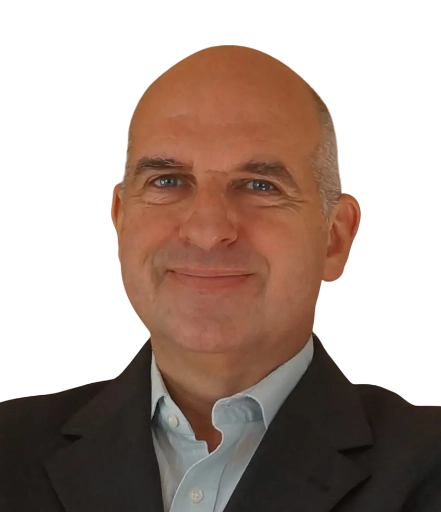
Last position:
Training and Knowledge Management at Adam Hall Group
- Supporting the rollout of Shopware 6, including creating a comprehensive knowledge base and training videos
- Developing a Moodle-based e-training system and conducting internal training sessions
H̊akan K.

Last position:
Consultant at Simulina GmbH
- Project planning of photovoltaic systems for a citizens' initiative
- Design of billing systems
Michael O.

Last position:
Software Engineer at Zalando SE
Discover over 15,000 top freelancers


Statistics of experts using Asterisk
Aggregated from the professional profiles of matched freelancers.

Experience
20 years

Position duration
1.8 years

Positions per freelancer
18

Top business areas
Information Technology, Project Management, Operations

Top industries
Information Technology, Retail, Telecommunication

Certification focus areas
Information Technology, Business Intelligence, Quality Assurance

Bachelor's degree or higher
80%

Master's degree or higher
60%

Doctorate
20%

Certifications per freelancer
2

Most common languages
English, German, Spanish

Speak two or more languages
89%
Based on our profile pool as of 9 Oct 2026.
Daily rate distribution
The chart shows how the daily rates of experts in this technology in Germany are distributed, based on recent contracts on our platform. Each bar covers a rate range — its height shows the share of experts charging within that range.
Average rates of experts in Germany using Asterisk
Rates are based on recent contracts and do not include FRATCH margin.

The average daily rate is the mean of all daily rates from recent contracts of comparable freelancers on our platform.
The median daily rate is the middle value of all daily rates — half of comparable freelancers charge less, half charge more. Unlike the average, it is barely affected by outliers.
Calculated based on our freelancers’ daily rates as of 9 Oct 2026. Actual rates may vary depending on seniority level, experience, skill specialization, project complexity, and engagement length.
Asterisk experts industry focus
See which industries our matched freelancers work in most often — every figure is calculated live from the freelancers on FRATCH.
- Information Technology (100%)
- Retail (67%)
- Telecommunication (67%)
- Banking and Finance (56%)
- Education (44%)
- Manufacturing (44%)
- Professional Services (44%)
- Automotive (33%)
Please note that freelancers can work across multiple industries, so percentages overlap.
About the technology
What Asterisk does
Asterisk is an open-source framework for building voice, video and unified communications systems. It provides the core services behind IP PBX installations, contact centres, softphones, conferencing and automated phone menus. Companies can shape call handling around their own processes instead of relying only on a fixed telephony product.
Core communication features
Asterisk supports SIP registration, call routing, voicemail, caller identification, recording and conference calls. Its dialplan controls how calls move through departments, schedules and service rules. Applications can connect through interfaces such as AMI, ARI and AGI, while PJSIP provides modern SIP channel support.
- Configure extensions, trunks and inbound routes
- Build IVR menus, queues and ring groups
- Connect voice workflows to business software
- Monitor, record and secure call traffic
Ecosystem and tooling
Asterisk projects often include Linux administration, networking, DNS, TLS certificates and SIP troubleshooting. Specialists may also work with FreePBX, Issabel, Kamailio, RTP, WebRTC and REST APIs. Common integrations link calls with CRMs, ticketing systems, identity providers and notification services.
When companies need expertise
Freelance expertise helps when a company is replacing a legacy PBX, moving telephony to the cloud or extending an existing call centre. It is also useful for difficult carrier connections, unreliable audio, capacity planning and urgent production incidents. In Germany, projects may require coordination across local offices, remote teams and German- or English-speaking stakeholders.
- Plan a migration without interrupting essential calling
- Diagnose one-way audio, codec and NAT problems
- Automate call actions through ARI or AMI
- Prepare documentation and operational handover
What strong specialists deliver
Strong Asterisk professionals clarify call flows before changing configuration. They separate the dialplan, infrastructure and application layers, test failure paths and document carrier assumptions. They understand security controls such as firewall rules, access restrictions, encrypted signalling and protected recordings.
They also measure call quality from real user journeys rather than treating a successful test call as proof of readiness. Clear rollback plans, readable configuration and practical monitoring make future changes safer.
Choosing the right professional
Look for evidence of comparable SIP environments, not only general Linux or VoIP knowledge. Ask how the professional would investigate failed registrations, intermittent audio, queue behaviour and a migration with active users. A useful discovery process should produce a call-flow map, integration boundaries, risks and a defined acceptance test.
Remote collaboration works well when the company can provide secure access, carrier documentation and a clear test environment. On-site work can still help with handset deployment, network diagnosis and coordination across physical locations.

Frequently asked questions
Not sure where to start with Asterisk? These answers cover the essentials.

Asterisk is used to build IP PBX systems, call queues, IVR menus, voicemail, conferencing and custom voice applications. It can also connect telephony with CRMs, ticketing tools and internal workflows through APIs.
Asterisk offers deeper control over call flows, integrations, data handling and deployment choices than a standard hosted phone system. A hosted service may reduce operational work, while Asterisk is often preferred when custom behaviour or tighter infrastructure control matters.
A strong Asterisk professional usually understands SIP, PJSIP, RTP, Linux, networking, DNS, firewalls and TLS. Experience with FreePBX, WebRTC, REST APIs, CRM integration and carrier interconnection can be valuable depending on the project.
The right Asterisk experience depends on the scope and risk of the system. A simple extension setup needs less specialist depth than a carrier migration, contact centre, high-availability design or application using ARI.
Asterisk can usually be configured and tested remotely when secure access, SIP details, network documentation and a representative test setup are available. On-site collaboration may help with handset rollout, local network issues or teams that need German-language workshops.
A capable Asterisk specialist checks SIP signalling, RTP paths, NAT, firewall rules, codecs and the behaviour of the carrier connection. They should reproduce the fault, inspect logs and packet flows, then document the root cause instead of applying an untested configuration change.
FreePBX is a web-based management interface and distribution layer commonly used to configure Asterisk. Asterisk remains the underlying communications engine, while FreePBX provides forms, modules and generated configuration for many common tasks.
Ask an Asterisk freelancer to explain a comparable call flow, migration approach and incident investigation in concrete terms. High-quality work includes secure configuration, tests for failure cases, clear documentation, sensible monitoring and a rollback plan.
The average hourly rate of freelancers in Germany who have used Asterisk in their recent projects is 104 €, which corresponds to a daily rate of about 832 € based on an 8-hour working day.
Of the freelancers in Germany who have used Asterisk in their recent projects, 80% hold at least a Bachelor's degree, 60% hold at least a Master's degree, and 20% hold a doctorate.
On average, freelancers in Germany who have used Asterisk in their recent projects have 20 years of professional experience, with a single engagement typically lasting around 1.8 years.
The most common languages among freelancers in Germany who have used Asterisk in their recent projects are English (100%), German (89%), and Spanish (56%).
The most common industries among freelancers in Germany who have used Asterisk in their recent projects are Information Technology (100%), Retail (67%), and Telecommunication (67%).
The most common business areas among freelancers in Germany who have used Asterisk in their recent projects are Information Technology (100%), Project Management (89%), and Operations (78%).
Main locations of FRATCH Experts, who have recently used Asterisk
Our freelancers and interim experts are at home across the DACH region — available on-site in the major business hubs or fully remote. Choose a location to discover matched specialists, local market insights and up-to-date availability.
 Berlin Hamburg Munich Cologne Frankfurt Stuttgart Dusseldorf Leipzig Dortmund Essen Bremen Dresden Hanover Nuremberg
 Request a free demo
Get in touch with the FRATCH team and we will get back to you within 4 hours.
Would you rather directly get in touch?
We always have the time for a call or email!

Philipp Thomaschewski
FRATCH CEO

