


Network Engineers in Germany
from 15,000 CVs with fast AI matchingNeed support for LAN and WAN design, firewall and VPN setup, Cisco or Fortinet environments, or network troubleshooting? Get fast, precise matching with vetted, available freelancers who can step into live infrastructure work.

Meet FRATCH Network Engineers in Germany
Julian W.

Last position:
Renewal of the Active Network Infrastructure
As part of this project, the existing active network infrastructure was modernized and made fit for the future. The goal was to introduce a powerful, secure and scalable network and WLAN infrastructure, including a Network Access Control (NAC) solution to improve network security and centralized access control.
At the beginning of the project, a comprehensive requirements analysis was carried out, taking into account the technical, operational and security-related requirements of the hospital sites. On this basis, a technical tender was prepared for new switches, WLAN access points and the NAC solution.
The successful implementation of the project established a modern, standardized and secure network infrastructure that meets the growing requirements for availability, mobility and IT security in hospital operations.
Activities:
- Supporting the tender process, including technical evaluation of offers and bidder evaluation
- Leading and managing the entire project implementation
- Coordinating the project process with internal stakeholders, business units and hospital IT
- Managing external service providers during the implementation and installation of the systems
- Monitoring the implementation, including quality control, project acceptance and defect management
- Coordinating and managing communication between hospital IT and external service providers as part of the NAC implementation
- Managing escalations in the event of technical and organizational challenges
- Ongoing budget monitoring and control of project expenses and additional costs
- Preparing decision papers for management on project changes, additional services and risks
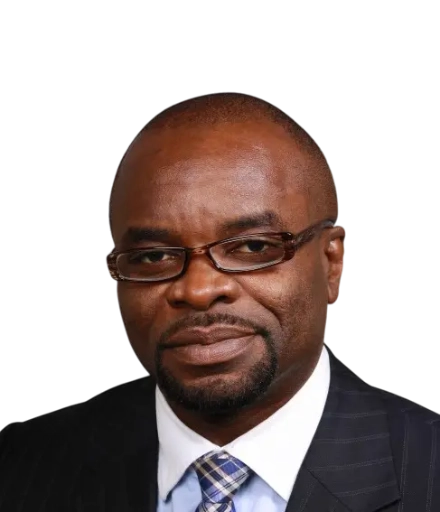
Eddy A.
Last position:
Network Administrator at Knauf Bayern
- Management of firewalls (Securepoint)
- Operation and maintenance of the client-server infrastructure (Windows)
- Operation and patching of IoT devices in the hazard management system (cameras, Web IOS, IP-to-serial converters)
- Support with the integration of security technology into existing IT infrastructures
- Planning and implementation of network segmentation and separation
- Transfer and implementation of solutions in other plants
- Tools used: Wireshark, Network Service Manager, PRTG, Cisco Catalyst, Nexus, HP Service, FNT/Command Manager Console, Service Now, Confluence, Active Directory, Wingard, Securepoint FW.
Rudolf E.

Last position:
Datacenter Engineer, Network & Security Administrator at International insurance group
Operation and further development of the network and security infrastructure.
Monitoring, analysis and resolution of network and security incidents.
Cross-department collaboration with other specialist teams for operations, further development and reporting.
Firewall vulnerability analysis.
Firewall rule approvals.
Troubleshooting IP communication issues in the network and firewall infrastructure.
Security-critical IT infrastructure, processing of personal data, compliance with legal regulations.
Products: Palo Alto Networks Firewalls, Cisco ACI, Checkpoint Firewalls, F5
Technologies: SDN, SDWAN, Cisco EPIC, Cisco ACI
Waseem S.

Last position:
Solution Architect / Subject Matter Expert at FRMCS Device Manufacturer
Participation in the EU-funded MORANE-2 project to validate the Future Railway Mobile Communication System (FRMCS) in real-world use cases: preparation of the requirements specifications for TOBA and the associated test specifications.
Technologies: 5GS (Radio & Core), FRMCS, MCx (MCPTT, MCData, MCVideo), MC Gateway UE, MCx Priority/Security/QoS Management, ETCS, SIP, IMS
Florian K.

Last position:
LAN Planner at Global Network AG
- As-is assessment of the current network infrastructure and its documentation, including on-site inspections
- Independent planning of new distribution and main distribution rooms in the individual district offices (components used, rack layout, connectivity), considering the BSI IT-Grundschutz and InfoSic requirements
- Planning of new copper and fiber optic cabling, including patch panels
- Coordination with building services engineering (TGA) to ensure compliance with relevant on-site requirements
- Development of detailed execution plans and high-level concepts for the rollout of the new infrastructure
- Additional support after the components go live (hypercare phase)
- Regular communication with project management and client stakeholders
Thierry H.

Last position:
Integration Consultant at Performgate
- Supporting the integration of the first acquisitions as part of a buy-and-build strategy
- Optimizing management systems
Tadeusz A.

Last position:
Lead Architect Enterprise Architecture & Security at CGI
Lead Architecture in an interdisciplinary architecture team covering enterprise, solution, NOOTS, cloud and security architecture as well as regulatory and European interoperability requirements.
Public / Government
Development and management of target architectures, principles, standards and technical guardrails; assessment of Security-by-Design, IAM, data protection and interface/integration architectures; architecture reviews, security assessments, risk analyses, and preparation of decision records, target visions, roadmaps and decision papers. Architectural knowledge and consideration of relevant AD-NOOTS requirements, particularly for IAM, authorization, secure integration and interoperability.
Technologies / Methods: Enterprise Architecture, Solution Architecture, Security Architecture, Cloud Architecture, NOOTS / EU-OOTS, IAM, Authorization, Security-by-Design, API/Integration Architecture, Interoperability, Risk Analysis, Architecture Governance
Security and integration requirements as well as technical decisions are structured in reliable architecture and decision artifacts.
Valentin O.

Last position:
Network Architect at IT Service Provider - Public Sector
- Designed a network management strategy focused on NetDevOps principles and model-driven telemetry using YANG data models
- Conducted NETCONF/YANG workshops for L2VPN/L3VPN services over SRv6
- Automated configuration deployment in the testing environment with Ansible
- Developed end-to-end service measurement concepts with IPSLA and the Telegraf-Prometheus-Grafana stack
- Created the dual-stack architecture design (router + switch + firewall) including a detailed test plan; planned, executed, and documented acceptance tests for the management network
- Performed BSI IT baseline protection checks according to the IT-Grundschutz catalog (needs assessment, modeling, risk analysis, deriving measures)
- Protocols: SRv6, IPv6, MPLS, BGP, ISIS, OSPF, NETCONF/YANG, model-driven telemetry, IPSLA
- Systems: Cisco Crosswork Network Controller, SolarWinds Orion, Grafana, InfluxDB, Telegraf, Ansible, Git
- Components: Cisco NCS router series, Cisco Catalyst switch series, Cisco Firepower firewall series
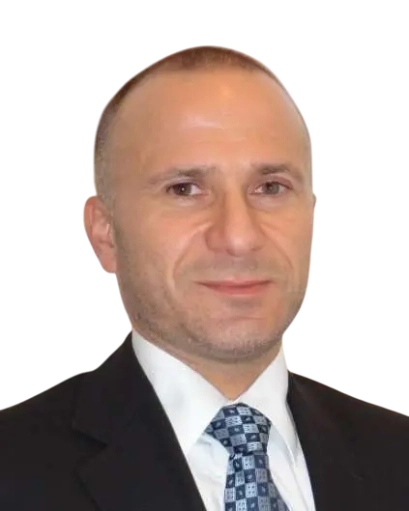
Ivaylo P.
Last position:
Senior Project / Rollout Manager at Deutsche Glasfaser GmbH
- Manage and coordinate site design, deployment, new Core/DWDM implementation, and optimization of a robust and scalable fiber optic network infrastructure
- Create high-level design (HLD) and low-level design (LLD) documents for core and aggregation network
- Define scope of network elements and establish operational and deployment guidelines
- Determine core-site strategy, integrate voice and ISP systems, and swap core components of 60 existing sites
- Develop site design, execute proof of concept, and deploy additional core sites
Mustafa K.

Last position:
Senior Network Design and Engineer at Helaba
Designed and specified the technical network integration of a new business-critical application system (MUREX) in the capital markets area in a complex interface and outsourcing environment.
Created component specifications, a catalog of measures and an implementation plan.
Ensured proper integration of the developed results in line with the bank’s framework: IT compliance, IT security, change and release management.
Selected and integrated a new service provider for the bank; moved critical bank applications to the provider.
Designed, implemented and supported the new Cisco network and Fortinet security setup at the service provider data center.
Acted as technical interface between the bank, service providers and consulting partners.
Supported and further developed the network and security infrastructure (clients, servers, networks); performed error analysis and implemented solutions within agreed service levels.
Analyzed and diagnosed all security and network failures, glitches and malfunctions.
Initiated continuous improvements to ensure efficient resource use and acceptable response times for users.
Provided network support in a financial services organization and prepared operational changes on production banking network infrastructure for both large and small projects within strict change management discipline.
Designed, defined, tested, governed and improved engineering standards.
Performed the role of network architect for medium to large projects involving team resources.
Hisham E.

Last position:
System Engineer Network & Security at Isringhausen GmbH
- Operation, maintenance and administration of the global network & security system landscape
- Troubleshooting and support in 2nd & 3rd levels and provide technical advice to other dept.
- Configuration of complex LAN/WAN/SD-WAN and WLAN network infrastructures (N5K, N9K, ASR 8000, Wireless Controller WLC9800, AP C91xx and VMware Velo Cloud)
- Control of external service providers as part of service and escalation management
- Implementation and monitoring of system updates (software upgrades, minor/major changes)
Minh Duc V.

Last position:
Senior System Engineer Network & Security at F.S. Fehrer GmbH & Co. KG
- Responsible for the configuration, maintenance, monitoring, troubleshooting, and optimization of the IT infrastructure, including Extreme Networks, SD-WAN, and Fortinet security solutions, at all international company locations in Europe and North America
- Development of a comprehensive strategic roadmap to optimize the network architecture, including VLANS, NAC, QoS, firewall configurations, VPNs, DPI, NGFW, threat intelligence, and SSL/TLS inspection
- Implementation of the OneIT strategy through the introduction of new technologies such as Cisco DNA Center, ExtremeCloud IQ, FortiOS, FortiManager, and FortiAnalyzer, which increased employee skills and the efficiency of the IT systems
- Integration of IT and OT systems to optimize the network and security architecture and improve operational efficiency
Jürgen K.

Last position:
Interim Management / Business Succession – Process Analysis & Stakeholder Management
As part of the preparation and operational support of a business succession:
- Company analysis: Analysis of the overall economic, organizational and structural situation (current state, strengths/weaknesses, risk potentials)
- Process analysis: Recording and documentation of all relevant business processes (BPMN, UML) in the areas of management, finance, procurement, sales and operations
- Process optimization: Identification of weaknesses and inefficiencies, development and operational implementation of improvement measures
- Stakeholder management: Identification and analysis of all relevant internal and external stakeholders; structured communication and coordination with previous and future owners, shareholders and employees
- Change management: Supporting the workforce and management through the handover process; building acceptance and trust among all participants
- Governance & documentation: Creation and handover of structured operation manuals, process documentation and organizational handbook for the new business owner
- Risk & vulnerability analysis: Assessment of operational and strategic risks in the handover process and development of recommended actions
- Operational support: Interim takeover of leadership tasks; ensuring business continuity during the transition phase
Waleed B.

Last position:
Network Planer at Enertrag
- Take full technical ownership of the development and planning of electrical grid infrastructure.
- Support the preparation of building permit applications and approval documents; maintain direct communication with grid operators, certification bodies, and other key stakeholders.
- Design and calculate electrical network components, including cable routing, compensation systems, protection and storage systems; conduct power system studies (load flow and short-circuit analysis).
- Independently plan grid connection concepts, substations, transformer stations, and transfer stations across multiple voltage levels.
- Supervise construction projects, oversee commissioning and billing processes, and coordinate all contractors and companies involved in on-site execution.
Esmaeil M.

Last position:
System Test & Integration Engineer (5G Core / Security / Cloud-Native) at Secuvera GmbH
- Independently carried out integration, testing, and acceptance activities on 5G core systems in a containerized test environment; structured test protocols and documentation
- Built a 5G core and RAN integration environment from scratch (Docker Compose) for reproducible test scenarios across multiple vendor configurations
- Performed fault analysis and troubleshooting across the entire protocol stack (SBI, RRC, NAS, NGAP, TLS) to precisely isolate integration issues
- Contributed to the BSI-related NESAS-CCS-GI evaluation project – experience in security-critical, regulated customer projects
Discover over 15,000 top freelancers


Network Engineers statistics
Aggregated from the professional profiles of matched freelancers.

Experience
24 years

Position duration
4.4 years

Positions per freelancer
14

Top business areas
Information Technology, Operations, Project Management

Top industries
Information Technology, Telecommunication, Manufacturing

Certification focus areas
Information Technology, Project Management, Audit

Bachelor's degree or higher
73%

Master's degree or higher
42%

Certifications per freelancer
6

Most common languages
German, English, Arabic

Speak two or more languages
97%
Based on our profile pool as of 16 Oct 2026.
Daily rate distribution
The chart shows how the daily rates of experts in this role in Germany are distributed, based on recent contracts on our platform. Each bar covers a rate range — its height shows the share of experts charging within that range.
Average rates for Network Engineers in Germany
Rates are based on recent contracts and do not include FRATCH margin.

The average daily rate is the mean of all daily rates from recent contracts of comparable freelancers on our platform.
The median daily rate is the middle value of all daily rates — half of comparable freelancers charge less, half charge more. Unlike the average, it is barely affected by outliers.
Calculated based on our freelancers’ daily rates as of 16 Oct 2026. Actual rates may vary depending on seniority level, experience, skill specialization, project complexity, and engagement length.
Network Engineers experts industry focus
See which industries our matched freelancers work in most often — every figure is calculated live from the freelancers on FRATCH.
- Information Technology (83%)
- Telecommunication (63%)
- Manufacturing (49%)
- Automotive (40%)
- Government and Administration (34%)
- Banking and Finance (31%)
- Professional Services (31%)
- Healthcare (29%)
Please note that freelancers can work across multiple industries, so percentages overlap.
About the role
What they do Network engineers design, build, and support the data networks that keep offices, plants, and cloud-connected systems running. They plan routing, switching, segmentation, wireless coverage, and secure remote access. Many companies also bring in a network administrator, network specialist, or LAN/WAN engineer for hands-on operations and cleanup work.
Typical deliverables
- Network design for office, campus, or branch setups
- Firewall, VPN, and access control configuration
- Routing, switching, and VLAN documentation
- Network troubleshooting and incident support
- Migration plans for hardware refreshes or cloud connectivity
- Handover notes and clean network diagrams
Skills and tools A strong Network Engineer understands TCP/IP, subnetting, routing protocols, switching, DNS, DHCP, and security basics. Common tools and platforms include Cisco, Juniper, Aruba, Fortinet, Palo Alto, Meraki, Wireshark, and monitoring tools such as PRTG or similar systems. For more complex environments, they also work with SD-WAN, VLAN design, NAC, load balancing, and segmenting critical traffic.
When to bring one in Companies usually hire freelance network engineers when an internal team is overloaded, a project needs specialist knowledge, or a change has to happen without disruption. Typical cases include office moves, network audits, security hardening, merger integrations, VPN rollouts, or production network issues that need fast diagnosis. In Germany, this is common in manufacturing, logistics, SaaS, and mid-sized industrial firms that need reliable collaboration with local IT teams and clear documentation in English or German.
What good looks like
- They ask the right questions before changing anything
- They document the current state before they touch it
- They work safely in live environments
- They explain trade-offs clearly to IT and business teams
- They leave the network easier to support than before
- They can switch between operations, project work, and incident response
Related titles Searches for this role often use adjacent titles such as network administrator, network specialist, or network architect, but the scope is not always the same. A strong freelancer can cover the overlap when the job involves implementation, troubleshooting, and design rather than only user support. For companies, the key is to define whether you need operational support, a project lead, or deep design work before the assignment starts.

Frequently asked questions
The facts hiring teams ask for most often when it comes to Network Engineers.

A Network Engineer plans, configures, and troubleshoots network infrastructure across offices, branches, and cloud-connected sites. The work often includes routing, switching, VLANs, VPNs, firewall rules, and network documentation. In many projects, the same person also handles testing, rollback planning, and handover to the internal IT team.
Look for solid knowledge of TCP/IP, subnetting, routing, switching, DNS, DHCP, and network security. A good freelancer should also be comfortable with tools such as Cisco, Juniper, Fortinet, Palo Alto, Aruba, or Meraki, depending on your stack. For troubleshooting work, packet analysis and clear incident communication matter just as much as configuration skills.
A Network Engineer usually focuses more on design, change, and problem solving, while a network administrator often concentrates on day-to-day operation and support. In practice, many freelancers cover both areas, especially in smaller teams. The exact scope should be set before the project starts so there is no gap in responsibility.
A freelancer makes sense when you need specialist expertise for a project, faster support for an urgent issue, or extra capacity for a limited period. This is common for migrations, security changes, office moves, or complex troubleshooting where internal staff are busy with operations. It is also useful when you want senior input without adding a permanent role too early.
Many tasks can be done remotely, such as design reviews, firewall changes, monitoring, and documentation. On-site presence is often helpful for cable tracing, hardware swaps, Wi-Fi surveys, rack work, or changes that must be coordinated with local teams. In Germany, mixed setups are common, especially when the network touches production, logistics, or office infrastructure.
Ask what equipment, software, and cloud services are in scope, and whether the work is operational, project-based, or both. Also clarify access, change windows, documentation expectations, and who approves network changes. A network specialist should be able to explain risks and dependencies before making any adjustment.
Strong profiles show practical experience with real network changes, not only theory. Look for examples of migrations, firewall work, incident recovery, WAN or VPN setup, and clean documentation. Good candidates explain how they reduce risk, test changes, and keep services stable during the work.
They overlap, but they are not always identical. A network architect usually focuses more on design and standards, while a LAN/WAN engineer or network engineer may do both design and implementation. For freelance work, the right choice depends on whether you need high-level planning, hands-on configuration, or both.
The average hourly rate for Network Engineers in Germany is 103 €, which corresponds to a daily rate of about 824 € based on an 8-hour working day.
Of the freelancers working as Network Engineers in Germany, 73% hold at least a Bachelor's degree and 42% hold at least a Master's degree.
On average, freelancers working as Network Engineers in Germany have 24 years of professional experience, with a single engagement typically lasting around 4.4 years.
The most common languages among freelancers working as Network Engineers in Germany are German (100%), English (97%), and Arabic (9%).
The most common industries among freelancers working as Network Engineers in Germany are Information Technology (83%), Telecommunication (63%), and Manufacturing (49%).
The most common business areas among freelancers working as Network Engineers in Germany are Information Technology (94%), Operations (86%), and Project Management (77%).
FRATCH Network Engineers main locations
Our freelancers and interim experts are at home across the DACH region — available on-site in the major business hubs or fully remote. Choose a location to discover matched specialists, local market insights and up-to-date availability.
 Berlin Hamburg Munich Cologne Frankfurt Stuttgart Dusseldorf Leipzig Dortmund Essen Bremen Dresden Hanover Nuremberg
 Request a free demo
Get in touch with the FRATCH team and we will get back to you within 4 hours.
Would you rather directly get in touch?
We always have the time for a call or email!

Philipp Thomaschewski
FRATCH CEO

