


ABAP Expert
for reliable SAP solutions, matched in minutes with AI from over 15,000 CVsHire experts who extend SAP business processes, develop ABAP applications, and modernize legacy reports with tools such as SAP S/4HANA, CDS views, and SAP Fiori integration. FRATCH matches you quickly and precisely with vetted, available freelancers.

Meet FRATCH Experts who have recently used ABAP
Petri W.

Last position:
Project Director
SailPoint Identity Security Cloud and SoD for Non-ABAP Applications
International manufacturing company
- Led the implementation of SailPoint Identity Security Cloud.
- Responsible for SoD across Non-ABAP and cloud applications: Active Directory, SAP Ariba, SAP Analytics Cloud, SAP Datasphere and Salesforce.
Products: SailPoint ISC, Active Directory, SAP Ariba, SAP Analytics Cloud, SAP Datasphere, Salesforce
Arefur R.

Last position:
Business Analyst | Generalist Expert at Mercor
- Conduct deep data analysis and business analysis to generate actionable insights.
- Review and validate datasets for accuracy, consistency, completeness, and quality.
- Apply structured analytical reasoning to evaluate business and data-related problems.
- Translate analytical findings into clear insights and recommendations.
Claudius L.
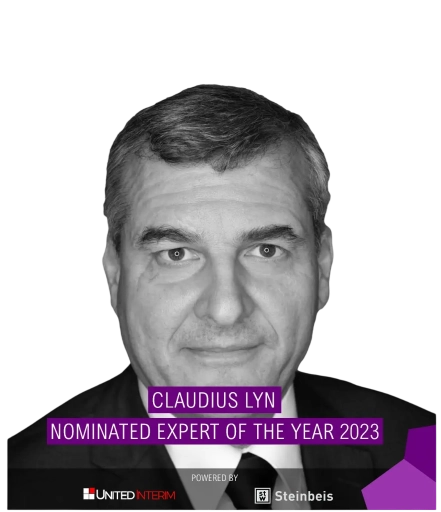
Last position:
Multi-project manager
Industrial sector: Transport
Tasks: Continuation of existing projects, advice on artificial intelligence (AI), implementation of regulatory requirements, management of external service providers
Subprocesses: Order clarification, role clarification, consolidation, effort estimation, activity planning, status reporting, progress tracking, stakeholder discussions, risk analysis
Background: Cloud computing, artificial intelligence (AI), predictive maintenance, compliance, governance, standing orders compliance, KRITIS
Software: Cherwell, Docker, IoT, MS Sharepoint, MS Teams, SQL Server
Melanie A.

Last position:
UX Design Lead for web software projects
Building and developing a global Design System in Figma
Accelerated feature conception by 50% through standardized components and processes, increased UI consistency and reduced onboarding time for new designers
- Creating screen designs in Figma & in...
Rekha M.

Last position:
SAP SD Consultant at WBS Group
- Introduction of a new payment term including its description, as well as a new shipping condition
- Configuration of item category determination (Item Category Determination)
- Implementation of the minimum price calculation (Floor Price) in the pricing procedure
- Setup of the intercompany third-party transaction (direct delivery) and addition of the direct delivery indicator to the invoice
- Prevention of delivery splits (Delivery Split) in sales orders
- Masking of the expiration date and net weight fields
- Transfer of the sales group from the quotation to the sales order
- Analysis and resolution of a pop-up appearing when creating sales orders
- Analysis and resolution of order confirmations that were created and sent with €0.00 per item
Shalabh K.

Last position:
Founder & Principal at SK SAP Advisory
Following the Vaillant engagement, established independent practice focused on senior SAP advisory and building ASTRA — a methodology, not a tool. ASTRA is independent and unbiased: the same four pillars serve CIO / Business Leadership, SI / SAP Practice, and Programme Director / Principal with equal weight. No audience is primary.
ASTRA serves three audiences with equal weight — CIO / Business Leadership · SI / SAP Practice · Programme Director / Principal. ASTRA is independent and unbiased — it does not sit inside any SI practice and does not serve any single audience as primary customer. Each audience receives a role-calibrated output from the same analysis.
One methodology, two outcomes:
OUTCOME 1 — SAP TRANSFORMATION GOVERNANCE:
Any active SAP programme: ECC→S/4HANA Greenfield, Brownfield, Global Rollout, AMS. The four pillars answer the four questions that determine whether a transformation succeeds — for any of the three audiences.
- Are business requirements clean — or is the SI building what SAP standard already covers? (Functional Auditor → all three audiences)
- Is the custom object inventory healthy — or accumulating debt that blocks upgrades? (RICEFW Auditor → Director and CIO)
- Is the SteerCo reporting accurate — or is leadership seeing a Watermelon? (Truth Engine → CIO and Director)
- Are people ready for the system they are receiving? (Human Signal → CIO and Director)
OUTCOME 2 — AUTONOMOUS ENTERPRISE READINESS:
Any programme deploying Joule, pursuing RISE, or planning an AE migration. The same four pillars answer the questions SAP does not — again, calibrated per audience.
- Which custom objects block the 224 Joule AI agents? (RICEFW Auditor → SI gets remediation paths, Director gets verdicts, CIO gets financial impact)
- Is the Fiori deployment complete enough to activate Joule? (Truth Engine → all three audiences)
- Is the workforce trained for AI-native working? (Human Signal → CIO and Director)
Four pillars (each serves all three audiences):
- Functional Auditor: Clean Core Score 0–100. Section A (CIO): KG fidelity risk in €. Section B (Director): SI challenge questions, man-day saving. Section C (SI): Language Translation Ledger, SAP alternatives.
- RICEFW Auditor: Joule API Pathway Audit, Clean Core Level A–D, Technical Debt Index 1–10. Section A: financial impact of blocked AI agents. Section B: RETIRE/MIGRATE/REDESIGN/KEEP verdicts. Section C: BTP remediation paths.
- Truth Engine: Watermelon Detection, Fiori Deployment check, Programme Truth Score 0–100. Section A: 3 SteerCo questions. Section B: 48-hour action list. Section C: vendor friction map.
- Human Signal: three-stage Fiori adoption model, HITL Policy readiness, Human Signal Score 0–100. Section A: GUI training weight, AE adoption financial risk. Section B: go-live recommendation, stakeholder resistance map.
On-Demand SAP Advisory:
- SAP Programme Management — end-to-end governance, factory management, multi-stream delivery, vendor oversight, SteerCo reporting for Greenfield, Brownfield, Rollout and AMS programmes.
- Delivery Management — RICEFW oversight, Data Migration governance, Release & Cutover management, Hypercare, SLA/KPI management.
- Due Diligence & Landscape Assessment — SAP landscape review, AS-IS/TO-BE roadmap, RFP structuring, SI selection advisory.
- IT Strategy & CIO Advisory — transformation roadmap, Clean Core strategy, Autonomous Enterprise readiness planning.
- Programme Recovery — distressed programme assessment, rapid governance setup, escalation resolution.
Operating through senior professional networks across EMEA.
Rainer V.

Last position:
Interim Consultant & Business Coach (Focus: Leadership & Competence Development) at bfz
Using periods between projects to deepen leadership skills and Change Management methods.
Personnel and culture development: Supporting specialists and managers with professional reorientation and providing strategic coaching for successful self-presentation.
Empowerment & Performance Coaching: Conducting systemic personality assessments to identify performance bottlenecks and specifically develop strengths within teams.
Moderation & Training: Managing interdisciplinary workshop and seminar groups in both industrial-technical and commercial environments.
Gergely S.

Last position:
SAP IS-U S/4Hana Customer Engagement (CRM) Consultant & Developer at Energie SaarLorLux
- SAP IS-U transformation project
SAP S4Hana transformation project – focus on Customer Engagement (CE) & MCM
- Customizing tasks & Development tasks
- Master data in Customer Engagement (BP/ Contract Account / Contract / PoD &Supply Scenario)
- Customizing Customer Engagement
- Upil
- BSP / Badi / ABAP OO / ADT / CDS / RAP
Bora D.

Last position:
Software Architect at DZ HYP AG
- Lead architect for an enterprise loan digitisation programme, coordinating 12 engineers across five workstreams and serving as final technical authority on system design.
- Cut critical application response times by 68% (display 17.3s → 5.6s; modification 11.8s → 5.0s) through targeted caching, OData query optimisation and lazy-loading refactoring; further optimisation in progress.
- Own production error triage, prioritisation and resolution across a multi-application portfolio supporting live lending operations.
- Design and implement SAP Fiori applications on SAP UI5, TypeScript and RAP, owning delivery from architecture and code through rollout and production support.
- Established C4 architecture documentation and decision records for the full programme, enabling faster onboarding and consistent cross-workstream design governance.
- Co-managed S/4HANA release cycle alongside primary responsibilities, coordinating directly with SAP support to resolve critical system issues across the portfolio.
Hüseyin B.

Last position:
SAP BW Senior Developer at Deloitte
Interim SAP BW Senior Consultant
Analysis and optimization of the analysis authorization concept
Analysis of the existing SAP BW authorization concept, particularly the mechanisms for assigning analysis authorizations to various organizational units.
Development of an enhanced concept to standardize authorization management.
Prototypical implementation of a solution for multidimensional authorization linking without additional CompositeProviders.
Use of dynamic control via Customer Exits in combination with an authorization ADSO, in which permitted combinations can be centrally maintained.
Application of the Cartesian product concept for precise modeling and authorization of permitted combinations from multiple analysis authorization dimensions, enabling flexible and consistent access control.
The new structure simplifies the management of complex authorizations, reduces redundancies, and makes extensions easier.
It was initially implemented as a prototype to create a well-founded basis for decisions regarding further strategic direction.
After successful validation and positive evaluation by the project team, the solution was further developed productively as part of a User Story and rolled out across the entire SAP BW system.
Virtual key figures & OLAP calculations
Capital Lock Up Ratio (CLR%)
Development and implementation of complex virtual key figures using BAdI RSROA_OLAP_BADI, including:
Net Service Revenue – 3 Month: Dynamic calculation of three-month totals across all periods of the selected year.
Capital Lock Up Ratio %: Key figure for measuring capital tied up, calculated as the ratio of NSR to the cumulative NSR three-month total from P1 to the current drilldown period; used to analyze how much capital is tied up in the company before it is converted into revenue – essential for liquidity management.
Implementation of a mechanism for simultaneously passing two FISCPER intervals:
One interval for displaying the period.
One interval for restricting the data.
Objective: Implementation of a moving average based on a dynamic drilldown period to determine capital tied up accurately for each period.
Account hierarchy-based key figure management
Development of dynamic key figure assignment based on account hierarchy nodes as an enhancement of the existing key figure management solution.
Implementation of BAdI RSROA_OLAP_BADI combined with an easy-to-maintain Customizing table in which the rules for key figure assignment can be defined flexibly.
Runtime-based mapping of approx. 135 key figures according to the individually maintained rules, without manual system changes.
Replacement of an earlier AMDP-based SQL logic in which every change to a node or key figure required a code adjustment, clearing the ADSO, and a time-consuming reload (approx. 2 hours).
The new solution enables ad hoc adjustments via SM30 maintenance – without a new transport, without data reloading, and with significantly reduced system load.
Significant reduction in maintenance and development effort.
Avoidance of long loading times and complex AMDP adjustments.
Increased flexibility in managing key figure assignments, effective immediately without system changes.
Improved performance and flexibility when analyzing reports.
Significant reduction in maintenance effort through dynamic control and modularization.
Contribution to the strategic development of the reporting and authorization system in the SAP BW environment.
Development of a generic ABAP framework for integrating SAP Analytics Cloud (SAC) Export APIs into SAP BW/4HANA
Design and implementation of a reusable handler and service class architecture for the automated transfer of data from SAC into BW ADSO structures.
Automated push reporting with dynamic query integration (SAP BW/4HANA)
Design and implementation of an ABAP-based push reporting framework for automatic email notifications based on BW query results.
Development of a central ABAP class for generating the HTML email body, including embedded MIME images (KPI screenshot, logo, etc.) and dynamic recipient management.
Remote hierarchy & access concept for user-specific WBS structures (Deloitte, 2025/2026)
Design and implementation of a virtual SAP BW/4HANA hierarchy for user-specific control of WBS elements in complex engagement structures. The objective was to eliminate redundant leaf nodes and ensure that each user sees only their own area of responsibility – both in the F4 value help and within analytical queries.
For this purpose, I developed a fully dynamic hierarchy generator based on an ADSO that determines the relevant subtrees at runtime and makes them available to the system without physical hierarchy loading. The solution eliminated duplicate structure paths, drastically reduced the data volume per user, and enabled secure, high-performance navigation without visibility of other users’ project data.
I also analyzed system-side limitations of the SAP standard F4 hierarchy resolution and, based on this, developed an alternative input and proposal concept for users with global views (“ALL”), fulfilling both security and performance requirements.
Technological focus: BW/4HANA, virtual/remote hierarchies, ADSO design, ABAP-based runtime generation, complex F4 logic, access concepts, performance optimization of large hierarchy structures.
Markus K.

Last position:
SAP Senior Logistics Consultant at ABS GmbH
Support for various SAP customers in the SD, MM, PP, and WM areas, including consulting and development
- Development of dunning and order forms
- Adobe Forms, Sapcript
- LE-TRA consulting
Industry: Software consulting
Gökan K.

Last position:
DATA ANALYST & DATA ARCHITECT at Labor Becker Medizinisches Versorgungszentrum
- Creation and optimization of data-based reports and dashboards in Microsoft Power BI
- Controlling of sales activities
- Contribution to the general Data Governance project topic
- Use of SQL data queries for decision-making on data-related issues
- Administration of Power BI users and permissions
Pascal G.

Last position:
SAP BW/4HANA Developer at Deutschen Bahn AG
Migration of data models to SAP BW/4HANA and development
- Coordination of the migration from BW 7.5 to BW/4HANA
- Coordination of optimization measures
- Coordination of the implementation of work packages
- Requirements analysis with stakeholders
Technologies used: SAP BW/4HANA, ABAP ADT, BW Modeling Tools, ABAP, SAP FI/CO, SAP SD
Paul O.

Last position:
Freelance AI & SAP Consultant at AI & SAP Consulting Paul Oesterwitz
Source-to-pay AI initiative at an automotive supplier, advanced RAG and agentic AI workflows
Songül D.

Last position:
Freelance SAP BW Consultant at DKV Mobility Services
- Designed and implemented enhancements in SAP BW on HANA 7.5 in the context of CRM migration and S/4HANA and BW/4HANA transformation programs
- Migrated SAPI data sources to the ODP framework as part of the S/4HANA migration
- Delivered SAP ECC data to Snowflake using BW data models and Calculation Views for Power BI analytics
- Integrated SAP and non-SAP data sources (including MS Dynamics)
- Improved reporting transparency through consolidated data models
- Optimized data loading processes for FI-CO data sources, significantly improving load times and system performance
Discover over 15,000 top freelancers


Statistics of experts using ABAP
Aggregated from the professional profiles of matched freelancers.

Experience
22 years

Position duration
3.1 years

Positions per freelancer
17

Top business areas
Information Technology, Project Management, Quality Assurance

Top industries
Information Technology, Professional Services, Manufacturing

Certification focus areas
Information Technology, Project Management, Product Development

Bachelor's degree or higher
90%

Master's degree or higher
56%

Doctorate
8%

Certifications per freelancer
3

Most common languages
German, English, French

Speak two or more languages
96%
Based on our profile pool as of 25 Nov 2026.
Daily rate distribution
The chart shows how the daily rates of experts in this technology are distributed, based on recent contracts on our platform. Each bar covers a rate range — its height shows the share of experts charging within that range.
Average rates of experts using ABAP
Rates are based on recent contracts and do not include FRATCH margin.

The average daily rate is the mean of all daily rates from recent contracts of comparable freelancers on our platform.
The median daily rate is the middle value of all daily rates — half of comparable freelancers charge less, half charge more. Unlike the average, it is barely affected by outliers.
Calculated based on our freelancers’ daily rates as of 25 Nov 2026. Actual rates may vary depending on seniority level, experience, skill specialization, project complexity, and engagement length.
ABAP experts industry focus
See which industries our matched freelancers work in most often — every figure is calculated live from the freelancers on FRATCH.
- Information Technology (89%)
- Professional Services (67%)
- Manufacturing (65%)
- Automotive (52%)
- Retail (41%)
- Banking and Finance (39%)
- Healthcare (36%)
- Transportation (33%)
Please note that freelancers can work across multiple industries, so percentages overlap.
About the technology
What ABAP Covers
ABAP, short for Advanced Business Application Programming, is SAP’s programming language for building and extending business applications. It runs inside SAP environments and supports transactional logic, reporting, interfaces, forms, and data processing. The language is closely tied to SAP ERP and SAP S/4HANA systems.
Where It Is Used
ABAP supports core processes where accuracy, auditability, and integration matter. Companies use it to adapt standard SAP functions, automate repetitive work, and expose business data to other applications.
- Finance, controlling, procurement, and sales processes
- Custom reports, forms, and workflow logic
- Interfaces with external systems and data sources
- Extensions for SAP S/4HANA and industry solutions
Ecosystem And Tools
Strong ABAP specialists work across both classic and modern SAP environments. Their toolkit may include ABAP Objects, the ABAP Development Tools plug-in for Eclipse, SAP GUI, CDS views, and RAP for service-based application development. They also understand SAP Fiori and OData when backend logic must support modern user experiences.
Performance analysis, transports, debugging, and authorization-aware development are part of reliable delivery. Knowledge of SAP HANA helps professionals choose efficient data access patterns and avoid unnecessary processing in application code.
When Freelance Expertise Helps
Companies often bring in freelance ABAP expertise during SAP transformations, system upgrades, or periods of high delivery demand. External specialists can handle a defined workstream without disrupting internal operations.
- Replacing or refactoring legacy custom code
- Preparing ABAP customizations for S/4HANA migration
- Delivering reports, interfaces, forms, and enhancements
- Investigating production defects and performance issues
What Strong Professionals Deliver
A capable ABAP professional starts with the business process, not just the requested code change. They clarify requirements, assess standard SAP functionality, and create maintainable extensions that respect the system’s data model and release strategy. Their work includes clear technical documentation and structured testing.
They distinguish a safe extension from a modification of SAP standard code. They also consider transport management, authorization objects, error handling, logging, and operational support before handing over a solution.
Choosing The Right Specialist
Look for evidence of work in the SAP modules and release landscape relevant to your project. Ask how the specialist approaches custom code analysis, CDS design, integration errors, testing, and performance tuning. Practical knowledge of ABAP Objects is important, while experience with S/4HANA, RAP, or SAP Fiori may be essential for modern initiatives.
Remote collaboration works well when access, transport procedures, documentation, and review routines are defined early. On-site work can help during workshops, cutovers, or sensitive production changes, while clear communication remains important in either setup.

Frequently asked questions
Not sure where to start with ABAP? These answers cover the essentials.

ABAP is used to implement business logic, reports, interfaces, forms, workflows, and extensions inside SAP systems. Companies rely on it to adapt standard processes while keeping financial, operational, and compliance data consistent.
ABAP is purpose-built for SAP business applications and has direct access to SAP data models, transactions, authorizations, and transport processes. General-purpose languages can be better for independent services or external applications, but they usually need additional integration work to reach the same SAP context.
An ABAP specialist may also need SAP S/4HANA, CDS views, OData, RAP, SAP Fiori, SQL, integration patterns, and SAP authorization concepts. The right combination depends on whether the project focuses on backend extensions, migration, reporting, or connected applications.
The required depth of ABAP expertise depends on system complexity, business risk, and the delivery stage. A straightforward report may need focused knowledge, while a migration, performance investigation, or production-critical interface calls for a specialist who has handled comparable SAP landscapes.
ABAP work can often be performed remotely when the specialist has secure system access, clear transport procedures, test data, and reliable communication with business stakeholders. On-site collaboration can still be useful for workshops, cutovers, or changes that require close coordination with operations teams.
Review how an ABAP specialist handles requirements, standard-versus-custom decisions, performance, authorization, testing, and documentation. Ask for examples of maintainable code, controlled transports, meaningful error handling, and solutions that fit the target SAP release.
ABAP remains important in SAP S/4HANA, especially for clean extensions, CDS-based data access, and RAP services. Modern projects usually expect specialists to understand newer patterns rather than relying only on older procedural code and heavily modified SAP standard objects.
Before starting an ABAP project, clarify the SAP release, modules, development environment, access rules, transport path, testing responsibilities, and definition of done. Freelancers should also confirm whether the work involves legacy maintenance, S/4HANA conversion, integration, or new service development.
The average hourly rate of freelancers who have used ABAP in their recent projects is 107 €, which corresponds to a daily rate of about 855 € based on an 8-hour working day.
Of the freelancers who have used ABAP in their recent projects, 90% hold at least a Bachelor's degree, 56% hold at least a Master's degree, and 8% hold a doctorate.
On average, freelancers who have used ABAP in their recent projects have 22 years of professional experience, with a single engagement typically lasting around 3.1 years.
The most common languages among freelancers who have used ABAP in their recent projects are German (99%), English (94%), and French (21%).
The most common industries among freelancers who have used ABAP in their recent projects are Information Technology (89%), Professional Services (67%), and Manufacturing (65%).
The most common business areas among freelancers who have used ABAP in their recent projects are Information Technology (98%), Project Management (73%), and Quality Assurance (60%).
Main locations of FRATCH Experts, who have recently used ABAP
Our freelancers and interim experts are at home all over Germany — available on-site in Berlin, Hamburg, Munich and every major business hub, or fully remote. Choose a city to discover matched specialists, local market insights and up-to-date availability.
 Berlin
 Hamburg
 Munich
 Frankfurt
 Dusseldorf
 Berlin Hamburg Munich Cologne Frankfurt Stuttgart Dusseldorf Leipzig Dortmund Essen Bremen Dresden Hanover Nuremberg
 Vienna
Across Switzerland our specialists are active in Zurich, Geneva, Basel and Bern — working on-site or fully remote. Choose a city to discover matched specialists, local market insights and up-to-date availability.
Zurich Geneva Basel Bern Countries:
Request a free demo
Get in touch with the FRATCH team and we will get back to you within 4 hours.
Would you rather directly get in touch?
We always have the time for a call or email!

Philipp Thomaschewski
FRATCH CEO

