


Linux Experts in Switzerland
matched in minutes with AI and ready to strengthen your infrastructureHire experts who manage Linux servers, automate cloud operations and secure production environments with tools such as Kubernetes, Docker, Ansible and systemd. FRATCH connects you with vetted, available freelancers through fast, precise AI matching.

Meet FRATCH Experts in Switzerland, who have recently used Linux
Mike B.

Last position:
Freelance UX-Researcher, Designer at Bodensee Schiffsbetriebe; Labhard-Medien
- UX research, UX concept development, and UX design for an AI dialogue system with information on events, locations, public transport timetables, and special trips. Observations, remote user tests, session recordings, analytics evaluations, RapidUserTests, prototyping, etc., using Figma/Figma Make, Claude Design, and OpenAI Codex (Design)
Patrick B.

Last position:
Senior Software Engineer at On AG
- Since August 2025 I'm working on the Conversational AI team. We are developing an internal platform for the future of Conversational Ecommerce, powering other teams to use the Agents in their user experience. I'm deeply focused on the architecture of this project, with a particular focus on the monitoring and live evaluation of the agents.
- Played a pivotal role in business-critical operations, including Adyen client upgrades, multi-account configuration for app releases, domain migration support, and implementing a crucial BFCM hotfix to resolve a 10-minute update query (on the checkout workflow) that was blocking sales.
- Served as a key member of the On-Call rotation for over a year, leading >15 incidents, contributing to system stability, and enhancing distributed tracing via New Relic integration, deepening system-wide understanding and operational excellence.
- Conceived and delivered an MVP for a "Low Stock in Key Variants" (LSKV) index within two weeks as part of the Conversion Rate Taskforce, using statistical analysis of size curves to identify OOS products; this initiative led to a (0.9%) CVR improvement post-handover.
- Led major performance and stability initiatives, including a Ruby upgrade (YJIT, Jmalloc) that slashed average response times from 220ms to <100ms, and initiated an "Order Table Cleanup" project to manage 10M+ order records, ensuring SOX compliance and database health.
- Architected and delivered a scalable CloudFlare Worker solution for critical Apple Pay domain validation, mitigating operational risks and establishing a best-practice, automated workflow that was subsequently leveraged by multiple teams, demonstrating cross-functional impact
- Drove substantial evolution of the core e-commerce backend through consistent, high-impact contributions (130+ merged PRs), spanning critical feature delivery, complex system optimizations, and enhancing platform stability."
Michael N.

Last position:
Hardware Development Engineer at Thales
- Architected and implemented a bidirectional USB-C 3.0 Power Delivery (PD/DRP) system for 24V battery charging, successfully minimizing software integration risks through targeted feasibility studies.
- Integrated CAN, USB 3.0, Gigabit-Ethernet, and Audio-Codec interfaces in Altium Designer, successfully delivering the complete system schematic ready for board redesign.
ACHIEVEMENTS:
- Rescued a failing (military) legacy project by reverse engineering undocumented hardware, successfully resolving critical design flaws and consolidating the Altium project.
Urs S.

Last position:
CargoMonitor App at MSR Electronics GmbH
MVP app for shock logger to monitor and analyze transport data via BLE as a Kotlin Multiplatform solution for Android and iOS.
Christoph P.

Last position:
ICT DevSecOps Engineer & Security Coordinator at Abraxas Informatik AG
- Interface role with the SOC team; improved incident response time by 45% through structured escalation processes and proactive security monitoring.
- Defined technical standards for a multi-tenant enterprise platform (10+ services), resulting in a 30% shorter onboarding time for new clients in the public sector.
- Active knowledge transfer and mentoring of a 6-person team; increased team autonomy and established a sustainable engineering culture.
- Reduced time to market by 50% by optimizing CI/CD pipelines and establishing self-service deployments.
- Stack: GitLab CI/CD, Kubernetes, Nexus, Harbor, ArgoCD, HashiCorp Vault, Grafana, Python, PostgreSQL, Java, Spring Boot, Flyway, Quarkus, JBoss, Loki, Go, Kafka, Kustomize, MongoDB
Pedro C.

Last position:
Senior Project Manager (previously Cloud Project Manager) at IBM Client Innovation Center (formerly Nordcloud)
- Led a migration team of several squads for a Public Sector client (on-prem to AWS & Azure), incl. lift-and-shift and database modernisation to PostgreSQL.
- Led AWS/Azure discovery & assessment of 80+ applications and 400+ environments, delivering the wave plan.
Detlef W.

Last position:
Sourcing Manager at BEDAG Informatik AG
- Solely responsible for managing procurement operations
- WTO tenders in an open procedure
- Invitation process
- Direct call-offs and mini-tenders from framework contracts
- Simap.ch, SuisseOffer.ch, Confluence, Jira, Microsoft 365 applications
Bojan A.
Last position:
Full Stack Developer with Angular at Further Education
- Highest level achieved: Certified Mid-Level Angular Developer
- 13 technologies newly learned or refreshed with (re-)certifications
- Current: Docker, Azure, Quarkus
Robin O.

Last position:
Co-Founder & AI Solutions Architect at airdys
- Product strategy, architecture, and technical co-direction
- AI workshops, client onboarding and go-to-market activities
- Design and implementation of AI architectures (LLMs, RAG, MCP, agents, voice, automation)
- Hands-on development of prototypes and production-ready AI integrations
- Consulting clients on AI adoption, workflows, and integration into existing infrastructure
- Collaboration with co-founders on strategic direction
- Collaboration in sales and customer acquisition
Tools and Technologies: OpenAI, Anthropic, Azure, Vercel AI SDK, RAG (Retrieval-Augmented Generation), MCP (Model Context Protocol), FastAgent, VAPI, n8n, make.com, LibreChat, PostgreSQL, OpenAPI, Next.js, Vercel, Docker
Gwang Jin K.

Last position:
Data Scientist / Applied AI, Automation & Data Systems Researcher at Independent
- Built and explored applied GenAI, RAG, GraphRAG, local LLM, agentic AI and document-intelligence prototypes for structured analysis, evidence extraction, semantic search, technical reasoning and decision-useful reporting
- Developed private local-LLM workflows and AI system patterns focused on privacy, reproducibility, reviewability, low-cost inference and practical user control
- Built reproducible Python/R workflows for data analysis, automation, API-driven tooling, validation logic, technical documentation and AI-assisted software development
- Designed workflows around explicit assumptions, traceable inputs, reviewable outputs and failure-mode awareness rather than black-box “looks good” demonstrations
- Supported RAHN AG in a chemical/regulatory environment with data extraction and processing around WERCS, a regulatory application for chemical product and compliance data
- Explored complex application/database schemas and wrote nested SQL queries to extract information for mixture calculations, component relationships, regulatory rules and reporting logic
- Continued hands-on development in Git/GitHub/GitLab/Bitbucket, Docker/Linux deployment patterns, REST/API workflows, error handling, technical writing and fast AI-assisted prototyping
- Built technical writing and documentation workflows that turn complex systems into clear runbooks, checklists, decision notes and user-facing explanations
Georgios S.

Last position:
Senior Software Engineer at UBS Bank
- Implementations of a code refactoring framework able to refactor thousands of repositories leveraging Generative AI
- Use Python (Django, Flask, FastAPI), Java and Typescript in Azure Cloud (Data Lake, VMs, AI) and GitLab infrastructure
- Mentoring and pair programming
- Obtained Azure AI-900 and AI-102 certifications
Markus S.

Last position:
Domain Architect Core Party Data at ING DiBa AG
Technologies: Confluence, PlantUML, BPMN
- As part of the modernization of ING DiBa, the master data management system is also being renewed. As the Domain Architect for this topic, I had to find a way to combine global solution approaches from the headquarters in Amsterdam with local requirements from the German branch in Frankfurt.
Ralf R.

Last position:
Security Architect at Federal Employment Agency
Responsibility for the design, migration, and integration of a security- and audit-critical HashiCorp Vault platform in the trust center of a nationwide authority with system-critical importance.
Analysis and realignment of the existing HashiCorp Vault landscape, including production and planned use cases
Design, proof-of-concept, migration, and integration of HashiCorp Vault Enterprise, taking into account the authority's PKI and operational processes
Design and implementation of an automated certificate and secrets management system for 300 Kubernetes clusters and several thousand certificates in the trust center
Securing the Vault platform using hardware security modules (HSM)
The solution enables a highly available, audit-compliant, and automated operation of certificate and secrets use cases in a highly regulated environment.
Technologies used: HashiCorp Vault Enterprise, Terraform, Ansible, OpenSSL, PKI, HSM
Venkata R.
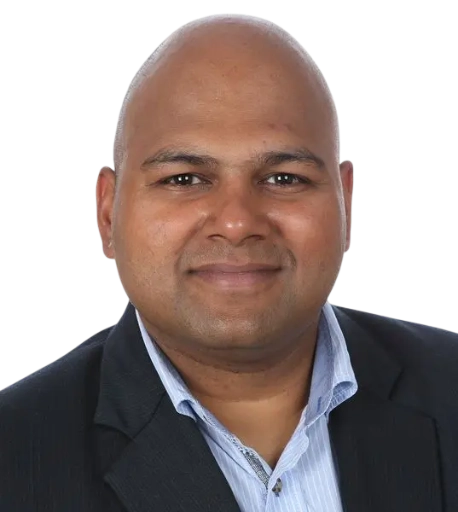
Last position:
Continuous Learning at Personal Time Off
- ZHAW CAS Secure Software Design and Development
- German C1 and Goethe Certificate C1
- ETH CAS Cloud and Mobile Computing at ETH Zurich
- Linux Foundation Linux System Administration LFS307
- Linux Foundation Kubernetes Fundamentals LFS258
- Linux Foundation Kubernetes for Application Developers LFD459
- Linux Foundation Kubernetes Security Fundamentals LFS460
Hanspeter J.

Last position:
Lead Salesforce Consultant DACH at DXC Technology
- Recording, validating, and coordinating customer requirements
- Analyzing customers' business processes, and designing and implementing solutions in Salesforce
- Designing and developing Salesforce architectures using Sales and Service Cloud
- Maintaining and expanding my skills to stay current with Salesforce's new features
- Taking an active role in the pre-sales phase and working closely with sales and pre-sales teams
- Building and strengthening the team's expertise in new areas
- Actively helping to define and align my role within DXC's best practices
- MC Growth implementation
- AI Agentforce Agents Builder
- Agent Designer with elements.cloud
- Salesforce org assessments
- Process configuration mining
- Serving as a single point of contact for global SFDC contacts
- Coordinating projects with the EMEA and global headquarters
- Preparing proposals and presales work with Salesforce Account Executives and client partners for global accounts
Discover over 15,000 top freelancers


Statistics of experts using Linux
Aggregated from the professional profiles of matched freelancers.

Experience
26 years

Position duration
3 years

Positions per freelancer
16

Top business areas
Information Technology, Product Development, Project Management

Top industries
Information Technology, Banking and Finance, Manufacturing

Certification focus areas
Information Technology, Product Development, Project Management

Bachelor's degree or higher
85%

Master's degree or higher
48%

Doctorate
11%

Certifications per freelancer
5

Most common languages
German, English, French

Speak two or more languages
97%
Based on our profile pool as of 9 Oct 2026.
Daily rate distribution
The chart shows how the daily rates of experts in this technology in Switzerland are distributed, based on recent contracts on our platform. Each bar covers a rate range — its height shows the share of experts charging within that range.
Discover detailed Linux rate benchmarks:
Explore rate insightsAverage rates of experts in Switzerland using Linux
Rates are based on recent contracts and do not include FRATCH margin.

The average daily rate is the mean of all daily rates from recent contracts of comparable freelancers on our platform.
The median daily rate is the middle value of all daily rates — half of comparable freelancers charge less, half charge more. Unlike the average, it is barely affected by outliers.
Calculated based on our freelancers’ daily rates as of 9 Oct 2026. Actual rates may vary depending on seniority level, experience, skill specialization, project complexity, and engagement length.
Linux experts industry focus
See which industries our matched freelancers work in most often — every figure is calculated live from the freelancers on FRATCH.
- Information Technology (93%)
- Banking and Finance (66%)
- Manufacturing (52%)
- Government and Administration (50%)
- Professional Services (48%)
- Telecommunication (43%)
- Insurance (38%)
- Healthcare (34%)
Please note that freelancers can work across multiple industries, so percentages overlap.
About the technology
Linux foundations
Linux is an open-source operating system used to run servers, cloud services, containers, network appliances and embedded systems. The Linux kernel supports a broad family of distributions, including Ubuntu, Debian, Red Hat Enterprise Linux, SUSE Linux Enterprise and Alpine Linux. The right distribution depends on security, support, hardware and workload requirements.
Systems and workloads
Linux specialists build and operate the foundation for web applications, databases, APIs, data platforms and internal business services. They configure storage, networking, identity, backups and observability, then keep environments reliable through patching, hardening and incident response. Linux is common in Swiss financial services, manufacturing, research, healthcare and technology operations.
Tools and automation
The ecosystem reaches from shell scripting and systemd to Ansible, Terraform, Docker and Kubernetes. Strong specialists connect operating-system work with Git, CI/CD pipelines, configuration management and cloud services. They also work with Nginx, Apache, PostgreSQL, Prometheus and central logging when a complete service environment is required.
- Provision and harden Linux hosts
- Automate deployments and configuration
- Operate containers and Kubernetes clusters
- Monitor performance, logs and availability
When expertise matters
Companies bring in freelance Linux expertise during migrations, cloud adoption, data-centre changes and reliability initiatives. It is also valuable when an internal team needs support with a security review, a difficult outage, a distribution upgrade or the removal of manual operational work. Remote collaboration works well for many tasks, while on-site access can help with physical infrastructure and regulated environments in Switzerland.
Skills to look for
A capable professional understands processes, permissions, networking, DNS, TLS, storage and resource management instead of treating Linux as a collection of commands. They can explain trade-offs between distributions and design choices, document changes and automate repeatable work. Experience with security controls, backup recovery and production troubleshooting is especially important.
- Clear shell and scripting practices
- Practical incident and root-cause analysis
- Secure access and patch management
- Reliable documentation and handover
Choosing a specialist
Assess candidates through the systems they have operated, not only through distribution names on a profile. Ask how they would secure remote access, recover a failed service, introduce changes safely and measure system health. For Swiss teams, clarify language, working hours, data-handling expectations and whether collaboration must be remote, on-site or mixed.

Frequently asked questions
Key details about Linux, drawn from the questions we get asked most.

Linux is used to run web servers, databases, cloud workloads, containers, network services and embedded devices. Companies also use it for development environments, automation, high-performance computing and secure internal systems.
Linux offers open-source flexibility, broad automation options and a large range of distributions. Windows Server can be a stronger fit for Microsoft-centric identity and application environments, while commercial Unix systems often remain tied to specific enterprise hardware or legacy workloads.
A strong Linux specialist often works with networking, shell scripting, cloud infrastructure, Docker, Kubernetes, Ansible, Terraform and CI/CD. Security, monitoring, databases and version control are also useful when the work covers a complete production service.
The right level depends on the risk and scope of the work. A straightforward server configuration may need focused operational experience, while migrations, security hardening and high-availability systems call for someone who has handled comparable production environments.
Linux operations are often well suited to remote collaboration through secure access, documentation and shared monitoring. On-site work may still matter for physical servers, restricted networks or teams that need close coordination, so clarify access rules and language expectations early.
A Linux freelancer should provide an inventory, target design, migration plan, tested automation and a rollback path. The handover should include configuration records, access procedures, monitoring coverage and clear ownership for ongoing operations.
Ask for specific examples of systems the professional operated and how they approached outages, patching, backups and access control. A strong Linux specialist explains decisions clearly, tests changes, documents the environment and distinguishes temporary fixes from durable solutions.
No. Linux distributions share the kernel but differ in package management, support models, defaults and release practices. Familiarity with Ubuntu, Debian, Red Hat Enterprise Linux, SUSE Linux Enterprise or Alpine Linux is useful, but sound systems knowledge transfers across distributions.
The average hourly rate of freelancers in Switzerland who have used Linux in their recent projects is 116 €, which corresponds to a daily rate of about 925 € based on an 8-hour working day.
Of the freelancers in Switzerland who have used Linux in their recent projects, 85% hold at least a Bachelor's degree, 48% hold at least a Master's degree, and 11% hold a doctorate.
On average, freelancers in Switzerland who have used Linux in their recent projects have 26 years of professional experience, with a single engagement typically lasting around 3 years.
The most common languages among freelancers in Switzerland who have used Linux in their recent projects are German (97%), English (97%), and French (43%).
The most common industries among freelancers in Switzerland who have used Linux in their recent projects are Information Technology (93%), Banking and Finance (66%), and Manufacturing (52%).
The most common business areas among freelancers in Switzerland who have used Linux in their recent projects are Information Technology (98%), Product Development (84%), and Project Management (69%).
Main locations of FRATCH Experts, who have recently used Linux
Our freelancers and interim experts are at home across the DACH region — available on-site in the major business hubs or fully remote. Choose a location to discover matched specialists, local market insights and up-to-date availability.

 Zurich
  Basel
Basel Request a free demo
Get in touch with the FRATCH team and we will get back to you within 4 hours.
Would you rather directly get in touch?
We always have the time for a call or email!

Philipp Thomaschewski
FRATCH CEO

