


Internet of Things Experts in Hamburg
matched in minutes from over 15,000 CVsHire experts who connect sensors, devices and cloud services, design reliable IoT architectures, and deliver industrial monitoring or smart building solutions. FRATCH precisely matches you with vetted, available freelancers quickly.

Meet FRATCH Experts in Hamburg, who have recently used Internet of Things
Yashar S.
Last position:
Compliance Consultant at RAS Reinhardt Maschinenbau GmbH
- Designed and moderated a NIS2 preparation workshop for RAS Reinhardt Maschinenbau GmbH and its IT service provider Catuno GmbH. Together with executive management and IT leadership, the current status was assessed, an initial GAP analysis was conducted and areas for action were prioritized based on ISO 27001.
- Developed an ISO-27001-based regulatory framework (ISMS) for NIS2 compliance, including a structured current/target GAP analysis, targeted improvement of the security maturity level and preparation of the organization for NIS2 audit readiness.
Martin W.

Last position:
Smart Manufacturing & Production Improvement Implementation at Food & Process Manufacturing
- Identified operational improvement opportunities together with production, engineering and management teams.
- Prioritized use cases according to measurable operational value rather than technology availability.
- Developed solutions around production performance, OEE, quality, traceability, reporting and process transparency.
- Translated operational requirements into required machine data, interfaces, information models and application requirements.
- Defined target architectures and integration approaches for heterogeneous brownfield production environments.
- Moved prioritized use cases from workshop and concept stages into concrete implementation projects.
- Coordinated manufacturing, OT, IT and technology stakeholders during implementation.
- Established reusable approaches to scale successful solutions beyond individual machines or pilot areas.
Niko S.
Last position:
Developing Architect, Technical Lead "gridlytics" at HH Energienetze
- Building a data integration platform for high, medium, and low voltage assets for contextual analysis of time series with master data from the SCADA control system (IEC 60870 104), INIS, and SAP.
- Responsibility for the architecture and implementation of the solution, as well as sparring partner for the Product Owner.
- Use of Kotlin, Spring Boot, Maven, TimescaleDB, PostgreSQL, liquibase, Elements IoT, Docker, Kubernetes, Grafana, Python, jupyter, and various API gateways.
Olcay C.

Last position:
OWI specialist process modernization at Junikom
Public sector, regulated environment with legal deadlines and interfaces to justice, finance offices, and authorities. Took over a software product, condition unknown. The handover reported 89 percent completion.
Description / Results:
Review of the current state showed only two months of remaining runtime until year-end. Stabilized the product base in four weeks, including setup. Process logic proven instead of estimated: 181 workflows with 28 steps each verified against the legacy system.
Dominik P.
Last position:
Head of IT at Aarsleff Spezialtiefbau GmbH
- Disciplinary and professional leadership of the IT and service team
- Definition and documentation of the Current Mode of Operation (CMO) in Confluence: application landscape, infrastructure, networks, backup & storage
- Development of the Future Mode of Operation (FMO) including process analysis & stakeholder interviews with all departments using BPMN and flowcharts
- Optimization of license management: reduction of ongoing software costs by approx. 17% p.a.
- Introduction and establishment of Jira as the central tool for project and service management
- Introduction and rollout of the HR software MindKey to digitize HR processes
- Introduction of a VoIP solution with Microsoft Teams incl. PSTN connection to replace classic telephony
- Introduction of the production and planning software OptiControl to digitize operational processes
- Rollout of Intune as a Mobile Device Management solution for Windows, iOS and Android
- Build-up of Power BI dashboards for machine park monitoring and financial reporting
- Planning and execution of the IT consolidation of two locations for 170 users
- Introduction of automated penetration testing with Pentera
- Coaching and mentoring the team in agile methods & project management
- Operational support in day-to-day business: administration, incident & change management
- Management of external service providers and assurance of the quality of outsourced IT services
- Responsibility for the IT budget incl. planning and controlling
- Direct reporting line to management with regular management reports on IT KPIs, budget and project status
Thomas W.
Last position:
Chief Product Officer at OWNLY FinTech GmbH
Freelance work for a large German family office
Built and further developed a modular B2B SaaS platform for professional wealth management and family offices, alongside freelance delivery of production-ready AI, data management, and automation solutions for the wealth management sector.
- Developed an AI governance framework for regulated finance and asset management workflows, aligned with DORA, BaFin-related governance expectations, and data protection requirements, including role definitions, access levels, and decision rules.
- Designed an agentic system with a locally operated open-source language model, including Qwen2.5 via Ollama, for secure querying of an asset database through text-to-SQL-to-text workflows.
- Built AI-supported analysis and reporting capabilities that generate structured answers, tables, and charts from asset data, with domain validation through resolver logic and RAG elements.
- Developed production-grade data import workflows for financial service provider data from CSV, PDF, and API sources, including validation, plausibility checks, and reconciliation with existing asset data.
- Solved the asset matching problem without a cross-system primary key through multi-stage validation rules and human-in-the-loop approvals.
Results:
- Secured EUR 250,000 in SaaS revenue in 2024, exceeding the forecast by 20%.
- Acquired family office clients with EUR 1.6bn in assets under management.
- Reduced manual effort for the largest client by approx. 3 days per month through automated data import and reconciliation processes.
- Reduced operational error risk through structured data validation, multi-stage asset matching, and human-in-the-loop approvals.
Enrique G.

Last position:
Security Architect at Capgemini
I implemented a Zero-Trust architecture for robust, military-grade maritime container mini data centers based on VMware & Tanzu to support containerized GIS workloads for ground forces. The main focus was on securing communications, workload protection, and data access in contested electronic battle environments affected by jamming, interception, signal manipulation, and constantly changing operational conditions. I designed and architected use cases so that every element of workload, identity, and system could continue to operate independently and securely even in degraded or disrupted scenarios. In parallel, I defined the enterprise and solution security architecture with LeanIX, Bizzdesign, and HOPEX as enterprise architecture, repository, and governance platforms to maintain architecture inventory, relationships, traceability, target pictures, and security governance in complex environments. For the architectural designs, I used Sparx Enterprise Architect to describe formal architecture views, interfaces, trust boundaries, and system architecture in both IT and OT environments. IriusRisk was used for threat modeling of the solution to identify architecture-driven risks, derive security requirements, and detect countermeasures and design gaps directly from the solution models. Risk and compliance management was supported with Archer. Architecture decisions, control gaps, and operational risks were translated into controlled governance and auditable compliance measures. For documentation, collaboration, and visual design, I used Confluence to maintain Architecture Decision Records, Security Blueprints, and workflows. I used Lucidchart and draw.io to create design artifacts tailored to stakeholders. I also defined OT security concepts with support from electrical and mechanical engineers in the areas of oil, vehicle onboard systems, rail, power plants, pharma, gas turbines, and nuclear technology. I created the end-to-end OT security strategy, starting with global policy, developed into standards and procedures, and finally aligned with Bell-LaPadula, Purdue Model, SABSA, TOGAF ADM, CENELEC 50701, IEC 62443, and NIST standards. In addition, I worked with engineering team leads to identify critical KBP assets and place them under protective measures that segmented SCADA, PLC, and HMI assets. I drove collaboration between Security, IT, and OT teams to create standardized workflows and use cases for the OT security solution catalog, while integrating Defense-in-Depth and Zero-Trust principles into operational environments. A key part of my work was integrating multidisciplinary engineering, security, and operations stakeholders into a unified security blueprinting strategy and ensuring that architecture, threat modeling, governance, and documentation were technically strong and operationally practical.
Marcus B.
Last position:
Managing Director at Petermann Brandt GmbH
- Development and implementation of custom IT solutions for key customers.
- More than 15 years of experience in IT and project management, disciplinary leadership of up to 80 employees.
Friederike A.
Last position:
Senior Consultant Portfolio Strategy, Offerings, and Go-to-Market
- Consulting and interim management for portfolio strategy and implementation
- Building transition and monetization portfolio, focus on telecoms
- Business unit transformations (structure, services, roles)
- Executive coaching
- Go-to-market, positioning, and offering logic
- Transferring telecom-specific monetization logics to other industries
Semir A.
Last position:
Engineering Manager at Grafana Labs
- I lead a team of 10 engineers across EMEA split into 2 squads (ingest and query), focused on developing the next generation of logging systems.
- Leading the Loki team in Europe, overseeing the logging solutions at Grafana. I manage a diverse team of engineers, ranging from mid-level to principal, ensuring we deliver top-tier results.
- One of our key achievements has been the successful development and launch of ExploreLogs and AdaptiveLogs.
Dhruti C.
Last position:
Freelancer Developer
Expomate platform
- Built a cross-platform exhibitor inquiry management app using React Native and RoR 8, leveraging RESTful APIs, Solid Queue for background job processing, and Devise for authentication on the backend, with Redux and AsyncStorage for state management and local data persistence.
TaskINT platform
- Developed a unified platform for task execution, time tracking, invoicing, client relations, and staff management using RoR 8 and React.js, utilising RESTful APIs, Sidekiq for background jobs, and Zustand for state management and WebSockets for real-time data sync, with 300+ users onboarded across 5 clients.
Andreas S.
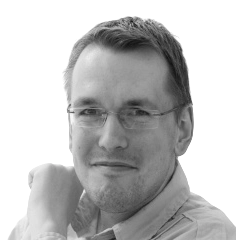
Last position:
Solution Architect, Business Analyst, Consultant, Full-Stack Lead-Developer at 50Hertz Transmission GmbH
- Solution for micro-service and frontend solution for the electric grid
- Leading of development teams
- Technologies: React-Native, TypeScript, Kotlin, AWS, Infrastructure As Code, Serverless Architecture, React, NoSQL, GraphQL, Angular, Playwright, Python, ML(Ops), Kubernetes, Docker
Simon K.
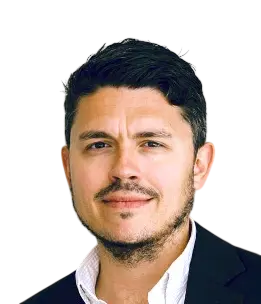
Last position:
Managing Partner at Heuristiq AI Studio
AI Strategy, Validation & Implementation for SME and Enterprise
- B2B GenAI Products
- Intelligent Workflows
- Third Party Implementation
Gerrit S.
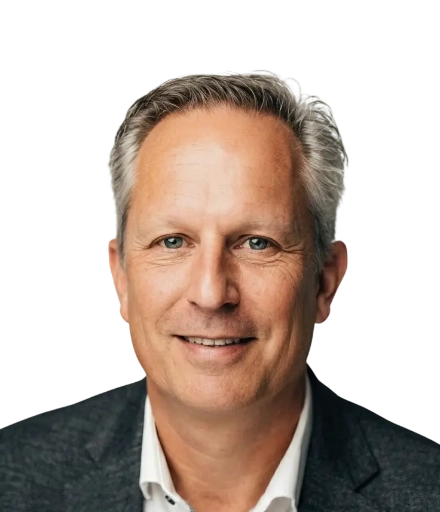
Last position:
Restructuring at Automotive Supplier
- Competency mapping and conversion into a standardized taxonomy for over 100,000 employees.
- Efficiency improvements by job function.
- Assignment of all white-collar employees to nine divisions worldwide within four months.
Brintha K.
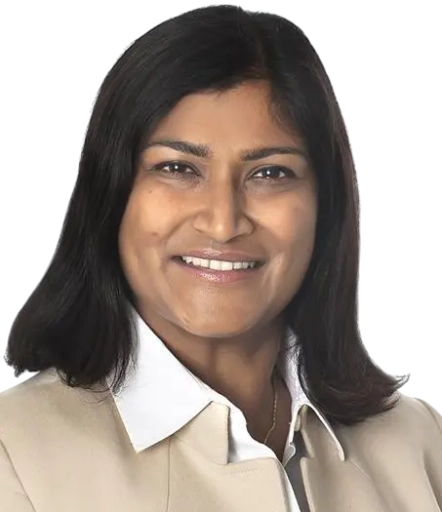
Last position:
Global Head of Digital Solutions, Vodafone Business at Vodafone Group plc
- Directed a 110-strong global team including data scientists, product managers, sales, operations, and developers
- Led investment and strategic reviews of scale-up ventures to drive profitability
- Developed and implemented portfolio strategy focused on IoT, AI, API platforms, and software products
- Restructured portfolio, eliminating unprofitable products and reallocating 70% of investments and resources to AI and platform development
- Delivered Vodafone’s first internal GenAI projects, enhancing sales and marketing efficiency
- Streamlined innovation strategy, reducing initiatives by 80% to focus on AI product enhancements and network APIs
Discover over 15,000 top freelancers


Statistics of experts using Internet of Things
Aggregated from the professional profiles of matched freelancers.

Experience
19 years (Germany: 20 years)

Position duration
2.3 years (Germany: 3.1 years)

Positions per freelancer
12

Top business areas
Information Technology, Product Development, Project Management

Top industries
Information Technology, Manufacturing, Professional Services

Certification focus areas
Information Technology, Product Development, Project Management

Bachelor's degree or higher
92% (Germany: 93%)

Master's degree or higher
52% (Germany: 63%)

Doctorate
4% (Germany: 10%)

Certifications per freelancer
3

Most common languages
German, English, Spanish

Speak two or more languages
100% (Germany: 98%)
Based on our profile pool as of 9 Oct 2026.
Daily rate distribution
The chart shows how the daily rates of experts in this technology in Hamburg are distributed, based on recent contracts on our platform. Each bar covers a rate range — its height shows the share of experts charging within that range.
Average rates of experts in Hamburg using Internet of Things
Rates are based on recent contracts and do not include FRATCH margin.

The average daily rate is the mean of all daily rates from recent contracts of comparable freelancers on our platform.
The median daily rate is the middle value of all daily rates — half of comparable freelancers charge less, half charge more. Unlike the average, it is barely affected by outliers.
Calculated based on our freelancers’ daily rates as of 9 Oct 2026. Actual rates may vary depending on seniority level, experience, skill specialization, project complexity, and engagement length.
Internet of Things experts industry focus
See which industries our matched freelancers work in most often — every figure is calculated live from the freelancers on FRATCH.
- Information Technology (89%)
- Manufacturing (81%)
- Professional Services (59%)
- Retail (52%)
- Banking and Finance (41%)
- Energy (37%)
- Telecommunication (37%)
- Automotive (33%)
Please note that freelancers can work across multiple industries, so percentages overlap.
About the technology
Connected Systems
Internet of Things (IoT) connects physical devices to networks, software and data services. Sensors collect conditions such as temperature, movement or machine status, while gateways and cloud systems process that data. The result can be live monitoring, automated control, predictive maintenance or better resource use.
Common Applications
- Industrial equipment monitoring and predictive maintenance
- Smart buildings, energy management and access control
- Fleet, logistics and asset tracking
- Connected products and remote device management
- Environmental, healthcare and agricultural sensing
IoT projects often combine embedded hardware, wireless communication, cloud ingestion, dashboards and operational workflows. In Hamburg, this can support logistics, manufacturing, maritime operations and commercial property systems.
Ecosystem And Tooling
IoT specialists work across microcontrollers, sensors, gateways and protocols such as MQTT, CoAP, Bluetooth Low Energy, LoRaWAN and OPC UA. They may use AWS IoT, Azure IoT, Google Cloud services, Kubernetes, Docker, time-series databases and event streaming tools. Strong delivery also requires device provisioning, certificate management, firmware updates and observability.
When Expertise Helps
Companies bring in freelance IoT expertise when a connected product must move from prototype to dependable operation, or when existing devices produce data that teams cannot use effectively. Specialists can define the architecture, select suitable connectivity, integrate operational technology and create a secure path from device to application. Hamburg-based teams may benefit from on-site workshops, while implementation and monitoring can often happen remotely.
Delivery And Security
A sound IoT solution addresses unreliable networks, limited device resources, changing hardware and large fleets of distinct devices. Experts establish data models, deployment processes, access controls and recovery plans before production rollout. They also separate operational technology from business networks and protect devices throughout their lifecycle.
Signs Of Quality
- Clear boundaries between device, gateway, cloud and application responsibilities
- Reliable handling of offline devices, duplicate messages and delayed data
- Secure identity, encryption, updates and access management
- Testable firmware, integrations and dashboards
- Documentation that operations teams can use
The strongest professionals explain trade-offs in plain language and connect technical choices to business outcomes. They can collaborate with hardware, software, security and operations teams, communicate in English or German when needed, and leave behind maintainable systems rather than isolated prototypes.

Frequently asked questions
Curious about Internet of Things? Here are the answers that come up again and again.

Internet of Things expertise is used to connect physical devices with software that collects, transports and acts on data. A specialist may deliver sensor networks, connected products, industrial monitoring, smart building controls or remote asset management.
IoT systems must account for physical devices, battery limits, intermittent connectivity and sensor accuracy. Unlike a conventional web application, they often require firmware, gateways, device identity, message handling and lifecycle management alongside cloud and user-facing software.
Internet of Things work benefits from skills in embedded systems, networking, cloud architecture, cybersecurity and data engineering. Experience with MQTT, LoRaWAN, OPC UA, time-series data, edge computing and industrial integration is especially useful for complex deployments.
IoT projects need experience suited to their risk and scope, not a fixed credential or timeline. A prototype may need focused knowledge of sensors and connectivity, while production systems require proven device management, security, monitoring, testing and operational handover.
Internet of Things work can often be done remotely for architecture, cloud integration, software and documentation. On-site sessions in Hamburg may still be valuable for installing hardware, testing radio coverage, inspecting machinery or aligning with operations teams.
IoT specialists should be able to show how they handled unreliable networks, device failures, security controls and production rollout. Ask for concrete deliverables such as architecture decisions, provisioning flows, monitoring plans and clear acceptance tests.
Internet of Things projects commonly use MQTT, CoAP, Bluetooth Low Energy, LoRaWAN and OPC UA, depending on the device and environment. Cloud services such as AWS IoT and Azure IoT may support ingestion, device registries, rules, security and fleet operations.
IoT architecture remains maintainable when device identities, data contracts, firmware updates and operational ownership are defined clearly. It should also handle offline behavior, observability, secure change management and the gradual replacement of hardware without disrupting connected services.
The average hourly rate of freelancers in Hamburg, Germany who have used Internet of Things in their recent projects is 119 €, which corresponds to a daily rate of about 952 € based on an 8-hour working day.
Of the freelancers in Hamburg, Germany who have used Internet of Things in their recent projects, 92% hold at least a Bachelor's degree, 52% hold at least a Master's degree, and 4% hold a doctorate.
On average, freelancers in Hamburg, Germany who have used Internet of Things in their recent projects have 19 years of professional experience, with a single engagement typically lasting around 2.3 years.
The most common languages among freelancers in Hamburg, Germany who have used Internet of Things in their recent projects are German (100%), English (100%), and Spanish (33%).
The most common industries among freelancers in Hamburg, Germany who have used Internet of Things in their recent projects are Information Technology (89%), Manufacturing (81%), and Professional Services (59%).
The most common business areas among freelancers in Hamburg, Germany who have used Internet of Things in their recent projects are Information Technology (93%), Product Development (78%), and Project Management (74%).
Main locations of FRATCH Experts, who have recently used Internet of Things
Our freelancers and interim experts are at home across the DACH region — available on-site in the major business hubs or fully remote. Choose a location to discover matched specialists, local market insights and up-to-date availability.


 Berlin
  Munich
  Cologne
  Frankfurt
  Stuttgart
  Dusseldorf
  Nuremberg
 Request a free demo
Get in touch with the FRATCH team and we will get back to you within 4 hours.
Would you rather directly get in touch?
We always have the time for a call or email!

Philipp Thomaschewski
FRATCH CEO

