


MAXQDA Experts in Germany
for rigorous qualitative research, matched in minutesHire experts who organize interview data, build reliable coding systems and turn mixed-method research into clear findings. Get fast, precise matching with vetted, available freelancers for remote or on-site work in Germany.

Meet FRATCH Experts in Germany, who have recently used MAXQDA
Zacharias D.
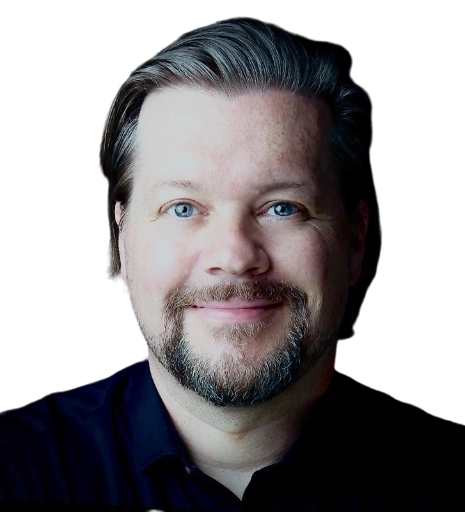
Last position:
Founder & Managing Director at Liveloop GmbH
- Built and successfully established a qualitative online market research software platform (Software-as-a-Service) as a boutique provider and grew it into a top 5 provider in the DACH region
- Product ownership and project management for the SaaS software platform in over 20 countries, and since 2017 for the mobile iOS and Android app
- Defined and implemented the product vision and roadmap, product and interface design, product backlog management and prioritization, including customer requirements and stakeholder input
- Advised corporate clients on structured user feedback and led user experience studies (in-home use tests, diary studies, user acceptance testing)
- Collaborated on digital product development projects in a corporate environment (apps & IoT applications) and facilitated workshops with D-level stakeholders in German and English
- Responsible for acquisition and account management of corporate clients in German-speaking countries and across Europe
- Built and led the Professional Services team both functionally and disciplinarily, with a focus on data protection and GDPR compliance
Sanket V.
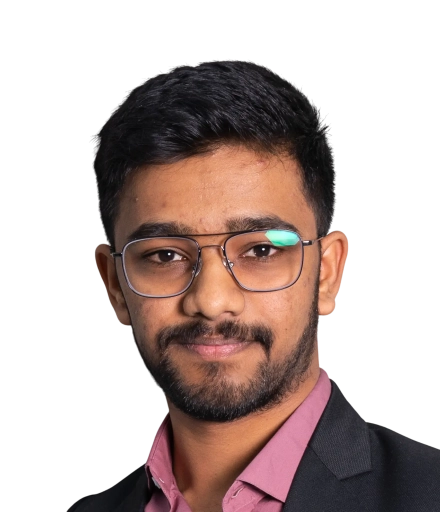
Last position:
Innovation Portfolio & Strategy Management Intern at Schaeffler Technologies AG & Co.KG
- Co-developed and facilitated strategic innovation workshops that surfaced 60+ early-stage ideas, with 15 selected for business case development aligned to megatrend priorities
- Co-led technology scouting on sustainable energy, screening 100+ startups and identifying 12 for Schaeffler’s new product development roadmap
- Conducted product research and market trend analysis to define value propositions for future mobility, developing workable prototype with technical specialist and strategiest (on-going)
Barbara S.
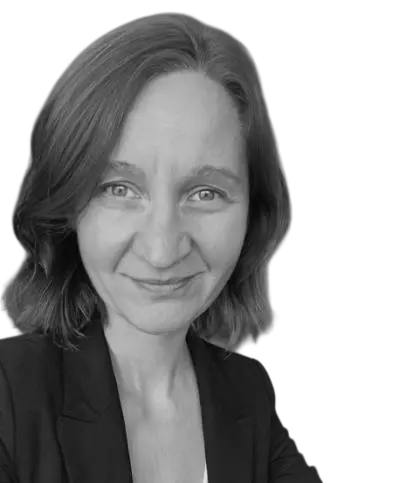
Last position:
Interim HR Manager & Organizational Transformation Consultant at epovia. Wandel mit Sinn
- Interim management for People & Culture or business development areas
- Delivery of consulting and training offers on HR management, organizational development, leadership culture, change and transformation processes
- Design and facilitation of leadership programs and upskilling concepts
- Implementation of modern communication and engagement concepts
Marvin S.
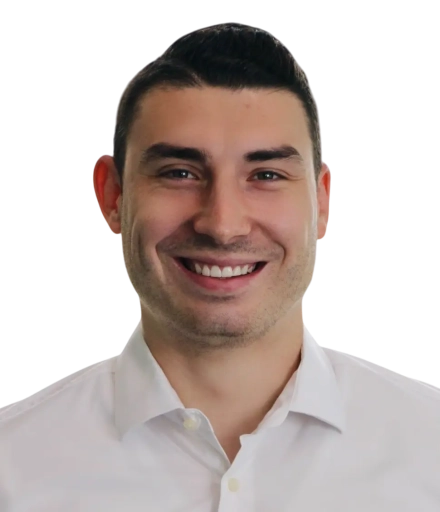
Last position:
Account Manager at JMVision GmbH
- Customer and employee acquisition via LinkedIn
- Supporting customers from onboarding to upsell
- Strategy and content creation
Kelechi I.
Last position:
Ironhack project (Cocktail Recipe Web App)
- A full-stack React CRUD web application for managing cocktail recipes, developed by Kelechi Ibeleche and Fabian Dietrich as part of the Ironhack Web development Bootcamp
- The app allows users to create, read, update, and delete cocktail recipes using a mock backend API
- Served as a practical exercise in React development, routing, and RESTful API integration
Nico S.
Last position:
Quantitative modeling and model development, statistical data analysis, reporting at DB InfraGO / Brockmann & Büchner Partnergesellschaft
- Technical project management, requirements management, and design to guide the data team in developing a predictive maintenance model for DB InfraGO's maintenance planning.
- Statistical modeling and analysis programming with R Studio for fault analysis in preventive maintenance: multivariate modeling using quasi-Poisson, negative binomial, lasso, offset, splines, RandomForest.
- Implementation of various R Shiny dashboards.
- Sparring partner and requirements management for data engineering, data modeling, and ETL pipeline in Tableau Prep.
Angelina B.
Last position:
Research Analyst at Responsible Mining Foundation
- Data collection and analysis
Discover over 15,000 top freelancers


Statistics of experts using MAXQDA
Aggregated from the professional profiles of matched freelancers.

Experience
15 years

Position duration
2.1 years

Positions per freelancer
9

Top business areas
Project Management, Marketing, Research and Development

Top industries
Education, Information Technology, Professional Services

Certification focus areas
Information Technology, Marketing, Product Development

Bachelor's degree or higher
71%

Master's degree or higher
57%

Doctorate
14%

Certifications per freelancer
1

Most common languages
German, English, French

Speak two or more languages
100%
Based on our profile pool as of 9 Oct 2026.
Daily rate distribution
The chart shows how the daily rates of experts in this technology in Germany are distributed, based on recent contracts on our platform. Each bar covers a rate range — its height shows the share of experts charging within that range.
Average rates of experts in Germany using MAXQDA
Rates are based on recent contracts and do not include FRATCH margin.

The average daily rate is the mean of all daily rates from recent contracts of comparable freelancers on our platform.
The median daily rate is the middle value of all daily rates — half of comparable freelancers charge less, half charge more. Unlike the average, it is barely affected by outliers.
Calculated based on our freelancers’ daily rates as of 9 Oct 2026. Actual rates may vary depending on seniority level, experience, skill specialization, project complexity, and engagement length.
MAXQDA experts industry focus
See which industries our matched freelancers work in most often — every figure is calculated live from the freelancers on FRATCH.
- Education (71%)
- Information Technology (71%)
- Professional Services (71%)
- Manufacturing (57%)
- Healthcare (43%)
- Government and Administration (43%)
- Advertising (29%)
- Automotive (29%)
Please note that freelancers can work across multiple industries, so percentages overlap.
About the technology
Purpose and scope
MAXQDA is a research software application for qualitative and mixed-methods data analysis. It helps teams organize interviews, focus groups, transcripts, PDFs, images, audio, video and survey responses in one project environment. Researchers use it to code material, compare themes, document interpretations and connect evidence to conclusions.
Core research tasks
- Import and structure interview transcripts, documents and media
- Create, refine and apply hierarchical coding systems
- Retrieve coded segments and compare cases or groups
- Write memos that preserve analytical decisions
- Visualize relationships with tools such as MAXMaps
Professionals also support document variables, summaries, paraphrase work and mixed-method links between qualitative findings and structured data. The right workflow keeps analysis transparent and reproducible without reducing interpretation to simple keyword searches.
Ecosystem and tooling
MAXQDA includes tools for coding, retrieval, memos, summaries, visual analysis and team workflows. Depending on the edition and project setup, specialists may work with survey data, statistical outputs, transcription workflows and MAXQDA TeamCloud for collaborative projects. They should also understand file preparation, anonymization, version control and export formats.
When companies need specialists
Companies often bring in freelance MAXQDA specialists when a research team needs a sound analysis structure but lacks time or method expertise. Common assignments include market research, user research, policy evaluation, healthcare studies, academic projects and internal employee research. Germany-based teams may value professionals who can work with German-language material while coordinating clearly with international stakeholders.
- Set up a project and coding framework before analysis begins
- Clean and prepare transcripts for consistent coding
- Review intercoder agreement and resolve coding differences
- Produce coded exports, summaries and evidence-based reports
What strong professionals bring
Strong professionals combine practical MAXQDA skills with a clear qualitative research method. They can explain why a code belongs in a framework, distinguish descriptive from interpretive coding and keep an audit trail of important decisions. They know when MAXQDA is appropriate and when a spreadsheet, statistical package or another qualitative analysis tool is better suited to the question.
Quality and delivery
Quality work starts with a defined research question, a documented codebook and a consistent approach to sampling and coding. A capable specialist agrees on naming conventions, handles sensitive data carefully and tests the project structure before the full dataset is processed. Final delivery may include the organized MAXQDA project, codebook, memos, visualizations, exports and a concise explanation of the analytical path.

Frequently asked questions
Need clarity? These are the questions we hear most often about MAXQDA.

MAXQDA is used to analyze qualitative and mixed-methods research data such as interviews, focus groups, documents, images, audio and video. Teams use it for coding, thematic analysis, memo writing, comparisons and visual exploration of findings.
MAXQDA overlaps with NVivo and ATLAS.ti in core coding, retrieval and memo functions. The choice usually depends on interface preferences, collaboration needs, existing team workflows, supported imports and the research methods used in the project.
A strong MAXQDA specialist also understands qualitative research design, interview and focus-group data, codebook development and research documentation. Skills in transcription review, survey analysis, Excel or statistical software can be useful for mixed-methods work.
A small project may need someone who can prepare files, apply an existing codebook and create basic exports. Complex studies need a MAXQDA professional who can design the analytical framework, manage team coding, document decisions and translate findings for a defined audience.
Yes. MAXQDA projects can be coordinated remotely through agreed file structures, secure data sharing, documented coding rules and regular review sessions. On-site work may help when researchers need close workshops, while German-language capability can matter for local interviews and reports.
Ask for a clear explanation of the research question, coding logic, quality checks and planned deliverables. A reliable MAXQDA professional can show how evidence is linked to themes, how changes are documented and how another team member could follow the analytical path.
MAXQDA supports mixed-methods workflows by combining qualitative coding with variables, document comparisons, survey data and quantitative results. It does not replace every specialized statistical tool, so the project plan should define which analyses happen inside MAXQDA and which happen elsewhere.
Clarify the research objective, data formats, language, privacy requirements, codebook status, collaboration model and final outputs. A MAXQDA freelancer should also confirm the software edition, project handover process and who approves coding decisions.
The average hourly rate of freelancers in Germany who have used MAXQDA in their recent projects is 80 €, which corresponds to a daily rate of about 638 € based on an 8-hour working day.
Of the freelancers in Germany who have used MAXQDA in their recent projects, 71% hold at least a Bachelor's degree, 57% hold at least a Master's degree, and 14% hold a doctorate.
On average, freelancers in Germany who have used MAXQDA in their recent projects have 15 years of professional experience, with a single engagement typically lasting around 2.1 years.
The most common languages among freelancers in Germany who have used MAXQDA in their recent projects are German (100%), English (100%), and French (29%).
The most common industries among freelancers in Germany who have used MAXQDA in their recent projects are Education (71%), Information Technology (71%), and Professional Services (71%).
The most common business areas among freelancers in Germany who have used MAXQDA in their recent projects are Project Management (100%), Marketing (71%), and Research and Development (71%).
Main locations of FRATCH Experts, who have recently used MAXQDA
Our freelancers and interim experts are at home across the DACH region — available on-site in the major business hubs or fully remote. Choose a location to discover matched specialists, local market insights and up-to-date availability.
 Berlin Hamburg Munich Cologne Frankfurt Stuttgart Dusseldorf Leipzig Dortmund Essen Bremen Dresden Hanover Nuremberg
 Request a free demo
Get in touch with the FRATCH team and we will get back to you within 4 hours.
Would you rather directly get in touch?
We always have the time for a call or email!

Philipp Thomaschewski
FRATCH CEO

