


Intrusion Detection System Experts in Germany
matched in minutes with vetted, available specialistsHire experts who detect suspicious activity, tune Suricata and Snort rules, and connect alerts with SIEM and SOAR workflows. Get precise, fast matching with vetted, available freelancers for security monitoring projects in Germany.

Meet FRATCH Experts in Germany, who have recently used Intrusion Detection System
Frank J.

Last position:
Senior Project Manager / IT Manager - Email Gateway Migration & Information Security at Public Authority
- Strategic planning, detailed technical preparation and operational management of an email gateway migration in a security-critical government environment.
- Preparation of the technical specification and development of technical concepts and migration approaches in line with BSI requirements.
- Technical requirements management with business units, information security and operations.
- Coordination of external service providers, integrators and implementation partners; maintenance of project plans, milestones, resources, risks and dependencies.
- Regular reporting to project management, the program environment and internal stakeholders.
Reza N.

Last position:
Senior IT-Security Expert at Teambank AG
- Completed the integration of log sources into Microsoft Sentinel, including GCP workloads – centralized consolidation of all security-relevant events from Azure and GCP environments for complete end-to-end telemetry and comprehensive compliance evidence
- Developed custom rules and use cases based on the GFG Use-Case Library and the MITRE ATT&CK Matrix to cover company-specific threats and GFG-relevant scenarios with precise, mapped detection rules
- Tuned detection rules to minimize false positives, optimized detection thresholds, and modeled exceptions – enabling the SOC to work with relevant, prioritized alerts while reducing Mean Time to Detect/Respond
- Built SOAR capabilities in Sentinel by developing playbooks to automate recurring response processes such as containment, user and host isolation, and ticketing – shorter response times and 24/7 scalability
- Designed and built a log transformation solution to normalize and enrich incoming raw logs (GeoIP, CMDB, threat intelligence) and convert them into a consistent schema for high-performance KQL queries, use case logic, and correlations
- Managed Azure security through Azure Policies to enforce security and compliance standards, prevent drift, and continuously remediate deviations
- Operated the Defender XDR portal to link endpoint, identity, email, and SaaS signals with Sentinel findings, enable holistic incident triage, and orchestrate measures directly from XDR
Technologies: Microsoft Sentinel, Microsoft Defender XDR, Azure Policy, KQL, GCP, MITRE ATT&CK
Julian W.

Last position:
Renewal of the Active Network Infrastructure
As part of this project, the existing active network infrastructure was modernized and made fit for the future. The goal was to introduce a powerful, secure and scalable network and WLAN infrastructure, including a Network Access Control (NAC) solution to improve network security and centralized access control.
At the beginning of the project, a comprehensive requirements analysis was carried out, taking into account the technical, operational and security-related requirements of the hospital sites. On this basis, a technical tender was prepared for new switches, WLAN access points and the NAC solution.
The successful implementation of the project established a modern, standardized and secure network infrastructure that meets the growing requirements for availability, mobility and IT security in hospital operations.
Activities:
- Supporting the tender process, including technical evaluation of offers and bidder evaluation
- Leading and managing the entire project implementation
- Coordinating the project process with internal stakeholders, business units and hospital IT
- Managing external service providers during the implementation and installation of the systems
- Monitoring the implementation, including quality control, project acceptance and defect management
- Coordinating and managing communication between hospital IT and external service providers as part of the NAC implementation
- Managing escalations in the event of technical and organizational challenges
- Ongoing budget monitoring and control of project expenses and additional costs
- Preparing decision papers for management on project changes, additional services and risks
Andreas Z.

Last position:
Transformation Architect / Business Analyst at IT Consulting
- Development of a comprehensive transformation model for IT departments and ITSM organizations, from operational stabilization through structuring and optimization to strategic advancement
- Design of a transformation matrix that connects development phases with the implementation activities Position, Focus, Model, Enable, Anchor and Develop
- Development of assessment, maturity and decision-making logic to determine the operational starting point, the appropriate entry point and the prioritized areas of action
- Structuring of an end-to-end approach from current-state assessment and target vision through operating model, roadmap and service modules to implementation and integration into steady-state operations
- Derivation of combinable consulting and implementation modules, including methods, deliverables, role models, governance structures and transformation paths
- Collection, structuring and prioritization of business requirements from the perspectives of IT management, service management and operational roles
- Translation of requirements into target visions, process and role models, decision criteria and traceable deliverables
Environment / Tools: ITIL 4, IT4IT, Operating Model Canvas, SIAM, maturity models Kanban
Enrique G.

Last position:
Security Architect at Capgemini
I implemented a Zero-Trust architecture for robust, military-grade maritime container mini data centers based on VMware & Tanzu to support containerized GIS workloads for ground forces. The main focus was on securing communications, workload protection, and data access in contested electronic battle environments affected by jamming, interception, signal manipulation, and constantly changing operational conditions. I designed and architected use cases so that every element of workload, identity, and system could continue to operate independently and securely even in degraded or disrupted scenarios. In parallel, I defined the enterprise and solution security architecture with LeanIX, Bizzdesign, and HOPEX as enterprise architecture, repository, and governance platforms to maintain architecture inventory, relationships, traceability, target pictures, and security governance in complex environments. For the architectural designs, I used Sparx Enterprise Architect to describe formal architecture views, interfaces, trust boundaries, and system architecture in both IT and OT environments. IriusRisk was used for threat modeling of the solution to identify architecture-driven risks, derive security requirements, and detect countermeasures and design gaps directly from the solution models. Risk and compliance management was supported with Archer. Architecture decisions, control gaps, and operational risks were translated into controlled governance and auditable compliance measures. For documentation, collaboration, and visual design, I used Confluence to maintain Architecture Decision Records, Security Blueprints, and workflows. I used Lucidchart and draw.io to create design artifacts tailored to stakeholders. I also defined OT security concepts with support from electrical and mechanical engineers in the areas of oil, vehicle onboard systems, rail, power plants, pharma, gas turbines, and nuclear technology. I created the end-to-end OT security strategy, starting with global policy, developed into standards and procedures, and finally aligned with Bell-LaPadula, Purdue Model, SABSA, TOGAF ADM, CENELEC 50701, IEC 62443, and NIST standards. In addition, I worked with engineering team leads to identify critical KBP assets and place them under protective measures that segmented SCADA, PLC, and HMI assets. I drove collaboration between Security, IT, and OT teams to create standardized workflows and use cases for the OT security solution catalog, while integrating Defense-in-Depth and Zero-Trust principles into operational environments. A key part of my work was integrating multidisciplinary engineering, security, and operations stakeholders into a unified security blueprinting strategy and ensuring that architecture, threat modeling, governance, and documentation were technically strong and operationally practical.
Alex V.

Last position:
CTO, Co-Founder, Cryptography(incl. Post-Quantum Cryptography) and AI Security Expertise at AISLEIPNIR
- Integration of Post-Quantum Cryptography (PQC) algorithms into high level protocols.
- Security of implementations of Post-Quantum Cryptography algorithms.
- Transition to Post-Quantum public key infrastructures.
- Security evaluations of Post-Quantum Cryptography (PQC) primitives.
- Drone Cybersecurity
- Satellite Cybersecurity
- AI Security
Andreas R.
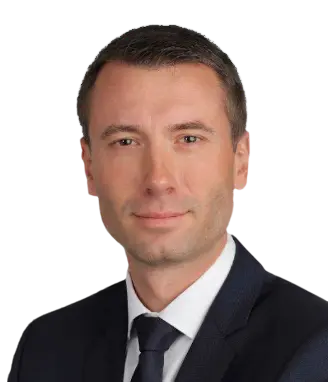
Last position:
Freelance Consultant for Information Security at A-R-C Andreas Rühl Consulting
Development and implementation of tailored information security strategies
Introduction and further development of ISMS according to ISO 27001, BSI baseline protection, and other standards
Risk management and creation of security concepts
Consulting for KRITIS, PCI DSS, TISAX, and VdS 3473/10000
Building and improving security organizations
Creation and implementation of guidelines, policies, work instructions, and process descriptions
Audit support and certification preparation
Conducting trainings, workshops, and awareness campaigns
Selection and consulting on the introduction of IT security solutions such as SIEM, DLP, IDS/IPS, firewalls, and encryption technologies
Conducting penetration tests and vulnerability analyses
Consulting on the selection, integration, and management of security architectures in complex IT environments
Consulting on ITSM and managed security services and SOC
Leading and managing complex projects to improve information security
Process analysis, optimization, and management according to ITIL, ISO 27001, and cybernetics
Introduction and quality assurance of management, documentation, and knowledge management systems
Support in complying with regulatory information security requirements (e.g. GDPR, HIPAA, SOX, GMP, KRITIS)
Development and implementation of risk analysis procedures
Organizing initial response, forensic investigations, and organizational measures in the event of security incidents
Designing and running targeted workshops on topics such as ISMS, IT risks, and current threat scenarios
Awareness campaigns to promote security culture in companies
Special trainings on ISO 27001, BSI baseline protection, KRITIS, and other relevant standards
Simulations and exercises to prepare for information security incidents
Interim management for leading information security projects or IT security organizations
Taking on the role of an external CISO (Chief Information Security Officer)
Support in developing and implementing IT security and corporate strategies
Coaching and mentoring of managers in the field of information security
Building and leading security departments as well as recruiting and qualifying employees
Temporary assumption of management responsibility in critical situations
Alexander S.

Last position:
AI Consultant for AI Voice Bot System at Rudolf Hörmann GmbH & Co.KG
- Consultant for system architecture, AI agents & integration, coach for data & process logic, Graph-RAG approaches, security and data protection.
- On-premise AI solutions with high compliance and performance requirements.
- Architecture decisions, operational setup, strategic prioritization & deployment.
- Technologies: LiveKit JS SDK, LiveKit Agents, Web Audio API, JS, AudioWorklet, Loki, vLLM, Zscaler, Docker, Neo4j, MySQL, Python.
- Models: GPT-OSS 20B, Whisper large v3 turbo, Qwen3-TTS.
Minh Duc V.

Last position:
Senior System Engineer Network & Security at F.S. Fehrer GmbH & Co. KG
- Responsible for the configuration, maintenance, monitoring, troubleshooting, and optimization of the IT infrastructure, including Extreme Networks, SD-WAN, and Fortinet security solutions, at all international company locations in Europe and North America
- Development of a comprehensive strategic roadmap to optimize the network architecture, including VLANS, NAC, QoS, firewall configurations, VPNs, DPI, NGFW, threat intelligence, and SSL/TLS inspection
- Implementation of the OneIT strategy through the introduction of new technologies such as Cisco DNA Center, ExtremeCloud IQ, FortiOS, FortiManager, and FortiAnalyzer, which increased employee skills and the efficiency of the IT systems
- Integration of IT and OT systems to optimize the network and security architecture and improve operational efficiency
Nenad B.

Last position:
Safety Video Analytics Project for Airbus at Airbus
- Developed a real-time video analytics proof-of-concept for deployment on NVIDIA Jetson edge devices.
- Implemented DeepStream pipelines including object detection, tracking, human pose estimation, face anonymization, and zone intrusion detection.
- Built a Qt/Python demonstration UI interfacing with the AI pipeline via REST APIs.
Michael F.

Last position:
Project Manager Implementation B3S / ISO 27001 at Health Insurance Fund
- Coordination of the B3S and ISO 27001 implementation project, considering the upcoming KRITIS evidence procedure
- Providing consulting services in ISO 27001, B3S, KRITIS, and IT baseline protection
- Collaborating with the Information Security Officer (ISO)
- Identifying company assets for IT risk management
- Developing a zone concept for IT risk management
- Creating an action plan for B3S
- Developing a template for risk analyses
Sergey K.

Last position:
Managing Director Cybersecurity at CBA-Cybersecurity and Business Advisory GmbH
- Development of comprehensive services in cybersecurity, IT governance, and AI
- Building and delivering strategic security solutions such as vCISO service, ISMS, SOC-as-a-Service (SIEM, SOAR, use cases, playbooks, threat hunting, incident response), AI-driven risk and compliance tools, and frameworks for outsourcing and third-party risks
- Supporting companies in meeting regulatory requirements and certifications (ISMS, NIS-2, DORA, CRA, KRITIS, ISO 27001, TISAX, BSI IT Baseline Protection, EU AI Act)
- Promoting innovations in cybersecurity automation, AI governance, and secure digital transformation
- Responsible for company growth, client relations, and strategic partnerships
Hichem B.
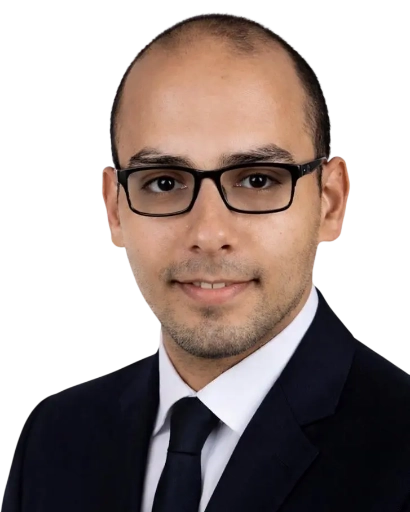
Last position:
IT Security Consultant & Data Engineer / Freelancer at datadefend GmbH
- Analysis and further development of the security architecture.
- Design and development of Splunk apps and technical add-ons (TAs).
- Development and implementation of security use cases in the Splunk SIEM.
- Creation and maintenance of incident response playbooks in Cortex XSOAR.
- Support of technical proof-of-concepts to assess new detection technologies.
- Lifecycle management and operational support for Splunk and Cribl systems.
- Deployment and scaling of Splunk indexers in hybrid data center environments.
- Maintenance, update planning, and optimization of Cribl Stream & Edge for log ingestion and data routing.
- Creation of dashboards and reports to visualize security posture and system availability.
- Technical analysis to assess network topologies and data flows.
- Integration of new data sources via Cribl Stream/Edge and heavy forwarders in cloud and on-prem environments.
- Integration of external security components such as Cortex XSOAR (SOAR) and user behavior analytics (UBA).
- Implementation of complex correlation rules in Splunk Enterprise Security (ES).
- Connection of external ticketing systems via mail gateways and REST APIs.
- Automated deployment of use cases, dashboards, and detection rules via Git and Ansible.
Bertrand R.

Last position:
Interim IAM Product Owner (Identity Management) at REWE digital GmbH
- Establishing Identity & Directory Management as a new (split-off) team & product within the IAM cluster.
- Leading the “Identity & Directory Management” product (8 people) as Product Owner.
- Concept for ‘Digital Identities’, i.e. IDs with n users/accounts and strategy for a modernized product offering.
- Upgrading APIs, migrating to a containerized infrastructure, rolling out international markets & standardized solutions across the REWE enterprise group.
- Tech: OpenText™ (NetIQ) eDirectory & Identity Manager, LDAP, SAP HR/HCM, Docker/Kubernetes/Podman, REST APIs, Microsoft Active Directory & Entra ID, postgresDB, Keycloak, Ansible, Cyberark (PAM), Apache Kafka, Jira, Confluence, Miro.
André G.

Last position:
IT Consulting Project Management / Engineering Subproject Management at T-Systems (on assignment for government agencies)
- Projects for federal networks (NdB).
- CR management, EoL change requests, design and documentation according to ITSCM.
- Data center planning.
- Project management and engineering subproject management.
- Software development for virtual server environments according to BSI.
Discover over 15,000 top freelancers


Statistics of experts using Intrusion Detection System
Aggregated from the professional profiles of matched freelancers.

Experience
24 years

Position duration
2.8 years

Positions per freelancer
14

Top business areas
Information Technology, Project Management, Operations

Top industries
Information Technology, Banking and Finance, Automotive

Certification focus areas
Information Technology, Project Management, Audit

Bachelor's degree or higher
86%

Master's degree or higher
56%

Doctorate
6%

Certifications per freelancer
7

Most common languages
German, English, French

Speak two or more languages
100%
Based on our profile pool as of 9 Oct 2026.
Daily rate distribution
The chart shows how the daily rates of experts in this technology in Germany are distributed, based on recent contracts on our platform. Each bar covers a rate range — its height shows the share of experts charging within that range.
Average rates of experts in Germany using Intrusion Detection System
Rates are based on recent contracts and do not include FRATCH margin.

The average daily rate is the mean of all daily rates from recent contracts of comparable freelancers on our platform.
The median daily rate is the middle value of all daily rates — half of comparable freelancers charge less, half charge more. Unlike the average, it is barely affected by outliers.
Calculated based on our freelancers’ daily rates as of 9 Oct 2026. Actual rates may vary depending on seniority level, experience, skill specialization, project complexity, and engagement length.
Intrusion Detection System experts industry focus
See which industries our matched freelancers work in most often — every figure is calculated live from the freelancers on FRATCH.
- Information Technology (96%)
- Banking and Finance (53%)
- Automotive (49%)
- Manufacturing (45%)
- Professional Services (43%)
- Telecommunication (43%)
- Healthcare (31%)
- Aerospace and Defense (29%)
Please note that freelancers can work across multiple industries, so percentages overlap.
About the technology
Detection and purpose
An Intrusion Detection System, or IDS, monitors network traffic, hosts, logs, and system behavior for signs of compromise. It identifies suspicious patterns such as port scans, malware communication, credential abuse, and unusual lateral movement. An IDS raises alerts for investigation rather than blocking traffic by default.
Network and host coverage
Network-based IDS tools inspect traffic at key points such as internet gateways, data centers, cloud edges, and segmented internal networks. Host-based IDS tools watch files, processes, configuration changes, and operating system activity on individual systems. Strong designs combine both views to improve context and reduce blind spots across hybrid environments.
Tools and integrations
The ecosystem includes Suricata, Snort, Zeek, Wazuh, and vendor security sensors. Professionals work with signature rules, protocol analysis, packet capture, threat intelligence, and behavioral detection. They also connect alerts to SIEM and SOAR systems such as Splunk, Microsoft Sentinel, Elastic Security, and QRadar, with dashboards and response workflows that security teams can act on.
Typical project work
- Select sensors and place them across network segments
- Build and tune detection rules for relevant threats
- Forward, enrich, and prioritize alerts in a SIEM
- Validate coverage with controlled attack simulations
- Document escalation paths and operating procedures
Companies often bring in freelance expertise during a security monitoring rollout, cloud migration, incident response improvement, or audit preparation. In Germany, professionals may work remotely with distributed security teams or join on-site sessions for network discovery and sensitive infrastructure changes.
Signs you need expertise
- Alerts are numerous but rarely lead to clear investigations
- Network changes have created monitoring gaps
- Detection rules produce too many false positives
- Cloud, identity, and endpoint signals remain disconnected
Specialists can assess the current architecture, define useful detection logic, and create repeatable triage processes. They can also help internal teams understand alert priority, evidence handling, and the limits of IDS data before expanding the monitoring stack.
What strong professionals bring
Strong professionals understand TCP/IP, DNS, HTTP, TLS, authentication, operating systems, and common attack paths. They can read packet and log evidence, write maintainable rules, investigate alerts, and explain findings to both security and infrastructure teams. They also know when an IDS should complement an IPS, endpoint detection, firewall controls, or a broader SIEM program.
Quality is visible in clear assumptions, tested detections, useful documentation, and measurable reduction of noise without hiding meaningful signals. For German projects, language needs should be agreed early when procedures, stakeholder workshops, or incident reports require local communication.

Frequently asked questions
Questions about Intrusion Detection System? Start with the answers below.

An Intrusion Detection System monitors network, host, and log activity for indicators of attacks or policy violations. It generates alerts that help security teams investigate events such as scanning, exploitation, malware traffic, and unauthorized access.
An IDS primarily detects and reports suspicious activity, while an intrusion prevention system can block or interrupt selected traffic automatically. The right choice depends on the need for visibility, response speed, and the risk of disrupting legitimate business activity.
A strong Intrusion Detection System specialist usually understands network protocols, Linux or Windows systems, firewalls, endpoint security, threat intelligence, and SIEM operations. Experience with incident response and detection engineering is also valuable because alerts must lead to reliable investigations.
The company should clarify monitored environments, available traffic and log sources, existing security tools, response ownership, and the outcomes expected from the engagement. A professional can then scope sensor placement, rule development, integrations, tuning, and documentation realistically.
An Intrusion Detection System project needs enough practical experience to understand the network, threat model, and operational impact of alerts. A smaller rule-tuning assignment may need a focused specialist, while a broad rollout across cloud and on-premises systems calls for deeper architecture and incident-response experience.
Yes, much of an IDS engagement can be handled remotely through secure access, workshops, configuration reviews, and shared documentation. On-site work can still help with sensor installation, network discovery, or restricted environments, and language expectations should be agreed before the project starts.
Look for evidence of well-tuned detections, controlled validation, clear alert triage, and useful handover documentation. A capable professional explains false positives, coverage limits, data retention, and how findings connect to incident-response decisions.
Common Intrusion Detection System technologies include Suricata, Snort, Zeek, and Wazuh, often connected to SIEM tools such as Elastic Security, Splunk, Microsoft Sentinel, or QRadar. The best combination depends on traffic visibility, host coverage, cloud architecture, licensing, and the team's ability to operate it.
The average hourly rate of freelancers in Germany who have used Intrusion Detection System in their recent projects is 105 €, which corresponds to a daily rate of about 837 € based on an 8-hour working day.
Of the freelancers in Germany who have used Intrusion Detection System in their recent projects, 86% hold at least a Bachelor's degree, 56% hold at least a Master's degree, and 6% hold a doctorate.
On average, freelancers in Germany who have used Intrusion Detection System in their recent projects have 24 years of professional experience, with a single engagement typically lasting around 2.8 years.
The most common languages among freelancers in Germany who have used Intrusion Detection System in their recent projects are German (100%), English (100%), and French (18%).
The most common industries among freelancers in Germany who have used Intrusion Detection System in their recent projects are Information Technology (96%), Banking and Finance (53%), and Automotive (49%).
The most common business areas among freelancers in Germany who have used Intrusion Detection System in their recent projects are Information Technology (98%), Project Management (73%), and Operations (61%).
Main locations of FRATCH Experts, who have recently used Intrusion Detection System
Our freelancers and interim experts are at home across the DACH region — available on-site in the major business hubs or fully remote. Choose a location to discover matched specialists, local market insights and up-to-date availability.

 Berlin
  Munich
 Request a free demo
Get in touch with the FRATCH team and we will get back to you within 4 hours.
Would you rather directly get in touch?
We always have the time for a call or email!

Philipp Thomaschewski
FRATCH CEO

