


Assembly Language Experts in Frankfurt
with precise AI matching, fast availability and access to over 15,000 CVsHire experts who optimize low-level code, analyze processor behavior and build reliable firmware, embedded software and performance-critical systems. FRATCH matches you quickly with vetted, available freelancers whose skills fit your technical requirements.

Meet FRATCH Experts in Frankfurt, who have recently used Assembly Language
Gregor P.

Last position:
Engineering Data Management Project Manager
Technical and commercial risk assessment for an investment project in the hardware sector (scaling potential, liability risks, operational processes) Process consulting for two SMEs in the engineering environment, with a focus on workflow digitization and PLM
Parthiban M.

Last position:
Quality Assurance Engineer at Hanon Systems GmbH
Define the QA strategy and plan for the above mentioned OEMs project.
Identify applicable processes, methods, and standards to be followed (eg, GS_95014, KGAS, ISO/IEC 15504, ISO 26262, ISO 21434, etc.).
Plan reviews, audits, and assessments as per the strategy.
Check whether the project follows defined processes (System, software, mechanical, hardware, testing, change, configuration, problem, risk etc.) as per strategy.
Provide QA support to software process: software requirement analysis, software architectural design, software detailed design and unit construction, software unit verification, software component verification and integration verification, software verification processes.
Monitor compliance with organization-wide and project-specific standards.
Verify that deviations are documented and escalated.
Review work products (requirements, design docs, test cases, code, reports (MISRA, C0, C1, coding standards), etc.).
Check compliance with standards, templates, and checklists.
Ensure that bi-directional traceability exists (e.g., requirements ↔ design ↔ tests).
Give objective evidence (not influenced by delivery pressure) during assessments.
Identify non-conformances (process not followed, missing approvals, wrong standard).
Report deviations and track them until closure.
Verify that corrective actions are implemented (5why, Ishikawa, 8D, FMEA, FTA, DFM, DRP, PCC, LLBP, PDCA).
Provide QA status reports to management and project stakeholders.
Highlight risks related to process non-compliance.
Deliver objective evidence for assessments/audits (e.g., ASPICE, ISO/IEC 15504, ISO 26262, ISO 21434, ISO_PAS_8800).
Collect and analyze QA findings.
Suggest process improvements.
Support lessons learned activities.
Achieved ASPICE Level 1 and Level 2 for multiple Audi and Mercedes-Benz projects assessments.
Minh D.
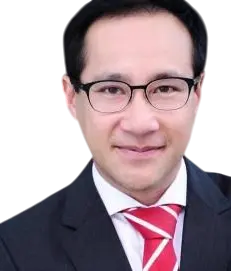
Last position:
Project Manager / Business Analyst / Application Manager at Finance and Insurance
Introducing 5 different process applications for various teams
Release planning: scope and time management
Resource/capacity planning
Conducting sprint planning / retrospectives
Increment planning (multiple sprints)
Preparing steering committee meetings / reporting to the executive board
Coordinating / aligning with external suppliers / deliveries
Multi-project resource planning
Aligning with the business unit and development team
Identifying best practices with IBM BAW
Cost control and planning for the project team and external service providers
Collecting KPIs using LogScale
Analyzing application errors with LogScale / queries
Defining user stories / aligning requirements with the business unit and development team
Testing and defect tracking
UI/UX design of the application
Preparing and facilitating brown-paper workshop
Test concept, test data, test organization, test execution
Recording team velocity / metrics
Executing tests
Scripts for automated testing
Organizing tests with the business unit and IT
Recording and prioritizing defects
Setting up and operating the application
Setting up application monitoring with LogScale dashboards
Checking health endpoints with PowerShell
Post mortem analysis
Setting up incident management
Setting up problem management
Analyzing errors using LogScale queries and dashboard
Pre-processing data for AI
Conducting evaluation with AI language models (Meta Llama 3.3 LLM and deepset Haystack) and RAG
Installing runtime environments for LLMs (large language model)
Evaluating various LLMs
Installing RAG (retrieval augmented generation) and integrating with LLM
Extracting unstructured data with LLM and RAG
Project based on IBM BAW (Business Automation Workflow), WebSphere Liberty, Domea, d.3, REST, LogScale (formerly Humio), Swagger, PowerShell, JIRA, Confluence, Lucom Interaction Platform (LIP), Mattermost, Jabber
Anand R.
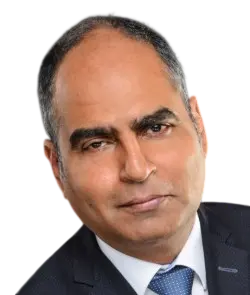
Last position:
Freelancer Scrum Master, Mentor and Strategist at Confidential Fintec Startup
- Provided coaching and support to Scrum teams to adopt and implement agile practices effectively
- Analyzed business requirements and identified IT solutions to support business goals
- Evaluated existing IT systems and processes to identify optimization opportunities
- Managed stakeholder relationships and coaching
- Facilitated Scrum ceremonies and ensured adherence to Scrum principles and practices
- Identified and implemented lean startup process optimizations to improve efficiency and effectiveness of development and business processes
- Developed and monitored daily business strategies to ensure development goals were met
- Developed and implemented OKR strategies to align team goals with company objectives
- Tools/Methodology: Jira, Confluence, Miro, PowerBI, team building & mentoring, conflict resolution, impediment resolution
Dieter K.
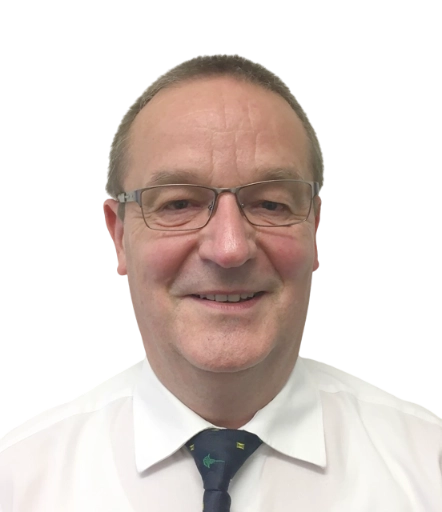
Last position:
SAP Senior Consultant at Shop and Catering
Implementation of MM and SD with integration of Diebold-Nixdorf cash registers
Capturing the required processes (inventory management, procurement, sales, and cash register processes)
Customizing MM and SD
Project planning and control
Master data upload and inventory recording using LSMW based on Excel spreadsheets
Cash register data transfer via EDI and IDoc processing (MBGMCR and ACC_DOCUMENT)
Creating extensive documentation for internal staff
No middleware; instructing and training customer staff in customizing; SAP standard as prerequisite
SAP ECC 6.0 modules MM, SD, FI
Jochen H.
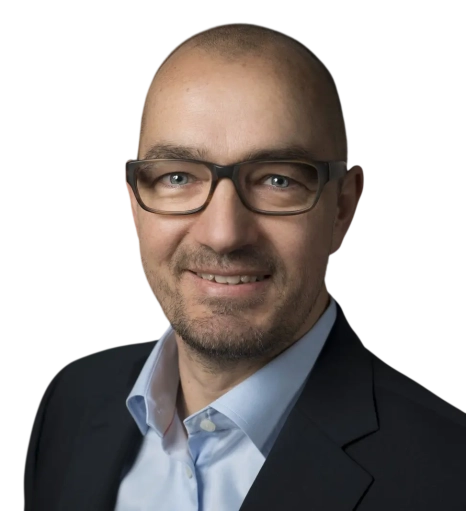
Last position:
DevSecOps Expert at DB InfraGO
- Central build and delivery for 20+ applications, 100+ pipelines/day, 700+ GitLab projects
- Build pipelines for Go, Java and JavaScript
- Provisioning of 100+ components
- Quality assurance via GitLab Code Quality and SonarQube
- Checks for dependencies, licensing and vulnerabilities
- Release creation via Jira and ServiceNow
- SBOM, Supply Chain Security, distroless images
- PoC GitLab Runner: Nomad vs. Kubernetes
- Technologies: Artifactory, buildah, GitLab Premium, Go, Gradle, Jenkins, Mend, Podman
Jihane T.
Last position:
Reporting and Business Intelligence Specialist at Union Investment
- Developing and implementing new reporting requirements based on Oracle DWH with various business intelligence systems (SAP Business Objects and Birt-Eclipse)
Discover over 15,000 top freelancers


Statistics of experts using Assembly Language
Aggregated from the professional profiles of matched freelancers.

Experience
25 years (Germany: 28 years)

Position duration
1.9 years (Germany: 2.9 years)

Positions per freelancer
21 (Germany: 19)

Top business areas
Project Management, Quality Assurance, Information Technology

Top industries
Telecommunication, Automotive, Banking and Finance

Certification focus areas
Information Technology, Project Management, Product Development

Bachelor's degree or higher
80% (Germany: 83%)

Master's degree or higher
20% (Germany: 54%)

Certifications per freelancer
4 (Germany: 3)

Most common languages
German, English, French

Speak two or more languages
100% (Germany: 99%)
Based on our profile pool as of 9 Oct 2026.
Daily rate distribution
The chart shows how the daily rates of experts in this technology in Frankfurt are distributed, based on recent contracts on our platform. Each bar covers a rate range — its height shows the share of experts charging within that range.
Average rates of experts in Frankfurt using Assembly Language
Rates are based on recent contracts and do not include FRATCH margin.

The average daily rate is the mean of all daily rates from recent contracts of comparable freelancers on our platform.
The median daily rate is the middle value of all daily rates — half of comparable freelancers charge less, half charge more. Unlike the average, it is barely affected by outliers.
Calculated based on our freelancers’ daily rates as of 9 Oct 2026. Actual rates may vary depending on seniority level, experience, skill specialization, project complexity, and engagement length.
Assembly Language experts industry focus
See which industries our matched freelancers work in most often — every figure is calculated live from the freelancers on FRATCH.
- Telecommunication (86%)
- Automotive (71%)
- Banking and Finance (71%)
- Information Technology (71%)
- Manufacturing (71%)
- Professional Services (57%)
- Transportation (43%)
- Aerospace and Defense (29%)
Please note that freelancers can work across multiple industries, so percentages overlap.
About the technology
What Assembly Language does
Assembly Language provides a readable form of a processor’s machine instructions. It gives specialists direct control over registers, memory, calling conventions and instruction flow. Companies use it when predictable execution, compact binaries or hardware-level access matters more than portability.
Systems it supports
Assembly Language appears in firmware, boot code, operating system components, device drivers, cryptographic routines and real-time software. It is also used to inspect compiler output, repair legacy binaries and optimize narrow sections of code where higher-level languages cannot meet strict constraints.
Ecosystem and tooling
Strong work depends on the target instruction set and its toolchain. Specialists may work with x86, x86-64, ARM, AArch64, MIPS or RISC-V, together with assemblers, linkers, debuggers and disassemblers.
- GNU Assembler and LLVM tools
- NASM, YASM and vendor assemblers
- GDB, LLDB, objdump and disassembly tools
- Cross-compilation, linker scripts and build automation
When companies need specialists
Freelance expertise is useful when a team must understand unfamiliar low-level code or address a difficult performance, memory or hardware issue. In Frankfurt, this can support embedded products, industrial equipment, automotive systems and other technical environments while teams collaborate remotely or on site.
- Porting code between processor architectures
- Optimizing hot paths and interrupt routines
- Debugging startup, memory and concurrency faults
- Maintaining legacy firmware or binary interfaces
What strong professionals deliver
A capable specialist connects instruction-level decisions with the wider system. They document assumptions, preserve application binary interfaces, test edge cases and explain trade-offs clearly to teams working in C, C++, Rust or operating-system code. They also know when a higher-level implementation is safer and easier to maintain.
How quality is assessed
Review the target architecture, toolchain and deliverables before work begins. Good professionals can explain register usage, stack behavior, alignment, calling conventions and memory ordering in practical terms. They use repeatable benchmarks, hardware-aware tests, symbol and map files, and focused documentation rather than relying on intuition alone.

Frequently asked questions
Key details about Assembly Language, drawn from the questions we get asked most.

Assembly Language is used for firmware, bootloaders, operating system components, device drivers and performance-critical routines. It is also valuable for reverse engineering, binary analysis and understanding how compiled code interacts with hardware.
Assembly Language offers more direct control over instructions, registers and memory than C or C++. C and C++ usually provide better portability, readability and maintainability, so assembly is often limited to hardware-specific or highly constrained sections.
A strong Assembly Language specialist should match their knowledge to the project’s processor, such as x86-64, ARM, AArch64, MIPS or RISC-V. They should also understand the related ABI, instruction set, assembler syntax, linker behavior and debugging workflow.
Professionals working with Assembly Language often bring experience with C, C++, Rust, embedded systems, operating-system internals and hardware debugging. Knowledge of compilers, reverse engineering, linker scripts and cross-compilation is also useful.
The right level depends on the risk and scope of the work. Assembly Language maintenance for a small routine may need focused architecture knowledge, while firmware bring-up, kernel work or binary compatibility tasks call for a professional who can trace faults across hardware, toolchain and application layers.
Yes. Assembly Language work can often be performed remotely when repositories, build systems, emulators, logs and test hardware are accessible. On-site collaboration may still help with prototype boards, lab equipment or hardware faults, while clear technical English supports distributed work.
Ask the specialist to explain calling conventions, register preservation, memory ordering, interrupt behavior and the reasons behind each optimization. High-quality Assembly Language work includes reproducible tests, benchmarks tied to a real requirement, clear comments and evidence that portability and maintenance risks were considered.
Assembly Language is usually a poor fit when portability, rapid change and broad team ownership matter more than precise hardware control. A higher-level language is often preferable unless profiling, resource limits, startup requirements or direct device access show a clear reason to work at instruction level.
The average hourly rate of freelancers in Frankfurt, Germany who have used Assembly Language in their recent projects is 106 €, which corresponds to a daily rate of about 846 € based on an 8-hour working day.
Of the freelancers in Frankfurt, Germany who have used Assembly Language in their recent projects, 80% hold at least a Bachelor's degree and 20% hold at least a Master's degree.
On average, freelancers in Frankfurt, Germany who have used Assembly Language in their recent projects have 25 years of professional experience, with a single engagement typically lasting around 1.9 years.
The most common languages among freelancers in Frankfurt, Germany who have used Assembly Language in their recent projects are German (100%), English (100%), and French (29%).
The most common industries among freelancers in Frankfurt, Germany who have used Assembly Language in their recent projects are Telecommunication (86%), Automotive (71%), and Banking and Finance (71%).
The most common business areas among freelancers in Frankfurt, Germany who have used Assembly Language in their recent projects are Project Management (100%), Quality Assurance (100%), and Information Technology (86%).
Main locations of FRATCH Experts, who have recently used Assembly Language
Our freelancers and interim experts are at home across the DACH region — available on-site in the major business hubs or fully remote. Choose a location to discover matched specialists, local market insights and up-to-date availability.
 Berlin Hamburg Munich Cologne
  Frankfurt Stuttgart Dusseldorf Leipzig Dortmund Essen Bremen Dresden Hanover Nuremberg
  Berlin
  Munich
  Stuttgart
  Dusseldorf
 Countries:
Request a free demo
Get in touch with the FRATCH team and we will get back to you within 4 hours.
Would you rather directly get in touch?
We always have the time for a call or email!

Philipp Thomaschewski
FRATCH CEO

