


Assembly Language Experts in Berlin
for low-level systems, matched in minutes with vetted specialistsHire experts who optimize processor-level code, analyze binaries and connect assembly routines with C, C++ or embedded systems. FRATCH uses fast, precise AI matching to connect you with vetted, available freelancers who fit your technical needs.

Meet FRATCH Experts in Berlin, who have recently used Assembly Language
Hendrik W.
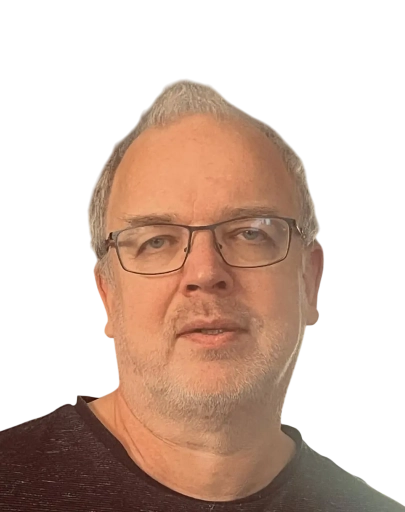
Last position:
Software Test and Maintenance Support at Anton Paar ProveTec GmbH
- Add/create test specifications
- Conduct regression tests
- Conduct release tests
- Analyze Jira tickets
- Identify software defects and fix them with C#
Ensar Y.
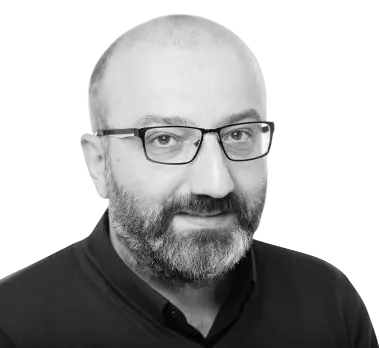
Last position:
Service Manager Microsoft Cloud Services (ITIL) at Industry (technology group)
- Took on the role of Service Manager for Microsoft 365 and Azure services
- Coordinated service providers in the areas of collaboration and security (Exchange Online, Teams, Azure AD)
- Monitored and optimized SLA-compliant operating processes (Incident, Change, Problem)
- Worked closely with internal IT management and integrated ITIL processes into Azure DevOps
- Microsoft Azure, Exchange Online, Teams, Azure AD, ITIL v4, Azure DevOps, Power BI, ServiceNow
Peter K.

Last position:
Hardware and Software Developer / Project Manager at Anonymer Kunde
- Development of control units for the automotive industry incl. embedded software
- CAN bus, Vector Tools, CANoe
- Support of the development process according to ISO 26262
- Ensuring cyber security standards:
- Key exchange (PKI) between vehicle and control units
- Hardware Security Module (HSM)
- Communication with external service providers (international)
- Development (PCB) of measuring adapters, statistical analysis of sensors
- IoT and embedded software development, backend administration
Mostafa S.

Last position:
Embedded Firmware Engineer at Esko-Graphics Imaging GmbH
- FPGA code conversion from AHDL to Verilog and SystemVerilog (Altera Cyclone)
- IDE: Intel Quartus Prime (Altera)
- Code simulation: QuestaSim
- Timing analysis
Jürgen B.

Last position:
Database Administrator and Performance Tuning Specialist at ALD Automotive Leasing Deutschland
- Database administration and performance tuning for Oracle databases on AIX 7.1, 7.2 with Oracle 12c and 19c
- Troubleshooting and resolution on RHEL 7
- Automation of operations with UNIX/Linux shell scripts, Perl programs, and PL/SQL
- Planning, preparation, execution, and customer-specific review of changes and upgrades for the LEASMAN and DOXIS applications
- Incident handling including communication with outsourcing service providers and business units
- Data exchange with Data Pump
- Visualization of database content and monitoring results
- Configuration of databases for Debezium and monitoring Debezium activities
- Preparation of Oracle databases for migration to cloud environments
- Implementation and monitoring of NIST requirements in databases
- Automation of release upgrades for the LEASMAN application
- Creation of operations manuals and instructions
- Generation of reports for GDPR information requests
Kaan D.

Last position:
IT Consultant at Tensora GmbH
Thomas M.

Last position:
Application Developer at Freelance
- Development of a new payment method
- Adaptation of SB programs for FRAUD provisioning
- Creation of programs for fraud processing
- Defect fixing and further development of SB programs
- Analysis and development as part of FRAUD for SB applications
- Requirement analysis
- Program development
- Quality assurance of the developed programs
- Testing of the developed programs
- Development of new batch applications
- Banks
- Assembler, Cobol2, DB2, File-AID, IBM mainframe, IBM ISPF, JCL, JES2, REXX, SQL, TSO, Xpediter, z/OS, IMS-DB, IMS-DC
Pawel N.

Last position:
Subject Mater Expert Linux at TCS Alliance Healthcare
- Updating/upgrading Linux servers to new versions
- Installing Trend Micro on Linux servers
- Creating, presenting and maintaining technical documents
- Refactoring tools
- Platforms: SUSE Linux Enterprise Server (SLES) 10, 11, CentOS, RedHat, Windows 10, PowerShell, Bash, Perl, Trend Micro AV, PuTTY, SSH, VMware
- Project language: English
Mathias K.
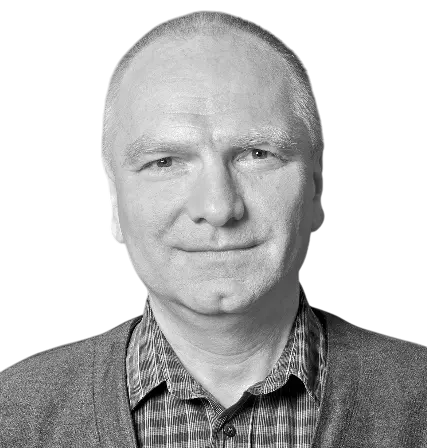
Last position:
botspot 3D Scan GmbH
- Support/consulting in the development and setup of 3D photo scanner systems
- Tools used: KiCAD, ePlanP8
Kornél L.

Last position:
Computer Vision Algorithm Engineer (contract) at Sony R&D Center, Stuttgart Laboratory 1
- Conducted research and development in the field of large-scale 3D reconstruction
Fabian S.

Last position:
Founder at eudaiTec GmbH
- Founded eudaiTec UG in 2021 and GmbH in March 2022
- Founded eudaiTec Private Limited, India in 2022
- Architected and developed the serverless and microservices-based application meetUs (React Native, Serverless Framework, AWS Lambda, AWS DynamoDB, AWS SNS & SQS)
- Conducted requirements engineering, pre-prototyping and concept development for the web application Trustbuilder
- Developed the cross-platform app conneo (React Native)
- Provided IT consulting for ERP rollout project management (end-to-end testing)
- Provided IT consulting for infrastructure setup at WvSC
Steffen L.

Last position:
Berdas Data Service UG
Discover over 15,000 top freelancers


Statistics of experts using Assembly Language
Aggregated from the professional profiles of matched freelancers.

Experience
27 years (Germany: 28 years)

Position duration
2 years (Germany: 2.9 years)

Positions per freelancer
18 (Germany: 19)

Top business areas
Information Technology, Product Development, Quality Assurance

Top industries
Information Technology, Manufacturing, Automotive

Certification focus areas
Information Technology, Business Intelligence, Logistics

Bachelor's degree or higher
75% (Germany: 83%)

Master's degree or higher
58% (Germany: 54%)

Doctorate
17% (Germany: 6%)

Certifications per freelancer
1 (Germany: 3)

Most common languages
German, English, French

Speak two or more languages
100% (Germany: 99%)
Based on our profile pool as of 9 Oct 2026.
Daily rate distribution
The chart shows how the daily rates of experts in this technology in Berlin are distributed, based on recent contracts on our platform. Each bar covers a rate range — its height shows the share of experts charging within that range.
Average rates of experts in Berlin using Assembly Language
Rates are based on recent contracts and do not include FRATCH margin.

The average daily rate is the mean of all daily rates from recent contracts of comparable freelancers on our platform.
The median daily rate is the middle value of all daily rates — half of comparable freelancers charge less, half charge more. Unlike the average, it is barely affected by outliers.
Calculated based on our freelancers’ daily rates as of 9 Oct 2026. Actual rates may vary depending on seniority level, experience, skill specialization, project complexity, and engagement length.
Assembly Language experts industry focus
See which industries our matched freelancers work in most often — every figure is calculated live from the freelancers on FRATCH.
- Information Technology (92%)
- Manufacturing (75%)
- Automotive (67%)
- Energy (58%)
- Healthcare (42%)
- Education (33%)
- Banking and Finance (33%)
- Transportation (33%)
Please note that freelancers can work across multiple industries, so percentages overlap.
About the technology
What Assembly Language Does
Assembly Language is a low-level programming language that maps closely to a processor's instruction set. It gives specialists direct control over registers, memory access, calling conventions and execution flow. Teams use it when timing, binary size, hardware access or reverse engineering matters more than general-purpose abstraction.
Systems It Supports
Assembly appears in firmware, boot code, operating-system components, device drivers, security tools and performance-critical libraries. It also supports binary analysis, legacy maintenance and carefully optimized routines inside applications written in C or C++.
- Embedded and real-time firmware
- Bootloaders and operating-system internals
- Cryptographic and signal-processing routines
- Malware analysis and binary reverse engineering
Ecosystem And Tooling
The right expertise depends on the target architecture, such as x86, x86-64, ARM or RISC-V. Specialists work with assemblers and linkers such as NASM, MASM and GNU Assembler, plus debuggers, disassemblers, profilers, emulators and toolchains for embedded hardware. They must also understand object formats, ABI rules and compiler output.
When Companies Need Help
Companies bring in freelance expertise when a hard-to-reproduce fault crosses the boundary between hardware and software, or when existing low-level code needs safe modernization. In Berlin, this can include embedded products, industrial systems, robotics, telecommunications and security work. Remote collaboration works well when teams provide hardware access, traces, build instructions and clear test conditions; on-site work can help when physical devices are central to the task.
What Strong Specialists Deliver
Strong professionals begin with the processor manual, build environment and observable failure rather than guessing from source code. They produce readable routines, documented assumptions, reproducible builds and tests that cover edge cases. They can explain trade-offs clearly to teams working in higher-level languages and distinguish a genuine optimization from a fragile microbenchmark result.
Choosing The Right Expert
Look for relevant architecture and operating-environment experience, not just familiarity with assembly syntax. Ask for examples involving debugging, calling conventions, memory safety, cross-compilation or disassembly, while respecting confidentiality. A good specialist can define the smallest useful deliverable, identify risks early and leave behind documentation that another professional can maintain.

Frequently asked questions
What clients ask us most about Assembly Language — answered in short.

Assembly Language is used for firmware, boot code, operating-system components, device drivers, security analysis and routines where precise hardware control matters. It is also useful for understanding compiler output, diagnosing binary faults and optimizing carefully selected hot paths.
Assembly Language offers more direct control over instructions, registers and memory, while C and C++ provide stronger abstraction and usually faster application development. Many production systems combine them, using assembly only where hardware access, timing or a proven performance constraint justifies the added maintenance cost.
A strong Assembly Language specialist should understand the relevant processor architecture, C or C++, linker scripts, ABI conventions and operating-system interfaces. Debugging with tools such as GDB, analyzing binaries with disassemblers and working with cross-compilers are also valuable.
The right Assembly Language experience depends on the architecture, risk level and deliverable, not on syntax alone. A small isolated routine may need focused expertise, while firmware, kernel or reverse-engineering work calls for a professional who has handled the surrounding toolchain, testing and hardware constraints.
Assembly Language work can often be done remotely when the team supplies a reproducible build, logs, traces, emulators or reliable access to target hardware. On-site collaboration in Berlin is more useful when debugging depends on physical devices, lab equipment or close coordination with an embedded product team.
Bring in an Assembly Language freelancer when a performance issue, hardware fault, binary compatibility problem or legacy routine exceeds the team's current low-level expertise. A specialist can isolate the constraint, make a targeted change and document how the result should be tested and maintained.
Quality Assembly Language work has a clear purpose, follows the target ABI, preserves required registers and includes tests for boundary conditions. Reviewers should also check readability, comments tied to architectural facts, reproducible builds and evidence that the change improves the real workload rather than only a synthetic test.
Before starting Assembly Language work, clarify the processor architecture, assembler syntax, operating environment, calling convention, build pipeline and success criteria. Agree on access to hardware or binaries, permitted analysis methods, documentation standards and how the final routine will be reviewed by the wider team.
The average hourly rate of freelancers in Berlin, Germany who have used Assembly Language in their recent projects is 95 €, which corresponds to a daily rate of about 760 € based on an 8-hour working day.
Of the freelancers in Berlin, Germany who have used Assembly Language in their recent projects, 75% hold at least a Bachelor's degree, 58% hold at least a Master's degree, and 17% hold a doctorate.
On average, freelancers in Berlin, Germany who have used Assembly Language in their recent projects have 27 years of professional experience, with a single engagement typically lasting around 2 years.
The most common languages among freelancers in Berlin, Germany who have used Assembly Language in their recent projects are German (100%), English (92%), and French (42%).
The most common industries among freelancers in Berlin, Germany who have used Assembly Language in their recent projects are Information Technology (92%), Manufacturing (75%), and Automotive (67%).
The most common business areas among freelancers in Berlin, Germany who have used Assembly Language in their recent projects are Information Technology (92%), Product Development (83%), and Quality Assurance (83%).
Main locations of FRATCH Experts, who have recently used Assembly Language
Our freelancers and interim experts are at home across the DACH region — available on-site in the major business hubs or fully remote. Choose a location to discover matched specialists, local market insights and up-to-date availability.
 Berlin
  Hamburg Munich Cologne Frankfurt Stuttgart Dusseldorf Leipzig Dortmund Essen Bremen Dresden Hanover Nuremberg
  Munich
  Frankfurt
  Stuttgart
  Dusseldorf
 Countries:
Request a free demo
Get in touch with the FRATCH team and we will get back to you within 4 hours.
Would you rather directly get in touch?
We always have the time for a call or email!

Philipp Thomaschewski
FRATCH CEO

