


Assembly Language Experts in Dusseldorf
from over 15,000 CVs matched by AIHire experts who master low-level processor architectures, hardware-near firmware, and cycle-accurate performance optimization, verified rapidly through precision AI matching.

Meet FRATCH Experts in Dusseldorf, who have recently used Assembly Language
Rudolf E.
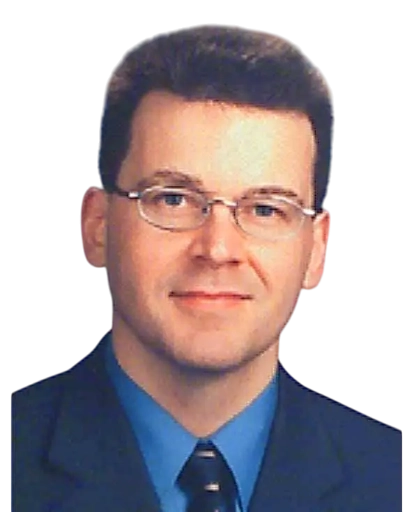
Last position:
Datacenter Engineer, Network & Security Administrator at International insurance group
Operation and further development of the network and security infrastructure.
Monitoring, analysis and resolution of network and security incidents.
Cross-department collaboration with other specialist teams for operations, further development and reporting.
Firewall vulnerability analysis.
Firewall rule approvals.
Troubleshooting IP communication issues in the network and firewall infrastructure.
Security-critical IT infrastructure, processing of personal data, compliance with legal regulations.
Products: Palo Alto Networks Firewalls, Cisco ACI, Checkpoint Firewalls, F5
Technologies: SDN, SDWAN, Cisco EPIC, Cisco ACI
Thorsten L.
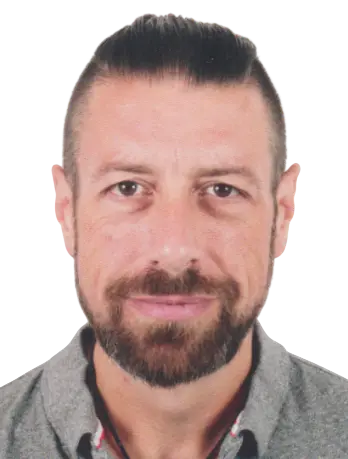
Last position:
Senior Security Analyst
- Analysis and remediation of security vulnerabilities in a risk assessment system for energy trading
- System analysis
- Threat modeling
- Decision-making on vulnerability mitigation strategies
- Implementation of vulnerability detection mechanisms
- Security scans
- DevSecOps practices
- Technical environment: Visual Studio Code, JetBrains Suite, MS Threat Modeling Tool, DevSecOps, Git, AWS, DynamoDB, SQL Server, Endur, Snowflake, Orca
- Languages: C#, JavaScript, TypeScript, Python, PowerShell, Bash, Terraform, SQL
Stanislaus S.
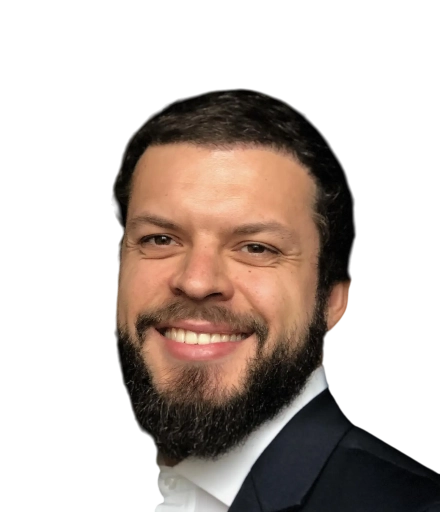
Last position:
Security Consultant at Rohde & Schwarz AG at Star Labs GmbH
- Worked on FPGA enhanced network encryption device with secure boot, TPM2.0 and smart card integration for BSI approved usage with Post Quantum Cryptography
- Developed and audited Linux drivers
- Collaborated using GitLab, Gerrit, Confluence and Jira
- Technologies: C, C++, Secure Boot
Jürgen S.
Last position:
IT Consultant / Analyst / Developer / Tester / Support at Automotive Manufacturer
- Analysis, software development/customization, and testing of various transaction and batch objects
- Conducting functional integration and regression tests on TEST and QA platforms under z/OS for later production implementation
- Hardware / Software / Tools: IBM MVS, z/OS, JES2/3, TSO-ISPF, JCL, DB2, SQL, SQL/PL, QMF, QMF for Workstations, SPUFI, FileAid, IMS-DB/DC, MFS, XPEDITER, COBOL, REXX, Windows 10, MS Office 365, MS Teams, batch job management via OPC, BETA92, RVS, BVB, ABL, DIALOGplus, PROBA, PRODPR (VW internal systems), JIRA, CONFLUENCE
Bernhard D.

Last position:
Enterprise Architect. And responsible for the cross-functional architecture as well as all domains with a focus on the sales at Süddeutsche Krankenversicherung
Creation of business and technical concepts as well as support for enterprise architecture management as part of the migration to the Adesso standard insurance solutions and the renewal of surrounding systems
Interface definitions
Business analysis and creation of the business concepts for input management and sales
Creation of architecture guidelines and processes
Processing technical and business decisions in the architecture board
Definition of service processes and system management aspects
Creation of the technical target operating model
Creation of an integration architecture for AI/LLMs from the providers Commasoft and Insiders
CommaSoft (Alan) webpages and web services
Insiders for Smartfix based on web services
Creation of a question catalog for a security/regulatory check.
Analysis of threats using threat modeling / STRIDE incl. creation of a set of measures to secure the systems
System environment: Jira, Confluence, Java, Enterprise Architect, VAIT/DORA, KritisV, GDPR, IT ServiceMgmt, Adesso Ecosphere and Insure Health, DoPIX and successor product, SmartFix, SmartFlow, Zabas, Kolumbus, Clarc archive, BiPRO, AI / LLM, MS Azure, AWS, TOM/FMO
Werner H.
Last position:
Insurance company
- Migrations of DB2 databases to Oracle
- Design and setup of new databases based on ODA X7-HA / X9-HA RAC 12cR2 - 19.23 / Data Guard / GI 19c
- Hardware: ODA X7 X9 / IBM
- Software: Oracle 12c-19.23 / Oracle Linux Enterprise 7.1–8.8
Discover over 15,000 top freelancers


Statistics of experts using Assembly Language
Aggregated from the professional profiles of matched freelancers.

Experience
33 years (Germany: 28 years)

Position duration
1.7 years (Germany: 2.9 years)

Positions per freelancer
28 (Germany: 19)

Top business areas
Information Technology, Product Development, Operations

Top industries
Information Technology, Manufacturing, Automotive

Certification focus areas
Information Technology, Project Management, Product Development

Bachelor's degree or higher
75% (Germany: 83%)

Master's degree or higher
25% (Germany: 54%)

Certifications per freelancer
5 (Germany: 3)

Most common languages
German, English, Spanish

Speak two or more languages
100% (Germany: 99%)
Based on our profile pool as of 9 Oct 2026.
Daily rate distribution
The chart shows how the daily rates of experts in this technology in Dusseldorf are distributed, based on recent contracts on our platform. Each bar covers a rate range — its height shows the share of experts charging within that range.
Average rates of experts in Dusseldorf using Assembly Language
Rates are based on recent contracts and do not include FRATCH margin.

The average daily rate is the mean of all daily rates from recent contracts of comparable freelancers on our platform.
The median daily rate is the middle value of all daily rates — half of comparable freelancers charge less, half charge more. Unlike the average, it is barely affected by outliers.
Calculated based on our freelancers’ daily rates as of 9 Oct 2026. Actual rates may vary depending on seniority level, experience, skill specialization, project complexity, and engagement length.
Assembly Language experts industry focus
See which industries our matched freelancers work in most often — every figure is calculated live from the freelancers on FRATCH.
- Information Technology (100%)
- Manufacturing (83%)
- Automotive (67%)
- Banking and Finance (67%)
- Healthcare (67%)
- Insurance (67%)
- Transportation (67%)
- Government and Administration (67%)
Please note that freelancers can work across multiple industries, so percentages overlap.
About the technology
Direct Hardware Control and Architecture
Assembly language provides human-readable mnemonics mapped directly to machine instructions. It operates without runtime overhead or abstract layers. Specialists use it to manage registers, pipeline stages, cache lines, and direct memory access across diverse CPU architectures including x86, x86-64, ARM, and RISC-V.
Low-Level Applications and Systems Engineering
- Writing bootloaders, board support packages, and bare-metal firmware
- Tuning cycle-critical algorithms for cryptography and high-frequency trading
- Developing kernel patches, interrupt service routines, and device drivers
- Reverse engineering legacy binaries and analyzing security vulnerabilities
Toolchains and Ecosystem Components
Working with assembly code demands specific assemblers such as NASM, MASM, GAS, and FASM. Tooling centers on disassemblers and debuggers like IDA Pro, Ghidra, GDB, and Radare2. Professionals combine ASM with C and C++ through inline assembly or dedicated object linking, verifying behavior via hardware oscilloscopes and logic analyzers.
Critical Value for Embedded and Industrial Systems
Industrial automation, telecommunications, and automotive suppliers in North Rhine-Westphalia depend on real-time determinism. When standard compilers fail to meet stringent latency bounds or memory constraints, assembly routines guarantee microsecond precision. Low-level assembly keeps control loops reliable inside harsh industrial operating environments.
Core Competencies in Strong Specialists
A proficient specialist understands calling conventions, ABI specifications, and memory barrier semantics. They do not write entire codebases in assembly without clear necessity. Instead, they isolate critical bottlenecks, analyze compiler output, optimize SIMD vector paths, and document side effects thoroughly for future maintainability.
Engaging External Assembly Specialists
Organizations engage external specialists to resolve elusive timing anomalies, audit binary safety, or port firmware to fresh silicon platforms. In Dusseldorf and the Rhine-Ruhr corridor, teams often structure work around hybrid models: handling binary research and optimization remotely, while running hardware bring-up and verification on local lab benches.

Frequently asked questions
What clients ask us most about Assembly Language — answered in short.

Assembly Language provides direct control over machine code and processor instructions. Organizations rely on it for hardware bring-up, real-time operating system kernels, bootloaders, micro-optimizations in signal processing, and vulnerability analysis through binary reverse engineering.
Compilers generate highly efficient machine code, but certain low-level operations remain out of reach. Hand-crafted ASM is required for accessing specialized CPU instructions, managing task switches, writing interrupt handlers, and extracting the absolute maximum throughput from tight computational inner loops.
Most projects call for assembly knowledge targeting x86-64 server platforms, ARM architectures commonly found in modern embedded devices, or open-standard RISC-V chips. Automotive and industrial embedded projects may also require deep experience with legacy microcontrollers such as AVR, PIC, or TriCore.
A strong background in assembler development always pairs with idiomatic C and C++. Specialists routinely deploy low-level tools such as GDB, LLDB, Ghidra, IDA Pro, and hardware debugging probes using JTAG or SWD interfaces.
Evaluate practical experience in debugging live hardware boards, reading processor data sheets, and analyzing compiler output. Top assembly language professionals can clearly explain when assembly is strictly necessary and when higher-level languages should be preferred.
Yes, many Assembly Language specialists based in Dusseldorf offer hybrid collaboration. While binary analysis, static auditing, and simulator testing can be done remotely, prototype testing and bench integration benefit from periodic visits to local industrial facilities.
Technical documentation and processor instruction reference manuals for ASM are universally in English. In Dusseldorf and surrounding hubs, local professionals typically speak fluent English alongside German, simplifying alignment with regional engineering teams.
Clear register allocation records, exhaustive inline comments, and standalone regression test benches ensure low-level routines remain maintainable. Experienced assembly specialists isolate assembly blocks in dedicated modules and document all architectural side effects.
The average hourly rate of freelancers in Dusseldorf, Germany who have used Assembly Language in their recent projects is 113 €, which corresponds to a daily rate of about 905 € based on an 8-hour working day.
Of the freelancers in Dusseldorf, Germany who have used Assembly Language in their recent projects, 75% hold at least a Bachelor's degree and 25% hold at least a Master's degree.
On average, freelancers in Dusseldorf, Germany who have used Assembly Language in their recent projects have 33 years of professional experience, with a single engagement typically lasting around 1.7 years.
The most common languages among freelancers in Dusseldorf, Germany who have used Assembly Language in their recent projects are German (100%), English (100%), and Spanish (33%).
The most common industries among freelancers in Dusseldorf, Germany who have used Assembly Language in their recent projects are Information Technology (100%), Manufacturing (83%), and Automotive (67%).
The most common business areas among freelancers in Dusseldorf, Germany who have used Assembly Language in their recent projects are Information Technology (100%), Product Development (83%), and Operations (67%).
Main locations of FRATCH Experts, who have recently used Assembly Language
Our freelancers and interim experts are at home across the DACH region — available on-site in the major business hubs or fully remote. Choose a location to discover matched specialists, local market insights and up-to-date availability.


 Berlin
  Munich
  Frankfurt
  Stuttgart
 Request a free demo
Get in touch with the FRATCH team and we will get back to you within 4 hours.
Would you rather directly get in touch?
We always have the time for a call or email!

Philipp Thomaschewski
FRATCH CEO

