


Vulnerability Management Experts in Berlin
in minutes from over 15,000 CVs with the power of AIWork with specialists who discover security flaws, prioritize CVEs using CVSS and threat intelligence, and automate remediation across cloud and on-premise infrastructure. Get matched rapidly with vetted, available talent tailored to your tech stack.

Meet FRATCH Experts in Berlin, who have recently used Vulnerability Management
Victor O.

Last position:
AI Training Engineer at Confidential AI Research Client
- Codebase Evaluation & Problem Design: Designed and stress-tested complex software engineering problems against large open-source Python codebases (including pandas), requiring deep context acquisition and architectural understanding to produce well-scoped, realistic problem statements aligned to strict correctness guidelines.
- Agent Failure Analysis: Assessed LLM coding agent solutions for correctness and completeness, identifying meaningful failures across edge case handling, dtype behaviour, and multi-column NaN propagation logic; documented findings with precision for downstream evaluation use.
- Programmatic Test Suite Development: Authored comprehensive pytest suites to programmatically verify agent-generated solutions against defined requirements, with deliberate coverage of boundary conditions and failure modes not caught by naive implementations.
- Containerised Environment Engineering: Built and debugged Docker environments for reproducible agent execution, including git-based repository provisioning, dependency pinning with npm ci, and multi-stage Dockerfile authoring across Linux-based containers.
André B.

Last position:
External Attack Surface Assessment & Cybersecurity Readiness Checks at Graydaxe Cybersecurity GmbH
- Conducting cybersecurity readiness checks based on an in-house assessment methodology
- Analyzing the external attack surface using the Graydaxe EASM platform
- Assessing maturity levels and deriving prioritized recommendations for action
Ali Y.
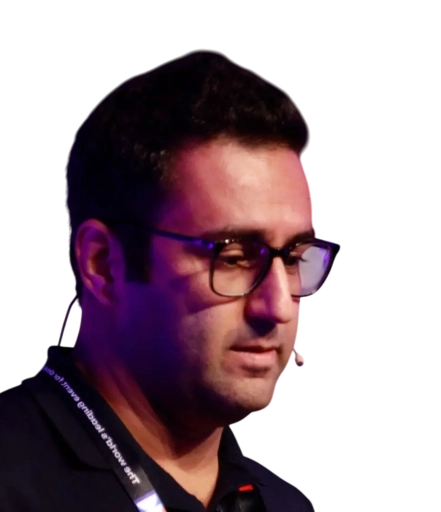
Last position:
Principal Product Security Engineer at Payrails GmbH
- Defined and executed a comprehensive security roadmap: integrated Shift-Left Security, CNAPP, and DevSecOps principles to streamline secure product development and reduce risk exposure.
- Established a robust threat modeling framework: embedded security into design processes, enabling early identification of vulnerabilities and reducing potential risks.
- Developed a scalable Vulnerability Management program: accelerated detection and remediation of new vulnerabilities, significantly shortening the risk response cycle.
- Enhanced cloud and container security: leveraged advanced tools such as Tetragon to achieve deeper visibility and implement a defense-in-depth strategy.
- Automated security controls within CI/CD pipelines: integrated security measures into the development lifecycle to maintain continuous delivery with robust safeguards.
- Championed cross-functional collaboration: partnered with developers and infrastructure teams to prioritize threats and align remediation efforts, fostering a unified security culture.
- Ensured regulatory compliance and audit readiness: collaborated closely with the InfoSec team to adhere to internal policies and successfully support audits for standards like PCI-DSS and SOC2.
Seyed Farhad M.

Last position:
Senior Product Security Engineer at Delivery Hero
- Developed a custom tool using the Mistral 7B LLM to scan, validate and report security vulnerabilities.
- Security tested AI agents, bots, and other LLMs with a focus on prompt injection, model inversion, data poisoning, EDR/AV bypass and evasion techniques, membership inference, model evasion, overfitting to malicious inputs and contextual manipulation.
- Onboarded repositories to SAST solutions for security scanning, implemented secrets scanning, DAST, SCA, and utilized ZAP for DAST in CI/CD pipelines.
- Engaged in security awareness trainings, developed CTF challenges and training materials to enhance developer security knowledge.
- Planned and executed bi-annual red teaming operations based on the MITRE ATT&CK framework and led internal and external pentests based on the OWASP Top 10 framework for 70+ applications worldwide, resulting in detection, reporting, and remediation of hundreds of vulnerabilities.
- Triaged HackerOne reports.
Vishnu K.
Last position:
Red Team Engineer (Professional Management Level VI) at Schwarz Group (Lidl, Kaufland, Stackit)
- Developed Red Team infrastructure for real-world attack simulations using Sliver C2 and custom tools
- Executed advanced Red Team operations, integrating AI/LLM security research for prompt injection attacks
- Conducted comprehensive breach assessment attacks and vulnerability assessments across enterprise infrastructure
- Performed root cause analysis and purple team exercises, generating executive-level reports
- Lead LLM red teaming initiatives to improve AI model security for GPT-4, Mistral, and internal GenAI models
Jan K.

Last position:
Consultant for Information Security & Auditor at Kopiasonsulting GmbH
Operational management of the company: building teams and infrastructure, developing products, analysis and implementation of IT security measures
Project assignments in the IT security environment focusing on establishing blue teaming activities (defensive processes and technologies) to defend against cyber attacks
Conducting red teaming processes, including penetration tests and security analyses for companies
Consulting on setting up Security Operation Centers and implementing SIEM systems, and building Computer Incident Response Teams (CSIRT)
Auditor for ISO 9001 and ISO 27001, § 8a, ISO 27019, § 11 1a EnWG, TISAX
Advising companies in critical infrastructures on information security and compliance with the IT Security Act
Building SIEM/SOC processes and SOC analyst work (Splunk, ELK-Stack)
Integrating data into monitoring tools (Prometheus, Grafana)
Consulting on BSI IT baseline protection, ISO 9001, ISO 27001, BCM, ITIL and risk management
Security assessments and penetration testing of IT and network architectures
Yves W.
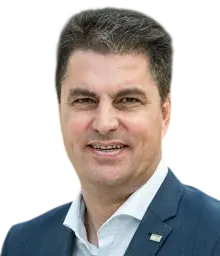
Last position:
Program Director, Project Manager
- Senior program director and enterprise architect with nearly 30 years of operational experience in HR, ERP, security, risk management, finance, PLM and SLM.
- Expertise in IT program and project management, engineering, process management and organizational development.
- Experience working for the world leader in service management software, rail transportation and a leading tier 1 automotive supplier.
- Subject matter expertise in finance, automation processes, logistics, ERP and PLM and integration, including related end-to-end lifecycle data management and enterprise architecture.
- Specializes in managing large and complex engagements, programs and projects from demand, idea and strategy to operation, including stakeholder and change management.
- Expertise areas: HR, ERP, SecOps, integrated risk management, supply chain and operations, finance, SLM, product strategy, lifecycle management, shared services, IT and PLM.
- Industry experience in technology, tier 1 automotive, transportation and logistics, manufacturing, high technology and software industries, banking and insurance, and railway.
- Experience with SecOps (security incident response and vulnerability management), digital portfolio management, integrated risk management, service portfolio management and business continuity planning.
- Experience defining and designing integrated risk management including security and operations (response plans), CMDB initiatives and shared service implementations.
- Implemented integrated risk management including digital business continuity plans, disaster recovery plans, digital maturity assessments and security risk registers.
- Technology skills include SAP, HR, time and attendance, ERP, PLM, ALM, ITSM and CAD systems.
- Experience with cloud-based services and master data management.
- Familiar with TOGAF, IT4IT, SAFe and PPM.
- Project client exposure to companies such as Siemens, BMW, Daimler, BASF, Bayer, Bosch, DHL, DB Schenker, ServiceNow, Bombardier, KION, Johnson Controls, Schaeffler, Deutsche Telekom, SAP, FEMSA, CEMEX, Nestlé, Heineken, Air France/KLM, Airbus, Vodafone, Majorel, Virgin Trains, Equinor, ASML and Volvo.
- Holds a master’s degree in informatics and a bachelor’s degree in applied economics.
Markus W.

Last position:
KRITIS Consultant at Oil Company
- Preparing an oil company for KRITIS auditing
- KRITIS consulting
- Creating necessary policies, processes, and guidelines in line with KRITIS requirements
- Tools and methodologies used: ISO/IEC 27001, BSI IT Baseline Protection, KRITIS-V
Discover over 15,000 top freelancers


Statistics of experts using Vulnerability Management
Aggregated from the professional profiles of matched freelancers.

Experience
14 years (Germany: 17 years)

Position duration
2.8 years (Germany: 2.3 years)

Positions per freelancer
13 (Germany: 14)

Top business areas
Information Technology, Project Management, Quality Assurance

Top industries
Information Technology, Banking and Finance, Professional Services

Certification focus areas
Information Technology, Audit, Legal

Bachelor's degree or higher
100% (Germany: 91%)

Master's degree or higher
43% (Germany: 60%)

Doctorate
14%

Certifications per freelancer
10 (Germany: 8)

Most common languages
English, German, French

Speak two or more languages
88% (Germany: 97%)
Based on our profile pool as of 9 Oct 2026.
Daily rate distribution
The chart shows how the daily rates of experts in this technology in Berlin are distributed, based on recent contracts on our platform. Each bar covers a rate range — its height shows the share of experts charging within that range.
Average rates of experts in Berlin using Vulnerability Management
Rates are based on recent contracts and do not include FRATCH margin.

The average daily rate is the mean of all daily rates from recent contracts of comparable freelancers on our platform.
The median daily rate is the middle value of all daily rates — half of comparable freelancers charge less, half charge more. Unlike the average, it is barely affected by outliers.
Calculated based on our freelancers’ daily rates as of 9 Oct 2026. Actual rates may vary depending on seniority level, experience, skill specialization, project complexity, and engagement length.
Vulnerability Management experts industry focus
See which industries our matched freelancers work in most often — every figure is calculated live from the freelancers on FRATCH.
- Information Technology (100%)
- Banking and Finance (63%)
- Professional Services (50%)
- Transportation (38%)
- Manufacturing (38%)
- Telecommunication (38%)
- Automotive (25%)
- Energy (25%)
Please note that freelancers can work across multiple industries, so percentages overlap.
About the technology
Continuous Scanning and Asset Discovery
Modern vulnerability management establishes baseline visibility across hybrid infrastructure. Specialists configure automated scanners to catalog endpoints, cloud resources, container registries, and external perimeters. Continuous asset discovery ensures unmanaged assets and shadow IT are exposed before threat actors exploit them.
Risk-Based Prioritization and CVE Triage
Raw scan outputs generate thousands of alerts that overwhelm engineering teams. Professionals apply contextual analysis to prioritize Common Vulnerabilities and Exposures. They combine Common Vulnerability Scoring System ratings with Exploit Prediction Scoring System metrics and threat intelligence to distinguish exploitable exposures from theoretical weaknesses.
Tooling and Platform Integration
- Enterprise vulnerability scanners such as Tenable Nessus, Qualys, and Rapid7 Nexpose
- Cloud security posture management tools including Wiz, Orca, and Prisma Cloud
- Application scanning suites spanning Snyk, Veracode, and GitHub Advanced Security
- Ticketing and workflow bridges integrating Jira, ServiceNow, and automated patch pipelines
Remediation Workflows and SLA Governance
Effective vulnerability assessment requires structured remediation workflows. Freelance specialists define realistic service level agreements for patching based on business criticality. They collaborate closely with infrastructure and platform teams to orchestrate routine kernel upgrades, package replacements, and configuration adjustments without disrupting production operations.
Compliance Alignment and Security Operations
Organizations in Berlin frequently handle sensitive data governed by GDPR, BSI IT-Grundschutz, or ISO 27001 standards. Freelance professionals align vulnerability scanning regimens with these compliance frameworks. They audit internal networks, supply audit-ready reporting to leadership, and integrate scan outputs into Security Operations Center workflows for coordinated defense.
When to Bring In External Expertise
- Backlogs of unresolved vulnerability alerts exceed internal response capacity
- Upcoming audits demand formalized patch management and scanning policies
- Migrations to cloud-native platforms introduce untracked container risks
- New compliance directives require independent validation of external perimeters

Frequently asked questions
Curious about Vulnerability Management? Here are the answers that come up again and again.

A specialist in vulnerability management designs and maintains processes to identify, evaluate, and remediate technical flaws across networks, endpoints, and cloud environments. They configure scanning tooling, analyze severity using threat intelligence, and coordinate with engineering teams to ensure patches and mitigating controls are deployed systematically.
While penetration testing involves simulated attacks at a specific point in time to breach defenses, vulnerability management is an ongoing operational process. It focuses on comprehensive asset discovery, continuous monitoring, and structured patch management rather than manual exploit chaining.
Specialists routinely manage enterprise vulnerability scanners like Tenable Nessus, Qualys VMDR, and Rapid7 InsightVM. For containerized and cloud environments, they implement tools like Snyk, Wiz, and Trivy, connecting findings directly to Jira or ServiceNow for developer remediation.
Strong vulnerability assessment professionals bring solid foundations in Linux and Windows systems administration, cloud architecture on AWS, Azure, or GCP, and basic scripting in Python or Bash. Knowledge of network protocols and software supply chain security is equally essential for validating alert accuracy.
Most vulnerability management initiatives run completely remotely because scanning agents, cloud posture engines, and reporting dashboards are cloud-hosted. For Berlin-based organizations, remote setups work seamlessly, though occasional on-site sessions facilitate initial asset architecture reviews and cross-team workshops.
Clear metrics include a reduced Mean Time to Remediate (MTTR) for critical CVEs, improved asset coverage across environments, and declining backlogs of stale vulnerabilities. A solid program also minimizes false positive alerts and establishes repeatable remediation SLAs.
Berlin-based organizations frequently require vulnerability management aligned with BSI IT-Grundschutz, ISO 27001, and European banking regulations like DORA. Professionals ensure scanning schedules and reporting cadences satisfy these strict statutory audit expectations.
Rather than relying solely on base CVSS scores, effective vulnerability management specialists incorporate the Exploit Prediction Scoring System (EPSS), active exploit feeds, and internal network exposure. This context ensures teams fix flaws actively targeted by attackers before addressing isolated, low-risk issues.
The average hourly rate of freelancers in Berlin, Germany who have used Vulnerability Management in their recent projects is 100 €, which corresponds to a daily rate of about 801 € based on an 8-hour working day.
Of the freelancers in Berlin, Germany who have used Vulnerability Management in their recent projects, 100% hold at least a Bachelor's degree, 43% hold at least a Master's degree, and 14% hold a doctorate.
On average, freelancers in Berlin, Germany who have used Vulnerability Management in their recent projects have 14 years of professional experience, with a single engagement typically lasting around 2.8 years.
The most common languages among freelancers in Berlin, Germany who have used Vulnerability Management in their recent projects are English (100%), German (75%), and French (25%).
The most common industries among freelancers in Berlin, Germany who have used Vulnerability Management in their recent projects are Information Technology (100%), Banking and Finance (63%), and Professional Services (50%).
The most common business areas among freelancers in Berlin, Germany who have used Vulnerability Management in their recent projects are Information Technology (100%), Project Management (63%), and Quality Assurance (63%).
Main locations of FRATCH Experts, who have recently used Vulnerability Management
Our freelancers and interim experts are at home across the DACH region — available on-site in the major business hubs or fully remote. Choose a location to discover matched specialists, local market insights and up-to-date availability.


 Munich
  Cologne
 Request a free demo
Get in touch with the FRATCH team and we will get back to you within 4 hours.
Would you rather directly get in touch?
We always have the time for a call or email!

Philipp Thomaschewski
FRATCH CEO

