


Tenable Experts in Germany
from over 15,000 CVs with fast, precise AI matchingHire experts who assess exposure, tune vulnerability management workflows, connect Tenable with security operations, and turn scan data into clear remediation plans. FRATCH matches you quickly with vetted, available freelancers who fit your project.

Meet FRATCH Experts in Germany, who have recently used Tenable
Reza N.

Last position:
Senior IT-Security Expert at Teambank AG
- Completed the integration of log sources into Microsoft Sentinel, including GCP workloads – centralized consolidation of all security-relevant events from Azure and GCP environments for complete end-to-end telemetry and comprehensive compliance evidence
- Developed custom rules and use cases based on the GFG Use-Case Library and the MITRE ATT&CK Matrix to cover company-specific threats and GFG-relevant scenarios with precise, mapped detection rules
- Tuned detection rules to minimize false positives, optimized detection thresholds, and modeled exceptions – enabling the SOC to work with relevant, prioritized alerts while reducing Mean Time to Detect/Respond
- Built SOAR capabilities in Sentinel by developing playbooks to automate recurring response processes such as containment, user and host isolation, and ticketing – shorter response times and 24/7 scalability
- Designed and built a log transformation solution to normalize and enrich incoming raw logs (GeoIP, CMDB, threat intelligence) and convert them into a consistent schema for high-performance KQL queries, use case logic, and correlations
- Managed Azure security through Azure Policies to enforce security and compliance standards, prevent drift, and continuously remediate deviations
- Operated the Defender XDR portal to link endpoint, identity, email, and SaaS signals with Sentinel findings, enable holistic incident triage, and orchestrate measures directly from XDR
Technologies: Microsoft Sentinel, Microsoft Defender XDR, Azure Policy, KQL, GCP, MITRE ATT&CK
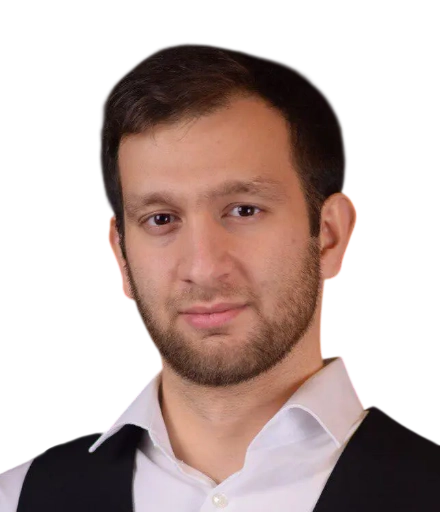
Mahmoud Q.
Last position:
Information Security & GRC Expert at GLG (Gerson Lehrman Group)
As a Council Member at GLG (Gerson Lehrman Group), the world’s leading expert network, I provide organizations, investment firms, and consulting companies with expert discussions on demand – wherever specialized knowledge in information security, IT governance, and regulatory compliance is needed.
My assessments are based on many years of practical experience in highly regulated industries: from building and implementing information security management systems (ISMS according to ISO 27001), IT risk and vulnerability management, and business continuity (ISO 22301) to the practical implementation of European regulations such as DORA, NIS2, BAIT, and the Cyber Resilience Act (CRA).
The cooperation is project- and discussion-based. I provide decision-makers with a practical perspective gained from real-world experience on cyber risks, security governance, and operational resilience – exactly when it is needed.
Thomas P.

Last position:
Unix/Linux Administrator at BDAV Verwaltungs GmbH
- Consulting and project management to build an AI-based automation platform for market data analysis
- Automated testing of financial data
- Market data automation with Python and N8N
- AI data integration and AI learning
- Use of Ollama and Qwen
- Data organization and database management
Enrique G.

Last position:
Security Architect at Capgemini
I implemented a Zero-Trust architecture for robust, military-grade maritime container mini data centers based on VMware & Tanzu to support containerized GIS workloads for ground forces. The main focus was on securing communications, workload protection, and data access in contested electronic battle environments affected by jamming, interception, signal manipulation, and constantly changing operational conditions. I designed and architected use cases so that every element of workload, identity, and system could continue to operate independently and securely even in degraded or disrupted scenarios. In parallel, I defined the enterprise and solution security architecture with LeanIX, Bizzdesign, and HOPEX as enterprise architecture, repository, and governance platforms to maintain architecture inventory, relationships, traceability, target pictures, and security governance in complex environments. For the architectural designs, I used Sparx Enterprise Architect to describe formal architecture views, interfaces, trust boundaries, and system architecture in both IT and OT environments. IriusRisk was used for threat modeling of the solution to identify architecture-driven risks, derive security requirements, and detect countermeasures and design gaps directly from the solution models. Risk and compliance management was supported with Archer. Architecture decisions, control gaps, and operational risks were translated into controlled governance and auditable compliance measures. For documentation, collaboration, and visual design, I used Confluence to maintain Architecture Decision Records, Security Blueprints, and workflows. I used Lucidchart and draw.io to create design artifacts tailored to stakeholders. I also defined OT security concepts with support from electrical and mechanical engineers in the areas of oil, vehicle onboard systems, rail, power plants, pharma, gas turbines, and nuclear technology. I created the end-to-end OT security strategy, starting with global policy, developed into standards and procedures, and finally aligned with Bell-LaPadula, Purdue Model, SABSA, TOGAF ADM, CENELEC 50701, IEC 62443, and NIST standards. In addition, I worked with engineering team leads to identify critical KBP assets and place them under protective measures that segmented SCADA, PLC, and HMI assets. I drove collaboration between Security, IT, and OT teams to create standardized workflows and use cases for the OT security solution catalog, while integrating Defense-in-Depth and Zero-Trust principles into operational environments. A key part of my work was integrating multidisciplinary engineering, security, and operations stakeholders into a unified security blueprinting strategy and ensuring that architecture, threat modeling, governance, and documentation were technically strong and operationally practical.
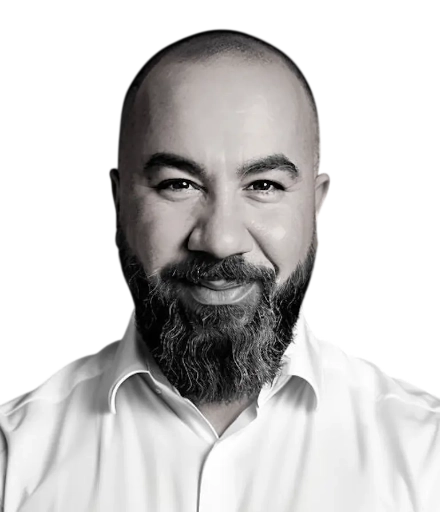
Halil O.
Last position:
Senior Cloud Operations & DevSecOps Engineer (Azure / Terraform / CI-CD) at KfW Bankengruppe
Regulated environment within a German banking group (approx. 8,500 employees, hybrid cloud strategy).
Responsible for operating, provisioning, and continuously securing business-critical platforms – including a GenAI chat application, a big data/AI platform, and data science workspaces based on Azure Virtual Desktops and VMs. Ownership of Azure DevOps projects for ShaiHulud and React2Shell, as well as BSI alerts – Security Operations improvements across the SDLC.
Deployment responsibility for the GenAI chat application, big data/AI platform (BDAI), and data science workspaces (AVD/VM-based) in the respective landing zones.
Deployment & release management: end-to-end responsibility for deploying portal and service applications across multiple Azure landing zones, including technical approvals, compliance with development team deployment guidelines, and ensuring ITIL-based change and release processes via ServiceNow.
Azure landing zones & network architecture: design, provisioning, and operation of Azure landing zones for 3-tier web applications with enhanced network segmentation, VNet peering, hub-and-spoke architectures, private endpoints, and firewall integration across separate subscriptions and tenants.
Azure DevOps governance & operations: ownership of the Azure DevOps organization, including projects, repositories, and CI/CD pipelines; implementation of governance requirements such as branch policies, approval gates, permission models, and audit-ready operating structures.
Infrastructure as Code (Terraform): design, implementation, and operation of a modular Terraform architecture for standardized cloud infrastructure deployment, including state management, provider versioning, reusability, and policy-as-code approaches.
CI/CD pipeline engineering: design, operation, and optimization of complex YAML-based CI/CD pipelines with multi-stage deployments, template standardization, self-hosted agents, integrated secret management, and automated quality and security checks.
Git migration & platform consolidation: planning and execution of repository and pipeline migration from Azure DevOps to GitLab CI/CD, including automated scripts, full Git history transfer, pipeline porting, and platform consolidation.
Container & platform operations (AKS): operation and security assessment of containerized workloads on Azure Kubernetes Service, centralization of on-premises container registries for ACR.
OpenShift (OCP) security reviews: security assessment of code baselines, build pipelines, and deployment processes for on-premises OpenShift clusters with critical applications, and derivation of specific hardening recommendations.
Shift-left security & DevSecOps transformation: introduction of a company-wide shift-left approach for early security integration in development and deployment processes, enabling developers to perform self-led security checks and sustainably reduce vulnerabilities before production (IDE integrations, pre-commit hooks, local scanners).
Software supply chain security: analysis and mitigation of supply chain risks in NPM- and Yarn-based applications through dependency audits, CI/CD pipeline hardening, token rotation, and restriction of risky build and lifecycle mechanisms.
Frontend & framework security (React / Next.js): security assessment and coordination of critical vulnerability remediation across platform applications and web frameworks, including coordination and complementary technical mitigations with all teams following BSI alerts.
Software composition analysis (SCA): introduction and operation of automated vulnerability scans for container images, pipelines/artifacts, and third-party dependencies, including SBOM exports within CI/CD pipelines.
SAST/DAST integration: design and piloting of static and dynamic application security tests in close collaboration with security architecture and development teams, for continuous improvement of code and runtime security, and establishing operational acceptance tests.
Artifact & registry consolidation: analysis and consolidation of all package and container repositories for service applications and AKS workloads, aiming for a centralized, secured registry strategy with centralized vulnerability scanning and governance.
Dependency-Track & SBOM strategy: advising the compliance board on introducing a central SBOM and vulnerability management platform to increase enterprise-wide dependency transparency and accelerate CVE response capability.
CI/CD pipeline hardening: security analysis and cleanup of the existing pipeline landscape by removing unused pipelines, improving secrets hygiene, implementing least-privilege principles, and isolating build agent environments.
Azure Web Application Firewall (WAF) optimization: analysis and tuning of existing Azure WAF rules (OWASP Top 10 Core Rule Set, DSR/SDC, custom rules) to defend against known vulnerabilities and exploit patterns, including reducing false positives and improving threat detection.
Documentation & stakeholder communication: creating and maintaining technical documentation, runbooks, and architecture overviews in Jira and Confluence, as well as active knowledge transfer between operations, development, security, and compliance stakeholders.
Cedric B.

Last position:
Enterprise & Cloud Security Architect at ---
Enterprise & Cloud Security Architect supporting the modernization of the SDK application landscape as part of the KVNeo transformation program. Responsible for enterprise architecture, cloud governance, security architecture, and the definition of technical standards for strategic business applications.
Key responsibilities include architecture governance, target architecture development, cloud and integration architecture, security-by-design, and the translation of regulatory requirements into sustainable technical solutions across multiple business domains.
Responsibilities and achievements
- Designed and reviewed target architectures for strategic insurance applications and enterprise services.
- Developed architecture documentation based on Arc42 and Architecture Decision Records (ADRs).
- Defined governance models, architecture principles, and technical guidelines for cross-domain initiatives.
- Supported the modernization of archive, document management, and output management platforms.
- Designed integration architectures using REST APIs and event-driven communication patterns.
- Led architecture discussions with enterprise architects, development teams, product owners, and business stakeholders.
- Translated regulatory requirements such as DORA and ISO/IEC 27001 into practical architecture decisions.
- Designed security concepts covering Identity & Access Management, authorization, authentication, auditability, and logging.
- Supported SIEM integration, security monitoring, and enterprise logging concepts.
- Evaluated technical risks, technical debt, and architecture improvements while providing decision papers for architecture boards.
- Established architecture governance processes and contributed to enterprise-wide transformation initiatives.
- Supported cloud governance activities and the definition of secure cloud architecture standards.
- Facilitated architecture workshops and coordinated cross-functional stakeholders across business and IT.
Technologies & Methods Microsoft Azure • Arc42 • Architecture Decision Records (ADR) • REST APIs • Event-Driven Architecture • Microsoft Entra ID • Active Directory • IAM • SIEM • Cloud Governance • Enterprise Architecture • Security Architecture • Azure API Management • Jira • Confluence • Draw.io • DORA • ISO/IEC 27001 • Agile • Scrum
Arndt M.

Last position:
Project Manager for ServiceNow Vulnerability Response at Union Investment Services & IT GmbH
- Led the subproject for implementing Vulnerability Response as part of DORA
- Documented the current processes in compliance, risk & security
- Created the functional design for introducing application, infrastructure, and cloud vulnerabilities
- Agile management of the integration service provider, the technical department, and the company's cross-functional teams
- Integrated the V scanners Tenable, Qualys and Defender, as well as NVD and CISA/KEV
- Integrated GitLab Ultimate for importing and processing SBOMs
- Developed automation rules to match scan results with CIs in the CMDB, assign vulnerabilities and remediation tasks, handle approvals (false positives, exceptions) and closures
- Calculated multiple risk scores and priorities
- Defined dashboards and reports (Workspaces, Performance Analytics)
- Aligned the new processes, especially to improve the CMDB data quality (according to CSDM)
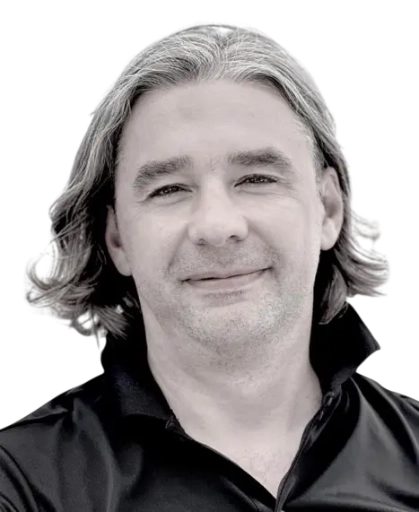
André B.
Last position:
External Attack Surface Assessment & Cybersecurity Readiness Checks at Graydaxe Cybersecurity GmbH
- Conducting cybersecurity readiness checks based on an in-house assessment methodology
- Analyzing the external attack surface using the Graydaxe EASM platform
- Assessing maturity levels and deriving prioritized recommendations for action
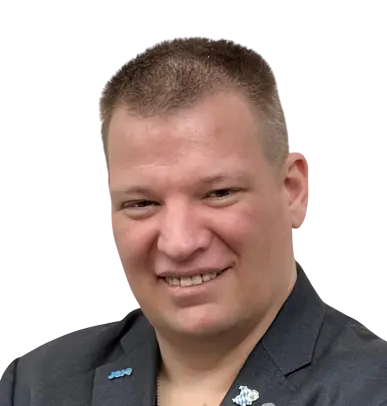
Gilbert L.
Last position:
Cyber Security Expert at TüV Süd AG (via Sthree GmbH)
- Security analysis of alerts
- Further development of the security operations center
- Development of processes and workflows in the security environment
- Implementation of SOC solutions
- Forensic expertise
- Conducting hunts
- Vulnerability scans and proof of concepts
- Risk assessments and risk analyses
- Maintenance and further development of the Tenable.sc ScanCenter environment
Maxim A.
Last position:
External Lecturer (Privatdozent) at Technische Universität Darmstadt
Supervised the course Software Engineering for Bachelor students and delivered lectures.
Krisztián K.
Last position:
IT-Soc/Vulnerability at ITZBund
- Vulnerability management (Greenbone, Tenable SC, Rapid7)
- Automation of vulnerability scans
- OpenTofu (Terraform)/Ansible/Vault/Podman/Docker
- Compliance audit
- SOC (ElasticSearch, Graylog)
- Python/Rust/Bash/Shell/PowerShell
- Git collaboration
- Report standardization and automation
- POC for several vulnerability scanning systems
- Setup of vulnerability scanning system
Prabhatkumar S.

Last position:
Software Engineer - Vulnerability Remediation at Coforge
- Ensured security compliance across 23,000+ endpoints, including 5,000+ business-critical servers and 18,000+ workstations, achieving a >95% compliance rate and aligning with industry standards such as ISO 27001 and CIS benchmarks.
- Led remediation efforts by deploying OS and third-party updates in phased rollouts, eliminating 80%+ of critical vulnerabilities within 6 months while ensuring zero unplanned service disruptions.
- Designed and implemented PowerShell and Python scripts with 99.5% reliability, automating patch validation, compliance tracking, and system health checks—reducing manual intervention by 70%.
- Utilized Kali Linux for proactive threat detection; monitored network traffic and background services using tools like Wireshark, Nmap, and Netstat.
- Conducted web application penetration testing using OWASP ZAP and Burp Suite, identifying and reporting vulnerabilities and reducing overall application risk exposure by 60%.
- Engaged with security teams, developers, and senior IT leadership to discuss risk posture, present vulnerability assessments, and define mitigation strategies aligned with business objectives.
- Monitored system performance during high-impact software and patch deployments, leading support and backup teams to resolve issues swiftly, achieving 98%+ deployment success rate and preventing potential downtime-related financial losses across critical infrastructure.
Sven T.

Last position:
IT Security Consultant – Creation & Management of the IT Security Roadmap at Diehl Aviation
- Analyze and structure specific IT security requirements
- Build a structured requirements backlog as a basis for the sub-group’s IT security initiatives (including separation from group-wide programs)
- Conduct a systematic delta comparison with group-wide IT security requirements to identify open needs and dependencies
- Develop a multi-level IT security roadmap including implementation and project planning, aligned with internal and external stakeholders
- Provide professional project management at the program level, including status analysis, risk management, action tracking, and goal control
- Coordinate internal departments and external service providers, including communication planning and managing regular status meetings
Daniel J.
Last position:
Information Security Consultant
- Enhanced quality assurance of documents, processes and required evidence in preparation for the upcoming KRITIS audit 2025.
- Reviewing and commenting on all relevant documents.
- Advising authors and document owners on inquiries and during the creation process.
- Supporting departments with IT security inquiries.
- Used tools/Frameworks MS Office, SharePoint, Jira, Confluence, ISO27001+, NIS-2 (EU 2022/2555), B3S (Statutory Health & Private Health Insurance), BSIG / IT-SIG 2.0, BSI-KritisV, BSI-C5, BSI Baseline Protection (200-2, 200-4), ServiceNow, RCE (EU 2022/2557), SGB, GDPR
Christian G.

Last position:
Deputy Chief Information Security Officer at Gothaer Solutions GmbH
- Deputy lead of the 10-member information security management team in a highly regulated environment (DORA, VAIT, BAIT)
- Direct reporting lines to the CIO of the Gothaer Group and the management board of Gothaer Solutions
- Regular member of the Group Risk Committee and the Compliance Committee
- Managing and coordinating information security processes within the company and with IT service providers
- Leading task forces for handling information security incidents
- Contributing to IT emergency and business continuity management
Discover over 15,000 top freelancers


Statistics of experts using Tenable
Aggregated from the professional profiles of matched freelancers.

Experience
19 years

Position duration
2.3 years

Positions per freelancer
14

Top business areas
Information Technology, Project Management, Operations

Top industries
Information Technology, Banking and Finance, Government and Administration

Certification focus areas
Information Technology, Quality Assurance, Project Management

Bachelor's degree or higher
93%

Master's degree or higher
40%

Doctorate
7%

Certifications per freelancer
11

Most common languages
German, English, Spanish

Speak two or more languages
100%
Based on our profile pool as of 9 Oct 2026.
Daily rate distribution
The chart shows how the daily rates of experts in this technology in Germany are distributed, based on recent contracts on our platform. Each bar covers a rate range — its height shows the share of experts charging within that range.
Average rates of experts in Germany using Tenable
Rates are based on recent contracts and do not include FRATCH margin.

The average daily rate is the mean of all daily rates from recent contracts of comparable freelancers on our platform.
The median daily rate is the middle value of all daily rates — half of comparable freelancers charge less, half charge more. Unlike the average, it is barely affected by outliers.
Calculated based on our freelancers’ daily rates as of 9 Oct 2026. Actual rates may vary depending on seniority level, experience, skill specialization, project complexity, and engagement length.
Tenable experts industry focus
See which industries our matched freelancers work in most often — every figure is calculated live from the freelancers on FRATCH.
- Information Technology (100%)
- Banking and Finance (78%)
- Government and Administration (44%)
- Telecommunication (44%)
- Energy (39%)
- Manufacturing (39%)
- Aerospace and Defense (33%)
- Healthcare (33%)
Please note that freelancers can work across multiple industries, so percentages overlap.
About the technology
What Tenable does
Tenable is a cybersecurity exposure management portfolio used to discover assets, identify vulnerabilities and prioritize risks. Its products help organizations understand where weaknesses exist across networks, endpoints, cloud environments, applications and operational technology. The platform turns technical findings into actions that security and infrastructure teams can track.
Products and ecosystem
The Tenable ecosystem includes Tenable Nessus for vulnerability assessment, Tenable.sc for on-premises management and Tenable.io for cloud-based exposure management. Tenable One brings broader exposure data together across attack surfaces. Strong specialists also work with asset inventories, credentialed scans, agents, APIs, dashboards, ticketing systems and security information and event management tools.
Common project work
- Configure discovery, credentialed scanning and vulnerability assessment policies
- Build asset groups, dashboards, reports and risk-based remediation workflows
- Integrate Tenable data with service management and security operations tools
- Improve coverage across cloud, containers, endpoints and operational technology
- Prepare evidence for internal security reviews and external assessments
Projects may involve initial deployment, migration between Tenable products, operational tuning or a focused review of an existing setup. The right approach depends on the organization’s asset model, network design and remediation process.
When companies need specialists
Companies often bring in freelance expertise when scan results are noisy, asset ownership is unclear or critical systems are not being assessed consistently. A specialist can establish practical policies, reduce false positives and connect findings to accountable remediation work. In Germany, remote collaboration is common, while regulated or operational environments may still require on-site workshops and German-language documentation.
Skills that matter
A capable Tenable professional understands vulnerability management beyond the console. Relevant skills include network segmentation, Windows and Linux administration, cloud security, identity controls, scripting, API integration and security reporting. They should know how to validate findings, rank exposure in business context and protect sensitive scan credentials and results.
Choosing strong expertise
Look for people who can explain why a finding matters, how it was verified and which remediation path is realistic. Strong professionals define scan scope carefully, document exclusions, manage platform access securely and leave repeatable procedures behind. They also communicate clearly with security, infrastructure, application and compliance stakeholders, turning Tenable output into decisions rather than another unprioritized report.

Frequently asked questions
Not sure where to start with Tenable? These answers cover the essentials.

Tenable is used to discover assets, assess vulnerabilities and manage exposure across infrastructure, cloud environments, applications and operational technology. Organizations use Tenable Nessus, Tenable.io or Tenable.sc to support prioritization and remediation.
Tenable is often compared with platforms such as Qualys and Rapid7 InsightVM. The right choice depends on asset coverage, deployment model, integrations, reporting needs and how closely vulnerability data must connect to broader exposure management.
A strong Tenable specialist usually understands network security, cloud platforms, Windows and Linux systems, identity controls and service management workflows. Scripting, API integration and experience with security information and event management tools are also valuable.
The required background depends on whether the assignment covers a focused scan review, a new deployment or an enterprise-wide exposure program. An experienced Tenable professional should be able to show comparable work with asset discovery, scan design, remediation processes and stakeholder reporting.
Many Tenable tasks can be completed remotely, including configuration, reporting, API work and scan-policy reviews. On-site collaboration may be useful for segmented networks, sensitive operational technology or workshops with infrastructure and security teams; German or English communication can be agreed in advance.
Ask how the professional validates findings, handles credentials, controls scan impact and connects results to asset owners. High-quality Tenable work produces trustworthy data, clear prioritization, documented procedures and remediation actions that teams can repeat.
Tenable Nessus provides vulnerability assessment through network and host scanning, with options for credentialed checks and detailed findings. It is commonly used as a standalone assessment tool or as part of a wider Tenable workflow managed through Tenable.sc or Tenable.io.
Tenable One is relevant when an organization wants a broader view of exposure across multiple attack surfaces rather than isolated vulnerability reports. A specialist can help map assets, connect data sources, define useful risk views and align the platform with existing security processes.
The average hourly rate of freelancers in Germany who have used Tenable in their recent projects is 107 €, which corresponds to a daily rate of about 852 € based on an 8-hour working day.
Of the freelancers in Germany who have used Tenable in their recent projects, 93% hold at least a Bachelor's degree, 40% hold at least a Master's degree, and 7% hold a doctorate.
On average, freelancers in Germany who have used Tenable in their recent projects have 19 years of professional experience, with a single engagement typically lasting around 2.3 years.
The most common languages among freelancers in Germany who have used Tenable in their recent projects are German (100%), English (100%), and Spanish (17%).
The most common industries among freelancers in Germany who have used Tenable in their recent projects are Information Technology (100%), Banking and Finance (78%), and Government and Administration (44%).
The most common business areas among freelancers in Germany who have used Tenable in their recent projects are Information Technology (100%), Project Management (83%), and Operations (72%).
Main locations of FRATCH Experts, who have recently used Tenable
Our freelancers and interim experts are at home across the DACH region — available on-site in the major business hubs or fully remote. Choose a location to discover matched specialists, local market insights and up-to-date availability.
 Berlin Hamburg Munich Cologne Frankfurt Stuttgart Dusseldorf Leipzig Dortmund Essen Bremen Dresden Hanover Nuremberg
 Request a free demo
Get in touch with the FRATCH team and we will get back to you within 4 hours.
Would you rather directly get in touch?
We always have the time for a call or email!

Philipp Thomaschewski
FRATCH CEO

