


Tolerance Analysis Experts in Germany
for reliable fit, function and manufacturability, matched in minutes with AIHire experts who assess dimensional variation, build tolerance stacks and connect GD&T decisions with production requirements. Work with vetted, available freelancers matched precisely to your project and ready to collaborate quickly.

Meet FRATCH Experts in Germany, who have recently used Tolerance Analysis
Gregor P.

Last position:
Engineering Data Management Project Manager
Technical and commercial risk assessment for an investment project in the hardware sector (scaling potential, liability risks, operational processes) Process consulting for two SMEs in the engineering environment, with a focus on workflow digitization and PLM
Volkmar S.

Last position:
Parameterization and support during the commissioning of water treatment at wks GmbH
Parameterization and support during the commissioning of water treatment
Project: New construction of municipal water treatment plant Dörenthe
- Checking the sensors for suitability, installation errors and parameterization.
- Coordination with the PL system for automation.
- Correction of errors
Tools: Endress & Hauser Tools
Manuel S.

Last position:
Freelance Mechanical Engineer at IBS Ingenieurbüro Sureck
Engineering services
Frank T.

Last position:
Engineering & Industry 4.0 / IoT Project Manager at Contech Software & Engineering GmbH
Engineering & Industry 4.0 / IoT projects with an AI system based on the Robust Design method for products & processes
Development, implementation & introduction of the AI system Analyser® for Robust Design for products & processes
AI and Industry 4.0 standard product for preventive and reactive quality and safeguarding as well as maintenance (Predictive Quality and Predictive Maintenance) based on Big & Smart Data
Srinivasan B.

Last position:
Master Thesis - Online Temperature estimation of motor in Brake-by-wire system at Robert Bosch GmbH
- Developed and validated physics-based mathematical models of PMSM to support system-level thermal behaviour understanding.
- Performed parameter estimation using Recursive Least Squares and validated results in MATLAB/Simulink and physical test-bench measurements.
- Conducted robustness analysis across static and dynamic operating scenarios using measured hardware data.
- Supported model verification activities by analysing deviations between simulation and experimental results, contributing to design validation.
- Improved resistance estimation by 80% and temperature estimation by 30%.
Tomasz W.

Last position:
Design Engineer/ Freelancer at Reiser Simulation and Training GmbH
- Designed components with Catia V5 (Generative Shape Design, Part Design, Drafting) and AutoCAD
- Full-flight simulator: developed a platform with an electromechanical system to move the platform and instructor/observer seats
- Airbus H145: designed seat slide rails
- VR flight simulator: developed a pedal mounting system
- Train simulator: designed a brake controller system
- Sketched concepts for quick visualization and as a communication tool
- Performed technical analyses, including statistical and tolerance analysis
- Collaborated with engineers and project teams to ensure manufacturability, cost efficiency, and quality standards compliance
- Managed and maintained CAD data in the PDM system (S4)
Michael S.

Last position:
Senior Hardware Development at Sabik Offshore GmbH
Use case analysis
Evaluation tests
Hardware and software specification
Component research
Cost price calculation
Project planning and control
System design
Circuit development and simulation
PCB layout
Reliability analysis
Engineering/EMC tests
Mixed-signal design (Multiprocessor)
DC/DC design
Manufacturable design
Lightning protection
Altium Designer
LTSpice
MS Office
MS Project
Mehmet Y.
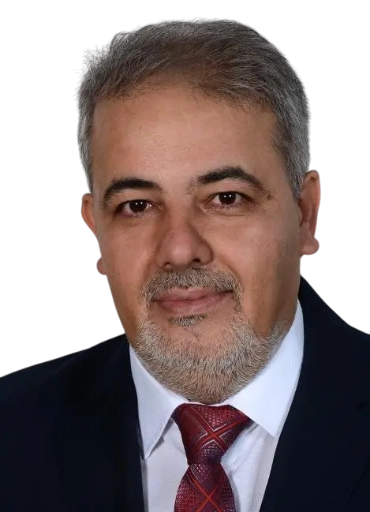
Last position:
CAD Designer at Mario Holtewert GmbH
- CAD modeling of silo systems in coordination with customers and welding engineer
- Creation of drawings and parts lists for production and purchasing
- Tools: HiCAD 2018, Helios 2018, MS Office
Zaur I.
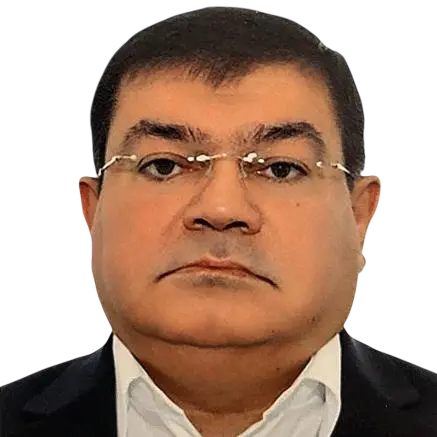
Last position:
Freelancer at Industrie 4.0 Zukunft
- 3D CAD development, design and detailing of new industrial projects for clients from concept phase through to series production and market launch
- Consulting and project planning for clients on newly developed and implemented projects, technologies, and concepts
- Leading and coordinating client projects: assigning tasks within the project team, moderating and monitoring the project
- Analyzing and advising on projects, test results, and vulnerability analyses
- Coordinating and advising collaboration with clients, external partners, and suppliers
- Consulting and sales support: evaluating projects in terms of manufacturability, functionality, quality, and cost
- Advising clients to ensure compliance with all quality standards
- CAD administration and training
- CAD: Creo Parametric 7.0/8.0/9.0/10.0/11.0, SolidWorks 2020–2025, Siemens NX 2206–2506, Inventor 2020–2025
Özgül Ö.

Last position:
Mechanical Development Engineer at DeltaVision
- Designed and developed mechanical components for space applications, considering envelope constraints, weight targets, and interface requirements
- Performed 3D CAD modelling and detailing in CATIA V5 (Part Design, Assembly Design, Drafting), including CAD and design tolerance analysis and manufacturing-oriented design
- Created norm-compliant manufacturing drawings with full GD&T definition, including fits, surface finishes, and form and position tolerances
- Conducted FEM analyses in SIMULIA for stress, contact conditions, and thermal effects under cryogenic boundary conditions
- Supported prototype build, testing campaigns, and iterative design reviews
- Developed Python scripts for engineering calculations, data processing, and automated evaluation of test and simulation results
Ossama D.

Last position:
FE Simulation and Design at Self-employed
- Design and development of charging inlets for megawatt charging systems
- Development of strategies for applying AI in mechanical engineering
- Concept development of inductive charging systems for autonomous vehicles in industrial environments
- Creating concepts for electronically controlled safety brakes for elevators
- Development of power generators with and without iron cores (output below 1 kV)
- Development of solutions for marking plastic and stainless steel components
- Development of various brackets in compliance with EHEDG guidelines
- Requirement management using JAMA
- Simulation of the strength behavior of wastewater treatment plants
- FE optimization simulation of equipment behavior under vibration loads using ANSYS
- Maintenance of bills of materials and databases
- Development of various opto-mechanical systems
- Distance measurement and safety light curtains
- Rapid prototyping methods like 3D printing, SLS, liquid silicone, STL
- Development of modules and connection techniques for integrating power supply and data management units onto PCBs
- Development of shielding elements for industrial equipment
- Implementation of design solutions for connecting PCBs with plugs or cables
- Development of busbars to meet ESD requirements
- Development of fasteners made of V4A steels with clinching, crimping, and/or riveting options for hygienic requirements
- Development of 2K injection molded parts and compressed elastomers
- Development of cable glands made of V4A stainless steel for hygienic requirements
- Development of devices with optical and electronic modules
- Conducting qualification tests (temperature cycling, leak tightness, climate tests, etc.)
- Conducting process and design FMEA
- Development according to agile processes
- Material-appropriate design for chemical resistance (cleaning and disinfecting agents)
- Optimization of injection molded parts for ultrasonic and laser welding
- Investigation of the influence of marking methods (laser marking, electrolytic marking) on part resistance to chemicals
- Corrosion assessment and investigation of stainless steel parts
- Design of parts for machining from welded semifinished products (V4A stainless steels)
- Development of parts made of metallic materials for wireless power transfer devices (CAD: Creo Parametric)
- Creating drawings and models for clients
- FE analysis of the behavior of elastomer seals including installation (CAE: ANSYS)
- Design and development of glass-to-V4A stainless steel connections according to EHEDG guidelines
- Implementation of design solutions for joining similar and dissimilar materials (adhesive bonding, welding, snap hooks) using CAD: Creo Direct Modeling and SolidWorks
- Equipment design for the pharmaceutical and food industries using FDA-approved materials and according to EHEDG guidelines (CAD: Creo Direct Modeling, SolidWorks)
- FE analysis of the effect of temperature on plastic assemblies (CAE: ANSYS)
- Further development of a tool for FE calculation of additive manufacturing (laser sintering process) (CAE: CalculiX)
- Consulting and services in the field of CAD & CAE engineering
- Further development of FE systems for analyzing component strength and topology optimization
- Further development and implementation of an indicator lamp from electrical, optical and mechanical components for integration into a safety module (CAD: Creo Direct Modeling)
- FE simulation to investigate assembly tightness and optimize seals (CAE: ANSYS)
Discover over 15,000 top freelancers


Statistics of experts using Tolerance Analysis
Aggregated from the professional profiles of matched freelancers.

Experience
24 years

Position duration
2.8 years

Positions per freelancer
12

Top business areas
Product Development, Quality Assurance, Project Management

Top industries
Manufacturing, Automotive, Professional Services

Certification focus areas
Product Development, Project Management, Business Intelligence

Bachelor's degree or higher
91%

Master's degree or higher
73%

Doctorate
9%

Certifications per freelancer
4

Most common languages
German, English, Turkish

Speak two or more languages
100%
Based on our profile pool as of 9 Oct 2026.
Daily rate distribution
The chart shows how the daily rates of experts in this technology in Germany are distributed, based on recent contracts on our platform. Each bar covers a rate range — its height shows the share of experts charging within that range.
Average rates of experts in Germany using Tolerance Analysis
Rates are based on recent contracts and do not include FRATCH margin.

The average daily rate is the mean of all daily rates from recent contracts of comparable freelancers on our platform.
The median daily rate is the middle value of all daily rates — half of comparable freelancers charge less, half charge more. Unlike the average, it is barely affected by outliers.
Calculated based on our freelancers’ daily rates as of 9 Oct 2026. Actual rates may vary depending on seniority level, experience, skill specialization, project complexity, and engagement length.
Tolerance Analysis experts industry focus
See which industries our matched freelancers work in most often — every figure is calculated live from the freelancers on FRATCH.
- Manufacturing (82%)
- Automotive (73%)
- Professional Services (45%)
- Aerospace and Defense (36%)
- Education (36%)
- Energy (36%)
- Construction (18%)
- Healthcare (18%)
Please note that freelancers can work across multiple industries, so percentages overlap.
About the technology
What Tolerance Analysis Covers
Tolerance Analysis evaluates how permitted variation in individual dimensions affects the fit, function and reliability of an assembled product. Experts combine statistical and worst-case methods to predict clearance, interference, alignment and performance before production. The work turns drawing tolerances into evidence for practical design decisions.
Where It Is Used
The method supports mechanical products in industries such as automotive, aerospace, medical technology, machinery and consumer equipment. It is useful wherever parts must assemble consistently while remaining economical to manufacture.
- Assess stack-ups for assemblies and interfaces
- Check clearance, interference and alignment conditions
- Support variation studies for moving mechanisms
- Link design limits to inspection and production needs
Methods And Tooling
A strong analysis may use worst-case calculations, root-sum-square methods, statistical simulation or Monte Carlo studies. The surrounding work often includes CAD assemblies, spreadsheets, dimensional inspection data and GD&T documentation. Specialists may also work with dedicated tolerance-analysis software integrated with mechanical design systems.
When Companies Need Support
Companies bring in freelance expertise when a new assembly shows uncertain fit, when prototypes reveal variation, or when a design must be released without excessive manufacturing cost. External support can also help standardize stack-up methods across teams and review critical interfaces before a supplier handover.
- Review drawings and functional requirements
- Identify dominant contributors to variation
- Recommend tolerance changes or datum strategies
- Document assumptions, results and design actions
Working With German Teams
Projects in Germany often connect tolerance studies with automotive supply chains, industrial machinery, precision equipment and regulated product development. Remote collaboration works well when CAD data, drawings and requirements are organized; on-site workshops can help resolve interface questions with design and production teams. Clear technical English is common, while German may be important for plant-facing work.
What Strong Professionals Bring
The best professionals understand both mathematical variation models and how parts are actually designed, machined, measured and assembled. They question unclear requirements, separate critical from non-critical dimensions and explain uncertainty without hiding assumptions. Look for evidence of traceable reports, sound GD&T interpretation, practical recommendations and close cooperation with design, quality and manufacturing teams.

Frequently asked questions
What clients ask us most about Tolerance Analysis — answered in short.

Tolerance Analysis predicts how dimensional variation can affect an assembly or product function. It helps teams verify fit, clearance, alignment, motion and performance before tooling or series production.
Tolerance Analysis is the broader discipline, while a tolerance stack-up is one of its main deliverables. A complete study can also compare worst-case and statistical methods, model contributors, assess sensitivity and recommend changes to the design or manufacturing process.
A capable Tolerance Analysis specialist usually understands GD&T, datum schemes, mechanical design, CAD assemblies and manufacturing processes. Experience with measurement systems, quality documentation and supplier communication is also valuable.
The right level depends on the risk and complexity of the assembly. A focused drawing review may need a specialist comfortable with stack-ups and GD&T, while safety-critical or highly constrained products call for experience with statistical variation, functional requirements and production validation.
Tolerance Analysis is often well suited to remote work when drawings, CAD data, requirements and inspection information are available. Workshops with design, quality and manufacturing teams may still be useful, especially for ambiguous interfaces or projects involving a German production site.
A Tolerance Analysis study is most useful before design release, tooling decisions or supplier handover. It is also valuable after prototype failures, recurring assembly problems or a cost review that considers loosening or relocating tolerances.
A good Tolerance Analysis report states the functional requirement, assumptions, contributors, method and limits clearly. Its conclusions should identify sensitivity, show traceable calculations and lead to practical actions rather than simply declaring a stack-up acceptable.
Before starting Tolerance Analysis work, clarify the product function, critical interfaces, applicable drawing standards, available CAD and measurement data, and the required deliverable. Confirm whether collaboration is remote or on-site and whether communication with German-speaking production teams is expected.
The average hourly rate of freelancers in Germany who have used Tolerance Analysis in their recent projects is 83 €, which corresponds to a daily rate of about 663 € based on an 8-hour working day.
Of the freelancers in Germany who have used Tolerance Analysis in their recent projects, 91% hold at least a Bachelor's degree, 73% hold at least a Master's degree, and 9% hold a doctorate.
On average, freelancers in Germany who have used Tolerance Analysis in their recent projects have 24 years of professional experience, with a single engagement typically lasting around 2.8 years.
The most common languages among freelancers in Germany who have used Tolerance Analysis in their recent projects are German (100%), English (91%), and Turkish (27%).
The most common industries among freelancers in Germany who have used Tolerance Analysis in their recent projects are Manufacturing (82%), Automotive (73%), and Professional Services (45%).
The most common business areas among freelancers in Germany who have used Tolerance Analysis in their recent projects are Product Development (100%), Quality Assurance (82%), and Project Management (73%).
Main locations of FRATCH Experts, who have recently used Tolerance Analysis
Our freelancers and interim experts are at home across the DACH region — available on-site in the major business hubs or fully remote. Choose a location to discover matched specialists, local market insights and up-to-date availability.
 Berlin Hamburg Munich Cologne Frankfurt Stuttgart Dusseldorf Leipzig Dortmund Essen Bremen Dresden Hanover Nuremberg
 Request a free demo
Get in touch with the FRATCH team and we will get back to you within 4 hours.
Would you rather directly get in touch?
We always have the time for a call or email!

Philipp Thomaschewski
FRATCH CEO

