


Sensor Fusion Experts in Munich
matched in minutes from over 15,000 CVsHire experts who combine camera, radar, lidar, ultrasonic and inertial data for autonomous systems, robotics and industrial monitoring. FRATCH quickly matches you with vetted, available freelancers whose skills fit your technical requirements.

Meet FRATCH Experts in Munich, who have recently used Sensor Fusion
Madhava N.

Last position:
Function Developer ADAS at Continental Automotive GmbH through Ferchau GmbH
- Project: Sensor fusion application for traffic participant detection
- Software frameworks: C++ (11,14), Python, Visual Studio, MTS, Qt, GitHub, Jenkins, JIRA, Confluence, Conan, CAN, RTOS, DOORS, CMake
- Refactored and adapted sensor fusion algorithms by processing sensor data (camera and radar) for ACC and EBA as per requirements
- Handled system test issue reports in JIRA
- Tuned Kalman filters and introduced new features to enhance tracking
- Adapted architecture, detailed design (UML) and simulation tool (Qt)
- Conducted unit testing, code reviews and static code analysis in compliance with MISRA standards
- Conducted regression testing to validate software, involved in software releases (CI/CD), KPI evaluation by testing NCAP scenarios
- Flashed ADAS software to target vehicles, used UDS protocol and OBD-II tools for diagnostics and verification
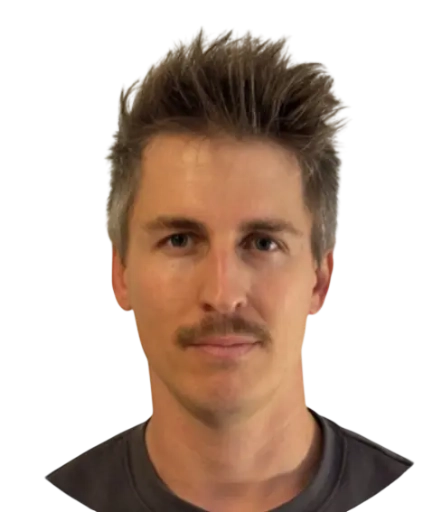
Tobias B.
Last position:
Lead XR Project at BMW Group
- Showcasing the world's first fully immersive AR glasses experience in a moving car at CES 2024.
- Speaker about augmented reality at international conferences (e.g. the AR Ride Concept @ Unite 2024).
- Lead a 12-person interdisciplinary software team developing Android head-unit integrations, navigation & ADAS UI, and embedded software.
- Define technical direction, drive cross-domain architecture and integration, and mentor engineers across Android, UI/UX and embedded stacks.
- Oversee a small fleet of test vehicles for validation, tests, and data collection.
Vasco A.

Last position:
AI Research Intern – Generative AI at BMW AG
- Designed and implemented multi-modal entertainment toolchains that combine passenger input, vehicle context, large-language models (text-to-text and speech-to-speech) and image generation models to deliver more interactive and immersive in-car experiences.
- Built and orchestrated tools for LLM-based agents, covering session management, background task execution, dynamic user interactions and persistent application state.
- Investigated multi-agent orchestration frameworks for in-car environments, evaluating communication protocols and architectural strategies for coordinated and reliable agent behavior.
Yimeng W.

Last position:
R&D Software Engineer at Advantest
- Development and maintenance of hardware drivers in C++
- Conducting unit and integration tests to ensure code quality
- Debugging and fixing issues with the hardware team and FPGA team
- Defining and developing software concepts and coordinating with the software architect
- Expanding test automation to improve efficiency
- Research and development of algorithms to improve existing codebases (runtime, memory usage, accuracy)
Daniel C.

Last position:
Founder & Managing Director at BotCraft GmbH
- Building the company with a focus on connectivity for IIoT and Industry 4.0, iRPA/process automation, advanced robotics and smart systems, sensors and services
- Project management and software architecture for IoT gateway development (since 2020) with protocol translation, IT/OT convergence and GRC
- Developing RPA bots for automating and monitoring industrial processes with an agent-based AI approach (since 2020)
- Implementing unsupervised clustering and anomaly detection for time series data in big data streaming pipelines (since 2021)
- Introducing a Docker-based release train for OTA updates with DevSecOps and CI/CD (since 2018)
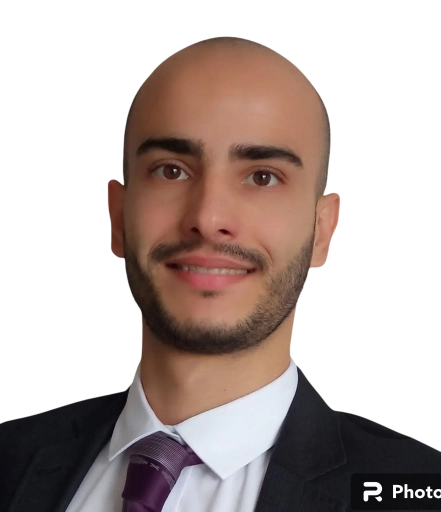
Ehsan Z.
Last position:
Freelance Robotics Software Engineer at Independent Contractor
- Developed and deployed custom ROS2 nodes for real-time LiDAR-IMU fusion using R3Live++ on ARM64 hardware (Docker, CMake)
- Configured IMU, camera, and LiDAR drivers for proper data timing and formats to enable real-time 3D mapping with R3Live
- Built complete simulation stack for quadrotor UAVs: Ardupilot SITL + ROS2/DDS + Gazebo Harmonic + YOLOv8 detection
Adithya B.

Last position:
Edge AI Software Engineer at Neura Robotics GmbH
- Deployed and optimized Vision-Language-Action (VLA) and diffusion policy models on NVIDIA Jetson Orin and Jetson Thor, meeting real-time inference latency targets for humanoid robot control loops.
- Built TensorRT engine pipelines (PyTorch → ONNX → TensorRT) with INT8/FP8 post-training quantization, calibration dataset design, and quantization-aware validation, reducing inference memory footprint by over 3× on Jetson without accuracy regression.
- Developed custom CUDA C++ plugins and CUDA Graphs for latency-deterministic, real-time policy execution – meeting hard runtime and memory constraints on embedded GPU targets.
- Developed an inference engine for VLA models on top of llama.cpp bringing different VLA policies under single runtime, packaging each as a single self-contained GGUF that needs no Python or PyTorch.
- Profiled and tuned GPU execution using NVIDIA Nsight Systems and Nsight Compute, identifying CUDA kernel bottlenecks, memory bandwidth saturation, and SM occupancy issues across Jetson Orin and Thor compute profiles for cross-layer performance optimization.
Discover over 15,000 top freelancers


Statistics of experts using Sensor Fusion
Aggregated from the professional profiles of matched freelancers.

Experience
11 years

Position duration
2.5 years

Positions per freelancer
5

Top business areas
Information Technology, Product Development, Research and Development

Top industries
Automotive, Information Technology, Manufacturing

Certification focus areas
Information Technology, Logistics, Quality Assurance

Bachelor's degree or higher
100%

Master's degree or higher
100%

Doctorate
14%

Certifications per freelancer
1

Most common languages
English, German, Spanish

Speak two or more languages
100%
Based on our profile pool as of 9 Oct 2026.
Daily rate distribution
The chart shows how the daily rates of experts in this technology in Munich are distributed, based on recent contracts on our platform. Each bar covers a rate range — its height shows the share of experts charging within that range.
Average rates of experts in Munich using Sensor Fusion
Rates are based on recent contracts and do not include FRATCH margin.

The average daily rate is the mean of all daily rates from recent contracts of comparable freelancers on our platform.
The median daily rate is the middle value of all daily rates — half of comparable freelancers charge less, half charge more. Unlike the average, it is barely affected by outliers.
Calculated based on our freelancers’ daily rates as of 9 Oct 2026. Actual rates may vary depending on seniority level, experience, skill specialization, project complexity, and engagement length.
Sensor Fusion experts industry focus
See which industries our matched freelancers work in most often — every figure is calculated live from the freelancers on FRATCH.
- Automotive (86%)
- Information Technology (57%)
- Manufacturing (57%)
- Education (43%)
- Healthcare (43%)
- Aerospace and Defense (14%)
- Biotechnology (14%)
- Chemical (14%)
Please note that freelancers can work across multiple industries, so percentages overlap.
About the technology
What it does
Sensor Fusion combines measurements from different sensors into a more complete and dependable view of an environment or machine. Sensor data fusion helps systems handle noise, missing readings and conflicting observations while improving position, object and state estimates. It is central to perception in vehicles, robots, drones and smart industrial equipment.
Core architectures
Projects may use loosely or tightly coupled fusion, depending on sensor access, timing and required control over raw measurements. Professionals design calibration, coordinate transforms, time synchronization and uncertainty models before selecting an estimation approach. They also define how the system behaves when a sensor becomes unreliable or unavailable.
Tools and methods
The ecosystem spans cameras, radar, lidar, ultrasonic, GNSS, IMUs and wheel encoders, with processing in C++, Python or embedded environments. Common methods include Kalman filters, extended and unscented variants, particle filters, Bayesian estimation and optimization-based approaches. ROS and ROS 2, OpenCV, Eigen and simulation tools often support development and testing.
Where companies use it
Sensor Fusion appears wherever software must interpret changing physical conditions with confidence:
- Combine camera, lidar and radar data for driver assistance and autonomous mobility
- Estimate robot pose and map indoor or outdoor spaces
- Track assets, people or objects across noisy sensor feeds
- Monitor industrial machines with vibration, temperature and position data
- Improve drone navigation when satellite signals are weak
When expertise matters
Companies bring in freelance specialists when a prototype must become a dependable field system, when sensor data does not align, or when performance breaks under real-world conditions. They can audit an existing pipeline, select an appropriate fusion model, build replay and simulation workflows, and validate results against recorded and live data. In Munich, collaboration may combine remote work with on-site access to vehicles, robots or production equipment.
What strong specialists deliver
Strong professionals connect mathematical estimation with practical systems work. They understand observability, covariance tuning, latency, sensor calibration, failure handling and real-time constraints, and they explain trade-offs clearly to software, hardware and product teams. Look for evidence of reproducible evaluation, meaningful edge-case testing and well-documented interfaces rather than a model that only performs well on ideal data.

Frequently asked questions
The facts hiring teams ask for most often when it comes to Sensor Fusion.

Sensor Fusion combines data from complementary sensors to estimate objects, motion, position or system state more reliably. Companies use it in autonomous vehicles, robotics, drones, industrial monitoring, security systems and navigation.
Sensor Fusion can compensate for the weaknesses of individual sensors, such as poor lighting for cameras or limited object classification from radar. It adds calibration, timing and uncertainty-management work, so it is most valuable when reliability across changing conditions matters.
A strong Sensor Fusion specialist usually understands probability, estimation theory, robotics, computer vision and embedded or real-time software. Experience with C++, Python, ROS or ROS 2, simulation, data recording and hardware integration is also useful.
Sensor Fusion work ranges from selecting sensors for a prototype to operating a safety-critical perception pipeline. The right specialist should have handled the relevant sensor types, environments and failure modes, and should be able to show how models were validated with representative data.
Sensor Fusion development can often be done remotely using recorded data, simulation, remote testing and shared code repositories. On-site work may still be needed for sensor mounting, calibration, vehicle or robot trials, and diagnosing issues that only appear on physical hardware.
A Sensor Fusion specialist in Munich may need to collaborate with automotive, robotics, aerospace or industrial teams and visit laboratories or production sites. Agree early on remote and on-site expectations, documentation standards and the working language used by hardware and software stakeholders.
Ask a Sensor Fusion professional to explain calibration, synchronization, uncertainty handling and behavior when a sensor fails. Review evaluation methods, replayable test data, edge-case coverage, latency measurements and whether the system reports confidence instead of hiding weak observations.
Sensor Fusion must reconcile sensors with different rates, coordinate frames, delays, noise patterns and failure behavior. A solution that works in simulation can degrade in weather, vibration, changing lighting or electromagnetic interference, so deployment requires disciplined monitoring and field validation.
The average hourly rate of freelancers in Munich, Germany who have used Sensor Fusion in their recent projects is 84 €, which corresponds to a daily rate of about 670 € based on an 8-hour working day.
Of the freelancers in Munich, Germany who have used Sensor Fusion in their recent projects, 100% hold at least a Bachelor's degree, 100% hold at least a Master's degree, and 14% hold a doctorate.
On average, freelancers in Munich, Germany who have used Sensor Fusion in their recent projects have 11 years of professional experience, with a single engagement typically lasting around 2.5 years.
The most common languages among freelancers in Munich, Germany who have used Sensor Fusion in their recent projects are English (100%), German (86%), and Spanish (14%).
The most common industries among freelancers in Munich, Germany who have used Sensor Fusion in their recent projects are Automotive (86%), Information Technology (57%), and Manufacturing (57%).
The most common business areas among freelancers in Munich, Germany who have used Sensor Fusion in their recent projects are Information Technology (100%), Product Development (100%), and Research and Development (100%).
Main locations of FRATCH Experts, who have recently used Sensor Fusion
Our freelancers and interim experts are at home across the DACH region — available on-site in the major business hubs or fully remote. Choose a location to discover matched specialists, local market insights and up-to-date availability.
Countries:
 Berlin Hamburg
  Munich Cologne Frankfurt Stuttgart Dusseldorf Leipzig Dortmund Essen Bremen Dresden Hanover Nuremberg
 Request a free demo
Get in touch with the FRATCH team and we will get back to you within 4 hours.
Would you rather directly get in touch?
We always have the time for a call or email!

Philipp Thomaschewski
FRATCH CEO

