


Retrieval-Augmented Generation Experts in Frankfurt
for reliable AI answers, matched in minutes with vetted freelancersHire experts who connect language models with trusted company data, build semantic search and retrieval pipelines, and deliver grounded assistants for internal knowledge and customer support. Get fast, precise matching with vetted, available freelancers.

Meet FRATCH Experts in Frankfurt, who have recently used Retrieval-Augmented Generation
Patrick L.
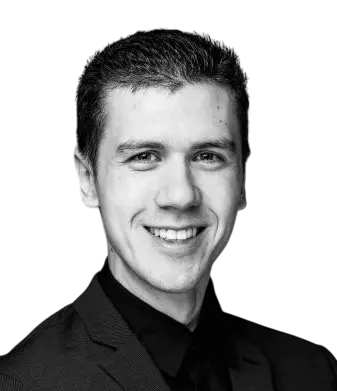
Last position:
Senior GenAI Fullstack Developer at SBH (Schulbau Hamburg)
Remote freelance role focused on Agentic AI strategy, secure application patterns, and reusable agentic workflows for a government agency.
- Development and implementation of an open-source Agentic AI strategy for a government agency, with a focus on GDPR, security, and self-hosted solutions
- Development of reusable agentic workflows and business applications that enable non-technical employees to solve business problems independently
- Implementation of nine business applications with Single Sign-On (SSO) and Azure PostgreSQL integration on Hetzner Linux servers
Techstack: Python, Streamlit, Anthropic SDK (Claude), Azure, Linux, PostgreSQL, MS SQL, Angular
Ali A.

Last position:
Founder & Architect at Independent AI R&D
- Fully on-premises LLM document-examination platform for a compliance-critical banking domain: agentic LangGraph pipeline with deterministic verification, every AI judgment structured and source-anchored; ~960 automated tests, zero data egress
- GPU throughput engineering (quantized serving, speculative decoding, prefix caching): 9.5x extraction speed-up, 500+ multi-document case files per day on a single A100
- AI-native EDI/EDIFACT integration platform (~116k LOC Java 25 / Spring Boot 4, 1,900+ tests): LLM-drafted partner mappings machine-verified before go-live (DFDL conformance, field-coverage checks, dry runs), ~99.5% byte match on real customer files — replacing weeks of manual mapping per partner
Saqib J.
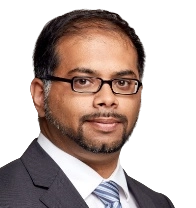
Last position:
AI Developer / AI Engineer (Lead) at KOM4TEC GmbH
- Conceptual design and implementation of modular AI assistants for sales and business processes in the Microsoft ecosystem (Agentic AI, Copilot extensions)
- Frontend architecture and development with React + TypeScript for embedded chat and assistant surfaces (streaming UI, hooks, React Query, OpenAPI clients)
- Enterprise-level agent development: reusable skill/agent library, MCP server, review and compliance gates
- LLM integration into the user experience: Anthropic (Claude), OpenAI, tool use, RAG pipelines, prompt engineering, guardrails
- Architecture and code review consulting as well as mentoring in the AI development team
- Integration with Microsoft Graph, Power Platform, and Azure services
- Technologies: React, TypeScript, Anthropic Claude, OpenAI, MCP, RAG, Microsoft Graph, Power Platform, Azure
Anthony M.

Last position:
Research and Development, AI for Enterprise at Mwanachama
- Built an MCP (Model Context Protocol) layer for Mwanachama's agency service, turning domain manager methods into callable AI-agent tools. This included a composite tool that builds a full organization design (org chart, goals, workflows, RACI matrix) from one specification.
- Built the chat-driven agency builder (Wakala Studio and API), where an organization describes its structure in natural language and an AI agent uses those tools to construct and modify the live design.
- Added an insights service so an organization can review AI-agent interactions and completed work. Insights from that review feed back into solution design, gated by architect and user sign-off.
- Alongside this, designed and built the platform itself: ~20 Go microservices on PostgreSQL, Flutter and React clients, deployed on Kubernetes.
- AI agents scan the platform autonomously for security gaps and run scripted tests, covering API (Postman-style) and UI testing. The rest of the work stays supervised. No rogue agents, promise.
Eduard V.
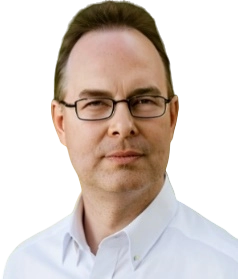
Last position:
Lead of workshop “Introduction to AI Development Tools” at Software company in Wiesbaden
- Presentation introducing generic A.I. and Large Language Models
- Explanation of legal frameworks (EU AI Act, US CLOUD Act, DSGVO)
- Systematic review of AI tools along the SDLC and holistic systems
- Comparison of on-prem LLMs vs. cloud-based solutions, as well as change management and works council considerations
- Moderation of the discussion and definition of next steps for introducing AI development tools
Minh D.
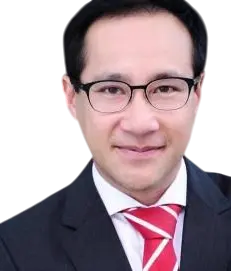
Last position:
Project Manager / Business Analyst / Application Manager at Finance and Insurance
Introducing 5 different process applications for various teams
Release planning: scope and time management
Resource/capacity planning
Conducting sprint planning / retrospectives
Increment planning (multiple sprints)
Preparing steering committee meetings / reporting to the executive board
Coordinating / aligning with external suppliers / deliveries
Multi-project resource planning
Aligning with the business unit and development team
Identifying best practices with IBM BAW
Cost control and planning for the project team and external service providers
Collecting KPIs using LogScale
Analyzing application errors with LogScale / queries
Defining user stories / aligning requirements with the business unit and development team
Testing and defect tracking
UI/UX design of the application
Preparing and facilitating brown-paper workshop
Test concept, test data, test organization, test execution
Recording team velocity / metrics
Executing tests
Scripts for automated testing
Organizing tests with the business unit and IT
Recording and prioritizing defects
Setting up and operating the application
Setting up application monitoring with LogScale dashboards
Checking health endpoints with PowerShell
Post mortem analysis
Setting up incident management
Setting up problem management
Analyzing errors using LogScale queries and dashboard
Pre-processing data for AI
Conducting evaluation with AI language models (Meta Llama 3.3 LLM and deepset Haystack) and RAG
Installing runtime environments for LLMs (large language model)
Evaluating various LLMs
Installing RAG (retrieval augmented generation) and integrating with LLM
Extracting unstructured data with LLM and RAG
Project based on IBM BAW (Business Automation Workflow), WebSphere Liberty, Domea, d.3, REST, LogScale (formerly Humio), Swagger, PowerShell, JIRA, Confluence, Lucom Interaction Platform (LIP), Mattermost, Jabber
Noel L.

Last position:
Founder & Lead Engineer at ausbildung-in-der-it.de
- Platform established and running stably; deliberately reducing my involvement to refocus on an engineering mandate in the financial sector.
- Built an own SaaS learning platform from the ground up and scaled it to over 20,000 users (over 6,000 courses sold, B2C and B2B); end-to-end ownership from development through infrastructure to operations.
- Built a lab environment that provisions an isolated Linux container per user (Docker, Traefik, Go), including automatic provisioning and a dedicated subdomain per user.
- Integrated LLM features into the product and accelerated development end-to-end with AI-assisted workflows (Claude Code, Codex); CI/CD with automated tests.
Alona L.

Last position:
AI Architect
AI-powered platform for automated UX validation and designer support
- Designed and led technical implementation of an enterprise-wide AI solution for automated UX review that improved design quality and significantly reduced manual review processes in teams
- Developed an automated UX validation tool as a Figma plugin and web application that generates test cases based on internal guidelines and reliably checks current designs for consistency and standard compliance
- Implemented an interactive designer chat based on RAG that answers questions about the current design and the company's UX guidelines, and designed the deployment architecture using containerized services
- Python, Azure OpenAI, PostgreSQL, REST API, Docker, OpenShift, Helm, CI/CD, Figma MCP, LLM, RAG, Prompt Engineering, GenAI, XAI, AI Architecture, AI Strategy
Anton R.

Last position:
AI-Engineer at Publicly traded company, industrial safety technology
- Designed and implemented the agent-based AI architecture for a company-wide platform to securely deploy LLM-based agents
- Designed and implemented end-to-end RAG pipelines from multiple sources: document preprocessing, chunking strategies for different document types, embeddings, retrieval with re-ranking, and robust prompt orchestration
- Developed a modular context engineering framework with skill architecture, context isolation, and dynamic resource management; human-in-the-loop control for enterprise tool integrations
- Built the CI/CD pipeline, testing strategy, tracing on the software side as well as automated LLM and agent evaluations, red team testing and tracing, and handed over to a reproducible production environment (ISO27001 and SOC2 compliant)
Kevin M.

Last position:
Backend & Infrastructure Engineer at Mileo Systems GmbH
- Engineered production-ready Azure environments using Terraform, ensuring consistent infrastructure parity across VNets and Resource Groups
- Implemented Microsoft Fabric tenant and workspace architecture for multi-stage Medallion data processing pipelines
- Designed secure data pathways using Managed Private Endpoints for isolated Azure Storage access
- Managed Service Principals and authentication tokens for secure REST API integrations
Kabir K.

Last position:
AI Engineer / Banking IT Specialist at Hamburg Commercial Bank (HCOB) & Real Estate Firm
- Developed a retrieval-augmented generation (RAG) application using LangChain and LangGraph for corporate document parsing, delivered as an installable Electron desktop application with local AI models via Ollama.
- Currently providing ongoing AI feature support for the Loan Pricing Tool at Hamburg Commercial Bank, with a commitment of three days per month.
- Architected Kubernetes-native solutions, including Helm chart configuration and Azure DevOps pipeline integration.
Mathew D.
Last position:
Data Science Expert and AI Strategist at Freelancer
- Built an API to ingest, clean, translate, and index EU tenders documents in Neo4j, enabling hybrid search with RAG and Cypher queries via a Streamlit dashboard
- Deployed the API on AWS Lightsail container services with CI/CD automation via GitHub Actions, ensuring stability through pytest unit and integration tests
- Designed and developed a comprehensive online course on data analysis using ChatGPT for professionals and learners, creating instructional videos and interactive Jupyter notebooks
- Utilized OBS and professional audio equipment to ensure high-quality video and audio content
- Led a CRM data normalization and cleaning project visualized via a Sankey diagram to aid customer understanding and pipeline development
- Implemented and validated a genAI-driven web crawling strategy on AWS, ensuring data quality, scalability, and CRM data augmentation
Roman K.
Last position:
Senior Data Engineer / Cloud Architect at DB Systel
- Development of a central billing app for cloud costs at DB
- AWS
- Python
- AWS CDK
- RDS
- Spark (PySpark)
- Glue
- Lambda
- CI/CD (GitLab)
- React/Typescript
- data optimization
- Scrum
Jens D.
Last position:
Product Owner & Senior Data Scientist at Legal Tech
- Led an international team of six developers in a Scrum environment
- Defined strategic goals for the project in coordination with stakeholders and the development team
- Prompt engineering for language models to improve the accuracy and relevance of generated responses
- Implemented LangChain components for a RAG chatbot to answer legal questions
- Technologies: GPT-4, LangChain, Python (Pandas, sklearn, streamlit), Docker, GitLab, ChromaDB
Alf Z.

Last position:
Professor of Business Administration at Hamm-Lippstadt University of Applied Sciences
Discover over 15,000 top freelancers


Statistics of experts using Retrieval-Augmented Generation
Aggregated from the professional profiles of matched freelancers.

Experience
17 years (Germany: 15 years)

Position duration
2.2 years (Germany: 2.8 years)

Positions per freelancer
11 (Germany: 9)

Top business areas
Product Development, Information Technology, Business Intelligence

Top industries
Information Technology, Banking and Finance, Education

Certification focus areas
Information Technology, Business Intelligence, Product Development

Bachelor's degree or higher
100% (Germany: 97%)

Master's degree or higher
45% (Germany: 74%)

Doctorate
18% (Germany: 12%)

Certifications per freelancer
3

Most common languages
German, English, Italian

Speak two or more languages
100% (Germany: 96%)
Based on our profile pool as of 9 Oct 2026.
Daily rate distribution
The chart shows how the daily rates of experts in this technology in Frankfurt are distributed, based on recent contracts on our platform. Each bar covers a rate range — its height shows the share of experts charging within that range.
Average rates of experts in Frankfurt using Retrieval-Augmented Generation
Rates are based on recent contracts and do not include FRATCH margin.

The average daily rate is the mean of all daily rates from recent contracts of comparable freelancers on our platform.
The median daily rate is the middle value of all daily rates — half of comparable freelancers charge less, half charge more. Unlike the average, it is barely affected by outliers.
Calculated based on our freelancers’ daily rates as of 9 Oct 2026. Actual rates may vary depending on seniority level, experience, skill specialization, project complexity, and engagement length.
Retrieval-Augmented Generation experts industry focus
See which industries our matched freelancers work in most often — every figure is calculated live from the freelancers on FRATCH.
- Information Technology (87%)
- Banking and Finance (67%)
- Education (47%)
- Manufacturing (40%)
- Telecommunication (33%)
- Automotive (27%)
- Healthcare (27%)
- Media and Entertainment (27%)
Please note that freelancers can work across multiple industries, so percentages overlap.
About the technology
What RAG does
Retrieval-Augmented Generation, commonly called RAG, combines information retrieval with a language model. Before generating an answer, the system searches approved sources and supplies relevant passages as context. This helps assistants answer questions with current, domain-specific information instead of relying only on model training.
Typical applications
RAG supports products and internal tools that must work with private or frequently changing content.
- Search assistants for policies, manuals and technical documentation
- Customer support tools grounded in product and service knowledge
- Enterprise question answering across structured and unstructured data
- Research workflows that retrieve evidence for summaries and recommendations
Ecosystem and tooling
A RAG solution can include document loaders, parsing and chunking logic, embeddings, a vector database and a reranking layer. Specialists often work with LangChain, LlamaIndex, Haystack, Elasticsearch, OpenSearch, Pinecone, Weaviate, Milvus or pgvector. They also connect cloud storage, relational databases and observability tools around the retrieval pipeline.
When expertise matters
Companies bring in freelance expertise when a proof of concept must become a dependable product, or when search quality is inconsistent across business content. Frankfurt teams may benefit from local workshops for sensitive knowledge projects, while remote collaboration works well when data access, review routines and language expectations are clearly defined.
- Answers cite the wrong passages or miss relevant content
- Source documents change faster than the assistant can be updated
- Retrieval works in demos but fails on real user questions
Skills behind reliable systems
Strong professionals understand information architecture, natural-language search and prompt design as one connected system. They define ingestion and refresh processes, select embedding and reranking methods, manage permissions and protect confidential content. They also design evaluation sets that test retrieval relevance, groundedness, citation quality and response usefulness.
Choosing the right professional
Look for evidence of complete RAG systems, not only chatbot interfaces or prompt experiments. A capable specialist can explain why a source was retrieved, how access controls are enforced and how failures are measured. They should also distinguish retrieval problems from generation problems and create a practical path from prototype to maintainable service.

Frequently asked questions
Need clarity? These are the questions we hear most often about Retrieval-Augmented Generation.

Retrieval-Augmented Generation is used to create language-model applications that answer questions from trusted, private or frequently updated sources. Common examples include knowledge assistants, support tools, document search and research workflows.
RAG adds relevant source content at query time, so teams can update knowledge without retraining the model. Fine-tuning changes model behavior or style and can be useful for consistent formats, but it is not a direct replacement for current, traceable source retrieval.
A strong Retrieval-Augmented Generation specialist usually understands embeddings, vector search, reranking, prompt design and evaluation. Experience with data ingestion, permissions, APIs, cloud storage and monitoring is also valuable because retrieval quality depends on the full pipeline.
The right level depends on the scope, data quality and risk of the application. A focused prototype may need a specialist who can validate retrieval and answer quality, while a production system requires proven capability in security, observability, evaluation and ongoing content updates.
Yes, RAG work is often suitable for remote collaboration when access to documents, environments and stakeholders is organized. On-site sessions in Frankfurt can help with sensitive data, process discovery and multilingual requirements, while implementation and testing can continue remotely.
A good Retrieval-Augmented Generation system retrieves relevant evidence, uses it faithfully and makes uncertainty visible. Ask for separate evaluation of retrieval, citation accuracy and generated answers, along with tests using real questions and difficult edge cases.
RAG is useful when people want a synthesized answer across several sources, but conventional search may be better when exact navigation, filtering or legal traceability is the priority. Many effective products combine keyword search, semantic retrieval and generation rather than choosing only one method.
A RAG professional should clarify the source systems, document formats, access rules, languages, update frequency and definition of a correct answer. They should also agree on evaluation data, citation expectations, latency needs and how the system will handle missing or conflicting information.
The average hourly rate of freelancers in Frankfurt, Germany who have used Retrieval-Augmented Generation in their recent projects is 98 €, which corresponds to a daily rate of about 782 € based on an 8-hour working day.
Of the freelancers in Frankfurt, Germany who have used Retrieval-Augmented Generation in their recent projects, 100% hold at least a Bachelor's degree, 45% hold at least a Master's degree, and 18% hold a doctorate.
On average, freelancers in Frankfurt, Germany who have used Retrieval-Augmented Generation in their recent projects have 17 years of professional experience, with a single engagement typically lasting around 2.2 years.
The most common languages among freelancers in Frankfurt, Germany who have used Retrieval-Augmented Generation in their recent projects are German (100%), English (100%), and Italian (13%).
The most common industries among freelancers in Frankfurt, Germany who have used Retrieval-Augmented Generation in their recent projects are Information Technology (87%), Banking and Finance (67%), and Education (47%).
The most common business areas among freelancers in Frankfurt, Germany who have used Retrieval-Augmented Generation in their recent projects are Product Development (100%), Information Technology (93%), and Business Intelligence (73%).
Main locations of FRATCH Experts, who have recently used Retrieval-Augmented Generation
Our freelancers and interim experts are at home across the DACH region — available on-site in the major business hubs or fully remote. Choose a location to discover matched specialists, local market insights and up-to-date availability.


 Berlin
  Hamburg
  Munich
  Cologne
  Stuttgart
  Dusseldorf
  Dortmund
  Nuremberg
 Request a free demo
Get in touch with the FRATCH team and we will get back to you within 4 hours.
Would you rather directly get in touch?
We always have the time for a call or email!

Philipp Thomaschewski
FRATCH CEO

