


Retrieval-Augmented Generation Experts in Dusseldorf
in minutes, with vetted specialists matched by AI from over 15,000 CVs.Hire experts who design retrieval pipelines, connect LLMs to trusted knowledge sources, and tune prompts, embeddings, and reranking for reliable answers. Get fast, precise matching with vetted, available freelancers.

Meet FRATCH Experts in Dusseldorf, who have recently used Retrieval-Augmented Generation
Ramzi A.

Last position:
Full Stack Java Developer at ISO Public Services GmbH
- Contributed to the development of an advanced RAG AI Chat application that integrates multiple LLM models, enabling users to seamlessly switch between models based on specific tasks. This improved the user experience by providing tailored, efficient solutions for various use cases, such as event scheduling, booking systems, and complex task management.
- Participated in designing and implementing a robust backend architecture using Spring AI, enabling advanced AI-driven capabilities like intelligent task automation, language processing, and contextual recommendations. Leveraged Spring AI Tools and Advisors to enhance the performance and decision-making of the AI models.
- Collaborated on the integration of vector databases to support embeddings, enhancing the app's ability to understand user queries and perform actions based on complex, real-time data inputs.
- Contributed to the development of a seamless, user-friendly front-end interface using React with TypeScript support, ensuring a modern, responsive, and scalable user experience across platforms.
- Assisted in implementing state management with Redux RTK for efficient data flow and real-time updates, optimizing the overall user experience in dynamic scenarios such as scheduling and task management.
- Partnered with stakeholders to define feature requirements, helping ensure that the app could scale to meet evolving business needs and integrate with other systems like calendar and email services. Worked alongside cross-functional teams, including data scientists and UI/UX designers, to fine-tune AI models and ensure alignment with project goals.
- Contributed to ensuring end-to-end system performance, security, and compliance by helping integrate authentication mechanisms, role-based access control, and secure communication protocols in both backend and frontend layers.
Technology Stack and Key Contributions:
- Java / Spring Boot / Spring AI: Developed backend services leveraging Spring AI for intelligent responses, task automation, and complex workflows.
- React / TypeScript: Built intuitive user interfaces with React and TypeScript, ensuring a smooth and scalable frontend.
- Redux RTK: Managed application state with Redux RTK for optimized state management, enabling dynamic, real-time data updates.
- Vector Databases: Integrated vector databases (pgVector) for embedding support, improving AI model performance in handling complex queries.
- PostgreSQL / Redis: Managed persistent and temporary data with relational and in-memory data stores, ensuring data integrity and speed.
- Kafka: Utilized Apache Kafka for event-driven communication and seamless integration between microservices.
- Spring Security: Ensured the security of backend services with robust authentication and authorization mechanisms.
- CI/CD & DevOps: Integrated continuous integration and deployment pipelines to ensure rapid and secure deployment of features and updates.
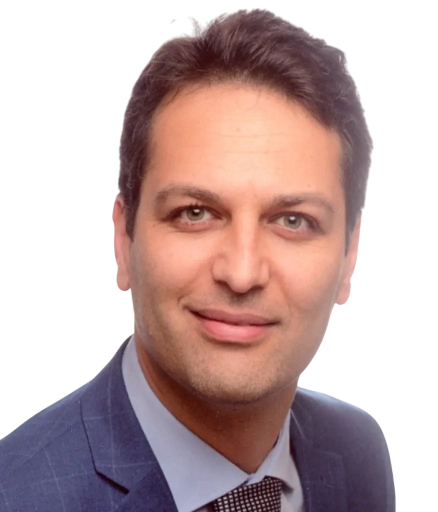
Ehsan A.
Last position:
Clinical Data Scientist at Freelance
- Conduct data management and statistical analysis for clinical studies on behalf of CROs.
- Guest lecturer at Ivancity University, Paris, specializing in data anonymization techniques and statistical disclosure control.
- Provide scientific and medical writing services for pharmaceutical companies.
- Perform optical mapping data analysis and develop software tools with a focus on algorithm optimization and technical support.
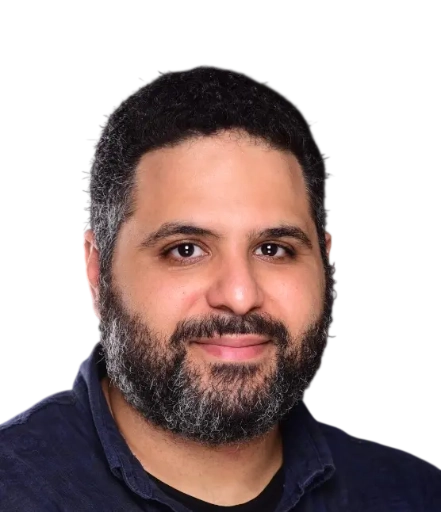
Mohammed E.
Last position:
Interim CTO & Senior Tech Consultant at ASCEND gGmbH / RepairX.io / GHBIO.org
- Development of the SmartHub platform for RepairX.io (iOS app & web)
- Development of an AI-powered (clinical decision support) patient management platform for the Malteser Hospital to provide care for uninsured patients
- Development of a retrieval-augmented generation (RAG) system for the intelligent processing of medical data for ASCEND gGmbH
- Design of an AI-powered system for emotion analysis of guests and development of AI agents for automated accounting and compliance checks
- Planning of the RepairX.io platform (circular economy) and management of a DAO Hyperledger blockchain system for NGOs
- Development of internal audit systems for AI ethics violations in healthcare (according to the EU AI Act)
Matthias S.

Last position:
AI-assisted Web Development & SaaS Founder at Self-employed
- Full focus on AI-augmented web development
- Building and running three proprietary AI-native SaaS products (BrainButler, PageUpgrade, termin365)
- Developing a self-hosted business stack for digital sovereignty
- Daily workflow with Claude as engineering partner and Anthropic/OpenAI APIs for product features
- Using RAG systems with custom vector databases and prompt engineering for complex multi-step pipelines
- Tech stack: Python/FastAPI (backend), React/TypeScript (frontend), WordPress plugin architectures (PHP), multi-tenant systems with per-user encryption
Aziz A.
Last position:
Senior Data Scientist & AI Engineer Consultant at Lialab SAS
- At Groupama: Developed multiple chatbots using Retrieval-Augmented Generation (RAG) to optimize internal processes and customer communication.
- At PwC: Set up an AI lab and developed various AI use cases.
- At La Poste: Analyzed and improved data quality in the data lake.
- At ARTE TV: Built a recommendation system using NLP for better content discovery.
Sara S.
Last position:
Senior Software Developer with a Focus on UI/UX at vGen GmbH
Development of an interactive prototype for the concept of an AI-supported Enterprise Architecture Management tool. The goal was to present complex relationships between IT systems, business processes, and departments in a way that is easy to understand and to support decision-making in the context of IT transformations.
The prototype combined data-driven analyses with guided questions and interactive visualizations. A central part was the integration of a RAG process to provide domain-specific EAM knowledge in context. The focus was on quick idea validation, user-centered interaction design, and the technical feasibility of a scalable overall concept.
Design, implementation, and validation of a RAG process for domain-specific EAM knowledge with Python, LangChain, and graph/vector databases (Neo4J, Milvus)
Business and technical requirements analysis as well as definition of an MVP
Development of the architecture and technology concept using Angular, Spring Boot, GraphQL, and Kubernetes
Design of an interaction concept and creation of a brand style guide with Figma
Development of interactive prototypes with Angular, Konva.js, and TypeScript
Integration of CI/CD processes with GitLab CI/CD
Discover over 15,000 top freelancers


Statistics of experts using Retrieval-Augmented Generation
Aggregated from the professional profiles of matched freelancers.

Experience
14 years (Germany: 15 years)

Position duration
3.5 years (Germany: 2.8 years)

Positions per freelancer
4 (Germany: 9)

Top business areas
Product Development, Information Technology, Customer Service

Top industries
Information Technology, Healthcare, Government and Administration

Certification focus areas
Information Technology, Research and Development, Business Intelligence

Bachelor's degree or higher
80% (Germany: 97%)

Master's degree or higher
80% (Germany: 74%)

Doctorate
20% (Germany: 12%)

Certifications per freelancer
3

Most common languages
German, English, Arabic

Speak two or more languages
100% (Germany: 96%)
Based on our profile pool as of 9 Oct 2026.
Daily rate distribution
The chart shows how the daily rates of experts in this technology in Dusseldorf are distributed, based on recent contracts on our platform. Each bar covers a rate range — its height shows the share of experts charging within that range.
Average rates of experts in Dusseldorf using Retrieval-Augmented Generation
Rates are based on recent contracts and do not include FRATCH margin.

The average daily rate is the mean of all daily rates from recent contracts of comparable freelancers on our platform.
The median daily rate is the middle value of all daily rates — half of comparable freelancers charge less, half charge more. Unlike the average, it is barely affected by outliers.
Calculated based on our freelancers’ daily rates as of 9 Oct 2026. Actual rates may vary depending on seniority level, experience, skill specialization, project complexity, and engagement length.
Retrieval-Augmented Generation experts industry focus
See which industries our matched freelancers work in most often — every figure is calculated live from the freelancers on FRATCH.
- Information Technology (67%)
- Healthcare (33%)
- Government and Administration (33%)
- Telecommunication (33%)
- Advertising (17%)
- Biotechnology (17%)
- Energy (17%)
- Banking and Finance (17%)
Please note that freelancers can work across multiple industries, so percentages overlap.
About the technology
RAG basics
Retrieval-Augmented Generation, often called RAG, combines search with generative models. A system retrieves the most relevant documents first, then uses them to answer questions, draft summaries, or support agents. It helps keep outputs grounded in current internal knowledge.
What it powers
- Knowledge assistants for policies, products, and support
- Search over manuals, contracts, tickets, and wikis
- Drafting flows that cite source material
- Internal copilots for teams that need trusted context
It is common in customer service, legal review, sales enablement, and enterprise search.
Core stack
Strong professionals work with vector databases, embeddings, chunking strategies, rerankers, and orchestration tools. They also know how to evaluate prompt design, source selection, and citation handling. In practice, they connect document stores, APIs, and model endpoints into one dependable flow.
When to bring in help
Companies usually need freelance expertise when retrieval quality is uneven, answer quality drifts, or the knowledge base keeps changing. Help is also useful when a pilot must move into production, or when teams need integration with existing systems. In Dusseldorf, this often fits mixed on-site and remote work with clear documentation.
What good specialists do
- Test retrieval quality with real queries
- Reduce hallucinations with better grounding
- Improve chunking, ranking, and filters
- Build fallback logic for missing context
- Set up evaluation sets and review loops
They write for maintainability, not just demos, and they know how to make the system explain its sources.
Signs of a strong fit
A good specialist can explain why a model failed before touching the code. They can discuss embeddings, retrieval strategy, data freshness, and security without hand-waving. For teams in Dusseldorf, strong communication in English is often enough, while German helps when knowledge comes from local business users.

Frequently asked questions
What clients ask us most about Retrieval-Augmented Generation — answered in short.

Retrieval-Augmented Generation is used to answer questions from company knowledge, draft content with source support, and improve search over large document sets. It is a strong fit when teams need current, grounded answers instead of a model guessing from memory.
RAG usually fits better when the problem is access to trusted information, not changing the model’s behavior. Fine-tuning changes how a model responds, while RAG changes what context it sees at answer time. Many teams start with RAG because it is easier to update when documents change.
A strong Retrieval-Augmented Generation specialist usually knows embeddings, vector search, document parsing, prompt design, and evaluation. Experience with APIs, cloud services, and data security also matters because the system sits between content sources and the model.
RAG work needs more than basic prompt writing when the system must be accurate, secure, and easy to maintain. A simple prototype can be small, but production work benefits from someone who has handled retrieval quality, reranking, and failure cases before.
Yes. Most Retrieval-Augmented Generation work can be done remotely if the expert has access to the relevant documents, systems, and review sessions. In Dusseldorf, a hybrid setup can help when sensitive content or workshop-heavy discovery is involved.
Look for clear thinking about retrieval, not just model prompts. A good RAG specialist can show how they measure answer grounding, handle missing context, and keep sources up to date. They should also be able to explain trade-offs in plain language.
No. Retrieval-Augmented Generation uses search as part of an answer-generation flow, while enterprise search mainly returns documents or snippets. RAG is better when users want a direct answer, a summary, or a draft built from retrieved sources.
Before hiring for Retrieval-Augmented Generation, gather sample documents, common questions, access rules, and examples of bad answers. That gives the specialist enough material to design retrieval, test relevance, and choose the right evaluation approach.
The average hourly rate of freelancers in Dusseldorf, Germany who have used Retrieval-Augmented Generation in their recent projects is 88 €, which corresponds to a daily rate of about 705 € based on an 8-hour working day.
Of the freelancers in Dusseldorf, Germany who have used Retrieval-Augmented Generation in their recent projects, 80% hold at least a Bachelor's degree, 80% hold at least a Master's degree, and 20% hold a doctorate.
On average, freelancers in Dusseldorf, Germany who have used Retrieval-Augmented Generation in their recent projects have 14 years of professional experience, with a single engagement typically lasting around 3.5 years.
The most common languages among freelancers in Dusseldorf, Germany who have used Retrieval-Augmented Generation in their recent projects are German (100%), English (100%), and Arabic (33%).
The most common industries among freelancers in Dusseldorf, Germany who have used Retrieval-Augmented Generation in their recent projects are Information Technology (67%), Healthcare (33%), and Government and Administration (33%).
The most common business areas among freelancers in Dusseldorf, Germany who have used Retrieval-Augmented Generation in their recent projects are Product Development (100%), Information Technology (83%), and Customer Service (50%).
Main locations of FRATCH Experts, who have recently used Retrieval-Augmented Generation
Our freelancers and interim experts are at home across the DACH region — available on-site in the major business hubs or fully remote. Choose a location to discover matched specialists, local market insights and up-to-date availability.


 Berlin
  Hamburg
  Munich
  Cologne
  Frankfurt
  Stuttgart
  Dortmund
  Nuremberg
 Request a free demo
Get in touch with the FRATCH team and we will get back to you within 4 hours.
Would you rather directly get in touch?
We always have the time for a call or email!

Philipp Thomaschewski
FRATCH CEO

