


LangChain Experts in Germany
, matched with vetted professionals in minutesHire experts who connect language models to business data, tools and workflows, from retrieval-augmented generation to production agents. FRATCH matches you quickly with precise, vetted and available freelancers for remote or on-site work.

Meet FRATCH Experts in Germany, who have recently used LangChain
Elsa B.

Last position:
AI Product Owner at HydroMapper GmbH
Designed and delivered a working AI inspection pipeline, now progressing to production with a German federal infrastructure client.
- Identified the core bottleneck: field inspectors documenting damage manually, requiring two people per record with no audit trail. Built an AI pipeline replacing the workflow with single-inspector voice capture, automated field extraction, and confidence-scored review before submission. Target: 30% reduction in documentation time per record.
- Ran discovery, defined the system architecture, and built the full POC using React, Python, FastAPI, LangGraph, and LangSmith. Embedded evaluation from day one: every AI output is logged against what the inspector confirmed, making accuracy measurable from the first production session. Built three-path error recovery into the system design: retry, re-record, and manual fallback, so the workflow holds up when AI output fails.
- Completed EU AI Act risk mapping and GDPR/DPIA documentation before architecture was finalised, establishing the compliance foundation required for federal adoption.
Muhammad S.

Last position:
Full Stack Engineer at ACTIMI
- Building FHIR-compliant healthcare full-stack with React, React Native, and NestJS — patient apps + clinician web panels integrated via MedPlum.
- Shipped end-to-end test coverage with Jest + Cypress, cutting regression issues caught in production.
- Designed and implemented mobile features (offline sync, secure push, deep linking) for React Native modules used by clinicians on the move.
- Reviewed AI/RAG integration approaches for clinical knowledge retrieval — applied learnings from master's thesis on RAG pipelines.
- Drove code quality through TDD and structured code reviews across cross-functional team.
Danish A.

Last position:
Senior Full Stack Developer at Zoi Tech
- Developing full-stack applications using React, Python, and PostgreSQL.
- Building AI-enabled solutions leveraging LLMs, agentic workflows, and automation technologies.
- Expanding cloud engineering expertise through hands-on AWS development and preparation for the AWS Certified Developer - Associate certification.
- Contributing to architecture discussions, code reviews, and Agile software delivery practices.
Vasco F.

Last position:
Senior AI Engineer (Freelance) at RWE
Databricks Architecture & AI Data Products [Databricks Apps · Unity Catalog · Delta Lake · Lakebase · Asset Bundles · Azure DevOps · MCP]
- Designed a layered Databricks financial data architecture: Apps/FastAPI for serving, modular Python calculation engines, SQL/Delta for governed analytics, and Unity Catalog Volumes for versioned workbook outputs.
- Integrated Lakebase PostgreSQL operational data with SQL warehouse analytics, keeping transactional and analytical access separate through App service-principal identity, short-lived credentials and controlled, read-only data interfaces.
- Defined DEV/TST/PRD deployment architecture using Databricks Asset Bundles and automatic Azure DevOps CI/CD, with reusable environment configurations, OAuth M2M identities and automated application/resource lifecycle management.
- Designed access boundaries across Apps, SQL warehouses, Unity Catalog tables/functions/Volumes and secret scopes; separated deployment, application and SQL identities through declarative resource permissions and environment-specific authentication.
- Built serverless Spark pipelines for geospatial reference data and a traceable storage architecture combining immutable Volume artifacts, revision lineage and append-only Delta history with durable audit-event delivery.
- Connected AI Hub agents to governed Databricks financial workflows through typed REST/MCP interfaces; implemented CAPEX/OPEX, commercial, lease and IRR/NPV engines with scenario validation and workbook consistency checks.
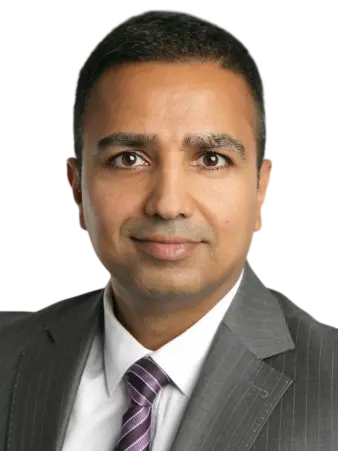
Ali B.
Last position:
Domain Architect Data & IT/OT at Tata-steel
Projects: Assessment, Migration, Modernisation, Strategy, Principles
- Leading the assessment of the current database landscape across different Tata-steel IT/OT factories
- Aligning with the strategy and developing data principles for use across the enterprise by all factories to improve quality
- Simplifying the data landscape by reducing the number of tools used for extraction, transformation and analysis
- Leading the review of current data governance tools and the selection of data governance tools
- Proposing the right solution for the Drones use case to store and integrate data on-premises for OT, as well as AI in the cloud
- Brainstorming with OT departments on how to position historians as fit for purpose within OT and IT
- Examining Oracle UELA with Procurement and guiding executive stakeholders in decision-making
- Leading the sizing and cost assessment with Procurement for Oracle ExaCC for the coming years
- Creating a roadmap for Domain Data & IT for the next two to five years to present company-wide
- Setting up the migration strategy and identifying Oracle candidate databases to migrate to Oracle Exacc
- Guiding Solution Architects towards a solution using the principles created for the TATA DNA Platform
- Providing the strategy for on-premises and cloud backup and archiving using IBM Prospect, Azure and OCI
- Creating a standard reference architecture for data environments and tools for ETL and reporting for advanced analytics
Key Technologies: Oracle, Sequel Server, IBM DB2, Github, SAP, Databricks, Azure, Beaver, Oracle ExaCC, Spotfire, Azure Purview, ETL Tools, PowerBI, Tibco DataVirtualization, TIBCO spotfire, DataBricks, Azure Edge Apache Airflow, Sql server, Azure Data factory, Azure Blob Storage, logic apps, power-apps, Azure File Synch
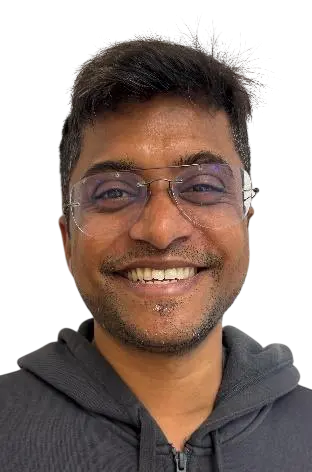
Sukumar R.
Last position:
AI Consultant
- Architect end-to-end AI/ML solutions, with a strong focus on advanced LLM applications, autonomous agentic AI workflows using MCP toolset, vLM embedding computations, and robust agentic RAG pipelines to drive real-world business impact for clients across diverse sectors.
- Designed intelligent agentic AI workflows to automate knowledge retrieval and reasoning for B2B clients, accelerating business impact.
Mirco S.

Last position:
Co-Founder, CTO & Managing Director at Sourcera.ai (Venture Build)
Full overall responsibility: product, technology, compliance and go-to-market
- Delivered an enterprise MVP in 54 days, exceeding scope and schedule.
- Won a 250k € ARR anchor customer and built a sustainable enterprise sales pipeline in the first quarter.
- Paid PoCs with Zalando (35k €) and tesa (26k €), validating product-market fit with Tier-1 enterprise customers.
- Initiated ISO-27001 and TISAX certification processes. Left when the venture entered its next organizational phase.
Özlem A.

Last position:
Adjunct Lecturer at Whitecliffe University of Applied Sciences
- Teaching Introduction to Data Science Course in MBA Programme
Luigi C.

Last position:
Senior Full Stack Developer at Almuc Advertising GmbH
- Applied modern JavaScript features, including ES6+ syntax, destructuring, modules, array methods, and asynchronous programming, to develop efficient and readable frontend code.
- Implemented frontend integration patterns for PHP and Laravel backend services, connecting React interfaces to REST APIs and handling structured JSON data.
- Developed interactive, functional component-based frontend applications using React Hooks, JavaScript, and TypeScript, alongside backend applications and RESTful APIs using Python, Django, Flask, and FastAPI, focusing on reusable components, modular architecture, maintainability, and efficient data processing.
- Maintained a dynamic portfolio platform using PHP, Laravel, Livewire, and MySQL, implementing end-to-end functionality across frontend interfaces, backend services, and database operations.
- Validated server-side request handling, routing, middleware, and form validation using Laravel features to support reliable application workflows and consistent data processing.
- Designed and managed relational database structures using MySQL and Laravel Eloquent ORM, implementing data models, relationships, database migrations, and efficient queries for content management.
- AI-powered applications integrating Large Language Models (LLMs) through external APIs and locally hosted models, exploring practical use cases for conversational AI, intelligent automation, and AI-assisted workflows.
- Built local AI applications and developer tools for running, configuring, and interacting with locally hosted language models, gaining experience with local inference, model integration, and privacy-conscious AI workflows.
- Explored Retrieval-Augmented Generation (RAG) approaches to combine language models with external knowledge sources, enabling context-aware responses based on relevant application data and retrieved information.
- Integrated AI services with backend APIs and application components, developing reusable modules for model communication, response processing, error handling, and data exchange.
Francesco R.

Last position:
Senior AI & Software Engineer at Trenkwalder GmbH
- Co-own the architecture and development of enterprise-grade AI and backend systems spanning communication automation, embedding-based candidate matching and talent-pooling workflows; shape product and feature direction across business, compliance and technical implementation.
- Design and implement production-grade AI pipelines and multi-step LLM workflows, including orchestration, prompt and context engineering, LLM routing and assessment, and integration with internal services and business data.
- Co-own the core candidate-matching system, leveraging vector embeddings and cosine similarity within internal ingestion and attribute-derivation pipelines.
- Drive the architecture and evolution of the candidate-pooling system, including its LLM-based routing and assessment layer.
Hakan A.
Last position:
Senior Software Engineer — AI Evaluation & Benchmarks at Diversido
- Provided technical leadership for a 4-engineer team delivering 3 major client platforms in 12 months with microservices architecture and scalability solutions — 100% of scoped majors shipped ahead of schedule vs. planned milestones (baseline: prior releases often slipped 1–2 sprints).
- Ran AI model evaluation and model outputs evaluation on LLM/AI vendor APIs: safety, completeness, instruction adherence, and groundedness review before go-live; cut escaped bad outputs in AI-integrated release checklists from recurring UAT findings to near-zero on final promote.
- Drove API development and performance optimization for payment, exchange, and AI services; fail-closed error handling and payload validation reduced integration rework cycles by ~35% vs. the first AI integration pass.
- Applied software testing, testing frameworks, code quality assurance, and code refactoring with continuous integration gates; first-pass PR acceptance improved across the team and production hotfixes on AI adapters dropped noticeably after review standards landed.
- Owned DevOps practices: Docker, GitHub Actions, Jenkins-compatible pipelines, and version control workflows — cut deployment time ~50% vs. pre-automation baseline and stabilized releases across 3 client environments.
- Implemented verifier/oracle-style pass-fail checks in container sandboxes (Harbor/Terminal-Bench aligned); wrote technical documentation so failures cleared in one review cycle.
- Led cross-functional collaboration with product and client stakeholders; translated AI evaluation scores and risk findings into plain-language briefs for non-technical partners, unblocking go/no-go decisions without extra engineering meetings.
- Used agile methodologies for sprint planning and backlog ownership; mentored engineers so mid-level contributors owned AI adapter modules independently by mid-engagement.
Gabin Maxime N.

Last position:
Multi-Agent R&D Pipeline (3 Custom Agents) at Independent Project
Claude Code subagents, MCP, Pydantic V2, pytest, bandit
Designed and shipped 3 specialized agents that hand work down a line: a research agent writes a cited implementation spec, a coding agent builds the modular code and its tests, a review agent ranks findings by severity and applies the fixes. Each handoff is a structured document, so no stage depends on another agent's context window.
Connected the research agent to an academic-research MCP server (Semantic Scholar, ArXiv, Hugging Face Hub, citation snowballing) so every reference traces to a tool result rather than the model. Gated commits behind ruff, mypy, pytest and bandit, required human sign-off before installs and commits, and persisted session state on disk so long runs survive a context reset.
Paul O.

Last position:
Freelance AI & SAP Consultant at AI & SAP Consulting Paul Oesterwitz
Source-to-pay AI initiative at an automotive supplier, advanced RAG and agentic AI workflows
Samuel K.

Last position:
Founder & Agentic AI Engineer at Agentakt LLC
Independent engineering practice focused on custom AI systems, production delivery, and fractional technical leadership.
Selected client engagement: Scalutions
Role: Serve as fractional CTO and hands-on technical lead, responsible for the architecture and agentic infrastructure behind its managed B2B outbound operation.
Product: Designed and built OutboundLoop, an agentic SDR operating system for research, qualification, personalized outreach, campaign management, human approvals, measurement, and continuous improvement.
Scope: Own the full system lifecycle—from business processes and agent behavior to context design, model routing, integrations, evaluation, telemetry, reliability, cost control, and production operations.
Rohit T.
Last position:
Senior Software Engineer at KRiAN GmbH
Clients: CARIAD, AUDI AG
- Built and deployed enterprise MLOps pipelines using Azure Machine Learning and Databricks. Reduced model release cycles by 95 percent, from four weeks to two days, through automated CI CD workflows.
- Delivered cloud native DevOps platforms for ADAS programs using Azure data services, Kubernetes, and Terraform based infrastructure provisioning.
- Designed high availability architectures with automated failover. Cut system downtime by 85 percent for mission critical energy trading platforms.
- Developed and integrated AI agents and enterprise chatbots using LangChain, AutoGPT, and GPT models. Enabled autonomous workflows and decision driven automation.
- Reduced cloud infrastructure spend by 40 percent through autoscaling strategies, spot instance usage, and policy driven resource governance across Azure and AWS.
- Partnered with Data Scientists, ML Engineers, Product Managers, and executive stakeholders to deliver large scale automotive and energy solutions.
- Implemented GitOps driven CI CD pipelines supporting automotive software delivery for over 500 engineers across distributed product teams.
- Designed and operated Kubernetes platforms on Azure AKS. Improved deployment stability and reduced rollback events by 70 percent.
- Implemented observability and monitoring stacks using Prometheus, Grafana, and Azure Monitor. Achieved 99.9 percent service availability targets.
Discover over 15,000 top freelancers


Statistics of experts using LangChain
Aggregated from the professional profiles of matched freelancers.

Experience
13 years

Position duration
1.8 years

Positions per freelancer
9

Top business areas
Information Technology, Product Development, Research and Development

Top industries
Information Technology, Education, Banking and Finance

Certification focus areas
Information Technology, Business Intelligence, Product Development

Bachelor's degree or higher
98%

Master's degree or higher
76%

Doctorate
14%

Certifications per freelancer
2

Most common languages
English, German, French

Speak two or more languages
98%
Based on our profile pool as of 19 Nov 2026.
Daily rate distribution
The chart shows how the daily rates of experts in this technology in Germany are distributed, based on recent contracts on our platform. Each bar covers a rate range — its height shows the share of experts charging within that range.
Discover detailed LangChain rate benchmarks:
Explore rate insightsAverage rates of experts in Germany using LangChain
Rates are based on recent contracts and do not include FRATCH margin.

The average daily rate is the mean of all daily rates from recent contracts of comparable freelancers on our platform.
The median daily rate is the middle value of all daily rates — half of comparable freelancers charge less, half charge more. Unlike the average, it is barely affected by outliers.
Calculated based on our freelancers’ daily rates as of 19 Nov 2026. Actual rates may vary depending on seniority level, experience, skill specialization, project complexity, and engagement length.
LangChain experts industry focus
See which industries our matched freelancers work in most often — every figure is calculated live from the freelancers on FRATCH.
- Information Technology (91%)
- Education (42%)
- Banking and Finance (40%)
- Healthcare (37%)
- Professional Services (36%)
- Automotive (35%)
- Manufacturing (32%)
- Retail (27%)
Please note that freelancers can work across multiple industries, so percentages overlap.
About the technology
LangChain foundations
LangChain is an open-source framework for building applications around large language models. It provides components for prompts, model calls, structured outputs, tool use and multi-step workflows. Teams use it to turn a language model into a controlled product feature rather than a standalone chat interface.
Applications and workflows
LangChain supports systems that retrieve information, reason over inputs and take defined actions. Typical deliverables include:
- Retrieval-augmented generation for internal knowledge
- Document question-answering and semantic search
- Support assistants with conversation history
- Agents that call APIs, databases or business tools
- Content, research and process automation workflows
Ecosystem and tooling
Professionals work with model providers such as OpenAI, Anthropic, Google and open-source models, often through LangChain integrations. Common companion tools include LangGraph for stateful agent workflows, LangSmith for tracing and evaluation, and vector stores such as Pinecone, Weaviate, Chroma or FAISS. Python and TypeScript are the main implementation languages.
When expertise matters
Companies bring in freelance specialists when a proof of concept must become a dependable service, when proprietary documents need grounded answers, or when agent behavior is difficult to control. They also help connect LangChain to existing APIs, identity systems, data pipelines and observability stacks. In Germany, this work often supports industrial, financial, retail and healthcare use cases, with clear coordination across remote or on-site teams.
Skills to assess
Strong professionals understand prompt design, embeddings, chunking, metadata, vector retrieval and structured generation. They can select the right model, manage context limits, protect sensitive data and design fallbacks when a tool or model fails. Experience with evaluation datasets, tracing, latency, cost control and production deployment matters as much as framework knowledge.
Quality signals
Look for specialists who explain why a chain, router or agent is appropriate instead of adding complexity by default. Good implementations have clear interfaces, testable steps, source attribution and safeguards against prompt injection and unreliable output. Ask for examples of evaluation methods, monitoring and failure handling, then verify that the professional can communicate trade-offs in the language and working style your team needs.

Frequently asked questions
Curious about LangChain? Here are the answers that come up again and again.

LangChain is used to build applications that combine language models with prompts, external data, APIs and business rules. Common examples include document assistants, semantic search, agent workflows, structured extraction and automated research.
LangChain adds reusable components for retrieval, tool calling, memory, structured output and workflow control around a model API. Direct API calls can be simpler for a narrow feature, while LangChain is useful when an application needs several connected steps or integrations.
A strong LangChain specialist usually understands Python or TypeScript, REST APIs, databases, embeddings and vector search. They should also be comfortable with prompt evaluation, security, cloud deployment, observability and the model providers used by your system.
The right level for LangChain depends on the risk and scope of the application, not only on the framework itself. A simple prototype may need focused integration skills, while a production system requires evidence of testing, retrieval quality, access control, monitoring and failure recovery.
LangChain projects are usually suitable for remote collaboration when interfaces, evaluation criteria and data access are clearly documented. For teams in Germany, agree early on the expected working language, meeting rhythm, security boundaries and any need for on-site workshops.
Review whether LangChain is used where it adds control and maintainability, rather than as unnecessary abstraction. Ask how the professional measures answer quality, handles hallucinations, traces tool calls, protects data and tests changes across models and prompts.
LangGraph is a related framework for building stateful, controllable agent workflows with explicit steps and transitions. It can be used alongside LangChain components, especially when an application needs durable state, human review, branching or recovery.
LangChain assignments vary from prompt and retrieval prototypes to production services with strict data and reliability requirements. Freelancers should clarify the model provider, data sources, deployment environment, evaluation method, expected autonomy and ownership of prompts, tests and monitoring.
The average hourly rate of freelancers in Germany who have used LangChain in their recent projects is 87 €, which corresponds to a daily rate of about 699 € based on an 8-hour working day.
Of the freelancers in Germany who have used LangChain in their recent projects, 98% hold at least a Bachelor's degree, 76% hold at least a Master's degree, and 14% hold a doctorate.
On average, freelancers in Germany who have used LangChain in their recent projects have 13 years of professional experience, with a single engagement typically lasting around 1.8 years.
The most common languages among freelancers in Germany who have used LangChain in their recent projects are English (99%), German (97%), and French (15%).
The most common industries among freelancers in Germany who have used LangChain in their recent projects are Information Technology (91%), Education (42%), and Banking and Finance (40%).
The most common business areas among freelancers in Germany who have used LangChain in their recent projects are Information Technology (95%), Product Development (93%), and Research and Development (67%).
Main locations of FRATCH Experts, who have recently used LangChain
Our freelancers and interim experts are at home across the DACH region — available on-site in the major business hubs or fully remote. Choose a location to discover matched specialists, local market insights and up-to-date availability.

 Berlin
 Hamburg
 Munich
 Cologne
 Nuremberg
Request a free demo
Get in touch with the FRATCH team and we will get back to you within 4 hours.
Would you rather directly get in touch?
We always have the time for a call or email!

Philipp Thomaschewski
FRATCH CEO

