


PyTorch Experts in Munich
matched in minutes from over 15,000 CVsHire experts who train and deploy deep learning models, develop computer vision and natural language systems, and connect PyTorch with production data pipelines. FRATCH matches you quickly and precisely with vetted, available freelancers.

Meet FRATCH Experts in Munich, who have recently used PyTorch
Michael N.

Last position:
Senior AI Engineer | Forward Deployed Engineer at Tiefbau
- Development of an AI-powered project organization tool for a civil engineering company that intelligently links project, task, tender, schedule, and document data through a knowledge graph.
- Implementation of AI features for document analysis, information extraction, context-based assistance, and voice-based data capture based on Microsoft Azure AI, reducing administrative effort, making information available faster, and supporting project teams in decision-making.
- Tech stack: Python, React, TypeScript, FastAPI, Claude Code, Codex, Graphify, PostgreSQL, Microsoft Azure AI Foundry, Azure OpenAI, Azure AI Speech, Azure AI Document Intelligence, Microsoft Graph, Microsoft Entra ID, Docker, Git, CI/CD.
Mirza K.
Last position:
Agentic Automation and a RAG system
- This project involved extraction of intelligence data to support report writing for a company that provides geopolitical, global, commercial intelligence. The data have been gathered from a number of resources (interview transcripts, online data, internal documents), and then a knowledge base has been build from it. This was the basis of a complex RAG system, that was evaluated against a golden dataset. Agents have been used to find out the contradicting intelligence, the statements supporting each other, and to store back the generated knowledge.
Used: Python, RAG, LangGraph, LangChain, deepeval, MCP
Philipp G.
Last position:
Data Scientist & ML Engineer at Data-Science Factory GmbH
- Building, implementing and selling automated Data Science solutions such as Scorecard Factory and Forecast Factory
- Implementation of automated end-to-end cloud processes
- Development of LLM and NLP models
- Creation of interactive reports
- Support for national and international large corporations as well as medium-sized companies in implementing ML projects
Giuseppe A.

Last position:
Embedded Software Developer at Inheco
- AI Integration (LLM & RAG): Design and build of an internal intelligent RAG system (Retrieval-Augmented Generation) based on LLMs, n8n, and vector data for the automated analysis of technical documents and error logs.
- Design & Implementation: Design of a robust RS-232/UART communication interface for an SBC-based embedded device to control medical shaker systems.
- Architecture & Protocol Design: Implementation of a highly maintainable software structure (OOP, SOLID) and definition of hardware-close, resilient communication protocols including multithreading and advanced error handling.
- Quality Assurance & DevOps: Test automation using xUnit, integration tests directly on the hardware target, and maintenance of technical documentation according to strict medical technology standards via Azure DevOps.
Label: C#, .NET, LLMs, RAG, n8n, RS-232, UART, Multithreading, async/await, xUnit, gRPC/protobuf, Blazor, MudBlazor, EF Core, Visual Studio 2026, Azure DevOps
Tezcan D.
Last position:
Solution Architect / Project Manager at German Football Association
- Overall responsibility for the project lifecycle from scope definition to completion
- Close collaboration with platform teams, IT leaders, and external service providers
- Application of SAFe principles and structured sprint work
- Creation of a migration roadmap with clear milestones
- Monitoring of the lifecycle: onboarding, repository migration, replication of permissions, and system tests
- Visualization of the architecture with PlantUML and Gliffy as well as documentation in Confluence
- Regular status reports and running knowledge transfer sessions
Thomas H.

Last position:
Senior MLOps, DevOps Engineer at Trianel Energy
- Build and operate an end-to-end MLOps platform on Azure ML and Kubernetes (Kubeflow) for the automated deployment, monitoring, and scaling of forecasting models (including Temporal Fusion Transformer, Informer, Autoformer).
- Implement CI/CD pipelines in Azure DevOps for the full ML lifecycle – from resource provisioning (Terraform), data transformation (Hugging Face Datasets, Pandas, PyTorch, CUDA cluster) through training and evaluation to model registry and endpoint deployment.
- Integrate MLflow for experiment tracking, model versioning, performance monitoring, and automated registration in the Azure Model Registry.
- Develop and containerize PyTorch training jobs (Azure Notebook, Jupyter Notebooks) for price and time series forecasting (PFC models) with automatic rollout via Azure ML Endpoints and REST/gRPC interfaces, Docker containerization, secured with OAuth 2.0.
- Set up monitoring and alerting mechanisms (Prometheus, MLflow Metrics), log centralization, and cost monitoring.
- Automate infrastructure provisioning and model deployment using Terraform, Helm, and Azure CLI; connect to existing market data systems and event pipelines.
- Migrate existing workloads and databases (IONOS → Azure, MongoDB) with integration into central MLOps workflows and internal networks.
- Extend the platform with LLM-based tools (LangChain, LangServe) to integrate GPT-based analysis modules into existing Spring Boot services for market anomaly detection and automated reports.
- Analyze and architect a software solution to process large volumes of data efficiently (>3000 messages/sec.) (market data store).
- Spring Boot / Java 21 container development with RabbitMQ for distributing stock market data via MongoDB (Kubernetes) with fast storage of data in Redis RMaps, deduplication, forwarding messages to Read Model queues, and building Read Models for UI display in MongoDB.
- Integration of RESTHeart to create a REST API for MongoDB.
- Build an Angular frontend to simplify data queries and master data maintenance.
- Agentic coding with remote and local LLMs (Claude Sonnet, Ollama Qwen) and MCP servers.
- Develop Python scripts for transforming and cleaning incoming stock market data (Pandas, scikit-learn).
André H.

Last position:
Linux IT Admin at ReiserST
- Development and maintenance of IT architectures with embedded Linux systems.
- Designing, implementing, and optimizing backend applications and script-based solutions.
- Analyzing and resolving issues, including troubleshooting and user support.
- Developing and implementing security concepts for cloud solutions.
- Administering networks (DHCP, DNS, NTP, VPN).
- Technologies: Linux, PowerShell, Bash, Python, Ansible, Kubernetes, GitLab CI.
- Methods: Kanban.
Krithika C.

Last position:
Professional Reorientation at Von Rundstedt
- Engaged in a structured career development program while strengthening German language proficiency (B1 level) and evaluating opportunities in ADAS/AD systems and requirements engineering.
Michael M.

Last position:
Freelance Senior Consultant & Cloud Architect at Rheinmetall AG
- Specialized in designing and implementing robust, secure cloud solutions for critical client infrastructure.
- Expertise in Microsoft Intune environment with a strong focus on system hardening and comprehensive policy management.
- Architected NIST and ISO/IEC 27000 compliant Mobile Device Management (MDM) infrastructure tailored for an international government defense aerospace project.
- Performed an architectural role for an offline Microsoft Endpoint Configuration Manager (MECM) environment, ensuring NIST compliance while handling complex manufacturing infrastructure.
Tobias N.

Last position:
Enterprise & Solutions Architect
- Building an independent enterprise IT setup — cloud strategy, network, AWS landing zone, security requirements, contract negotiations.
- Migration of all applications; avoiding high contractual penalties for the client.
- Onboarding and coordination o...
Stephan B.
Last position:
Freelance Data Scientist at Baier Data & AI Consulting
Narges D.
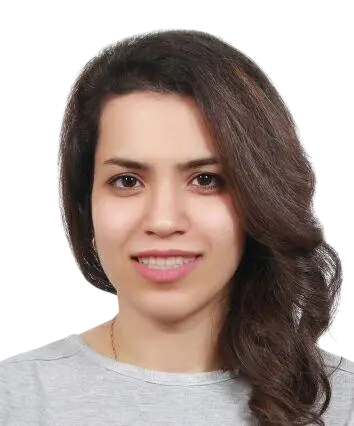
Last position:
Research Assistant at Hochschule München
Introduced an integrated approach for structural damage detection across concrete, steel, and glass using advanced technologies such as LiDAR and thermal imaging. Highlighted cross-material interactions to enhance diagnostics and enable predictive maintenance.
Developed an NLP-based medical note simplifier that transforms complex clinical instructions into plain, child-level English. Applied prompt engineering with Flan-T5 transformer models to extract patient-relevant actions and rephrase them into clear to-do items. Built dual Flask and Tornado backends with a printable web interface.
Thomas L.

Last position:
Consultant for AI-driven process automation at Lumiz
AI-driven automation of purchasing on a printing company's website, including selecting delivery times, order options, ordering, payment, and uploading print data from the Lumiz Cloud.
Martin R.
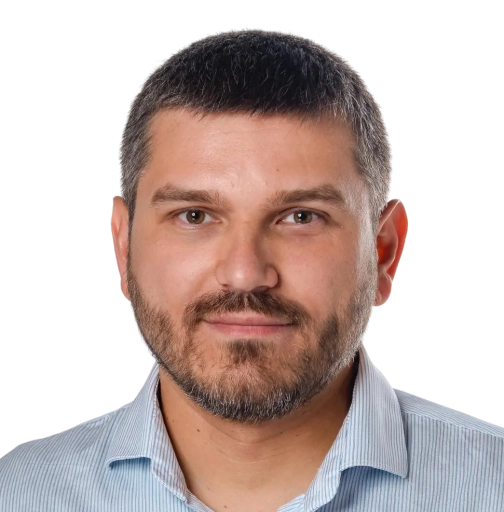
Last position:
Senior LLM Research Scientist at BYO Inc.
- Research and develop models for chatbots, NLP and LLMs (e.g. Llama, Qwen, OpenAI)
- Enhance chatbots with RAG, in-context learning
- Supervised fine-tuning (PEFT, LoRA), Huggingface or Unsloth
- Advanced training methods: Test-time training, (transductive) active learning, reinforcement learning
- High-throughput serving with vLLM
- Apply embedding models (e.g. SentenceTransformers), similarity/vector search or vector DB or ranking (e.g. LlamaIndex, Faiss, LangChain)
- Generate and filter synthetic data, clustering
- Detect hallucinations
- Evaluate chatbot models (Rouge, BLEU, F1-Score, Recall, Precision)
- Visualization of experiments (matplotlib)
Caner K.

Last position:
Synthetic Medical Dataset (MedGym) at MedTank
- Generated synthetic datasets for CXR, mammography, and distal radius fracture detection using GANs and diffusion, creating >50k synthetic images for benchmarking.
- Ensured GDPR-compliant workflows and reproducibility, enabling dataset adoption for internal validation and academic collaboration.
- Project highlighted in MedTank’s internal R&D showcase as a flagship synthetic data initiative.
Discover over 15,000 top freelancers


Statistics of experts using PyTorch
Aggregated from the professional profiles of matched freelancers.

Experience
14 years (Germany: 12 years)

Position duration
1.6 years (Germany: 1.9 years)

Positions per freelancer
11 (Germany: 8)

Top business areas
Information Technology, Product Development, Research and Development

Top industries
Information Technology, Automotive, Manufacturing

Certification focus areas
Information Technology, Business Intelligence, Research and Development

Bachelor's degree or higher
100% (Germany: 99%)

Master's degree or higher
95% (Germany: 83%)

Doctorate
24% (Germany: 19%)

Certifications per freelancer
2

Most common languages
English, German, Spanish

Speak two or more languages
100% (Germany: 98%)
Based on our profile pool as of 9 Oct 2026.
Daily rate distribution
The chart shows how the daily rates of experts in this technology in Munich are distributed, based on recent contracts on our platform. Each bar covers a rate range — its height shows the share of experts charging within that range.
Average rates of experts in Munich using PyTorch
Rates are based on recent contracts and do not include FRATCH margin.

The average daily rate is the mean of all daily rates from recent contracts of comparable freelancers on our platform.
The median daily rate is the middle value of all daily rates — half of comparable freelancers charge less, half charge more. Unlike the average, it is barely affected by outliers.
Calculated based on our freelancers’ daily rates as of 9 Oct 2026. Actual rates may vary depending on seniority level, experience, skill specialization, project complexity, and engagement length.
PyTorch experts industry focus
See which industries our matched freelancers work in most often — every figure is calculated live from the freelancers on FRATCH.
- Information Technology (91%)
- Automotive (55%)
- Manufacturing (52%)
- Education (50%)
- Healthcare (41%)
- Banking and Finance (36%)
- Professional Services (32%)
- Government and Administration (27%)
Please note that freelancers can work across multiple industries, so percentages overlap.
About the technology
What PyTorch does
PyTorch is an open-source machine learning framework for building, training and deploying neural networks. Its tensor operations, automatic differentiation and dynamic execution model support rapid experimentation as well as production AI. Teams use it for computer vision, natural language processing, generative AI, recommendation systems and scientific computing.
Core ecosystem
PyTorch projects often combine the framework with a broader set of tools and services:
- TorchVision for image datasets and vision models
- TorchAudio and TorchText for specialist data workflows
- Transformers for language and multimodal models
- CUDA and GPUs for accelerated training
- TorchServe, ONNX or cloud runtimes for deployment
The surrounding stack may also include Python, NumPy, pandas, experiment tracking, containers and distributed computing services.
Typical deliverables
Experts use PyTorch to prepare datasets, design model architectures and create reliable training pipelines. They deliver image classifiers, object detection systems, speech or text models, embeddings, forecasting solutions and fine-tuned foundation models. Production work can include inference APIs, batch scoring, model monitoring and reproducible experiment setups.
When to bring in expertise
Freelance expertise helps when a proof of concept must become a dependable service, when training costs or model quality need improvement, or when internal teams lack deep learning capacity. In Munich, PyTorch specialists may support automotive, manufacturing, healthcare, research and media initiatives. They can work remotely or alongside local teams, depending on data access and collaboration needs.
Skills that matter
Strong professionals understand more than model code. They can assess data quality, select suitable evaluation methods, prevent leakage, manage GPU workloads and explain trade-offs between accuracy, latency and operating cost. Useful adjacent skills include Python, SQL, Linux, Docker, Kubernetes, cloud services, MLOps and responsible handling of sensitive data.
How quality is assessed
Look for clear reasoning from dataset to production outcome, not only impressive model demos. A capable specialist can show how they handle imbalanced data, reproducibility, versioning, testing and rollback. They should also communicate assumptions, document experiments and adapt open-source models without treating default settings as a finished solution.

Frequently asked questions
Curious about PyTorch? Here are the answers that come up again and again.

PyTorch is used to build and train machine learning models for image analysis, language processing, speech, recommendations, forecasting and generative AI. Companies may also use it to create model services that score new data inside an existing product or operational workflow.
PyTorch and TensorFlow both support deep learning, GPU acceleration and production deployment. PyTorch is often valued for its flexible, Python-friendly experimentation workflow, while TensorFlow can be preferred where an organisation already relies on its tooling and serving ecosystem.
A strong PyTorch specialist usually combines model development with Python, data preparation, SQL and evaluation design. Experience with CUDA, Docker, cloud infrastructure, Kubernetes, MLOps and tools such as Transformers or TorchVision can be important for production work.
The right PyTorch expertise depends on the project stage and risk. A prototype may need strong modelling and data skills, while a regulated or high-volume service also requires deployment, monitoring, security and reproducibility experience.
Yes, PyTorch work can often be done remotely when data, GPUs and development environments are securely accessible. On-site collaboration in Munich can help with workshops, hardware access or sensitive datasets, and German or English communication should be agreed at the start.
Ask a PyTorch specialist to explain a complete workflow: data checks, model choice, validation, deployment and monitoring. Review whether they can discuss failure cases, reproducibility and operational trade-offs instead of presenting only a final accuracy result.
PyTorch is widely used to train, adapt and run large language, diffusion and multimodal models. Specialists may work with Transformers, distributed GPU training, parameter-efficient fine-tuning, retrieval pipelines and inference optimisation.
PyTorch may be unnecessary when a simple rule-based system, classical machine learning model or managed AI service solves the problem more reliably. A good specialist should test that assumption and recommend the simplest approach that meets the required quality and operating constraints.
The average hourly rate of freelancers in Munich, Germany who have used PyTorch in their recent projects is 88 €, which corresponds to a daily rate of about 704 € based on an 8-hour working day.
Of the freelancers in Munich, Germany who have used PyTorch in their recent projects, 100% hold at least a Bachelor's degree, 95% hold at least a Master's degree, and 24% hold a doctorate.
On average, freelancers in Munich, Germany who have used PyTorch in their recent projects have 14 years of professional experience, with a single engagement typically lasting around 1.6 years.
The most common languages among freelancers in Munich, Germany who have used PyTorch in their recent projects are English (100%), German (93%), and Spanish (20%).
The most common industries among freelancers in Munich, Germany who have used PyTorch in their recent projects are Information Technology (91%), Automotive (55%), and Manufacturing (52%).
The most common business areas among freelancers in Munich, Germany who have used PyTorch in their recent projects are Information Technology (95%), Product Development (93%), and Research and Development (75%).
Main locations of FRATCH Experts, who have recently used PyTorch
Our freelancers and interim experts are at home across the DACH region — available on-site in the major business hubs or fully remote. Choose a location to discover matched specialists, local market insights and up-to-date availability.


 Berlin
  Hamburg
  Cologne
  Frankfurt
  Stuttgart
  Dresden
  Nuremberg
 Request a free demo
Get in touch with the FRATCH team and we will get back to you within 4 hours.
Would you rather directly get in touch?
We always have the time for a call or email!

Philipp Thomaschewski
FRATCH CEO

