


pytest Expert in Munich
for reliable Python tests, matched in minutes with vetted freelancersHire experts who create maintainable Python test suites, integrate pytest with CI pipelines and validate APIs, services and data workflows. FRATCH matches you quickly and precisely with vetted, available freelancers suited to your project.

Meet FRATCH Experts in Munich, who have recently used pytest
Michael N.

Last position:
Senior AI Engineer | Forward Deployed Engineer at Tiefbau
- Development of an AI-powered project organization tool for a civil engineering company that intelligently links project, task, tender, schedule, and document data through a knowledge graph.
- Implementation of AI features for document analysis, information extraction, context-based assistance, and voice-based data capture based on Microsoft Azure AI, reducing administrative effort, making information available faster, and supporting project teams in decision-making.
- Tech stack: Python, React, TypeScript, FastAPI, Claude Code, Codex, Graphify, PostgreSQL, Microsoft Azure AI Foundry, Azure OpenAI, Azure AI Speech, Azure AI Document Intelligence, Microsoft Graph, Microsoft Entra ID, Docker, Git, CI/CD.
Felix S.
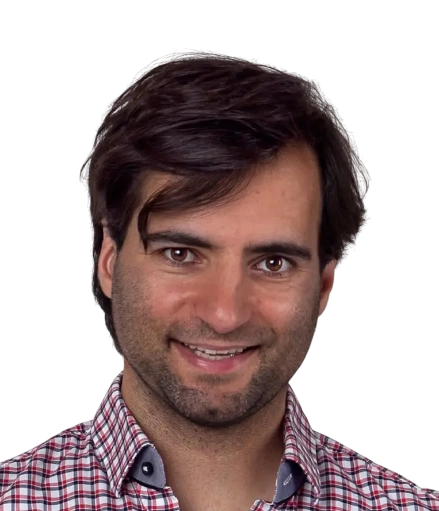
Last position:
App Developer at XIXUM-Modeler
- Developing a model-based AI where natural language is interpreted as formal relations.
- Natural language terms are not considered rigid but fluid and can be negotiated in a context so meaning resolves by iteratively specifying.
- Develops all kinds of model solutions.
- Backed by natural language and data annotation.
- Requirements to code and other solutions.
Ljubomir O.

Last position:
Senior Software Test Engineer at Keil KTM GmbH
Temporary employment
- System black-box integration tests (BBIT, IVVQ): Execution of regression, release, acceptance, and compliance tests for safety-critical brake control units in the rail industry
- Software test application & integration: Runtime configuration of software components and libraries, validation of interfaces, configuration dependencies, and component interactions
- Test automation (FEAT framework): Co-development and further development of an automated test framework for test execution, reporting, and result analysis
- Functional safety (SiL4, FuSi): Ensuring compliance with safety requirements, traceability and coverage, as well as standards compliance according to EN50126/28/29
- Test automation for communication components: Configuration and validation of fieldbus (CAN) and Ethernet-based TCMS data communication interfaces (TRDP and CIP)
- Requirements analysis & shift-left (PTC Windchill ALM): Analysis of software and system artifacts to identify gaps, ambiguities, and redundancies early in the SDLC
- Test design & test case development: Derivation of test conditions, coverage strategies, and implementation of data-driven test cases (DDT), including reusable test data fixtures
- CI/CD & automation (Python, PowerShell, Jenkins, SVN): Automation of build, test, and HIL deployment processes as well as integration into CI/CD pipelines
- Test data & configuration management (XML): Maintenance and adaptation of XML test vectors and system configurations with automated integration into test environments
- Non-functional testing: Execution of performance and load tests to assess stability and system behavior
- Agile development & defect management (JIRA, Confluence): Participation in Scrum teams, test coordination, review of test artifacts, as well as defect tracking and root-cause analysis
- Error analysis & debugging (CANoe, CANalyzer): Analysis of errors and message flows across multiple system layers (application to bus)
- Model-based analysis (UML, Enterprise Architect): Specification of SUT/SOW and support for systematic test control
- Process & test documentation: Creation of integration and test documentation according to internal quality and certification requirements
Giuseppe A.

Last position:
Embedded Software Developer at Inheco
- AI Integration (LLM & RAG): Design and build of an internal intelligent RAG system (Retrieval-Augmented Generation) based on LLMs, n8n, and vector data for the automated analysis of technical documents and error logs.
- Design & Implementation: Design of a robust RS-232/UART communication interface for an SBC-based embedded device to control medical shaker systems.
- Architecture & Protocol Design: Implementation of a highly maintainable software structure (OOP, SOLID) and definition of hardware-close, resilient communication protocols including multithreading and advanced error handling.
- Quality Assurance & DevOps: Test automation using xUnit, integration tests directly on the hardware target, and maintenance of technical documentation according to strict medical technology standards via Azure DevOps.
Label: C#, .NET, LLMs, RAG, n8n, RS-232, UART, Multithreading, async/await, xUnit, gRPC/protobuf, Blazor, MudBlazor, EF Core, Visual Studio 2026, Azure DevOps
Any-Arlene N.

Last position:
Co-Founder · Data Engineering & Backend at zirikana (Kirundi Bible Web App) – Civic Technology
- Built a Python pipeline that converts lectionary web content into structured daily JSON, applying liturgical-calendar rules for accurate weekday and Sunday coverage.
- Shipped a read-only FastAPI REST API with shared Pydantic models and delivered a Kirundi-first web client for browser and mobile use.
- Owned the data layer and backend architecture, collaborating closely on system architecture and interfaces while automating refreshes with GitHub Actions and validating the ETL with pytest.
- Impact: Created a reliable, API-driven source of truth for daily Bible readings in Kirundi, enabling consistent access to previously unstructured content.
André H.

Last position:
Linux IT Admin at ReiserST
- Development and maintenance of IT architectures with embedded Linux systems.
- Designing, implementing, and optimizing backend applications and script-based solutions.
- Analyzing and resolving issues, including troubleshooting and user support.
- Developing and implementing security concepts for cloud solutions.
- Administering networks (DHCP, DNS, NTP, VPN).
- Technologies: Linux, PowerShell, Bash, Python, Ansible, Kubernetes, GitLab CI.
- Methods: Kanban.
Serge K.
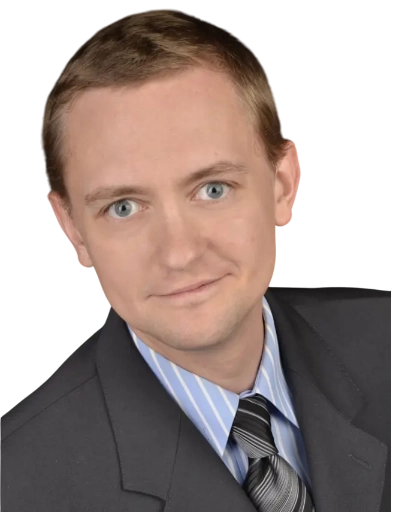
Last position:
Founder
- Idea, design and initial implementation of a service that aggregates publicly available data to estimate prices for certain types of objects
- Collection of data from different data sources and its normalization. Embedding the data using SentenceTransformer and training gradient boost models
- Implementation of a web service that
- reads arbitrary user text
- extends it if some parts of data are missing
- uses a local LLM model to prepare the data for prediction
- embed the data and call for prediction from the gradient boost model
- uses a LLM model to generate a report for the user request including explanations
- Stack: BigQuery, Vertex AI, Cloud Run (GCP), Python, Terraform, DBT, SentenceTransformer, Qwen
- Minor SEO optimizations
- More to come...
Michael T.

Last position:
Senior Freelance Software Engineer — Enterprise Software & Data Projects
- Delivered backend systems, data processing solutions, and software integrations for enterprise business applications.
- Designed and implemented API-based services connecting internal platforms with external systems.
- Built automated processing workflows to handle large-scale structured business data.
- Improved application performance by 30–50% through database optimization, caching strategies, and backend refactoring.
- Reduced manual operational effort by 40–60% by automating repetitive workflows.
- Supported production environments through troubleshooting, monitoring improvements, and continuous optimization.
- Authored technical documentation and led knowledge-transfer sessions to support long-term maintainability.
Jiri S.
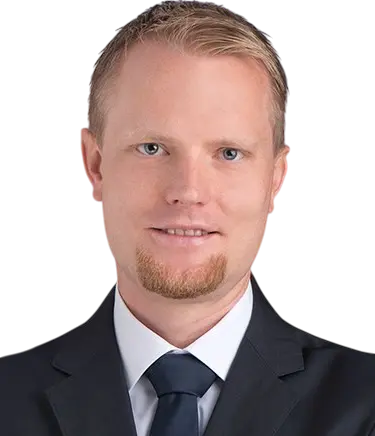
Last position:
Quality Manager/Test Management at Noriba GmbH
- Test concept creation
- Creation of test processes
- Coordination of TC development: stress tests, functional tests, performance tests, high data rate tests, integration tests, etc.
- HW testing: FPGA, RF
- Test automation and regression tests
- Ensuring 24/7 operation of the test system
- Analysis & reporting
- Regular coordination of the test team, meetings with other stakeholders
- Communication and coordination with stakeholders and the project manager
Anton K.
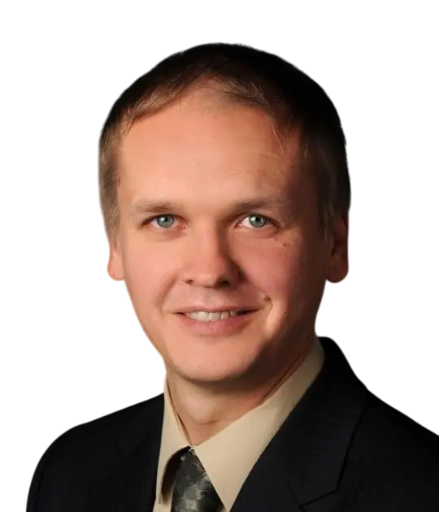
Last position:
Head of Overall Technical Integration NSC / Hadoop Cloud Development at IABG
Head of overall technical integration NSC (National Secure Cloud, project with approx. 60 employees).
Technical integration of all subprojects into one product, definition of interfaces and basic components of a cloud including hardware, technical architecture of the IABG platform.
Development of a Cloud Management Platform (CMP) capable of creating private/mixed clouds of any complexity based on a textual description with one click or interactively.
CMP also includes the complete hardware management lifecycle.
Kubernetes, OpenStack and Hadoop are used as the foundation.
The management layer includes Harbor, Gitea, Longhorn, Keycloak, Rancher and Jenkins, which are configured automatically.
Private cloud can run any customer workloads, including a full Hadoop layer with HDFS, Spark, MapReduce, Mesos, HBase and around 20 additional ML/DL technologies.
Hadoop worker clusters can also be installed automatically without Kubernetes on bare metal or commodity hardware.
OpenStack with Nova, Neutron, Ironic, Swift, Cinder, Ceph.
Development of a Java application Rudi: SOAP, REST, containers, DB.
Technologies: Kubernetes (K3s, Rke2, Minikube, Harbor, Gitea, Jenkins, Longhorn, Keycloak, Rancher), OpenStack (Nova, Neutron, Keystone, Swift, Ceph, Cinder, Sahara, Magnum, Kayobe, Kolla, Bigrost, Ironic), Hadoop (HDFS, Ambari, Solr, Livy, Ranger, YARN, Tez, HBase, Kafka, Hive, Zookeeper, MapReduce, Spark, Oozie, Flink), virtualization (Kubernetes (K3S), VMware, Oracle), scripting (Ansible, Puppet, Juju, Shell, Groovy, Gradle, Maven).
Youssef A.
Last position:
Test Automation Engineer at IAV GmbH
- Executed standard/complex test cases using ECU-test and Python, improving test throughput by 30%.
- Performed validation and execution of ECU test cases on HiL benches for ADAS to ensure functional quality before release.
- Worked closely with customers to align test activities with project requirements and provide regular validation updates.
- Coordinated with subcontractors to track defects, ensure timely issue resolution, and maintain test quality.
- Ensured testbench stability and maintenance before executing test plans, identifying and resolving issues proactively.
- Developed Python-based automation scripts for reporting and workflow automation.
- Managed test issues and documentation via Jira in coordination with QA and development teams.
- Used CANPE for measuring signals of CAN, FlexRay, Ethernet, and IP using Vector CAN tools.
Clarissa H.

Last position:
AI Trainer at Komdis GmbH
- Led comprehensive AI workshops for professionals, focusing on AI-driven process automation.
- Tech Stack: n8n, Make, LLMs (OpenAI, Anthropic), Prompt Engineering, Process Mapping Tools.
Subodh K.

Last position:
Senior Software Engineer at EDAG Engineering GmbH
Project Title: Path Planning Module Development (Oct 2024 – Jun 2025)
Developed path planning module using C++14 and CMake
Implemented gRPC communication protocol between modules
Performed unit testing using Pytest framework and Python
Project Title: HMI Programming for Battery, Fuel Cell Electric Vehicle (Aug 2023 – Sep 2024)
Developed HMI software for BEV/FCEV using Ruby and Crystal for backend
Implemented frontend using Vue.js framework
Conducted bug fixes and simulator testing
Project Title: IFHOST CAN Bus Programming (Jan 2023 – Jul 2023)
Programmed CAN bus software using C and C++
Executed unit tests with Google Test framework
Performed integration testing using CAPL in Vector CANalyzer
Participated in onsite testing
Maziyar K.

Last position:
Data Engineer at MSD Germany
- Lead Architect to design and implement the data lake and ETL Pipeline using AWS Stack
- Performance Optimization of Data Ingestion of ETL Pipeline
- Development of Data Validation using Great Expectations
- Leading of the data migration for two sources exchanges
- Data Modeling in AWS Redshift
MLOps
- Model inference implementation by mlflow and AWS SageMaker
- Feature Engineering for the running ML Models ( Recommender Engineer, Clustering )
- Implementatino of Model Registry and artifactory using mlflow
- Historization an Profiling of the Input Data Using AWS Glue Crawler and AWS Data Catalog
- Feature importance using mlflow
Tech. Stack: Python 3, AWS Glue, AWS Step Fucntion, AWS Lambda, AWS EventBridge, AWS IAM Role, AWS SageMaker, AWS EC2, AWS Glue Crawler, AWS CloudWatch, MLFlow, ETL, Data lake, GitHub Action, Terraform, Jenkins, Ansible playbooks (Infrastructure as Code), CI/CD, GitLab, SQL, PySparkSCRUM, Agile, Jira, BigData, VSCode, DBeaver, MSSQL, MySQL, grafana, Docker, Linux, Bash, MapReduce, Data Modeling (ORM), Pandas, YAML, SQL-Alchemy
Daniel C.
Last position:
Founder & Managing Director at BotCraft GmbH
- Building the company with a focus on connectivity for IIoT and Industry 4.0, iRPA/process automation, advanced robotics and smart systems, sensors and services
- Project management and software architecture for IoT gateway development (since 2020) with protocol translation, IT/OT convergence and GRC
- Developing RPA bots for automating and monitoring industrial processes with an agent-based AI approach (since 2020)
- Implementing unsupervised clustering and anomaly detection for time series data in big data streaming pipelines (since 2021)
- Introducing a Docker-based release train for OTA updates with DevSecOps and CI/CD (since 2018)
Discover over 15,000 top freelancers


Statistics of experts using pytest
Aggregated from the professional profiles of matched freelancers.

Experience
15 years

Position duration
2.3 years (Germany: 1.8 years)

Positions per freelancer
11 (Germany: 10)

Top business areas
Product Development, Information Technology, Quality Assurance

Top industries
Information Technology, Automotive, Healthcare

Certification focus areas
Information Technology, Quality Assurance, Business Intelligence

Bachelor's degree or higher
100% (Germany: 97%)

Master's degree or higher
95% (Germany: 73%)

Doctorate
11% (Germany: 12%)

Certifications per freelancer
3 (Germany: 2)

Most common languages
German, English, Spanish

Speak two or more languages
95% (Germany: 99%)
Based on our profile pool as of 9 Oct 2026.
Daily rate distribution
The chart shows how the daily rates of experts in this technology in Munich are distributed, based on recent contracts on our platform. Each bar covers a rate range — its height shows the share of experts charging within that range.
Average rates of experts in Munich using pytest
Rates are based on recent contracts and do not include FRATCH margin.

The average daily rate is the mean of all daily rates from recent contracts of comparable freelancers on our platform.
The median daily rate is the middle value of all daily rates — half of comparable freelancers charge less, half charge more. Unlike the average, it is barely affected by outliers.
Calculated based on our freelancers’ daily rates as of 9 Oct 2026. Actual rates may vary depending on seniority level, experience, skill specialization, project complexity, and engagement length.
pytest experts industry focus
See which industries our matched freelancers work in most often — every figure is calculated live from the freelancers on FRATCH.
- Information Technology (95%)
- Automotive (47%)
- Healthcare (47%)
- Manufacturing (42%)
- Education (37%)
- Insurance (32%)
- Pharmaceutical (32%)
- Telecommunication (32%)
Please note that freelancers can work across multiple industries, so percentages overlap.
About the technology
What pytest does
pytest is a testing framework for Python applications. It supports clear test functions, readable assertions and detailed failure reports without forcing teams into heavy class structures. Companies use it to check application logic, APIs, services, data pipelines and automation scripts before release.
Core capabilities
pytest gives teams a compact foundation for unit, integration and end-to-end testing. Fixtures handle reusable setup and teardown, while parametrization covers varied inputs without duplicating test code. Plugins extend the framework for coverage, parallel execution, browser checks, mocking and test reporting.
- Organize tests with fixtures and markers
- Test synchronous and asynchronous Python code
- Validate APIs, databases and external services
- Run selected suites locally or in CI
Ecosystem and tooling
Strong pytest work includes Python packaging, virtual environments and dependency management. Experts often connect pytest with tox, nox, coverage.py, mypy, Ruff, Selenium, Playwright or HTTP clients. They also configure GitHub Actions, GitLab CI, Jenkins or cloud build systems so test results influence delivery safely.
When companies need help
Freelance expertise is useful when a Python codebase has little test coverage, unreliable tests or slow feedback in continuous integration. It can also support a new API, a migration from unittest, a growing data platform or a quality review before a major release. In Munich, remote collaboration is common, while on-site work can help with workshops and shared delivery routines.
- Establish a practical test structure
- Stabilize flaky fixtures and integration tests
- Add coverage to legacy Python services
- Improve CI execution and diagnostic output
What strong experts bring
Good pytest professionals understand the system under test, not just the framework syntax. They separate unit tests from integration boundaries, choose realistic fixtures and keep external dependencies controlled. They make failures easy to diagnose and explain which risks are covered, which remain, and why.
Choosing the right specialist
Ask for examples of pytest suites that run in a real delivery pipeline and discuss how the professional handled flaky tests, database state, third-party APIs and asynchronous code. Relevant experience with Python architecture, Git workflows and CI is often as important as pytest itself. For Munich teams, clarify whether collaboration requires German, English or both, as well as the expected remote and on-site rhythm.

Frequently asked questions
Quick answers to the questions that come up most around pytest.

pytest is a Python testing framework for checking application behavior through unit, integration and end-to-end tests. It is commonly used for APIs, web services, data processing, automation scripts and libraries.
pytest usually offers a more concise test style, powerful fixtures and flexible parametrization than Python’s built-in unittest framework. unittest can suit codebases that prefer its class-based conventions, while pytest is often chosen for simpler test structure and a broad plugin ecosystem.
A strong pytest specialist should also understand Python packaging, mocking, databases, HTTP services and continuous integration. Experience with coverage.py, tox or nox, Git workflows and tools such as Playwright can be valuable when tests cover complete delivery flows.
The right level of pytest experience depends on the codebase, risk and test scope rather than a fixed tenure. A small unit-test setup may need focused framework knowledge, while legacy systems, distributed services and unstable CI require proven judgment around fixtures, isolation and test design.
pytest work is well suited to remote collaboration because tests, reports and CI configuration can be reviewed in shared repositories. Munich teams should still agree on communication language, working hours, access to environments and whether workshops or release support require occasional on-site presence.
Review whether pytest tests describe meaningful behavior, fail for useful reasons and remain independent and maintainable. Ask how the specialist measures coverage, handles external services, investigates flaky tests and keeps feedback fast in the delivery pipeline.
pytest can test asynchronous Python code when the suite uses suitable async support and event-loop handling. The specialist should understand async fixtures, service boundaries and cleanup so tests do not pass only because timing or shared state hides defects.
pytest may be unsuitable when a team must follow another language’s testing standard or a tightly prescribed unittest-style structure. It can also become ineffective if the test suite relies on excessive mocking, poorly isolated fixtures or browser checks that belong in a dedicated end-to-end layer.
The average hourly rate of freelancers in Munich, Germany who have used pytest in their recent projects is 103 €, which corresponds to a daily rate of about 826 € based on an 8-hour working day.
Of the freelancers in Munich, Germany who have used pytest in their recent projects, 100% hold at least a Bachelor's degree, 95% hold at least a Master's degree, and 11% hold a doctorate.
On average, freelancers in Munich, Germany who have used pytest in their recent projects have 15 years of professional experience, with a single engagement typically lasting around 2.3 years.
The most common languages among freelancers in Munich, Germany who have used pytest in their recent projects are German (100%), English (95%), and Spanish (26%).
The most common industries among freelancers in Munich, Germany who have used pytest in their recent projects are Information Technology (95%), Automotive (47%), and Healthcare (47%).
The most common business areas among freelancers in Munich, Germany who have used pytest in their recent projects are Product Development (100%), Information Technology (95%), and Quality Assurance (74%).
Main locations of FRATCH Experts, who have recently used pytest
Our freelancers and interim experts are at home across the DACH region — available on-site in the major business hubs or fully remote. Choose a location to discover matched specialists, local market insights and up-to-date availability.
 Berlin Hamburg
  Munich Cologne Frankfurt Stuttgart Dusseldorf Leipzig Dortmund Essen Bremen Dresden Hanover Nuremberg
  Berlin
 Request a free demo
Get in touch with the FRATCH team and we will get back to you within 4 hours.
Would you rather directly get in touch?
We always have the time for a call or email!

Philipp Thomaschewski
FRATCH CEO

