


IEC 61508 Experts in Germany
, matched in minutes from over 15,000 CVsHire experts who assess functional safety, define safety requirements and support SIL-oriented development across hardware, software and industrial control systems. FRATCH quickly connects you with vetted, available freelancers whose experience fits your project.

Meet FRATCH Experts in Germany, who have recently used IEC 61508
Volker F.
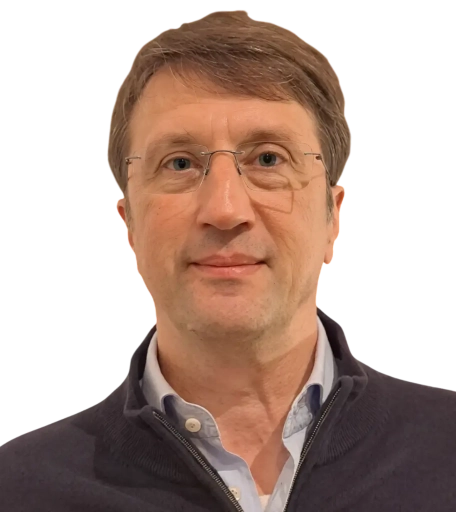
Last position:
Technical Lead | Software Architect | Embedded Software Engineer at Hydac
- Development of safety-related embedded software for a mobile machine on a Hydac TTC 2390 controller.
- Implementation in C with consideration of SIL 3 / ASIL D and MISRA-C:2025.
- Implementation of communication via CAN, CANopen, and J1939.
Standards, guidelines and norms: ISO 26262, IEC 61508, MISRA-C:2025
Technologies: C99, Hydac TTC 2390, Infineon TriCore Aurix TC397, Hightec C/C++ Compiler, PC-lint Plus, CAN, CANopen, J1939, MISRA-C:2025
Stephan J.
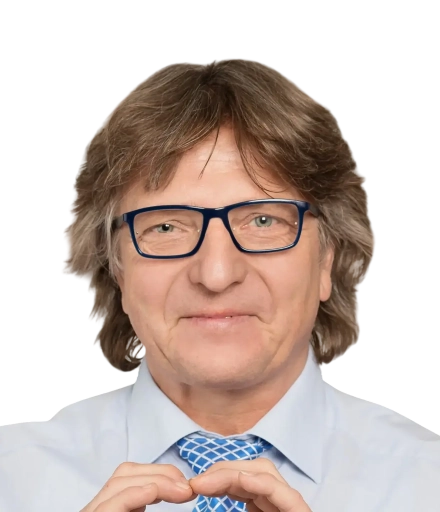
Last position:
Technical Writer at pro-beam
Technical writer at a special-purpose machine manufacturer, implementing the requirements of the EU Machinery Regulation in the technical documentation and moderating FMEAs. Role: Technical Writer and FMEA Moderator
Nagaraj N.

Last position:
Manager, Functional Safety at Eaton Industries GmbH
- Lead functional safety strategy and ISO 26262 compliance across the full lifecycle for a high-voltage electronic switching device that safely connects/disconnects the HV battery in EVs, enabling fast fault isolation and high-current interruption.
- Own the Functional Safety Management Plan (FSMP) and Development Interface Agreement (DIA), acting as the primary safety governance authority across program stakeholders.
- Architect system safety concepts — developing FSC, TSC, and system safety architecture — and define the safety manual with complete user instructions.
- Direct verification and confirmation reviews per ISO 26262 independence requirements.
- Lead safety analysis activities (FTA, FMEA, FMEDA, DFA) and chair vehicle/system integration reviews across cross-functional engineering teams.
- Define methods, templates, and processes that establish best-in-class FuSa practices organization-wide.
- Conduct SEooC assessments and audits, representing the safety organization to internal leadership and external stakeholders.
Torsten V.

Last position:
COO/CTO (Freelance) at Reitreal LLC
- Setting up and running operations for offering multi-level tokenized real estate investment possibilities,
- Start-up preparations, establishing a real estate investment trust (REIT)
- Communication with SEC, technology provider selection, etc.
Robert P.
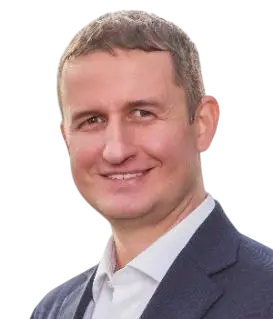
Last position:
Site HSE Manager at Nidec ASI
Project: Arneburg BESS Station (30 MW / 78 MWh)
Responsibilities:
- Assistance for the Nidec site manager on site for all HSE-related matters
- Monitoring of all site activities in accordance with HSE guidelines and the Nidec's construction regulations
- Preparation of daily, weekly and monthly reports using HSE documents
- Management of Nidec's internal HSE reporting system
- Verification and validation of risk assessments
- Audits and inspections; participation in client meetings and implementation of HSE measures
- Document creation, verification of documents + RAMS
- Safety briefing / Toolbox meeting / Induction
- Participation in Nidec audits
- Verification of work suitability / RAMS and implementation of preventive measures
- Management of fire safety / Fire Response Plan (Fire Brigade)
- Organising emergency drills
- Compliance with HSE Plan and Nidec ERP
- Assistance with local legal requirements and ensuring compliance
- Coordination of services such as equipment hire, snow clearance and other services + their maintenance
- Local support on other matters
Goran P.

Last position:
Test Manager/Test Analyst at Festo/ Questax GmbH
Coordinate and execute system tests, system requirements reviews and creation of system/SW use/test cases
Organize requirements
Create test specification
Create use and test cases
Manage project/tests in Codebeamer and MS Teams
Analyze error impact, link defects and communicate to developers
Review system requirements versus system test cases and link them
Perform simulations with FAS/REST API
Perform system and safety tests
Technologies and tools: CAN, MODBus, Ethernet, PLC, ProfiDriv; Codebeamer ALM; Scrum; Kanban; SAFe; MS Office 365; MS Teams; Git; GitLab CI/TeamCity; Batch; FAS; WireShark; Python; Enterprise Architect EA; ChatGPT; MS Copilot
Mirko H.
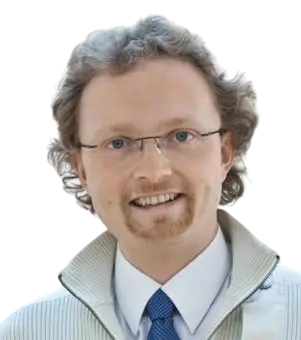
Last position:
Cybersecurity Manager at Joynext GmbH
Cybersecurity for RTCU project for the Stellantis Group.
The management of cybersecurity was strongly criticized by the customer Stellantis, questioning competence. Requirements were missing or incomplete, the architecture for cybersecurity controls was non-existent, and documentation such as cybersecurity plans and concepts were incomplete and formally incorrect.
- Building customer trust and de-escalation
- Sprint planning with the customer based on SAFe
- Task-force management
- Switching planning and control to an agile approach
- Review and update of cybersecurity documents
- Communication and problem solving with suppliers, particularly Rolling Wireless and Autocrypt
- Internal workshops and coordination across various hierarchy levels from developers to CTO
- Coordination of work packages and implementation across locations in Dresden, Ningbo, and Oborniki
- Reporting and support of cybersecurity audits
- Coaching of Joynext cybersecurity managers
- De-escalation of critical customer issues
- Acceleration of requirement creation and release by a factor of 5
- Timely provision of 3rd party components
- Reduction of vulnerability management effort by factor 3
- Creation of cybersecurity documents conformant to existing standards
- Technologies and Methods: V-Modell, ASPICE, IREB, ISTQB, Scrum, Kanban, SAFe, PMP, IPMA, BPMN 2.0, Microsoft Office, Microsoft Project, Jira, Confluence, Siemens Polarion, Dependency Track
Roland R.
Last position:
Support in Ongoing Project at Automotive Supplier
- closing the safety case
- creation of meaningful traceability matrices and targeted test expansion
- transferring requirements into other database systems
- structuring the requirements, assessing their completeness, and setting up new test cases based on use-case–based test strategies and the results of internal traceability matrices
- partial automation of tasks within a requirement assessment tool
- tools and languages: MS Teams, reqIF, Enterprise Architect, Codebeamer, proprietary tools for creating and evaluating traceability matrices (approx. 1000 x 1000)
Thomas A.
Last position:
Interim Management at Vincorion Power Systems GmbH
- Process and project management to optimize products and development processes for energy systems
- Technical risk management
- Requirements engineering and system architecture
- System FMEA of power generator units and energy storage modules aiming for generic structures
- Claims management according to Section 313 of the German Civil Code
- Regulatory environment: military and NATO standards, AQAP, VG norms
Arne H.

Last position:
Embedded Fullstack Developer at IoT / Infrastructure Automation Sector
- Analysis of legacy codebase and identification of architectural issues, implementing improvements in coordination with the Product Owner.
- Development of clean, efficient, and fully documented code following established software engineering practices and standards.
- Analysis of Erlang components in backend and device layers to provide recommendations for ensuring stable system operation.
- Setup and optimization of CI/CD pipelines on client infrastructure, including testing, debugging, and certificate management quality assurance.
- Participation in planning, design, and implementation of epics and stories according to Product Owner specifications.
- Technical consultation for Product Owner regarding Erlang codebase management and best practices.
- Collaboration with Product Owner, Scrum Master, and development team to ensure timely delivery of features.
- Elixir & Phoenix + PostgreSQL
- Erlang
- IoT
- CI/CD
- Git
- Agile/Scrum
- Docker
- Kubernetes
- Frontend (VueJS)
- Embedded Devices
Ould Aly I.
Last position:
Functional Safety Assessor at VW
- Pre-assessments and review of functional safety status for ADAS ECUs and body controller components
- Conduct functional safety audits
- Review the functional safety status of the E3 1.2 in a pre-assessment
- Document interviews
- Document findings and generate internal reports
Methods:
- ISO26262
- Automotive SPICE Level 2, 3
- Agile methods, SAFe
Tools:
- DOORS
- Enterprise Architect
- JIRA & Confluence
- IQ-FMEA
- Isograph
Matthias W.

Last position:
Embedded Software Developer at Schaffarzyk Hardware & Software
Development of the embedded firmware for a smart wearable to capture vital signs with smartphone connectivity:
- Architecture and implementation of the complete embedded firmware
- Connecting and processing various sensors for vital data collection
- Implementing BLE communication for the smartphone app
- Optimizing power consumption and battery life for wearable operation
- Technologies: BLE, Embedded C/C++, sensors, low-power design, Git, nRF52840, GCC, Azure
Bernhard T.

Last position:
Risk Management/ISO26262 at Delta
- FTA analysis and TSR of SW and HW according to ISO 26262 requirements
- FMEDAs of HW according to ISO 26262 requirements
- P-FMEA and optimization of electronics manufacturing in Bangkok, Thailand
Daniel C.

Last position:
Founder & Managing Director at BotCraft GmbH
- Building the company with a focus on connectivity for IIoT and Industry 4.0, iRPA/process automation, advanced robotics and smart systems, sensors and services
- Project management and software architecture for IoT gateway development (since 2020) with protocol translation, IT/OT convergence and GRC
- Developing RPA bots for automating and monitoring industrial processes with an agent-based AI approach (since 2020)
- Implementing unsupervised clustering and anomaly detection for time series data in big data streaming pipelines (since 2021)
- Introducing a Docker-based release train for OTA updates with DevSecOps and CI/CD (since 2018)
Rüdiger S.
Last position:
Consultant for Functional Safety: I3 Confirmation Reviews according to ISO 26262:2018 at VW
Conducting I3 confirmation reviews for all work products at the item (system) level that require I3 review, according to ISO 26262:2018: impact analysis, safety plan, functional safety concept, technical safety concept, FMEA, FTA, DFA, integration and test strategy, safety validation specification, safety case
Creating/updating review criteria for I3/I2 confirmation reviews of all work products based on ISO 26262:2018
Discussing findings with specialist departments as needed
Coordinating findings and review criteria with the responsible customer department
Training new internal employees in performing I3 confirmation reviews
ISO 26262
Requirements Analysis
Failure Analysis (FTA, FMEA, DFA)
Microsoft Office
Jira
Confluence DevStack
Document Management System (DMS)
Discover over 15,000 top freelancers


Statistics of experts using IEC 61508
Aggregated from the professional profiles of matched freelancers.

Experience
26 years

Position duration
2.3 years

Positions per freelancer
19

Top business areas
Quality Assurance, Product Development, Information Technology

Top industries
Automotive, Manufacturing, Information Technology

Certification focus areas
Quality Assurance, Information Technology, Product Development

Bachelor's degree or higher
95%

Master's degree or higher
60%

Doctorate
5%

Certifications per freelancer
3

Most common languages
German, English, Spanish

Speak two or more languages
100%
Based on our profile pool as of 9 Oct 2026.
Daily rate distribution
The chart shows how the daily rates of experts in this technology in Germany are distributed, based on recent contracts on our platform. Each bar covers a rate range — its height shows the share of experts charging within that range.
Average rates of experts in Germany using IEC 61508
Rates are based on recent contracts and do not include FRATCH margin.

The average daily rate is the mean of all daily rates from recent contracts of comparable freelancers on our platform.
The median daily rate is the middle value of all daily rates — half of comparable freelancers charge less, half charge more. Unlike the average, it is barely affected by outliers.
Calculated based on our freelancers’ daily rates as of 9 Oct 2026. Actual rates may vary depending on seniority level, experience, skill specialization, project complexity, and engagement length.
IEC 61508 experts industry focus
See which industries our matched freelancers work in most often — every figure is calculated live from the freelancers on FRATCH.
- Automotive (86%)
- Manufacturing (86%)
- Information Technology (57%)
- Healthcare (43%)
- Energy (38%)
- Aerospace and Defense (33%)
- Education (24%)
- Utilities (24%)
Please note that freelancers can work across multiple industries, so percentages overlap.
About the technology
Functional safety
IEC 61508 is the International Electrotechnical Commission standard for functional safety in electrical, electronic and programmable electronic systems. It provides a risk-based framework for safety functions, from hazard analysis and requirements through design, verification, validation and operation.
Where it applies
The standard supports systems that can create unacceptable risk when they fail. It appears in industrial automation, process control, machinery, rail, energy, medical technology and automotive supply chains, often alongside sector-specific functional safety standards.
- Safety instrumented systems and protective functions
- Programmable electronic control systems
- Industrial machinery and process equipment
- Safety-related embedded software and hardware
Methods and tooling
Work around IEC 61508 connects safety lifecycle planning with requirements engineering, traceability and evidence management. Specialists may use hazard and risk analysis, failure mode analysis, fault tree analysis, quantitative reliability models and software lifecycle controls, supported by requirements, test and configuration tools.
When companies need help
Companies bring in freelance expertise when a new product needs a safety case, an existing system must be assessed, or an audit exposes gaps in its evidence. Germany-based projects may require collaboration with local production, certification and quality teams, while remote work suits documentation, analysis and review activities.
- Define the safety plan and lifecycle activities
- Derive and trace safety requirements
- Review architecture, diagnostics and independence
- Prepare verification, validation and audit evidence
What strong experts deliver
Strong professionals distinguish IEC 61508 requirements from guidance that is merely customary. They connect system hazards to measurable safety requirements, challenge weak assumptions, document decisions clearly and understand how hardware, software, operations and maintenance affect the safety function.
Choosing the right specialist
Look for evidence of complete safety lifecycle work rather than familiarity with the standard alone. Ask for examples of hazard analysis, safety requirements, verification records and safety cases, then confirm experience with the relevant industry, toolchain and working model. Clear technical English is useful; German communication can matter for on-site reviews and local stakeholders.

Frequently asked questions
Need clarity? These are the questions we hear most often about IEC 61508.

IEC 61508 is used to manage the functional safety of electrical, electronic and programmable electronic systems. It helps companies identify hazards, define safety functions, set requirements and produce evidence that risks are controlled throughout the system lifecycle.
IEC 61508 is a generic functional safety standard and often serves as the foundation for industry-specific standards. A specialist should know how its lifecycle principles, safety integrity concepts and evidence expectations map to requirements in areas such as machinery, process control, rail or automotive systems.
An IEC 61508 specialist often works with hazard and risk analysis, requirements engineering, reliability analysis, embedded software, hardware diagnostics and verification. Experience with safety cases, configuration control and independent review is also valuable.
The right level of IEC 61508 experience depends on the scope and lifecycle stage. A focused documentation review may need a narrow specialist, while a new safety-related product benefits from someone who has connected hazard analysis, architecture, implementation, validation and audit evidence.
Much IEC 61508 work can be performed remotely because requirements, analyses, reviews and safety evidence are document-based. On-site sessions may still help with plant observations, equipment reviews, workshops or coordination with German production and quality teams.
Ask an IEC 61508 freelancer to explain their role in comparable safety lifecycles and to show anonymized examples of traceability, analysis or safety-case structure. Their answer should show how they turn hazards into testable requirements and maintain consistency across system, hardware and software evidence.
Yes, IEC 61508 may still be relevant as the underlying functional safety reference for a sector-specific standard or for supplier evidence. A specialist can determine which requirements apply directly, which are inherited and where additional industry rules change the development or assessment process.
Good IEC 61508 work is consistent, traceable and proportionate to the identified risk. Review whether assumptions are explicit, safety requirements are testable, independence is addressed where needed and the final evidence supports verification, validation and an informed safety decision.
The average hourly rate of freelancers in Germany who have used IEC 61508 in their recent projects is 109 €, which corresponds to a daily rate of about 871 € based on an 8-hour working day.
Of the freelancers in Germany who have used IEC 61508 in their recent projects, 95% hold at least a Bachelor's degree, 60% hold at least a Master's degree, and 5% hold a doctorate.
On average, freelancers in Germany who have used IEC 61508 in their recent projects have 26 years of professional experience, with a single engagement typically lasting around 2.3 years.
The most common languages among freelancers in Germany who have used IEC 61508 in their recent projects are German (100%), English (95%), and Spanish (19%).
The most common industries among freelancers in Germany who have used IEC 61508 in their recent projects are Automotive (86%), Manufacturing (86%), and Information Technology (57%).
The most common business areas among freelancers in Germany who have used IEC 61508 in their recent projects are Quality Assurance (95%), Product Development (90%), and Information Technology (81%).
Main locations of FRATCH Experts, who have recently used IEC 61508
Our freelancers and interim experts are at home across the DACH region — available on-site in the major business hubs or fully remote. Choose a location to discover matched specialists, local market insights and up-to-date availability.
 Berlin Hamburg Munich Cologne Frankfurt Stuttgart Dusseldorf Leipzig Dortmund Essen Bremen Dresden Hanover Nuremberg
 Request a free demo
Get in touch with the FRATCH team and we will get back to you within 4 hours.
Would you rather directly get in touch?
We always have the time for a call or email!

Philipp Thomaschewski
FRATCH CEO

