


GRC Experts in Munich
for stronger controls, risk visibility and compliance with fast AI matchingHire experts who design governance models, configure risk and compliance workflows, and connect GRC data with business systems. FRATCH matches you quickly and precisely with vetted, available freelancers who fit your project needs.

Meet FRATCH Experts in Munich, who have recently used GRC
Rallis T.
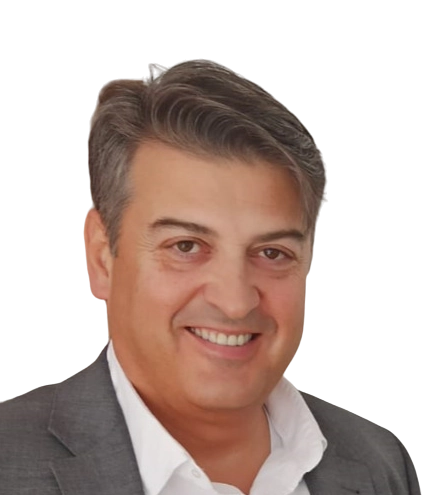
Last position:
Freelancer Senior Program Manager at LTM Mindtree-Germany
- Managed Microsoft Cloud Accelerator Factory (CAF) programs for global enterprise customers, ensuring Azure cloud implementations aligned with security, governance, and compliance best practices, including ISO 27001-aligned controls and cloud security frameworks.
- Managed complex global enterprise transformation programs with strong focus on project delivery, financial governance, budget control, planning, risk management, and executive reporting, ensuring delivery within scope, timeline, and budget.
- Led the implementation of e-invoicing solutions for Nestlé, coordinating finance, IT, business stakeholders, and external providers to ensure successful integration, testing, rollout, and delivery of electronic invoicing processes.
- Managed an Oracle-to-PostgreSQL database migration, coordinating technical teams, application owners, testing activities, dependencies, risks, and cutover planning to ensure a controlled and successful transition.
- Led cross-functional programs involving finance and payment-related processes, enterprise platforms, and system integrations, with strong stakeholder management across business, IT, vendors, and senior leadership.
- Delivered transformation programs in FMCG environments, including Nestlé, managing complex international stakeholder structures, third-party providers, governance, RAID management, and business-critical dependencies.
Jürgen H.
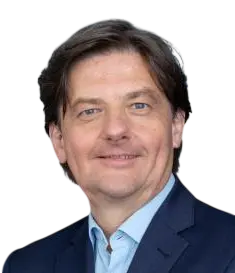
Last position:
Consultant at NDA
GenAI – Chat & Voicebot
Setup of a GenAI solution with a knowledge base as well as chat and voicebots.
- Definition of use cases and chat/voicebot functionalities
- Project setup for cloud, knowledge base, LLMs and RAG
- AI guardrails, IAM concept
- Governance, Risk & Compliance (GRC)
Result:
Setup of an enterprise GenAI solution with knowledge base, chat/voicebots, IAM and governance.
Mohamad D.

Last position:
DevOps Engineer & IT-Security-Architect at BMW Group
- Set up Azure Kubernetes clusters (AKS) with network policies, security groups, and RBAC
- Developed Terraform-based infrastructure as code for secure, reproducible deployments in the BMW Azure cloud
- Hardened CI/CD pipelines using Jenkins, SonarQube, Fortify SSC, and Contrast AST
- Integrated SAP BTP/Kyma and ServiceNow GRC
Diana G.

Last position:
Interim Project-Controller at Supplying industry defence
- Developed organization, task descriptions, processes and systems of the controlling system to improve activities.
- Harmonized ERP software within the group across IT procurement, plan data, controlling and reporting.
- Designed the basis for an agile and modern IT control system.
- Set up budget plans and supported master data and planning.
- Monitored and validated projects in the PM tool Sciforma, covering OPEX and CAPEX in line with legal requirements and group rules.
- Performed PMO assistance activities including meeting minutes, presentations and reports.
- Tools: SAP FI/CO, SAP MM, SAP PPM, PM-Tool Sciforma, MS Office 365.
Franz S.
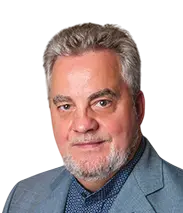
Last position:
Business Development Sales & Marketing - Lead Generation at Various software and telecom companies
- Market development for software products & services and strategy
- Designing online marketing concepts including lead and acquisition management
Patrick U.
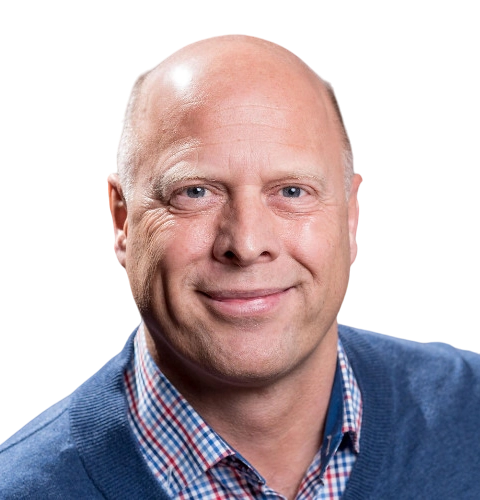
Last position:
Interim Management | Consulting & Implementation | Data Deletion in SAP at BSR (Berliner Stadtreinigung)
- Topics: Business Analysis, Data Privacy, Data Management, Stakeholder Management, Conceptualization
- This project focuses on developing and implementing a strategic approach for data deletion in SAP systems. The goal is to identify the relevant data and structures during system migration to ensure both data privacy and IT system efficiency. At the same time, downtime should be minimized and regulatory requirements met.
- Development of a comprehensive approach for data deletion in SAP systems, considering data privacy and business requirements.
- Ensuring efficient and structured data transfer to the new system.
- Optimizing system efficiency and reducing downtimes during migration.
- Creating functional and technical concepts to ensure compliant and sustainable data management.
- Topic preparation: Detailed study of the "data deletion" area to lay the foundation for a structured data migration.
- Definition of project structure: Setting roles, interfaces and the project's organizational structure.
- Regulatory requirements: Analysis of data privacy regulations and business requirements to define deletion criteria.
- Approach: Developing possible scenarios and methods for data cleansing and deletion.
- Deletion concepts: Creating functional and technical deletion concepts that structure the implementation and provide clear guidelines.
- Setting deletion criteria: Defining which data and structures to delete or transfer.
- Responsibilities: Clarifying responsibilities within the project team and among stakeholders.
- Analysis of ongoing activities: Identifying and collecting existing activities in the "data deletion" area.
- Effort, cost and timeline planning: Creating estimates for resources, effort and budget.
- Implementation initiatives: Developing and executing concrete measures to apply the defined deletion strategies.
- IT system efficiency: Analyzing the existing IT infrastructure to identify optimization potential for data deletion and transfer.
- Technology trends: Evaluating new technologies and tools that can support the data cleansing process.
- Cost-benefit analysis: Assessing the financial impact of data cleansing and the introduction of new solution approaches.
- Risk management: Identifying potential risks during implementation and developing appropriate mitigation measures.
- This project lays the foundation for a sustainable and compliant data transfer to a new SAP system. With a clear approach to data deletion, it meets data privacy requirements, reduces downtimes and increases the efficiency of the new system. The results and recommendations will help companies develop a future-proof data strategy that meets legal and business needs.
Rupesh K.
Last position:
IT Baseline Compliance Consultant at Consultant
- Baseline compliance verification against MAS audit findings
- Building technical architecture concept for 30 technologies to build hardening standard artifacts
- Identifying and building automation possibilities for given technologies based on CIS
- Building the standard baseline configuration based on internal security standard
- Responsible for building Cloud Native Application Protection Platform (CNAPP) architecture artifacts based on Azure cloud platform
- Responsible for RFQ and RFP for different CNAPP solutions (Qualys Total Cloud, CrowdStrike, Azure Security Center)
- Supporting compliance verification and validation via automated scripts for a sample population of IT devices and instances
- Responsible for complete vulnerability management lifecycle using Nexpose, remediation, reporting and integration of results with Splunk, HPSM and Tableau
- Audit support for MAS
Lukas B.
Last position:
Project Management Migration Specialist at ADAC
- Data migration strategy consulting for core banking solution - Mainframe to Cloud migration
- Data models evaluation and analysis of value flows for a new cloud-based insurance portfolio system introduction
- High level migration strategy
Daniel C.

Last position:
Founder & Managing Director at BotCraft GmbH
- Building the company with a focus on connectivity for IIoT and Industry 4.0, iRPA/process automation, advanced robotics and smart systems, sensors and services
- Project management and software architecture for IoT gateway development (since 2020) with protocol translation, IT/OT convergence and GRC
- Developing RPA bots for automating and monitoring industrial processes with an agent-based AI approach (since 2020)
- Implementing unsupervised clustering and anomaly detection for time series data in big data streaming pipelines (since 2021)
- Introducing a Docker-based release train for OTA updates with DevSecOps and CI/CD (since 2018)
Klaus K.
Last position:
Consultant and Trainer, Managing Partner at Opexa Advisory GmbH
- Advising clients on ISO/IEC 27001, TISAX, BSI IT-Grundschutz and GDPR
- Trainer and internal auditor
- Contract management (service and work contracts, framework agreements)
- Coordinating and supporting tender responses
- Developing strategies and measures for clients and new business opportunities (e.g. phishing, online awareness trainings)
- Further developing the governance/risk/compliance offering
- Account management for existing clients and new business acquisition
- Supporting HR with hiring and interviews
Discover over 15,000 top freelancers


Statistics of experts using GRC
Aggregated from the professional profiles of matched freelancers.

Experience
24 years (Germany: 23 years)

Position duration
2.1 years

Positions per freelancer
14

Top business areas
Information Technology, Project Management, Quality Assurance

Top industries
Banking and Finance, Information Technology, Professional Services

Certification focus areas
Information Technology, Project Management, Finance

Bachelor's degree or higher
100% (Germany: 92%)

Master's degree or higher
88% (Germany: 60%)

Doctorate
13% (Germany: 10%)

Certifications per freelancer
6

Most common languages
German, English, Spanish

Speak two or more languages
80% (Germany: 98%)
Based on our profile pool as of 9 Oct 2026.
Daily rate distribution
The chart shows how the daily rates of experts in this technology in Munich are distributed, based on recent contracts on our platform. Each bar covers a rate range — its height shows the share of experts charging within that range.
Average rates of experts in Munich using GRC
Rates are based on recent contracts and do not include FRATCH margin.

The average daily rate is the mean of all daily rates from recent contracts of comparable freelancers on our platform.
The median daily rate is the middle value of all daily rates — half of comparable freelancers charge less, half charge more. Unlike the average, it is barely affected by outliers.
Calculated based on our freelancers’ daily rates as of 9 Oct 2026. Actual rates may vary depending on seniority level, experience, skill specialization, project complexity, and engagement length.
GRC experts industry focus
See which industries our matched freelancers work in most often — every figure is calculated live from the freelancers on FRATCH.
- Banking and Finance (90%)
- Information Technology (90%)
- Professional Services (70%)
- Manufacturing (60%)
- Automotive (50%)
- Insurance (50%)
- Government and Administration (50%)
- Media and Entertainment (40%)
Please note that freelancers can work across multiple industries, so percentages overlap.
About the technology
GRC fundamentals
GRC stands for Governance, Risk and Compliance. It is the structured way organizations align decisions, manage uncertainty and demonstrate that policies and obligations are being met. GRC work can cover enterprise risk, internal controls, audit evidence, policy management, third-party oversight and regulatory reporting.
What GRC builds
GRC initiatives turn scattered requirements into repeatable processes and clear ownership. Specialists help companies create control frameworks, risk registers, approval paths, evidence repositories and dashboards for oversight.
- Map risks, controls and obligations
- Design audit and compliance workflows
- Establish policy and exception management
- Connect operational data to reporting
Platforms and tooling
GRC specialists may work with dedicated platforms such as ServiceNow GRC, RSA Archer, IBM OpenPages, SAP GRC, MetricStream or OneTrust. Their work often includes configuration, data models, workflow rules, integrations, access controls and reporting. Useful adjacent knowledge includes IT service management, identity governance, data protection and business process management.
When companies need support
Companies bring in freelance GRC expertise during implementation, control redesign, audit preparation, remediation or a move from spreadsheets to a central system. In Munich, specialists may support regulated industries, manufacturing, finance, insurance and technology businesses, working on-site, remotely or in a hybrid setup. German and English communication may both matter when teams and stakeholders are international.
Strong specialist signals
The strongest professionals connect governance goals with practical operating processes. They can challenge unclear ownership, distinguish a policy from a control, and explain risk information to both technical and business stakeholders.
- Translate regulations into workable controls
- Configure workflows without overcomplicating them
- Test evidence, permissions and approval paths
- Create reports that support decisions
Choosing the right fit
Assess a specialist by the environments and control frameworks they have handled, not by platform familiarity alone. Ask for examples of data migration, integration, audit response and user adoption. A good fit understands the organization’s risk appetite, documents decisions clearly and leaves behind maintainable processes that teams can operate after the engagement.

Frequently asked questions
Curious about GRC? Here are the answers that come up again and again.

GRC is used to coordinate governance, risk management and compliance activities across an organization. It helps teams define policies, assign controls, collect evidence, track remediation and report on exposure to decision-makers.
Governance, Risk and Compliance brings related processes into a connected operating model instead of leaving risk registers, policies and audit evidence in separate files. A dedicated approach can improve ownership, traceability and reporting, while spreadsheets may still be suitable for a limited, low-complexity process.
A strong GRC freelancer may also understand internal audit, information security, privacy, IT service management, identity and access management, vendor risk and business continuity. Platform configuration, data integration and change management are useful when the engagement includes implementation.
The right level depends on scope, regulatory pressure and the condition of existing data and controls. GRC implementation or remediation work benefits from a specialist who has handled comparable workflows, stakeholder groups and evidence requirements rather than only completed platform training.
GRC work can often be delivered remotely because much of it involves workshops, configuration, documentation and review. On-site sessions in Munich may still help with process discovery, sensitive stakeholder discussions or control walkthroughs, especially when teams prefer hybrid collaboration.
Common platforms include ServiceNow GRC, RSA Archer, IBM OpenPages, SAP GRC, MetricStream and OneTrust. The best choice depends on the control framework, existing enterprise systems, reporting needs and the organization’s appetite for configuration.
Look for clear control ownership, traceable evidence, practical workflows and documentation that users can follow. A capable Governance, Risk and Compliance specialist can explain design choices, show how exceptions are handled and connect reports to real management decisions.
A GRC engagement may involve sensitive risk information, confidential policies and access to business systems. Freelancers should clarify scope, stakeholders, confidentiality, delivery standards, platform permissions and how success will be assessed before configuration or control redesign begins.
The average hourly rate of freelancers in Munich, Germany who have used GRC in their recent projects is 106 €, which corresponds to a daily rate of about 845 € based on an 8-hour working day.
Of the freelancers in Munich, Germany who have used GRC in their recent projects, 100% hold at least a Bachelor's degree, 88% hold at least a Master's degree, and 13% hold a doctorate.
On average, freelancers in Munich, Germany who have used GRC in their recent projects have 24 years of professional experience, with a single engagement typically lasting around 2.1 years.
The most common languages among freelancers in Munich, Germany who have used GRC in their recent projects are German (100%), English (80%), and Spanish (20%).
The most common industries among freelancers in Munich, Germany who have used GRC in their recent projects are Banking and Finance (90%), Information Technology (90%), and Professional Services (70%).
The most common business areas among freelancers in Munich, Germany who have used GRC in their recent projects are Information Technology (100%), Project Management (100%), and Quality Assurance (70%).
Main locations of FRATCH Experts, who have recently used GRC
Our freelancers and interim experts are at home across the DACH region — available on-site in the major business hubs or fully remote. Choose a location to discover matched specialists, local market insights and up-to-date availability.
 Berlin Hamburg
  Munich Cologne Frankfurt Stuttgart Dusseldorf Leipzig Dortmund Essen Bremen Dresden Hanover Nuremberg
  Frankfurt
 Request a free demo
Get in touch with the FRATCH team and we will get back to you within 4 hours.
Would you rather directly get in touch?
We always have the time for a call or email!

Philipp Thomaschewski
FRATCH CEO

