


FitNesse Experts in Germany
for living documentation and acceptance testing, matched in minutesHire experts who turn business rules into executable acceptance tests, connect FitNesse with Java or .NET systems, and integrate test suites into CI pipelines. FRATCH matches you quickly with vetted, available freelancers who fit your project.

Meet FRATCH Experts in Germany, who have recently used FitNesse
Marcus B.

Last position:
Java and Quarkus Expert at Large German energy service provider
- Modernization of a large-scale Java enterprise application*
The project is modernizing a complex enterprise application that has grown over many years. The existing Spring-based legacy system runs on Java 8, OSGi, and Eclipse RCP and is being gradually migrated to a modern, maintainable architecture with Java 25 and Quarkus.
Marcus works on analysis, architecture, refactoring, and implementation. One focus is on untangling historically grown structures and dependencies and on building a clean, sustainable Java and Quarkus technology stack.
Tools & technologies: Java 8, Java 25, Quarkus, Hibernate ORM with Panache, EclipseLink, OSGi, Eclipse RCP, Maven, JUnit, Mockito, REST, JSON, Git, Eclipse IDE, IntelliJ IDEA Ultimate, Jira, Confluence
Martin P.

Last position:
Business Analyst and Test Manager at ProSiebenSat.1 Tech & Services GmbH
- Analysis of affected business processes taking numerous stakeholders into account
- Interface analysis, architecture and system design
- Communicating and coordinating various subprojects and interface partners
- Creating epics and user stories, maintaining the backlog, workshops and review presentations
- Support during implementation between business departments and development
- Test management including strategy and approach definition
- Test case definition, execution and approval
- Cross-team organization of integration and acceptance tests
- Support of test environments
- Technologies and tools: Java, Angular, Kubectl, REST, AWS SNS/SQS, Kafka, S4/HANA, Bruno
Michael S.
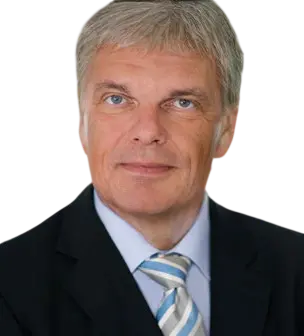
Last position:
IT & Test Consultant at Testing Experts GmbH
AI Readiness - Part 3: Creating an E-Book on the Use of AI in Software Testing
- Designing and creating an e-book on the meaningful and safe use of AI in software testing from the perspective of an experienced test expert.
- Using generative AI (ChatGPT, Perplexity Pro) as a sparring partner for structuring, wording suggestions and variant creation, with final technical review and approval of all content based on my own expertise.
- Developing practical opportunities and risks of AI in testing, with a special focus on collaboration between testers and AI instead of "tester vs. AI".
- Title: "11 Strong Reasons: Dream Team Instead of Rivals - Testers and AI Are Unbeatable Together"
- Subtitle: "How humans and machines form the perfect team in software testing—and why pure AI testing is risky."
- Planned use of the e-book as a basis for workshops, client presentations, or internal training.
- Technology: Generative AI, ChatGPT, Perplexity Pro, Microsoft Word, Adobe Acrobat, many years of professional testing experience, common sense.
Florian F.

Last position:
Senior Backend Developer at ING Deutschland AG
- Database design with Oracle DB, JPA and Flyway considering high performance requirements
- Analysis of multiple architecture drafts and identification of technical risks
- Design and implementation of various interfaces and integrations, especially REST APIs and Kafka topics
- Setup of Elasticsearch for monitoring and analyzing log data
- Establishment of an iterative work approach in the project team facing complex business requirements
Vitor R.

Last position:
Test Coordinator Automation at Pro4all
- Designed and built from scratch the automation framework using Playwright, Typescript, JavaScript, Gherkin, Cucumber, BDD, Maven, IntelliJ IDEA
- Defined, developed and maintained test plans, test scripts, reports and other QA documentation in Confluence
- Created and maintained test data with SQL Server Management Studio, Toad and Faker.js
- Performed web services and API testing using Swagger Open API, SoapUI, JSON, HTML and XML
- Executed functional, smoke, regression, black box, GUI, cross-browser, UAT and E2E testing using CrossBrowserTesting and Safari Web Inspector
- Integrated and maintained automated scripts within sprints following Kanban, CI/CD, GitHub, Docker, Azure Pipelines, Agile, Scrum, Kafka and Kibana
- Raised and managed defects in Azure DevOps
- Conducted mobile testing with Robot Framework and Appium
Alona L.

Last position:
AI Architect
AI-powered platform for automated UX validation and designer support
- Designed and led technical implementation of an enterprise-wide AI solution for automated UX review that improved design quality and significantly reduced manual review processes in teams
- Developed an automated UX validation tool as a Figma plugin and web application that generates test cases based on internal guidelines and reliably checks current designs for consistency and standard compliance
- Implemented an interactive designer chat based on RAG that answers questions about the current design and the company's UX guidelines, and designed the deployment architecture using containerized services
- Python, Azure OpenAI, PostgreSQL, REST API, Docker, OpenShift, Helm, CI/CD, Figma MCP, LLM, RAG, Prompt Engineering, GenAI, XAI, AI Architecture, AI Strategy
Meryem G.

Last position:
Test Manager-SPOT at EON
- Overall process definition, planning, training, tools, effective execution, and progress and quality measurement of test activities at the release level
- Defining and improving the test process
- Scheduling of releases
- Coordinating alignment with release management for test setup and data provisioning
- Coordinating migration test planning for Westnetz, Mitnetz, and EON Grid
- Monitoring test progress, audit-proof documentation, progress tracking via defects, OSS reports, and incidents
- Designing and coordinating potential test automation
IT environment: Jira Zephyr, Confluence, SIGMA, PowerBI
Jürgen B.
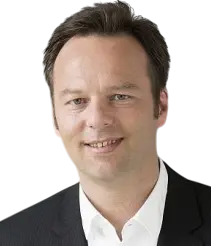
Last position:
Software Developer at Inform AG
- Coaching junior developers
- Further development and customer-specific extensions of a standard software product (microservices (DDD) and partly monolith)
- Interface extensions
- Web services
- Test automation
- Design
- Technologies used: Java8, Java17, TypeScript, Python, PostgreSQL, Spring (Integration, Data, Boot), JPA, AWS (Cloud, Lambda, EC2, SQS/SNS), Microservices, Fitnesse/Cucumber, Gitlab
Mbah S.

Last position:
Software Tester for Banking Requirements at comdirect
- Responsibility for testing and quality assurance of application processes
- Creation and execution of test cases based on defined acceptance criteria
- Documentation of deviations and analysis, as well as initiation of necessary corrective actions
- Ensuring the flow of information within the team and with other specialist departments
- Maintenance and further development of test automation
- Adapting Selenium-based automation to every release and sprint change
- Extending test automation with new processes
- Performing security tests
- Identifying typical vulnerabilities (e.g. XSS, SQL injection, insecure headers) through automated tests in the CI/CD flow
- Use of technologies Selenium (including integration with security scanners such as OWASP ZAP), Unix/SQL environments and optionally Cypress, SAP, C#, Java, GitLab, Jira, Confluence, REST API, Postman, HP-ALM, SSI, Octane, WinSCP.
Ben S.
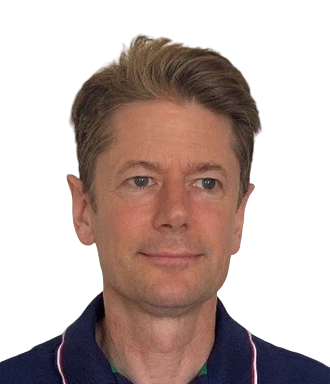
Last position:
Data Engineer/ ETL Developer at Deutsche Bahn
- Developed data extraction from PostgreSQL with Talend ETL tool
- Developed SQL/PL SQL scripts and views as required for ETL process
- Used the GIT repository together with the existing CI/CD process for testing and production deployment
- Created and updated multiple complex ETL jobs for mapping tarif data into SQLite files for the Input Pool
- Extracted and transformed source data via an H2 DB into SQLite for MT and ticket machines
- Collaborated closely with requirements engineers and data managers in an Agile environment
Discover over 15,000 top freelancers


Statistics of experts using FitNesse
Aggregated from the professional profiles of matched freelancers.

Experience
25 years

Position duration
1.4 years

Positions per freelancer
17

Top business areas
Information Technology, Quality Assurance, Product Development

Top industries
Banking and Finance, Information Technology, Automotive

Certification focus areas
Project Management, Quality Assurance, Information Technology

Bachelor's degree or higher
88%

Master's degree or higher
50%

Doctorate
13%

Certifications per freelancer
3

Most common languages
English, German, French

Speak two or more languages
100%
Based on our profile pool as of 9 Oct 2026.
Daily rate distribution
The chart shows how the daily rates of experts in this technology in Germany are distributed, based on recent contracts on our platform. Each bar covers a rate range — its height shows the share of experts charging within that range.
Average rates of experts in Germany using FitNesse
Rates are based on recent contracts and do not include FRATCH margin.

The average daily rate is the mean of all daily rates from recent contracts of comparable freelancers on our platform.
The median daily rate is the middle value of all daily rates — half of comparable freelancers charge less, half charge more. Unlike the average, it is barely affected by outliers.
Calculated based on our freelancers’ daily rates as of 9 Oct 2026. Actual rates may vary depending on seniority level, experience, skill specialization, project complexity, and engagement length.
FitNesse experts industry focus
See which industries our matched freelancers work in most often — every figure is calculated live from the freelancers on FRATCH.
- Banking and Finance (90%)
- Information Technology (90%)
- Automotive (70%)
- Retail (70%)
- Energy (50%)
- Telecommunication (50%)
- Insurance (40%)
- Transportation (40%)
Please note that freelancers can work across multiple industries, so percentages overlap.
About the technology
Acceptance testing
FitNesse is an open-source framework for collaborative acceptance testing and living documentation. Teams write requirements in wiki pages and connect them to executable fixtures, so business users and technical specialists can review the same examples. It is commonly used to check whether software behavior matches agreed business rules.
How FitNesse works
A FitNesse suite combines wiki content, tables, test pages, and fixture code. The framework sends table data to the system under test through fixtures, then displays readable pass or fail results. Specialists configure the test runner, manage page hierarchies, and keep test data and acceptance criteria understandable as the product changes.
Ecosystem and tooling
FitNesse is often paired with Java, .NET, Maven, Gradle, and build servers used for continuous integration. Depending on the project, professionals work with Slim or the older Fit protocol, custom fixtures, REST or database access, and source control for test pages. Good integration keeps acceptance suites repeatable outside a developer workstation.
Where companies use it
- Validate order, pricing, billing, and workflow rules
- Document acceptance criteria beside executable examples
- Test service integrations and data-driven business scenarios
- Create regression suites for established enterprise applications
- Give product and domain teams a readable view of system behavior
FitNesse is especially useful where domain knowledge is essential to test design. It can support internal business systems, logistics software, financial processes, manufacturing workflows, and other applications with complex rules.
When to bring in expertise
Companies usually seek freelance expertise when an existing suite has become slow, fragile, or difficult to understand. Specialists can establish a fixture strategy, migrate older Fit tests to Slim, connect suites with CI, or introduce FitNesse into a new acceptance-testing process. In Germany, remote collaboration often works well when requirements, repositories, and test environments are accessible; on-site workshops can help when domain teams need close alignment.
What strong specialists bring
Strong FitNesse professionals understand both test automation and the business language behind acceptance criteria. They separate reusable fixtures from scenario-specific data, diagnose failures at the right layer, and make reports useful to non-technical stakeholders. Look for clear examples of maintainable suites, experience with the project’s programming language and build tools, and the ability to explain trade-offs between FitNesse, unit tests, API tests, and browser automation.

Frequently asked questions
Key details about FitNesse, drawn from the questions we get asked most.

FitNesse is used for acceptance testing and living documentation. Teams express business examples in wiki pages and connect them to fixtures that execute against the application, making requirements and verification visible in one place.
FitNesse uses wiki pages and table-based fixtures, while Cucumber commonly uses feature files written in a behavior-driven syntax such as Gherkin. FitNesse can be a strong choice when teams want executable documentation that business users can edit and navigate directly.
A strong FitNesse specialist usually understands Java or .NET, test design, SQL, REST services, source control, and continuous integration. Knowledge of Maven, Gradle, build servers, and the application’s domain also helps keep fixtures reliable and relevant.
The right level depends on the scope and condition of the test suite. A small proof of concept may need fixture and test-design skills, while a large enterprise rollout calls for someone who can structure page hierarchies, improve maintainability, integrate CI, and guide domain stakeholders.
FitNesse is well suited to remote collaboration because pages, fixtures, and results can be reviewed in shared repositories and test environments. German projects may still benefit from on-site workshops when business rules are complex or teams need close coordination in German and English.
FitNesse is often better for validating business rules and service behavior without coupling every test to a user interface. Browser automation remains useful for critical end-to-end journeys, so many teams combine both approaches rather than treating them as substitutes.
Review whether FitNesse suites are readable, repeatable, fast enough for continuous integration, and separated cleanly from production code. Ask for examples showing useful fixtures, stable test data, meaningful failure messages, and documentation that domain experts can understand.
FitNesse projects often involve legacy systems, inconsistent requirements, and fixtures that expose hidden business assumptions. Freelancers should clarify the test protocol, programming language, build process, environment access, ownership of wiki pages, and how acceptance results will be used by the client.
The average hourly rate of freelancers in Germany who have used FitNesse in their recent projects is 98 €, which corresponds to a daily rate of about 782 € based on an 8-hour working day.
Of the freelancers in Germany who have used FitNesse in their recent projects, 88% hold at least a Bachelor's degree, 50% hold at least a Master's degree, and 13% hold a doctorate.
On average, freelancers in Germany who have used FitNesse in their recent projects have 25 years of professional experience, with a single engagement typically lasting around 1.4 years.
The most common languages among freelancers in Germany who have used FitNesse in their recent projects are English (100%), German (90%), and French (30%).
The most common industries among freelancers in Germany who have used FitNesse in their recent projects are Banking and Finance (90%), Information Technology (90%), and Automotive (70%).
The most common business areas among freelancers in Germany who have used FitNesse in their recent projects are Information Technology (100%), Quality Assurance (90%), and Product Development (80%).
Main locations of FRATCH Experts, who have recently used FitNesse
Our freelancers and interim experts are at home across the DACH region — available on-site in the major business hubs or fully remote. Choose a location to discover matched specialists, local market insights and up-to-date availability.
 Berlin Hamburg Munich Cologne Frankfurt Stuttgart Dusseldorf Leipzig Dortmund Essen Bremen Dresden Hanover Nuremberg
 Request a free demo
Get in touch with the FRATCH team and we will get back to you within 4 hours.
Would you rather directly get in touch?
We always have the time for a call or email!

Philipp Thomaschewski
FRATCH CEO

