


Serenity BDD Experts in Germany
matched in minutes with vetted, available freelancersHire experts who create living acceptance tests, automate web and API scenarios, and connect BDD practices with JUnit, Cucumber and Selenium. Get precise access to vetted, available freelancers matched to your needs.

Meet FRATCH Experts in Germany, who have recently used Serenity BDD
Predrag P.
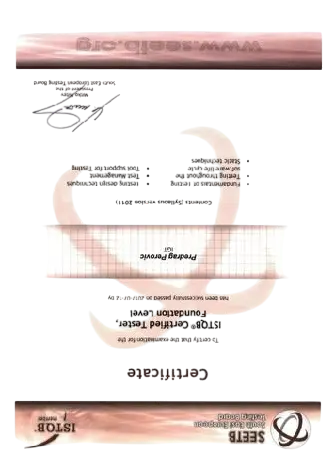
Last position:
Test Developer | Test Automation Engineer at CreditReform
Technologies: Java 25, Selenium, Insomnia, SSO, Gitlab, Jenkins, Docker, Kubernetes, Jira, IntelliJ, Nexus, Oracle, MariaDB, SpringBoot, Grafana, Concept Board, Vue.js, OpenApi, Kotlin. Implementation, maintenance, and enhancement of automated end-to-end regression tests for UI and API interfaces. Appropriate and targeted test automation involving multiple software products, including Java-based Windows applications. Automation of business processes with Selenium, reset jobs, and DB import jobs, as well as creation of test concepts, test case descriptions, and structured defect reporting.
Frank B.

Last position:
System Engineer at Frequentis Comsoft
- Migrate company software to RHEL10
- Development in Bash, Python, C, Ansible
Rolf G.

Last position:
Developer & Designer at Sicherheitsbehörden
- Migration of a case management system with numerous interfaces to other systems from Spring and Activiti to a Java JEE application
- Further development toward a cloud application
- Consulting, development, requirements analysis, specification and design
- Coordination with upstream and downstream systems
- Data modeling, programming and implementation
- Support with code reviews and ensuring clean code in the PL/SQL context
- Documentation in Confluence
- Troubleshooting of PL/SQL applications, including log analysis, session tracing and performance profiling
- Optimization and tuning measures in the PL/SQL environment
- Knowledge transfer and onboarding of new employees
- Use of Jira for task management, progress tracking and sprint planning
Olaf T.
Last position:
CTO, Shareholder, Agile Coach, Product Owner at fluidx digital GmbH
- Development and rollout of a browser-based platform for camera streaming, augmented reality (AR), and visual computing
- Device-independent camera streaming for smartphones, tablets, desktop PCs, as well as VR and AR headsets
- Ensuring GDPR-compliant hosting in Open Telekom Cloud and other sovereign cloud providers
- Intuitive visual and collaborative features to increase efficiency and integrate smoothly into existing business software
Stephan H.

Last position:
Software development, software quality assurance, tester, test automation engineer at IT services
Refactoring the CRM system of an IT service provider This includes a complete refactoring of the legacy application, in particular the migration from JDK 1.6 to JDK 25 and the replacement of self-developed infrastructure components, such as the Object-Relational Mapper (ORM) and the frontend template engine, with current standard components based on Spring Boot. At the same time, the previous close coupling between the back end and front end is being removed and the application is being migrated to a modern microservice architecture. The microservices are implemented as independent, reusable units and operated in autonomous Docker containers. The backend components are provided through REST APIs. As part of the project, CI/CD and deployment processes for the container-based microservice architecture were also established and automated using GitLab CI. At the same time, quality assurance is ensured through the implementation and automation of unit, integration and system tests. The work is supported by AI, particularly through the use of GitHub Copilot and LM Studio (gpt-oss) for code development and prompt engineering. Position: Software development, software quality assurance, tester, test automation engineer
Work performed:
- Analysis of the functional and technical use cases (workflows, involved processes/systems, communication paths, security requirements)
- Code refactoring (code cleanup, optimization)
- Dependency refactoring
- Refactoring of REST services (SpringBoot)
- Refactoring of the ORM layer
- Test execution / test automation (Serenity, Selenium, Playwright, JUnit)
- Establishment and automation of CI/CD pipelines for build, test and deployment steps in a Docker/microservice environment Team size: 2 people IT basis: Technologies: Java (JDK 25), Spring Boot, Hibernate, JPA, SQLServer, MariaDB, Docker, Yaml, Markdown, JSON, HTML/CSS, REST Tools: IntelliJ, DBeaver, Git/GitLab, GitHubCopilot (AI) Work management: Gitlab Tests: Serenity, Selenium, Playwright, JUnit Platform: Linux, Windows Version control: Gitlab Build management: Gitlab CI
Srecko S.

Last position:
Test Consultant at PROSEQUM GmbH
- Taking over operational acceptance tests for internal and external applications in a preproduction environment
- End-to-end tests across multiple systems
- Planning and implementation of acceptances based on expected loads and service levels
- Creation of test plans and automated tests
- Monitoring of systems, log analysis and creation of test reports, monitoring charts and acceptance documentation
- Support during rollouts of security and OS patches in preproduction
- Load and performance tests as well as failover/rollback tests
- Testing SOAP/REST APIs with JMeter, Grafana and Kibana
- Batch tests with Bash and log analysis
- Load and performance tests of own applications
- Test automation with JMeter and PyTest
- Maintenance and creation of Bash scripting tests
- Manual system integration tests
Sebastián K.

Last position:
Smart Charging at Mercedes-Benz, MBTI
Agile software development in an interdisciplinary environment
Cross-team collaboration to achieve important milestones
Independently developing new and improving existing features
Estimation, refinement, implementation, and presentation
Finding solution ideas, analyzing problems, rolling out bug fixes
Writing automated tests, manual testing, log and error analysis
Ensuring high availability, fault tolerance, and scalability of the production environment
Rolling out releases and multi-stage infrastructure
Setting up alerts and monitoring
Pair programming, code reviews, documentation
On-call duty, 3rd level support
Event-Driven Architecture, Clean Code, Hexagonal Architecture
Microservices based on Go (Gin), Java 21 (Spring Boot 3), Python (FastAPI)
Terraform/OpenTofu, KQL, SQL, JSON, REST, Helm, ArgoCD, AzureCLI, K9s, OAuth2
Postgres, Redis, Kafka, Azure EventHub, Kubernetes, nginx, Ingress
AppInsights, LogAnalytics, OpenTelemetry, Datadog, OpenAPI 3, Swagger
Azure DataExplorer, Storage, KeyVault, Container Registry, Azure Functions,…
Junit5/Jupiter, testify, RestAssured, Docker Compose, Wiremock
IntelliJ, Scrum, Kanban, Teams, Confluence, OpsGenie, Arc42
GitHub CI/CD, GitLab CI/CD, Azure DevOps
EV charging protocols (EVSE, OCPP, V1G, V2G)
Discover over 15,000 top freelancers


Statistics of experts using Serenity BDD
Aggregated from the professional profiles of matched freelancers.

Experience
26 years

Position duration
1.4 years

Positions per freelancer
22

Top business areas
Information Technology, Product Development, Quality Assurance

Top industries
Information Technology, Retail, Banking and Finance

Certification focus areas
Information Technology, Quality Assurance, Product Development

Bachelor's degree or higher
100%

Master's degree or higher
40%

Certifications per freelancer
2

Most common languages
German, English, French

Speak two or more languages
100%
Based on our profile pool as of 29 Oct 2026.
Daily rate distribution
The chart shows how the daily rates of experts in this technology in Germany are distributed, based on recent contracts on our platform. Each bar covers a rate range — its height shows the share of experts charging within that range.
Average rates of experts in Germany using Serenity BDD
Rates are based on recent contracts and do not include FRATCH margin.

The average daily rate is the mean of all daily rates from recent contracts of comparable freelancers on our platform.
The median daily rate is the middle value of all daily rates — half of comparable freelancers charge less, half charge more. Unlike the average, it is barely affected by outliers.
Calculated based on our freelancers’ daily rates as of 29 Oct 2026. Actual rates may vary depending on seniority level, experience, skill specialization, project complexity, and engagement length.
Serenity BDD experts industry focus
See which industries our matched freelancers work in most often — every figure is calculated live from the freelancers on FRATCH.
- Information Technology (100%)
- Retail (71%)
- Banking and Finance (57%)
- Healthcare (57%)
- Government and Administration (57%)
- Telecommunication (57%)
- Automotive (43%)
- Transportation (43%)
Please note that freelancers can work across multiple industries, so percentages overlap.
About the technology
What Serenity BDD does
Serenity BDD is an open-source automated acceptance testing and reporting framework for Java teams. It turns executable specifications into readable reports that show what was tested, how scenarios behaved and where failures occurred. It is commonly used with JUnit, Cucumber and Selenium.
Core capabilities
Serenity BDD helps teams connect business-readable behaviour with maintainable automated checks. Strong implementations usually cover:
- Writing structured acceptance criteria and executable scenarios
- Automating browser journeys with Selenium or other WebDriver integrations
- Testing REST services and validating API responses
- Producing detailed reports with screenshots, steps and outcomes
- Linking tests to requirements, features and release evidence
Ecosystem and tooling
The framework fits Java build environments based on Maven or Gradle and works with JUnit and Cucumber. Specialists often combine it with Selenium WebDriver, REST Assured, CI pipelines and source-control workflows. They also configure Serenity reports, test data, environment settings and parallel execution for dependable feedback.
When companies need specialists
Freelance expertise is useful when an existing test suite is difficult to understand, slow to maintain or poorly connected to product requirements. Companies may also need support during a BDD rollout, a migration from another automation approach or the introduction of API and browser coverage. In Germany, specialists often collaborate remotely with distributed product teams or work on-site when workshops and close domain alignment matter.
Typical delivery work
A Serenity BDD professional may assess the current framework, define a test architecture and create reusable page objects or screenplays. Typical deliverables include feature files, step definitions, API checks, CI integration, reporting configuration and documentation for product and quality teams. The work should fit the application’s risk profile rather than add automation for its own sake.
What strong professionals bring
Look for hands-on evidence of readable test design, reliable selectors, stable test data and clear failure diagnosis. Strong specialists understand BDD as a collaboration practice, not only as a tool, and can explain scenarios in terms that business stakeholders can review. They also know when Serenity BDD is a good fit, when plain JUnit is simpler and how to keep automated checks fast and trustworthy.

Frequently asked questions
Curious about Serenity BDD? Here are the answers that come up again and again.

Serenity BDD is used to automate acceptance and regression tests while producing detailed, readable reports. Teams apply it to browser workflows, REST APIs and business scenarios that need traceable evidence of behaviour.
Serenity BDD complements rather than replaces Cucumber or JUnit. Cucumber provides a Gherkin-based scenario style, while JUnit supplies a test execution foundation; Serenity adds reporting, traceability and integrations around those tests.
A strong Serenity BDD specialist usually understands Java, Maven or Gradle, Selenium WebDriver and CI systems. REST Assured, API testing, Cucumber, Git and practical BDD facilitation are also valuable when the scope spans web, service and business validation.
Serenity BDD work does not depend on a fixed amount of experience. The right level depends on the application, test architecture and delivery risk; a smaller suite may need focused automation support, while a framework rollout calls for someone who can design standards and coach the team.
Serenity BDD is well suited to remote collaboration because tests, reports and build configuration can be reviewed in shared repositories and CI pipelines. On-site sessions can still help with domain workshops, stakeholder alignment and decisions about acceptance criteria, especially for German-speaking teams.
Ask a Serenity BDD specialist to explain how they prevent flaky tests, structure reusable steps and investigate failures. Review sample reports, test design, CI feedback and the link between scenarios and requirements rather than judging the suite only by its volume.
Serenity BDD supports both browser and API automation through integrations and reporting around the checks. A specialist can combine Selenium-based journeys with REST Assured or comparable tools so service behaviour is tested directly instead of only through the user interface.
Serenity BDD may be unnecessary for a small, straightforward suite where plain JUnit or another lightweight framework already gives clear feedback. It can also create maintenance overhead if a team adopts BDD syntax without shared ownership of scenarios, domain language and acceptance criteria.
The average hourly rate of freelancers in Germany who have used Serenity BDD in their recent projects is 95 €, which corresponds to a daily rate of about 760 € based on an 8-hour working day.
Of the freelancers in Germany who have used Serenity BDD in their recent projects, 100% hold at least a Bachelor's degree and 40% hold at least a Master's degree.
On average, freelancers in Germany who have used Serenity BDD in their recent projects have 26 years of professional experience, with a single engagement typically lasting around 1.4 years.
The most common languages among freelancers in Germany who have used Serenity BDD in their recent projects are German (100%), English (100%), and French (43%).
The most common industries among freelancers in Germany who have used Serenity BDD in their recent projects are Information Technology (100%), Retail (71%), and Banking and Finance (57%).
The most common business areas among freelancers in Germany who have used Serenity BDD in their recent projects are Information Technology (100%), Product Development (100%), and Quality Assurance (100%).
Main locations of FRATCH Experts, who have recently used Serenity BDD
Our freelancers and interim experts are at home across the DACH region — available on-site in the major business hubs or fully remote. Choose a location to discover matched specialists, local market insights and up-to-date availability.
 Berlin Hamburg Munich Cologne Frankfurt Stuttgart Dusseldorf Leipzig Dortmund Essen Bremen Dresden Hanover Nuremberg
Request a free demo
Get in touch with the FRATCH team and we will get back to you within 4 hours.
Would you rather directly get in touch?
We always have the time for a call or email!

Philipp Thomaschewski
FRATCH CEO

